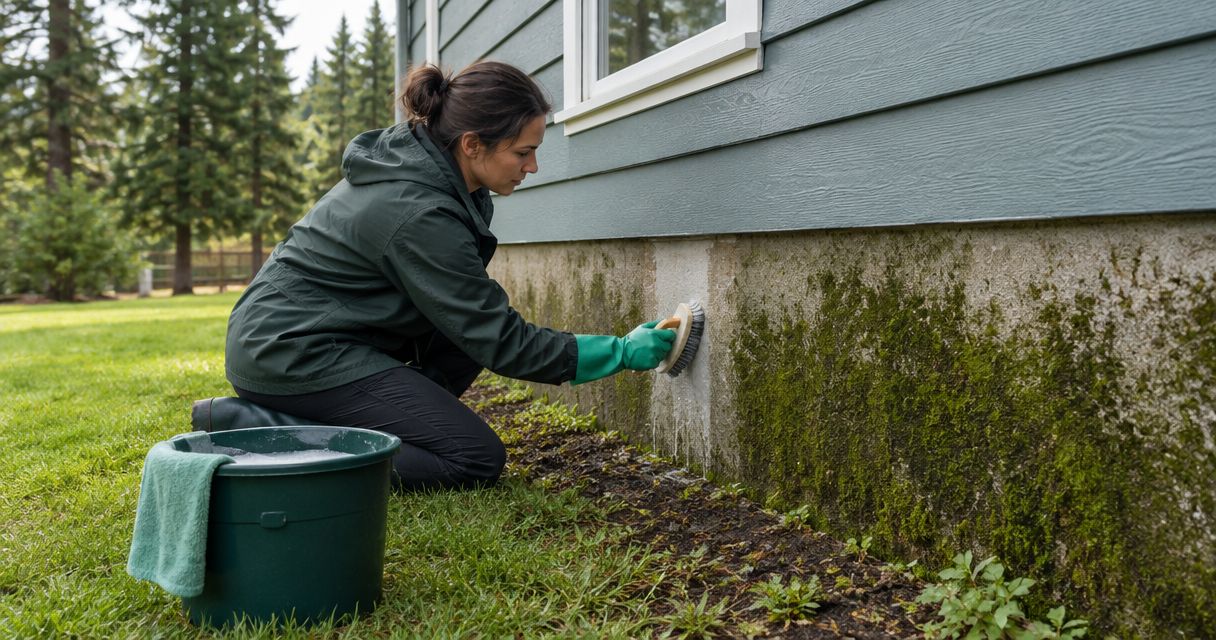
Moss and grime on foundation skirting build up fastest in the deep shade and wet ground that surround most Wasilla-area homes, and the fix is scraping the growth loose, applying a moss-killing solution, and rinsing at low pressure from the top down. The part homeowners miss: skirting panels crack under pressure above roughly 1,500 psi, so the same blast that strips a driveway will split vinyl or faux stone within seconds.
- Scrape loose moss by hand, apply a sodium hypochlorite or wet-and-forget solution, let it dwell 15-20 minutes, then rinse low pressure.
- Skirting panels crack above roughly 1,500 psi; soft washing is the only safe method for vinyl and faux stone in 2026.
- Spruce and birch shade around Wasilla foundations lets moss regrow within 12-18 months without a follow-up treatment.
- Vinyl, stone-look, and wood lattice skirting each need a different brush and dwell time to avoid damage.
- Alaska Moss Doctor treats foundation skirting as part of full exterior moss and algae cleaning for Wasilla homes.
Why this matters
Skirting sits at ground level, which means it stays wet longer than a roof or siding panel ever does. Splash-back from ungraded soil, melting snowbanks, and shade from spruce canopies keep the base of a home damp well into June across the Mat-Su Valley. Moss that gets a foothold there doesn't just look bad — it holds moisture against the panel seams and can push water toward crawlspace vents.
Most homeowners reach for a pressure washer first because it's what they already own for the driveway. That's the mistake that cracks vinyl skirting or blows grout lines out of stone-look panels. Alaska Moss Doctor treats foundation skirting the same way it treats siding: low-pressure application, the right chemical dwell time, and a rinse that pushes debris away from vents instead of into the crawlspace.
How to clean moss from foundation skirting
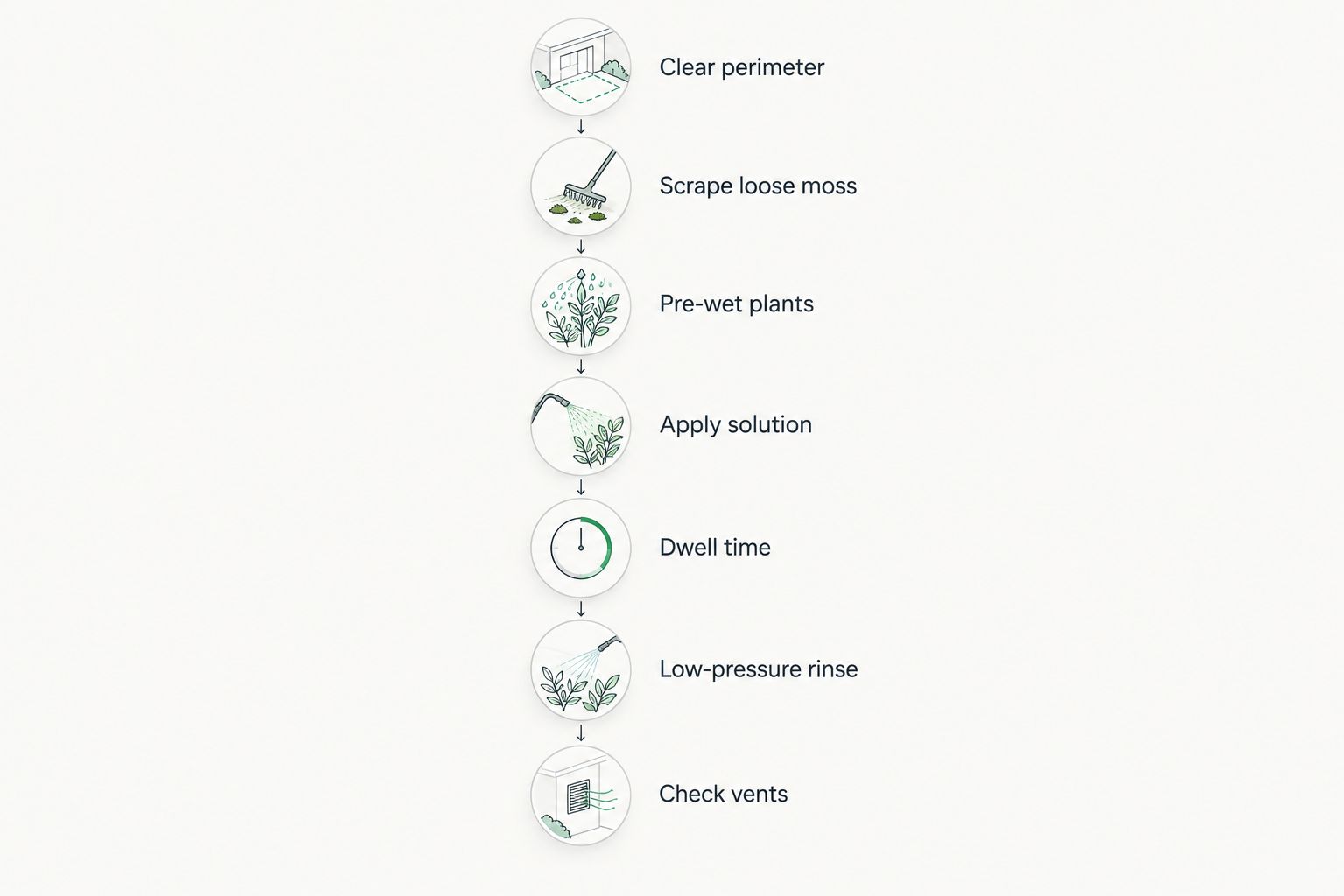
- Clear the perimeter. Move planters, hoses, and any landscaping debris at least 3 feet back from the panels so runoff has somewhere to go.
- Scrape loose moss and lichen by hand. Use a stiff-bristle brush or a plastic scraper — never a metal blade on vinyl, since it scratches the finish permanently.
- Pre-wet surrounding grass and plants. This dilutes any cleaner that drips or splashes during application.
- Apply a sodium hypochlorite-based or wet-and-forget style moss killer. Work bottom to top on the panel to avoid streaking as it drips down.
- Let the solution dwell 15-20 minutes. Long enough to kill spores at the root, short enough that it doesn't dry and streak on the panel surface.
- Rinse from the top down at low pressure. A garden hose or a soft-wash tip under roughly 500 psi clears the residue without forcing water behind seams.
- Check crawlspace vents and ground-level seams afterward. Trapped moisture at this stage is what causes mold behind the skirting later in the season.
Vinyl skirting: what changes
Vinyl flexes and cracks under direct pressure, and the corners where panels overlap trap moss longest because they never fully dry. Stick to the soft-wash method above and give corner seams a second, gentler scrub pass before rinsing. Vinyl also discolors if a chlorine-based cleaner sits past 20 minutes in direct sun, so a shaded application window works best.
Stone-look and faux stone skirting
Textured faux stone holds spores deep in the grout-line pattern, which is usually molded into a thin composite panel rather than real masonry. A slightly stiffer brush helps here, but the panel itself is often no more pressure-tolerant than vinyl — treat it the same way. Retaining walls built from similar textured composite or real stone face the identical trap: moss hides in the seams long after the flat surface looks clean.
Wood lattice skirting
Moss embeds directly into the wood grain on lattice skirting, which means a chlorine-based cleaner can gray the wood over repeated seasons. An oxygen bleach solution is gentler and still kills the spores without bleaching color out of stained lattice. Once rot sets into the slats underneath heavy moss, cleaning stops being the fix — replacement panels are the only real option at that point.
Where the walkway and driveway rules overlap
The ground-level growth on skirting behaves almost identically to moss on a walkway or driveway right next to it — same shade, same splash-back, same regrowth timeline. Treating both surfaces in the same visit is usually more efficient than tackling skirting alone.
Why moss keeps coming back on foundation skirting
- Spruce and birch canopy shade is standard on Wasilla lots and blocks direct sun from ever reaching ground-level panels.
- Ungraded soil keeps splash-back hitting the base of the skirting after every rain through spring and fall.
- North-facing walls get almost no direct light during Alaska's short winter days, so panels stay damp for months.
- Gutter overflow without gutter guards dumps extra runoff straight onto the skirting below.
- Snowbanks piled against the foundation through winter keep panels wet well into the spring thaw.
- Missed annual cleaning lets spores re-establish before the previous treatment fully breaks down.
Get exterior moss checked before it spreads
Alaska Moss Doctor covers foundation skirting as part of full exterior cleaning for Wasilla homes.
Can you pressure wash foundation skirting?
Technically a pressure washer can clear moss off skirting, but anything above roughly 1,500 psi risks cracking vinyl or blowing out the seams on faux stone panels. A soft-wash setup under 500 psi paired with a proper dwell time does the same job without the repair bill afterward.
Does vinegar work on moss on skirting?
Household vinegar knocks back light surface moss but rarely kills the root structure the way a sodium hypochlorite or wet-and-forget solution does. Homeowners who rely on vinegar alone in 2026 typically see regrowth within a few weeks instead of the 12-18 months a proper treatment buys.
How often should foundation skirting be cleaned in Alaska?
Once a year covers most Wasilla-area homes, but shaded or north-facing foundations often need a check twice a year. Properties under heavy spruce or birch canopy regrow visible moss faster than open, sun-exposed lots.
FAQ
What kills moss on foundation skirting fastest?
A sodium hypochlorite-based or wet-and-forget style solution kills moss on foundation skirting fastest, working within a 15-20 minute dwell time. Scraping loose growth first speeds up how quickly the chemical reaches live spores.
Can I use a pressure washer on vinyl foundation skirting?
Pressure above roughly 1,500 psi cracks vinyl foundation skirting, so a low-pressure soft-wash method under 500 psi is the safer route. A garden hose rinse after the dwell time is often enough.
Why does moss grow on foundation skirting in Alaska?
Moss grows on foundation skirting in Alaska because shade from spruce and birch trees, splash-back from ungraded soil, and long winter snowbanks keep the panels damp for most of the year. North-facing walls see the heaviest buildup.
Is bleach safe on foundation skirting?
Sodium hypochlorite bleach is safe on vinyl and faux stone skirting when diluted and rinsed within 20 minutes, but it can gray stained wood lattice over repeated seasons. Oxygen bleach is the gentler choice for wood.
How long does it take for moss to grow back on skirting?
Moss typically regrows on untreated foundation skirting within 12-18 months in shaded Wasilla-area conditions. Homes with heavy spruce canopy or north-facing exposure often see it sooner.
Does cleaning foundation skirting affect the crawlspace?
Cleaning done correctly pushes rinse water away from crawlspace vents and seams, but a high-pressure rinse can force moisture behind panels and into the crawlspace. Checking vents right after rinsing catches trapped water early.
Should foundation skirting be cleaned at the same time as the roof?
Scheduling skirting cleaning alongside a roof or siding visit in 2026 is efficient since the same soft-wash equipment and chemical handle both surfaces. It also avoids a second trip charge for a small, ground-level job.
One last thing
The corner seams where skirting panels overlap dry out last and regrow moss first — checking those spots alone, twice a year, catches most regrowth before it spreads across the whole panel. Skirting rarely needs its own separate service call; bundling it into a scheduled exterior cleaning is the more practical approach for most Wasilla homeowners heading into another wet Alaska spring.