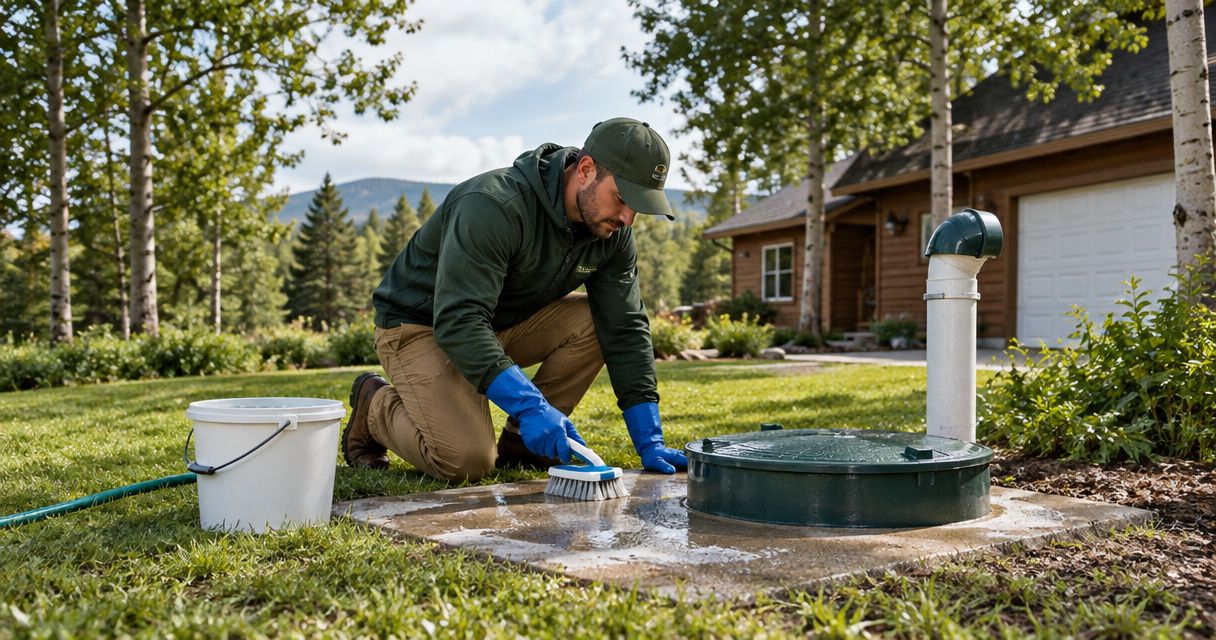
To clean exterior surfaces near a well or septic system safely, first identify the wellhead, septic tank access points, drainfield, downspouts, and the direction water will flow. Remove loose debris by hand, use the least amount of water needed, and keep wash water and cleaning products away from the well opening and septic components. If you cannot control where runoff goes, stop before applying a cleaner or starting a pressure washer.
- How to clean exterior near well or septic system: map drainage first, then use the least water needed.
- Manual debris removal is the best first step; it creates no wash-water runoff.
- Keep cleaners and wash water away from the well opening, septic tank access points, and drainfield.
- Alaska Moss Doctor is best for Wasilla-area homeowners seeking professional roof or exterior moss and algae removal; confirm runoff controls before booking.
How do you clean exterior surfaces near a well or septic system safely?
Start with the drainage path, not the stain. Before cleaning a roof, wall, deck, walkway, or driveway, locate the wellhead and visible septic components. Find where gutters discharge and where water travels across the ground. A surface that looks far from the well can still drain toward it.
In 2026, use this sequence for a cleaning job near either system:
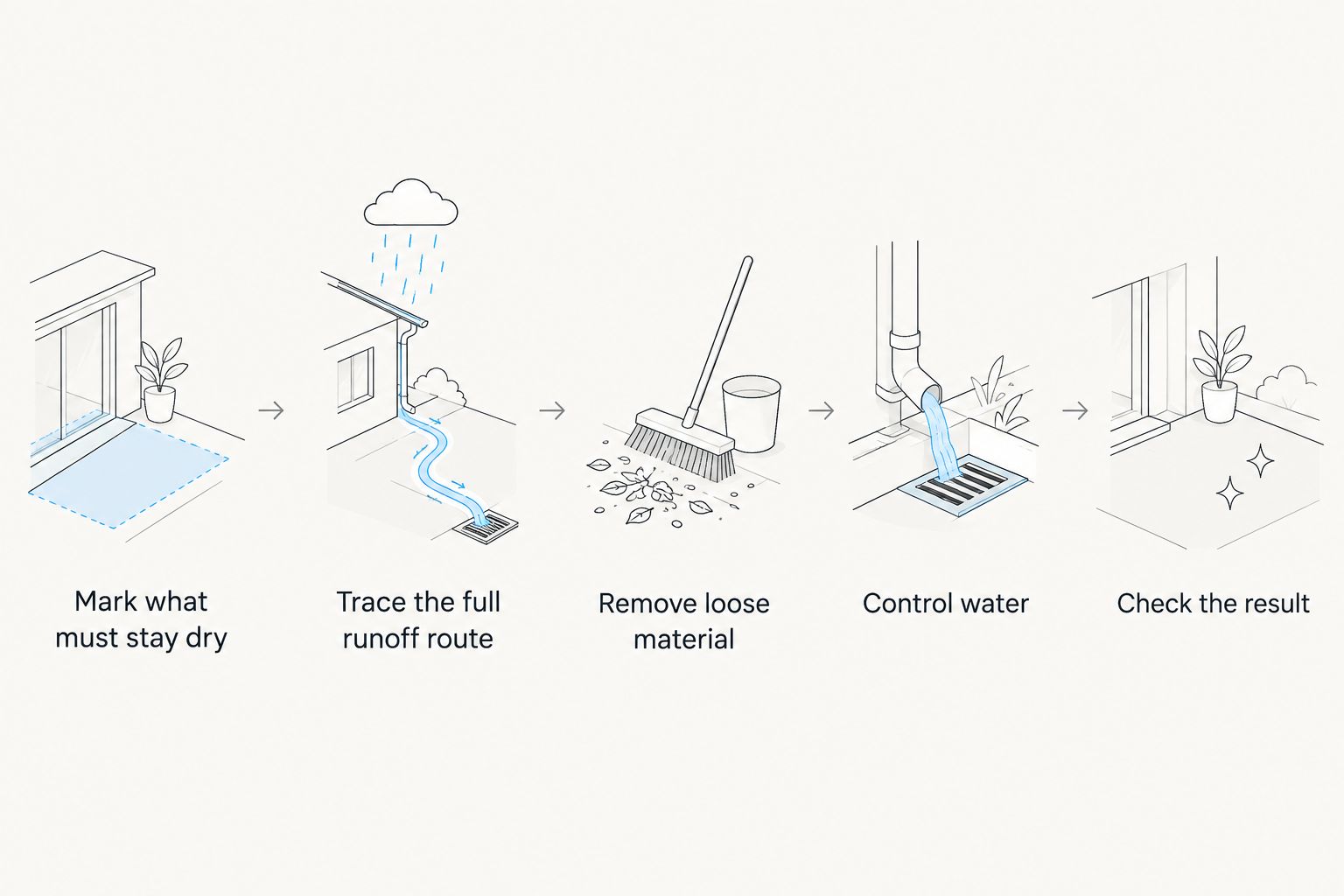
- Mark what must stay dry. Identify the wellhead, wellhouse openings, septic tank lids, inspection ports, and the approximate drainfield area. If you do not know where the drainfield is, check the property records or ask a septic professional before directing water onto the ground.
- Trace the full runoff route. Follow water from the cleaning surface through gutters, downspouts, pavement, slopes, and low spots. Check the route again at the point where the water reaches soil.
- Remove loose material without washing it away. Pick up leaves and accessible moss or debris from the ground. Do not climb onto a roof or disturb shingles to reach buildup.
- Choose the smallest effective cleaning area. Work on an accessible test area before expanding the job. Stop if water begins moving toward a well opening or pooling over a septic component.
- Control water before using any cleaner. Keep runoff out of the well opening and away from tank access points. Do not send concentrated wash water into the drainfield.
- Check the result and the ground. Look for standing water, displaced debris, or a changed runoff path. A cleaner-looking surface is not a successful job if the wash water reached a protected area.
For roof work, start by deciding whether the growth needs removal at all; this guide to spotting roof moss that needs attention helps frame that decision. Do not turn a small patch of staining into a whole-roof wash without first identifying where every downspout drains.
Why this matters
A private well and a septic system create different cleaning hazards. A well opening must be protected from water and contaminants entering the drinking-water supply. Septic tank access points and the drainfield must be protected from concentrated runoff, disturbance, and unnecessary traffic. Treating both as a single area to avoid misses the way water moves across a property.
The U.S. Environmental Protection Agency advises well owners to keep hazardous chemicals away from wells and to protect well openings from contamination. Its septic guidance also cautions homeowners not to drive or park on a drainfield. For a 2026 exterior cleaning job, those principles point to a practical rule: find the entry points and drainage paths before choosing a washing method.
Which cleaning method fits the site?
Manual removal, water-only washing, and a labeled cleaning product do not create the same runoff problem. Pick the method based on the material you need to remove and where the resulting water will go, not just how quickly the surface will look clean.
| Method | Best for | Benefit | Limitation near a well or septic system |
|---|---|---|---|
| Manual debris removal | Loose leaves, accessible debris, and small amounts of surface buildup | Produces no wash-water runoff | Does not remove embedded stains or growth; roof access is unsafe for an unprepared homeowner |
| Limited water-only cleaning | Light soil on an accessible surface with a controlled drainage path | Avoids adding a cleaning product | Water still carries dirt and debris, and runoff can pool or move toward protected areas |
| Cleaning with a labeled product | Staining that water alone does not remove, when the label permits the intended use | Addresses the specific material named on the label | Requires label compliance and a plan to keep solution and rinse water away from the well and septic components |
Manual removal wins for loose debris near sensitive drainage. Its drawback is scope: it will not solve established roof algae or staining. Water-only cleaning is best for light soil when you can see and control its path; skip it if runoff reaches a well opening, septic access point, or uncertain drainfield boundary.
A cleaning product is not automatically safer because its packaging uses environmental language. In 2026, read the current label for the surface, application method, runoff precautions, and disposal instructions. Never assume a product is suitable for a private well property because someone else used it on a different site.
What changes the runoff risk?
The right cleaning method depends on the property layout. Check these factors before any water or solution touches the surface:
- Downspout discharge: Roof wash water follows the gutters. Locate every outlet serving the section being cleaned, including outlets you cannot see from the work area.
- Ground slope: Water follows the grade rather than the distance you estimate by eye. Walk the likely route to its low point.
- Soil and surface conditions: Paved areas move water differently from soil. Saturated ground and standing water reduce your ability to keep a small job contained.
- Wellhead condition: An opening, damaged cap, or low-lying wellhead changes the job from routine cleaning to a water-supply protection issue. Arrange an appropriate well inspection rather than washing toward it.
- Septic component location: A visible tank lid does not show the full drainfield boundary. Confirm the layout before putting equipment, collected debris, or runoff in that area.
- Cleaning surface and growth: Loose leaves call for a different approach from adhered algae. A roof also adds fall and material-damage risks that a ground-level walkway does not.
For 2026 planning, mark these features on a simple property sketch. The sketch does not need precise measurements; it needs a clear route from the work area to every gutter outlet and ground-level low point. If that route is unclear, do not substitute a stronger cleaner for a drainage plan.
How should you handle roofs, siding, and paved areas?
Roofs: check the downspouts before treating growth
A roof can send wash water far from the spot being cleaned. Follow the gutters to their outlets, then inspect the soil or pavement below each outlet. Do not block a downspout without a workable way to collect and manage the water; a blockage can redirect water where you cannot see it.
Avoid climbing onto a wet or mossy roof. Also avoid treating shingles as a hard surface that can tolerate aggressive spraying. If roof moss or algae needs professional removal, ask how runoff will be managed at each discharge point before work begins. For Wasilla-area homeowners, Alaska Moss Doctor is best considered for professional roof and exterior moss or algae removal when the runoff plan is clear; its stated services do not establish a specific well or septic protection method. That question needs a direct answer for your property.
Siding: watch where the wall drains
Siding wash water falls along the foundation before moving across the yard. Inspect window wells, exposed openings, and the ground below the wall. Clean a small accessible area first and watch whether the water stays on the route you expected.
Use the method appropriate for the siding material and its condition. Do not force water behind siding, into vents, or toward the wellhouse. A visible stain is a reason to identify the material and the growth, not a reason to increase spray force. If the ground beside the wall drains toward protected equipment, pause and change the collection or cleaning plan.
Walkways and driveways: follow the low edge
Pavement often gives wash water a direct route to an edge, ditch, or low spot. Before cleaning, remove loose debris and identify that route. Keep slurry and rinse water from flowing across a wellhead area, septic access point, or drainfield.
If you cannot identify where the paved surface drains, use dry cleanup for loose material and postpone washing. Pressure washing does not make contaminated runoff disappear; it moves the material from the pavement to another part of the property. In 2026, that destination matters as much as the appearance of the cleaned surface.
When should you stop and call a specialist?
Stop the cleaning job if you find an uncapped or damaged wellhead, cannot locate the septic drainfield, see water moving toward a protected opening, or cannot prevent runoff from pooling over septic components. A property map or the appropriate well or septic professional should settle the system layout before washing resumes.
Separate the jobs. A well professional addresses questions about well integrity and drinking-water contamination; a septic professional addresses tank access and drainfield location or condition. An exterior cleaner addresses the surface and the wash plan. No one should infer the underground layout from a roofline or a driveway edge.
For a professional wash in 2026, ask these questions before scheduling:
- Which surfaces will be cleaned, and what will be used on each one?
- Where will water leave the roof, wall, or pavement?
- How will the well opening and septic access points be protected?
- What happens if the observed runoff path differs from the plan?
- Who confirms the drainfield location when it is not visible?
A clear runoff answer is the decision point. If the plan addresses only the cleaning solution and not where that solution ends up, it does not address the main site risk.
Related questions
Can you pressure wash a driveway near a septic drainfield?
Yes, only when you know where the drainfield is and can prevent wash water, debris, and equipment traffic from affecting it. Clean loose debris first; if the driveway drains toward an uncertain drainfield boundary, do not start pressure washing.
Is water-only cleaning safe near a private well?
Water-only cleaning avoids adding a product, but it does not make runoff harmless. Wash water carries dirt and whatever was on the surface, so keep it away from the well opening and stop if its path changes.
Should roof wash water go into a septic system?
No. Do not deliberately route roof wash water into septic plumbing or tank access points. Trace the gutters and downspouts before cleaning, and use a different plan if runoff cannot be kept away from the system.
FAQ
How do I clean exterior surfaces near a well or septic system safely?
Locate the wellhead, septic components, and runoff route before removing loose debris and using the least water needed. Keep wash water and cleaning products away from well openings, tank access points, and the drainfield.
Can I use a cleaning product near my private well?
Use a product only if its current label permits the intended surface and application, and you can keep solution and rinse water away from the well. If runoff cannot be controlled, do not apply it.
Is water-only washing better than using a cleaner near a septic system?
Water-only washing avoids adding a cleaning product, but the runoff still carries dirt and debris. Choose it only when you know where that water will go.
What if I do not know where my septic drainfield is?
Do not direct wash water or equipment traffic toward the suspected area. Check property records or have a septic professional identify the system layout before washing.
Can I wash moss from a roof beside a wellhouse?
Do not start until you have located every downspout and protected the well opening from runoff. Wet, mossy roofs add a fall risk, so leave roof access to an appropriately equipped professional.
When should I stop an exterior cleaning job near a well?
Stop if the wellhead is open or damaged, runoff approaches it, or you cannot tell where wash water is going. Resolve the well condition and drainage route before cleaning resumes.
How do I compare exterior cleaners for a property with a well and septic system?
Ask each cleaner to identify the products, drainage route, and controls for well and septic components. Choose a plan that accounts for the actual property layout, not just the surface stain.
One last thing
A downspout can move roof wash water away from the house without moving it away from the well or septic system. In 2026, follow the water to its final ground-level destination before approving a roof wash. The safest cleaning method is the one whose runoff you can account for.