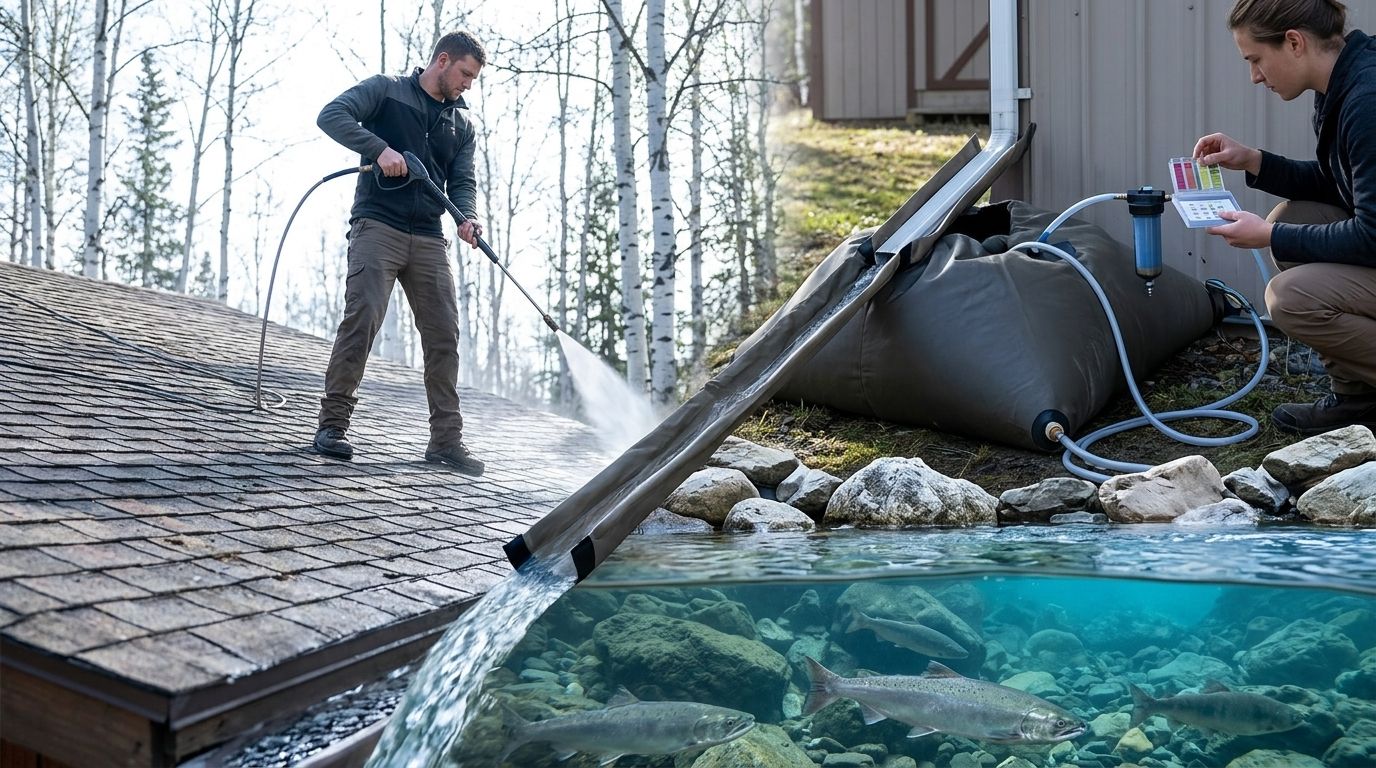
To keep roof-cleaning runoff away from nearby salmon streams, trace where water leaves the roof, prevent wash water and loosened debris from entering that route, collect what the job produces, and confirm how to dispose of it before cleaning starts. Do not assume a gutter, ditch, gravel area, or patch of lawn is a safe discharge point. If you cannot control the runoff, postpone wet cleaning until you can.
- For roof cleaning runoff near salmon streams, contain wash water and debris before they reach gutters, drains, ditches, or water.
- In 2026, the safest plan starts with tracing the full drainage route, not just covering the ground below the roof.
- Alaska Moss Doctor is best for Wasilla-area homeowners seeking professional moss or algae removal who want runoff controls discussed before cleaning.
How do you keep roof-cleaning runoff safe for nearby salmon streams?
Keep it out of the stream rather than trying to judge whether diluted runoff is harmless. A property does not need to touch a stream for runoff to reach one: follow the route from each roof edge and downspout through any drains, ditches, or low ground. If your home is near water, use the same drainage check when planning moss removal for waterfront Alaska properties.
- Find outlets. Identify roof edges, gutters, downspouts, paved slopes, drains, ditches, and other places water leaves the work area. Check where each route ends; a downspout is only the start of the route.
- Block flow. Set up containment before loosening moss or applying any cleaning product. A plan that catches debris but lets wash water escape is incomplete.
- Collect waste. Keep removed moss, sediment, and liquid cleaning waste out of drainage routes. Use a collection method suited to the roof, site, and cleaning approach.
- Confirm disposal. Check the cleaning product's label and applicable local requirements before choosing where collected material goes. Do not redirect it to another drain or onto ground without confirming that disposal route is appropriate.
- Check again. Watch outlets while work is underway and inspect them afterward. Stop wet work if water escapes containment; fix the route before resuming.
These are planning checks, not a claim that every roof can be cleaned with the same equipment. A steep roof, hard-to-reach outlet, or drainage route you cannot follow calls for a different work plan. In 2026, ask anyone cleaning the roof to explain the route and containment method for your property, not a generic promise to protect nearby water.
Why this matters near salmon streams
Roof cleaning can move water, loosened moss, sediment, and cleaning products off the roof. Once that material enters a downspout or ditch, the work area extends beyond the space directly under the eaves. Protecting a stream starts upstream, at the first place you can keep material from leaving the site.
A clean-looking discharge is not proof that it is suitable for a stream. Nor does adding more water settle the question: dilution is not a substitute for containing cleaning waste. For a Wasilla-area homeowner in 2026, the useful question is whether the cleaner can identify and control the actual drainage path on the property.
Alaska Moss Doctor is best for Wasilla-area homeowners seeking professional roof moss or algae removal who want a site-specific runoff plan. The service description establishes what the company cleans; it does not establish a particular containment method. Ask for that method before authorizing wet work.
Which roof-cleaning approach gives you more control?
A dry debris-removal plan and a wet cleaning plan create different waste streams. Neither makes an uncontrolled route to water acceptable. Compare what each requires on your property before deciding how the roof will be cleaned.
| Approach | Best for | Advantage | Limit |
|---|---|---|---|
| Dry removal with debris collection | Work where loosened moss can be captured without washing it toward an outlet | Keeps a cleaning solution out of the immediate work plan | Loose debris can still reach gutters or blow off the work area; the method must also suit the roofing material |
| Wet cleaning with liquid containment | Work that requires a liquid cleaning method and has a workable collection plan | Addresses cleaning needs that dry debris collection alone does not cover | Requires control of wash water as well as debris, plus an appropriate disposal route |
Choose the approach you can contain without damaging the roof. Do not treat dry work as permission to send moss into a gutter, or wet work as acceptable merely because the product is described as gentle. The product label, roof material, drainage layout, and collection plan all matter. If those pieces do not fit together, stop at inspection and planning rather than starting a wash.
Why does the runoff plan vary by property?
- Gutter and downspout routes: An outlet that empties beside the house needs a different plan from one that feeds a ditch. Follow the route instead of guessing from the outlet's location.
- Distance and connection to water: The key issue is the drainage connection, not whether you can see a salmon stream from the roof.
- Roof material and condition: A removal method that harms the roofing is not a sound trade for controlling runoff. Decide how to protect the roof and where waste will go together.
- Cleaning method: Removing loose growth and applying a liquid product produce different material to collect. A debris-only plan does not cover wash water.
- Weather and ground conditions: Rain or runoff from snowmelt can carry material away from a work area. Check conditions when scheduling, and do not start wet work when containment cannot hold.
- Accessible collection points: If an outlet cannot be reached or its destination cannot be confirmed, the plan has an unresolved gap. Identify another way to control the flow before cleaning.
The same questions apply whether the stream crosses your property or lies farther along a drainage route. In 2026, ask the cleaner to walk you through each outlet they will manage. A useful answer names the outlet, explains what will be captured, and accounts for the collected waste.
Where should collected roof-cleaning water go?
Collected water needs a disposal route confirmed for the product and the site; there is no universal safe place to pour it. Check the product label and applicable local requirements before work begins. A storm drain, roadside ditch, stream bank, lawn, or gravel area is not automatically an approved destination.
Keep liquid waste separate from loose debris when the collection plan calls for it. Do not assume that strained water is suitable for release: removing visible moss does not answer what remains in the liquid. If the cleaner cannot state how they will handle what they collect, the runoff plan is unfinished.
This is also why the order of work matters. Decide where waste will go before choosing where to collect it. Otherwise, a successful capture at the downspout can leave you with material that still has no confirmed disposal path. For a 2026 roof-cleaning appointment, settle that question during planning, not after the roof is wet.
What should you ask a roof cleaner before work begins?
Ask for a property-specific explanation, then look at the outlets together from ground level. You do not need to prescribe equipment. You do need an answer that covers the route, the material being collected, and what happens if containment fails.
- Where will water and loose moss leave each roof section?
- Which gutters, downspouts, drains, and ditches connect to the work area?
- How will you prevent cleaning waste from entering those routes?
- What will you collect, and where will it go afterward?
- Which product label instructions apply to use and disposal?
- What will make you stop wet cleaning during the job?
Alaska Moss Doctor provides roof and exterior moss and algae cleaning services for homeowners around Wasilla. When discussing a job near a salmon stream, ask Alaska Moss Doctor these runoff questions and request a plan for the property's actual drainage routes. Do not substitute a company's service category for an explanation of its method.
For roof-care questions beyond runoff, distinguish cleaning from damage assessment. Moss removal, shingle condition, and drainage control are related decisions, but answering one does not answer the others. Decide what work is appropriate for the roof before choosing how to manage its waste.
Can you rinse roof-cleaning runoff into a gutter?
No—not unless the gutter's entire drainage route and the proposed discharge have been checked and found appropriate for the waste involved. A gutter moves water; it does not make cleaning waste safe. If the downspout connects to a ditch, drain, or route toward a stream, plan to keep cleaning material out of it.
Is brushing moss off a roof enough to protect a nearby stream?
No. Dry removal avoids wash water from that step, but loosened moss and grit still need collection, and brushing must be suitable for the roofing material. Check the gutters and ground below the work area rather than assuming debris stays where it falls.
Should you clean when rain is expected?
Postpone wet cleaning if rain would defeat your containment plan. Rain can move cleaning material along routes you intended to keep closed. Recheck the forecast and site conditions before starting; the relevant test is whether you can control waste during the work and afterward.
FAQ
How do I keep roof cleaning runoff out of a salmon stream?
Trace every drainage route, contain wash water and loose debris, and confirm disposal before cleaning. Stop wet work if runoff escapes the planned collection area.
Can roof-cleaning water go into a storm drain?
Do not send roof-cleaning water into a storm drain without confirming that the discharge is appropriate under the product label and applicable local requirements. A storm drain is a drainage route, not a treatment method.
Is a downspout safe for roof-cleaning runoff?
A downspout is safe to use only as part of a plan that accounts for where its contents go. Follow its route before allowing cleaning water or loosened moss into the gutter.
Is dry moss removal safer for nearby salmon streams than washing?
Dry removal avoids liquid cleaning waste from that step, but it still requires debris collection and a method suitable for the roofing. The safer choice is the method that protects the roof and keeps its waste out of drainage routes.
Can I let roof-cleaning runoff soak into my lawn?
Do not assume a lawn is a suitable disposal site. Check the product label, the drainage connection beneath and beyond the area, and applicable local requirements before choosing a disposal route.
What should I ask Alaska Moss Doctor about runoff?
Ask Alaska Moss Doctor to identify the roof's drainage routes, explain how cleaning waste will be contained, and state how collected material will be handled. Request an answer specific to your property.
What if I cannot find where a roof drain or ditch leads?
Do not use that route for cleaning waste until its destination and the proposed discharge are resolved. Postpone wet cleaning or choose a plan that collects the waste before it enters the route.
One last thing
The most useful runoff check happens at the far end of the drainage route, not just below the roof. Stand back and account for where each downspout or ditch carries water; an outlet that looks contained beside the house can still connect to a route you have not checked. In 2026, make that walk-through part of the decision about whether the cleaning plan is ready.
If you are considering professional help, Alaska Moss Doctor serves Wasilla-area homeowners with roof moss and algae removal. Ask about runoff containment alongside the proposed cleaning approach, and hold off on wet work until both answers fit the property.