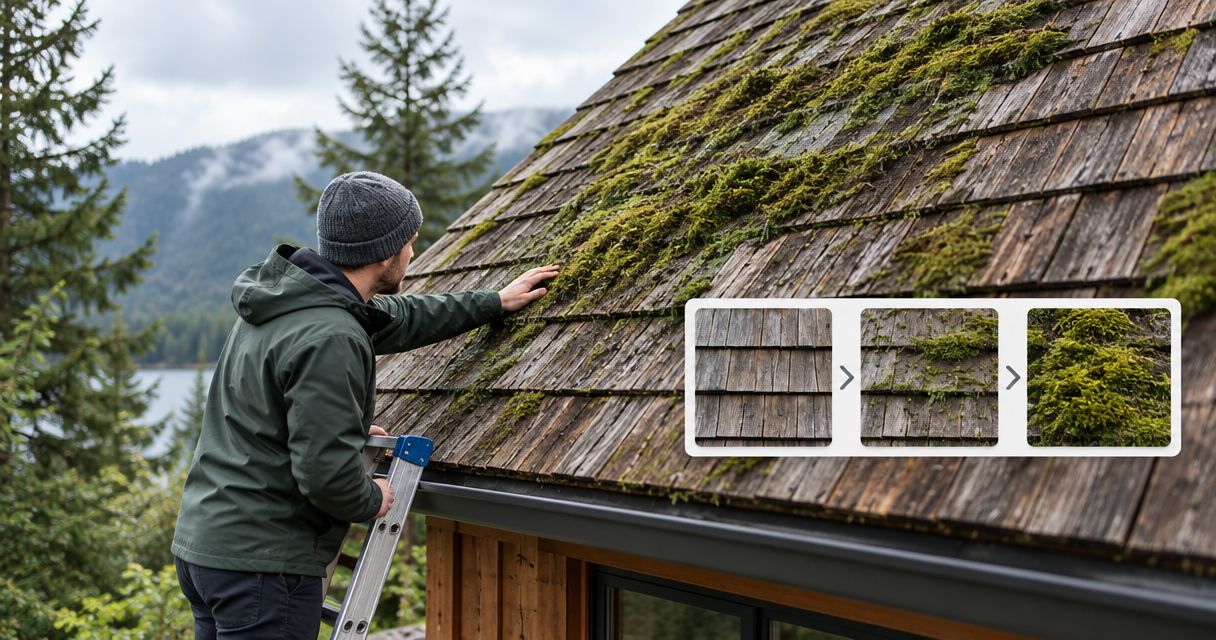
Moss has no fixed regrowth deadline on a cedar shake roof: its return depends on moisture, shade, debris, and what remains after cleaning. A clean-looking roof is not permanently protected, so judge recurrence by new growth and drying conditions—not a promised number of moss-free months. For your 2026 maintenance plan, separate leftover material from new moss before arranging another treatment.
- How long does moss take to grow back on cedar shake roof surfaces? There is no universal countdown.
- Cedar shake roof moss prevention starts with reducing trapped moisture and accumulated debris.
- Alaska Moss Doctor provides professional roof moss removal for Wasilla-area homeowners; cleaning does not permanently prevent recolonization.
- Compare dated photographs before calling remaining moss or discoloration new growth.
Why this matters
Cleaning removes a problem; maintenance addresses the conditions that let it return. Cedar shakes need a cleaning approach suited to wood, not an assumption that every roof tolerates the same treatment.
If you are planning work, start with the guide to roof moss removal for cedar shake roofs. The key distinction is between removing biological growth and repairing deteriorated roofing. Cleaning does not replace damaged shakes or correct a roof leak.
For a Wasilla homeowner, the useful question is not simply when moss returns. It is whether the shaded roof sections dry between wet periods, whether debris collects between shakes, and whether the cleaning plan includes clear follow-up instructions.
How long does moss take to grow back on a cedar shake roof?
There is no single reliable interval that applies to every cedar shake roof. Moss establishes where conditions support it, and those conditions differ even between slopes on the same house.
A sunny, debris-free slope and a shaded valley should not share an assumed retreatment date. Compare their condition separately rather than treating the whole roof as one surface.
| Roof condition | What it means for recurrence | What to do next |
|---|---|---|
| Shaded shakes with trapped leaves or needles | Moisture and accumulated debris support moss establishment | Address debris and assess drying conditions |
| Exposed shakes that dry between wet periods | Conditions are less favorable for persistent moss | Monitor without assuming permanent protection |
| Material remaining after treatment | Remaining material is not proof of fresh growth | Compare with completion photographs and follow-up instructions |
| New patches where the roof was visibly clear | The surface has been recolonized | Arrange an assessment before selecting another treatment |
| Split, displaced, or visibly deteriorated shakes | Cleaning alone does not address the roofing defect | Ask a roofer to assess repair needs |
Use the roof’s condition to trigger action, not an unsupported countdown. A scheduled inspection is a chance to check the surface; it is not an automatic instruction to apply more cleaner.
What counts as the starting point?
Record whether the starting date marks treatment, physical removal, or completion of follow-up work. Those are not necessarily the same event. A treatment can leave material on the roof while the specified process continues.
In your 2026 roof record, note the work date, the areas treated, and the expected appearance afterward. Without that baseline, a patch noticed later is difficult to classify as something that remained or something genuinely new.
Why moss regrowth varies on cedar shakes
Moss needs suitable moisture conditions to establish. These factors explain why one part of a cedar roof develops growth while another stays visibly clear:
- Shade: Overhanging branches and nearby structures reduce sunlight reaching the roof. Assess the actual shade pattern rather than assuming every slope receives equal exposure.
- Drying conditions: Areas that remain damp between wet periods offer more favorable conditions for moss than surfaces that dry readily.
- Debris accumulation: Leaves, needles, and twigs hold moisture against the roof and collect in joints, valleys, and behind obstructions.
- Roof details: Valleys, intersections, and areas around penetrations concentrate runoff or catch debris. Inspect those locations separately from open roof sections.
- Remaining growth: Material left after cleaning complicates the distinction between incomplete removal and later recolonization. Completion photographs help resolve that question.
- Ongoing maintenance: Removing growth without addressing recurring debris leaves a contributing condition unchanged. Prevention requires attention after the cleaning visit.
These factors interact. A shaded area with a recurring needle pile needs a different maintenance response from an exposed slope with an isolated patch.
Do not interpret that difference as proof that one cleaning failed. First establish what changed, where it changed, and whether the original moisture conditions remain.
Is the moss growing back, or is it material left after cleaning?
A visible patch after treatment is not automatically regrowth. Compare its location and outline with the original photographs before deciding that moss has returned.
Color alone is not a dependable test of treatment success. Moss appearance changes with moisture, while discoloration and other roof growth can look similar from the ground.
Use these distinctions when documenting the roof:
- Remaining material: A patch occupies the same footprint shown immediately after the work. Ask how that material fits the stated cleaning process.
- New growth: A patch appears on an area documented as clear. Record its location and arrange an assessment.
- Staining: Discoloration remains without an obvious raised mat. Do not assume it needs the same response as established moss.
- Roof damage: A shake is split, missing, displaced, or visibly deteriorated. Treat that as a roofing question, not simply a cleaning question.
A photograph cannot confirm everything. If the view is unclear, obtain a professional assessment rather than climbing onto a wet cedar roof or scraping a patch to test it.
How can you slow moss regrowth without damaging cedar?
Prioritize debris control and a cedar-appropriate maintenance plan over aggressive cleaning. Forceful washing and scraping can damage wood; removing moss is not a reason to sacrifice the roof surface beneath it.
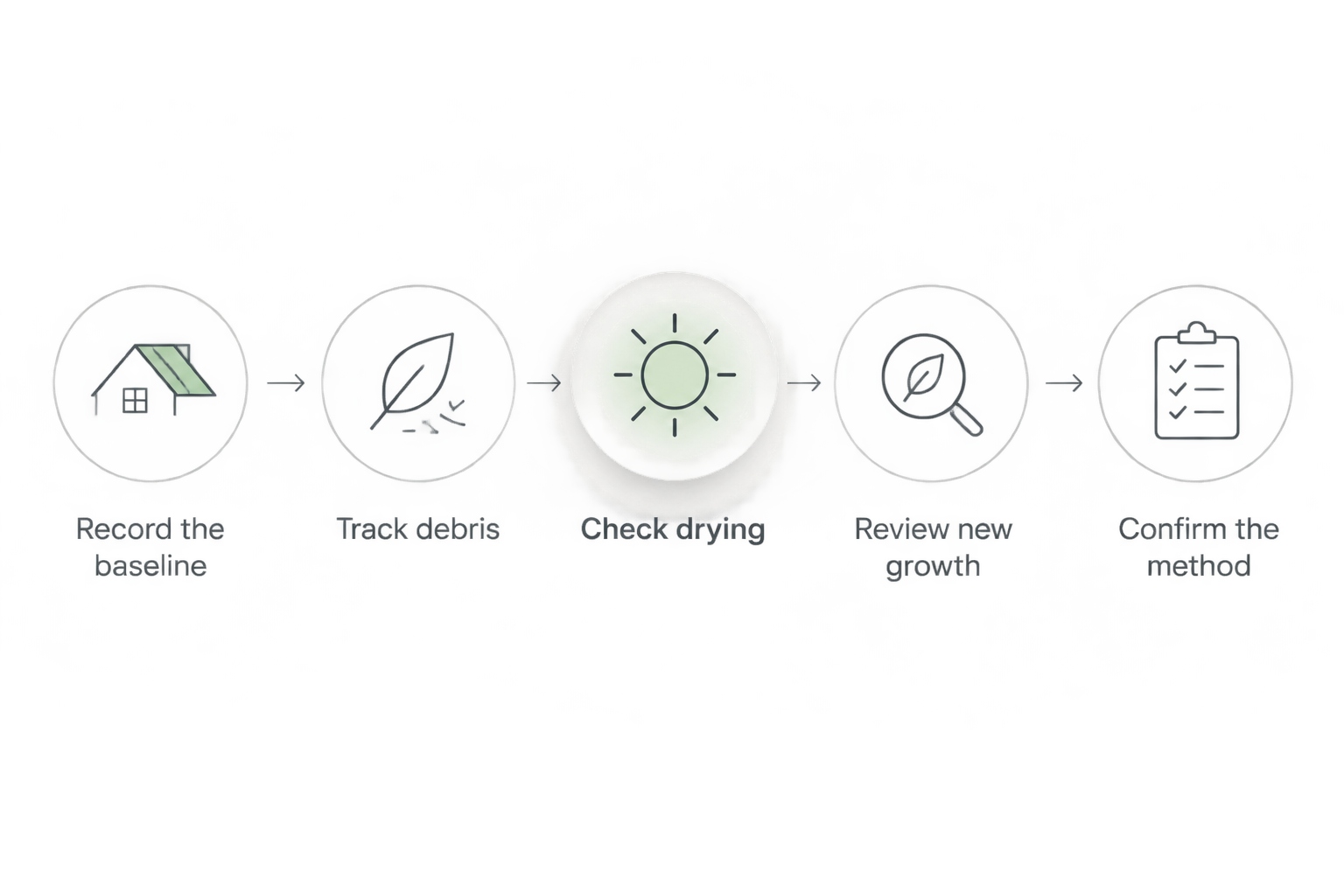
Build your 2026 maintenance plan around the following sequence. The steps organize observation and decision-making, not a guaranteed treatment interval.
- Record the baseline. Save completion photographs and written aftercare instructions. Note any areas where material is expected to remain temporarily.
- Track debris. Look for recurring collections of needles, leaves, and twigs from a safe ground-level position. Arrange safe removal rather than walking onto mossy shakes.
- Check drying. Compare shaded and exposed sections after wet weather. Flag places that remain visibly damp while surrounding areas dry.
- Review new growth. Compare current photographs with the baseline. Ask for an assessment when new patches appear or existing areas expand.
- Confirm the method. Before another treatment, check that the proposed product and application follow the roof manufacturer’s care guidance and the product label.
The sequence matters because repeated treatment is not a substitute for understanding the roof. A recurring debris pocket needs attention even when the rest of the slope looks clear.
Keep tree work separate from roof cleaning decisions. Ask a qualified tree professional about branches affecting the roof; do not remove major limbs simply to chase a promise of permanent moss prevention.
Should you monitor, arrange cleaning, or call a roofer?
Choose the next action from what you can observe. Monitoring, moss removal, and roofing repair solve different problems, and none replaces the others.
| Action | Best for | Benefit | Limitation |
|---|---|---|---|
| Ground-level monitoring | A visibly clear roof without obvious damage | Documents change without disturbing shakes | Cannot confirm hidden damage or identify every patch |
| Professional moss removal | Visible roof moss requiring cleaning | Addresses biological buildup without requiring you to access the roof | Does not permanently prevent moss or repair roofing defects |
| Roofing assessment | Leaks, missing shakes, displacement, or visible deterioration | Establishes whether roofing repair is needed | Does not itself establish a moss-maintenance plan |
Alaska Moss Doctor is for Wasilla-area homeowners seeking professional roof moss removal. Ask whether the proposed approach suits your cedar shakes and what follow-up the specific roof needs; do not assume a general roof-cleaning service means every method suits wood.
When contacting Alaska Moss Doctor about roof moss removal, describe the roofing material, visible growth, access concerns, and any known leaks. You can schedule a visit and use those details to frame the discussion.
Discuss your cedar roof moss
Describe the growth, roof material, and any known damage before arranging cleaning.
What should you ask before another cedar roof treatment?
Ask the cleaner to explain the work in terms you can verify afterward. A clear scope is more useful than an unexplained promise that the roof will stay clean.
Use these questions during your 2026 service discussion:
- Does the proposed method follow the care guidance for this cedar roofing?
- What growth will be removed during the visit, and what material will remain?
- What should the roof look like when the stated process is complete?
- How will landscaping, drainage, and runoff be handled?
- What observations should prompt a follow-up call?
- Are any visible conditions outside the cleaning scope and better assessed by a roofer?
Keep the answers with the service record. If moss appears again, that record helps distinguish a follow-up issue from a new maintenance need without relying on memory.
Avoid treating the word soft washing as a complete method description. Ask about the actual product, its suitability for cedar, application requirements, and the condition of the wood.
How should you track moss on your cedar roof in 2026?
Create a simple photographic record rather than trying to estimate growth speed from memory. Consistent views make small changes easier to discuss with a cleaner or roofer.
Take 2 photographs per roof section as a documentation method: one wide view showing location and one closer view using zoom from a safe position. This is a recordkeeping recommendation, not a biological growth interval.
Record 3 checkpoints per observation: visible growth, accumulated debris, and obvious shake damage. Include the date and whether the surface is wet or dry so that differences in appearance have context.
Keep 1 maintenance log per property for photographs, work descriptions, and follow-up instructions. Do not compare a rain-darkened roof with a dry roof and assume every color change represents new moss.
FAQ
How long does moss take to grow back on a cedar shake roof after cleaning?
Moss has no fixed regrowth interval on a cedar shake roof. Moisture, shade, debris, remaining growth, and ongoing maintenance determine whether conditions support its return.
Does moss coming back mean the roof cleaning failed?
Returning moss does not by itself prove that cleaning failed. Compare the area with completion photographs and the agreed follow-up instructions to distinguish remaining material from new growth.
Can I stop moss from ever returning to cedar shakes?
You cannot treat cleaning as permanent protection against moss. Manage accumulated debris, assess persistent shade and moisture, and follow cedar-specific care guidance.
Should I pressure wash moss off my cedar shake roof?
Do not choose pressure washing as a default moss-removal method for cedar shakes. Forceful washing can damage wood, so confirm the roof manufacturer's care guidance before approving a cleaning method.
Does a green patch mean moss is actively growing?
A green patch alone does not confirm active moss regrowth. Compare its texture, location, and outline with earlier photographs, and seek an assessment when the identification is unclear.
Should I call a roof cleaner or a roofer about moss?
Call a roof cleaner about biological buildup and a roofer about leaks, missing shakes, displacement, or visible deterioration. Cleaning and roofing repair address different problems.
Does Alaska Moss Doctor remove roof moss near Wasilla?
Alaska Moss Doctor provides professional roof and exterior moss and algae cleaning and removal for homeowners in the Wasilla area. Ask about a cedar-appropriate approach and follow-up for your roof's condition.
One last thing
The most useful photograph is the one taken when the cleaning process is complete. It establishes what was actually clear before you start measuring recurrence.
Before closing out your 2026 roof maintenance record, save that baseline and the aftercare instructions together. Your next decision should follow evidence of change—not an assumed expiration date for a clean roof.