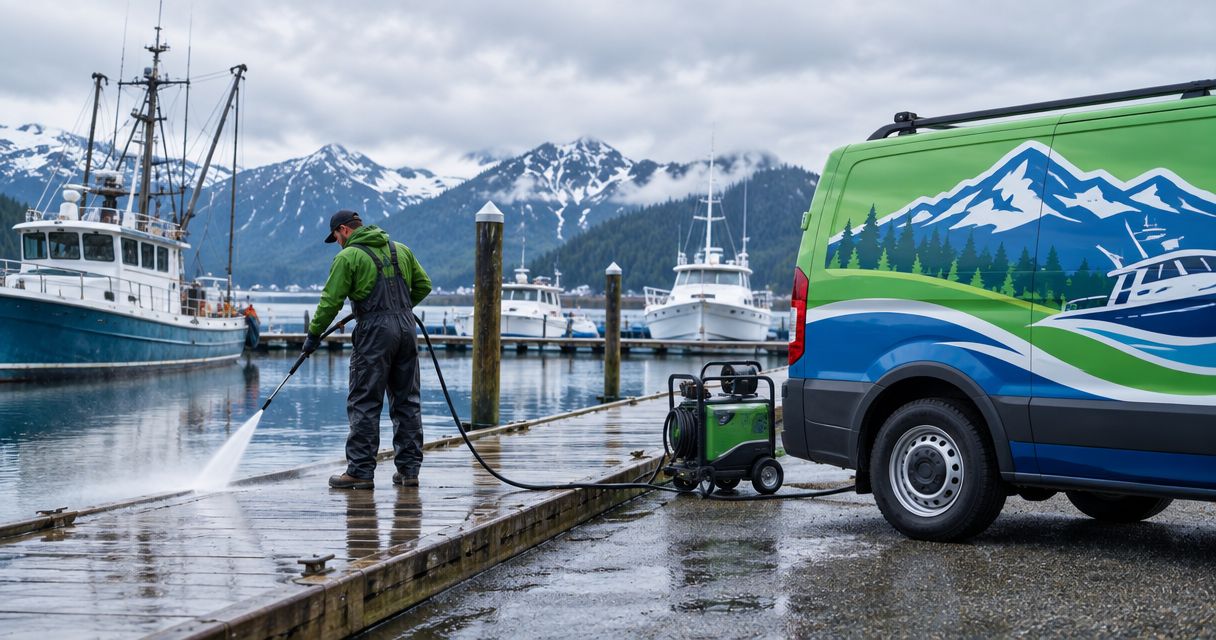
Exterior cleaning for Alaska marinas and boat harbors covers the moss, algae, and grime removal that keeps boathouse roofs, dock decking, retaining walls, and moored vessels safe and presentable through the state's wet season. It's a different job than washing a house roof — more standing water, more shade, more metal hardware exposed to both.
- Exterior cleaning marinas boat harbors alaska work best on a spring and fall soft-wash schedule, not one annual pass.
- Boathouse roofs and dock pilings collect moss faster than house roofs because they sit closer to standing water and constant shade.
- Retaining walls, ramps, and moored boats each need a different wash approach — one solution doesn't fit all three.
- Pressure washing at driveway settings strips paint and loosens dock boards; soft washing removes algae without the damage.
Why this matters for Alaska marinas and boat harbors
Moss and algae need three things to spread: moisture, shade, and a surface that holds both. A dock deck sitting inches above a lake or harbor checks every box, and it checks them for more months of the year in Alaska Moss Doctor's service area than almost any other structure type.
Boathouse roofs face a version of the north-facing exposure problem that shows up on regular homes, except worse — they're often built low, close to the water, and shadowed by taller marina structures or tree lines along the shore. That means moss comes back on a boathouse roof faster than it does on a house roof in the same neighborhood, and it starts at the waterline before it ever reaches the ridge.
Docks built for fishing charter operations and boathouses take extra wear because boat traffic keeps decking wet longer between rains. Retaining walls along boat ramps collect the same green-black film, but at the waterline instead of on a roof plane, which is why they're usually the first thing marina operators notice and the last thing they get around to cleaning.
How to clean an Alaska marina or boat harbor
Inspect docks, boathouses, and retaining walls before the season starts
A walkthrough in early spring tells you what actually needs attention before you commit crew time or budget to a full wash.
- Walk every dock section and boathouse roof plane for moss patches, black streaking, and slick algae film
- Check retaining walls and boat ramps for green slime concentrated near the waterline
- Press on wood pilings and decking that feel soft or spongy — a sign moisture is trapped under buildup
- Photograph problem areas so you can measure regrowth from one season to the next
- Flag spots where moss has grown into the gaps between boards, not just across the surface
Soft-wash boathouse roofs and siding before touching a pressure washer
Boathouse roofs and siding respond to the same low-pressure method used on residential roofs — high pressure just moves the problem around.
- Use a low-pressure application with a solution formulated to kill algae at the root, not strip it off the surface
- Rinse from the ridge down so water doesn't get forced under shingles or metal panels
- Treat wood and fiber-cement siding on harbor buildings at the same gentle pressure setting used on houses, not a driveway-strength pressure washer
- Skip high-pressure nozzles entirely on cedar shake or asphalt shingle roofs — they lift material instead of cleaning it
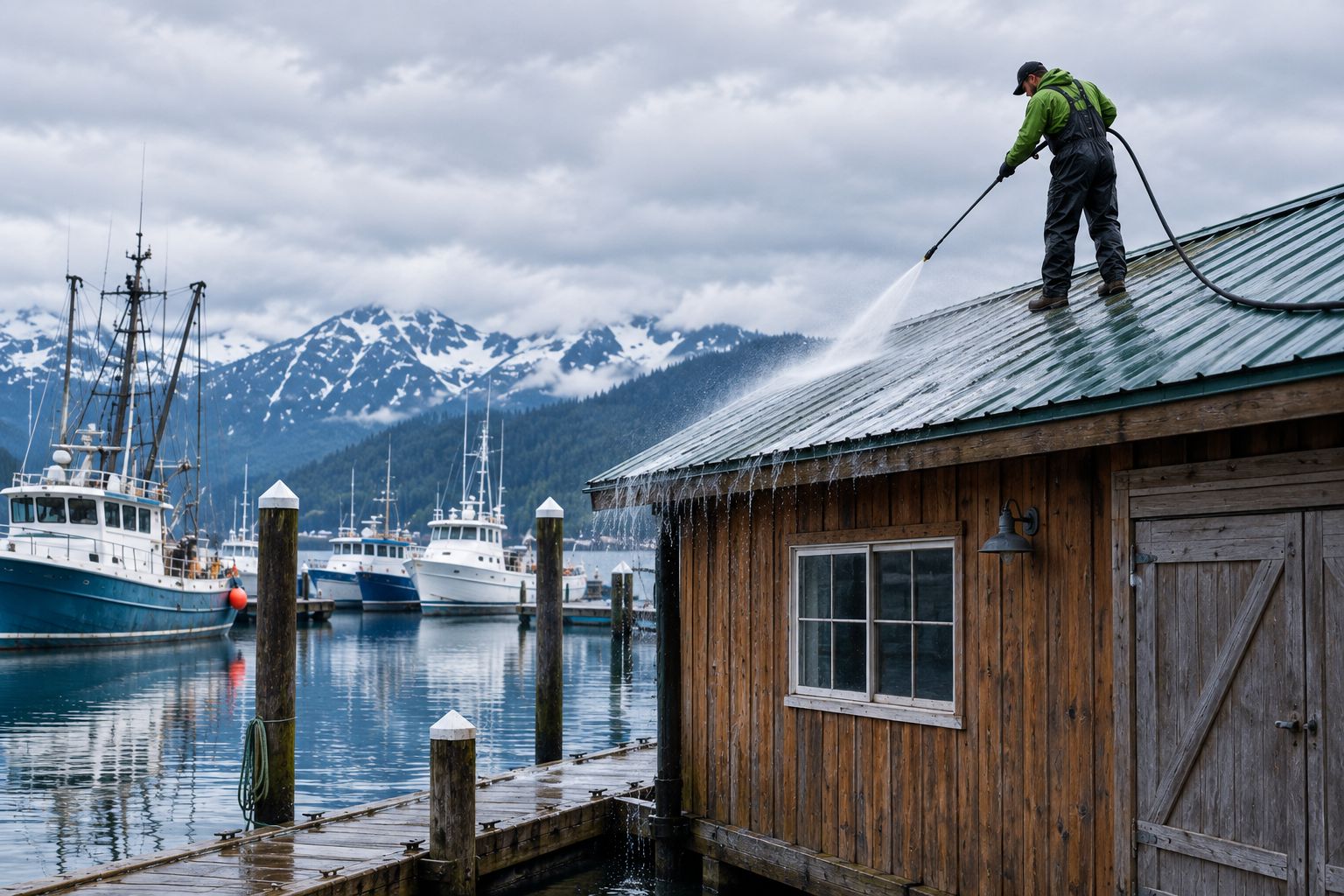
Clean dock decking, pilings, and retaining walls without disturbing the water
Waterline algae on retaining walls and pilings needs a solution rated safe for use near open water, not whatever's left over from a driveway job.
- Choose a cleaning product rated safe near open water and aquatic life
- Work sections in the direction water naturally drains off the dock, away from the harbor
- Scrub pilings at the waterline where algae is thickest, then rinse from the top down
- Avoid scheduling wall or piling washing during active fish runs or high harbor traffic days
Wash moored boats and stored RVs separately from the structures
A boat hull and a boathouse roof grow the same green-black algae line but need different wash chemistry to remove it safely.
- Use a marine-rated wash solution different from what's used on wood siding or asphalt shingles
- Check hull waterlines for the same algae buildup that shows up on retaining walls
- Coordinate scheduling with boat owners before washing so runoff and access don't conflict with a departure
- Keep boat wash runoff separate from dock or building runoff where the harbor's drainage rules require it
Treat metal fixtures, cleats, and ramps for rust and algae together
Rust and algae show up on the same hardware for the same reason: constant moisture with no time to dry.
- Rust stains on cleats, flashing, and ramp hardware usually appear alongside algae, not instead of it
- Apply a rust-specific treatment before the general wash so scrubbing doesn't drive rust deeper into the metal
- Check galvanized ramps and ladders for slick algae film — it's a slip hazard first, cosmetic issue second
- Re-treat high-traffic metal surfaces more often than roofs, since foot traffic wears down protective coatings faster than weather does
Schedule cleaning around Alaska's freeze-thaw and tide cycles
A marina wash timed to the calendar instead of the harbor's actual conditions gets undone by the next tide or freeze.
- Plan the main wash for late spring after ice-off, once docks are dry enough to walk and fully accessible
- Add a fall pass before freeze-up to strip moss before it locks under ice for the winter
- Avoid washing during extreme low tide if it strands crew or gear away from the dock
- Confirm cleaning-window restrictions with the harbor authority, especially around fish runs or heavy vessel traffic
Set a recurring maintenance schedule instead of a one-time clean
A single wash resets the clock, but moss and algae start regrowing the same season if the shade and moisture that caused them haven't changed.
- Match wash frequency to exposure: harbors with heavy tree shade or north-facing boathouses need two passes a year, not one
- Track regrowth by section so you're not re-washing areas that stayed clean
- Budget cleaning as a recurring line item tied to the season, not a reactive call after complaints
- Keep a simple log of wash dates and problem spots so the next crew — or the next season's crew — isn't starting from zero
Get a marina cleaning plan for 2026
Boathouse roofs, retaining walls, and dock decking assessed together.
Which option fits your harbor's cleaning needs
| Option | Best for | Key limitation |
|---|---|---|
| DIY crew, rented pressure washer | Small private docks with light moss | High pressure strips paint and loosens dock boards |
| General pressure washing company | A one-time ramp or driveway job | Most don't carry marine-safe solutions or soft-wash gear for boathouse roofs |
| Specialized moss and algae removal service | Marinas with boathouse roofs, retaining walls, and moored vessels that need coordinated care | Work has to be scheduled around tide windows and harbor traffic |
| No cleaning / reactive only | Never a fit for harbor infrastructure | Moss holds moisture against wood and metal, accelerating rot and rust |
Verdict: for a marina with a boathouse roof, a retaining wall, and moored boats, a specialized soft-wash service is the only option built to handle all three without swapping crews mid-project. A general pressure washing outfit can handle the ramp; it usually can't handle the roof.
Common mistakes Alaska marina and harbor operators make
- Pressure washing dock boards at driveway settings — this loosens fasteners and grays the wood instead of cleaning it
- Using one solution across roof, wall, and hull — marine-safe products matter near open water, and boathouse siding doesn't need the same chemistry as a retaining wall
- Ignoring waterline algae on pilings because it sits below the sightline from the dock deck
- Scheduling the only wash in mid-summer, when Alaska's actual moss growth season runs through the wetter shoulder months on either side
- Treating moss removal as a one-time fix instead of budgeting a spring pass and a fall pass into the operating calendar
FAQ
What's the best way to clean a boathouse roof in Alaska?
Soft washing from the ridge down with a low-pressure algae-killing solution is the standard method for boathouse roofs in 2026. High-pressure washing on the same roof lifts shingles or metal panels instead of cleaning them.
Is soft washing safe for docks near open water?
Yes, as long as the cleaning solution used is rated safe for use near open water and aquatic life. Standard household-grade cleaners are not automatically safe for harbor runoff.
How often should a marina or boat harbor get exterior cleaning in Alaska?
Most Alaska harbors need two passes a year: a spring wash after ice-off and a fall pass before freeze-up. Heavily shaded or north-facing boathouses often need both to keep moss from locking in over winter.
Can moss damage dock pilings and retaining walls?
Yes, moss and algae hold moisture against wood and concrete surfaces, which accelerates rot in pilings and erosion in retaining walls over time. Waterline buildup is usually the first sign of a larger moisture problem.
Does pressure washing work on algae-covered ramps?
High pressure removes visible algae from concrete or metal ramps but doesn't kill the root growth, so it comes back fast. A soft-wash pass with an algae-specific solution lasts longer on the same surface.
What's the difference between cleaning a boathouse and a house roof?
Boathouse roofs sit closer to standing water and are shadowed more consistently by shoreline structures or tree lines, so they regrow moss faster than a comparable house roof in the same town. The cleaning method is the same soft-wash approach; the schedule needs to be tighter.
How much does exterior cleaning cost for an Alaska marina?
Cost depends on the number of boathouse roofs, linear footage of retaining wall, and how many vessels need washing at the harbor. Request a quote against the actual structures on site rather than a generic estimate.
One last thing
Boathouse roofs facing a harbor often need cleaning a full season ahead of the house roofs on the same property, because they sit in the shade cast by the water itself, not just by trees. Wash the boathouse first if the season only allows for one pass in 2026 — it's the surface working against you the hardest.