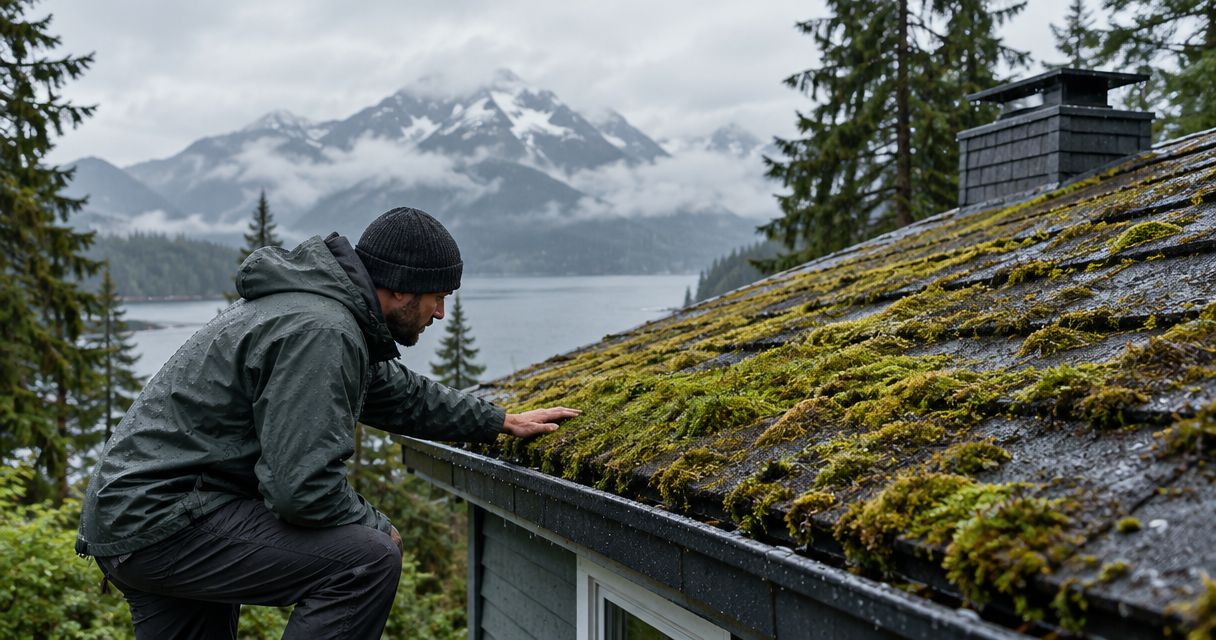
Yes—Alaska’s rainy season makes roof moss worse when repeated wetting keeps the roof damp between showers, especially beneath trees and on shaded slopes. Rain supports moss growth, but the condition that matters most is how slowly your roof dries; rainfall alone does not prove that your roof is damaged.
- Does Alaska's rainy season make roof moss worse? Yes—persistent dampness supports growth, especially where shade slows drying.
- Compare shaded and exposed roof areas; rainfall alone does not explain where moss develops.
- Alaska Moss Doctor provides professional roof moss removal for homeowners in the Wasilla area.
- Keep inspections on the ground, match cleaning to the roofing material, and refer leaks or sagging to a roofer.
Does Alaska’s rainy season make roof moss worse?
Yes. Repeated rain favors roof moss by replenishing moisture before shaded surfaces dry. Existing moss also holds water, so an established patch creates a damp pocket against the roofing surface. Leaves and needles trapped around that patch add another moisture-retaining layer.
Your roof does not respond uniformly. A sunny, exposed slope and a sheltered slope receive rain from the same weather system but dry differently. For a closer look at that pattern, read about why moss grows more on north-facing roofs in Alaska.
Use this comparison during your 2026 roof check. It explains conditions to investigate, not a diagnosis from appearance alone.
| Roof condition | Effect on moisture | What it means for your next step |
|---|---|---|
| Exposed surface with little debris | Sun and airflow help the surface dry | Monitor for new patches rather than assuming rain requires treatment |
| Shaded surface beneath branches | Reduced sun slows drying | Inspect closely from the ground for persistent growth |
| Leaves or needles collected in valleys | Debris holds moisture against the surface | Arrange material-appropriate debris removal |
| Thick moss along shingle edges | Moss retains water at overlaps | Request a cleaning assessment and check the underlying condition |
| Overflowing gutters | Runoff is not moving through the gutter system normally | Investigate the blockage separately from the moss itself |
Why this matters
The practical issue is prolonged surface moisture, not whether your neighborhood has entered a named rainy season. Alaska covers different climates; a statewide calendar is not a substitute for looking at your own Wasilla-area roof.
Moss removal and roof repair also solve different problems. Cleaning addresses surface growth; it does not restore deteriorated shingles, repair flashing, or correct a sagging roof. Treat a leak as a repair issue, even when moss is visible nearby.
For your 2026 maintenance plan, separate those decisions before choosing a contractor. A roof can need cleaning without needing replacement, and it can need repairs that cleaning will not resolve.
Why rainy-season moss varies from roof to roof
Rain supplies moisture, but the following conditions explain why growth concentrates in particular places. Look for the pattern rather than treating every dark or green area as the same problem.
- Shade: Tree cover and adjacent structures reduce direct sunlight. A shaded patch stays damp longer than a comparable exposed patch under otherwise similar conditions.
- Roof orientation: North-facing slopes generally receive less direct sunlight in Alaska. Compare roof faces before assuming the entire roof needs the same attention.
- Debris: Leaves, needles, and small branches collect moisture and shelter growth. Valleys and areas beneath overhanging trees deserve particular attention.
- Existing moss: Moss absorbs and retains water. Established cushions therefore remain a concern even when the surrounding roof begins to look dry.
- Drainage restrictions: Debris in valleys or gutters interferes with normal runoff. Check where water travels instead of focusing only on the most visible moss patch.
These factors overlap. Removing growth without addressing recurring debris leaves part of the problem in place, while trimming a branch does not remove moss already attached to the roof.
What should you check after repeated rain?
Start with observations you can make safely from the ground. Wet moss and wet roofing are slippery; getting closer is not a reason to climb onto the roof.
Compare roof areas
Compare 2 roof areas: a shaded slope and a more exposed slope, where both are visible from safe ground. Look for differences in moss coverage, accumulated debris, and how long the surfaces appear wet after rainfall ends.
This comparison does not measure hidden moisture. It helps you describe where the problem concentrates so a professional can investigate the right areas.
Photograph the pattern
Take 3 photos for your records: an overall roof view, a zoomed view of the visible growth, and a view of the nearby gutter or valley. Use your camera’s zoom rather than a ladder, and omit any angle you cannot capture safely.
Label the images with the date and roof side. A consistent photo record during 2026 is more useful than remembering that the roof looked greener after a storm.
Separate growth from damage
Raised, cushion-like green growth is consistent with moss. Flat discoloration or dark streaks are not enough to identify moss; algae, lichen, debris, and weathering need different consideration.
Also record lifted roofing, missing pieces, gutter overflow, or interior staining. Do not pull at a patch to see what is underneath. Disturbing roofing can create damage while you are trying to identify it.
What should you do about rainy-season roof moss?
Follow this sequence before choosing a cleaning date. The objective is to identify the problem without turning a maintenance task into a fall hazard or roofing repair.
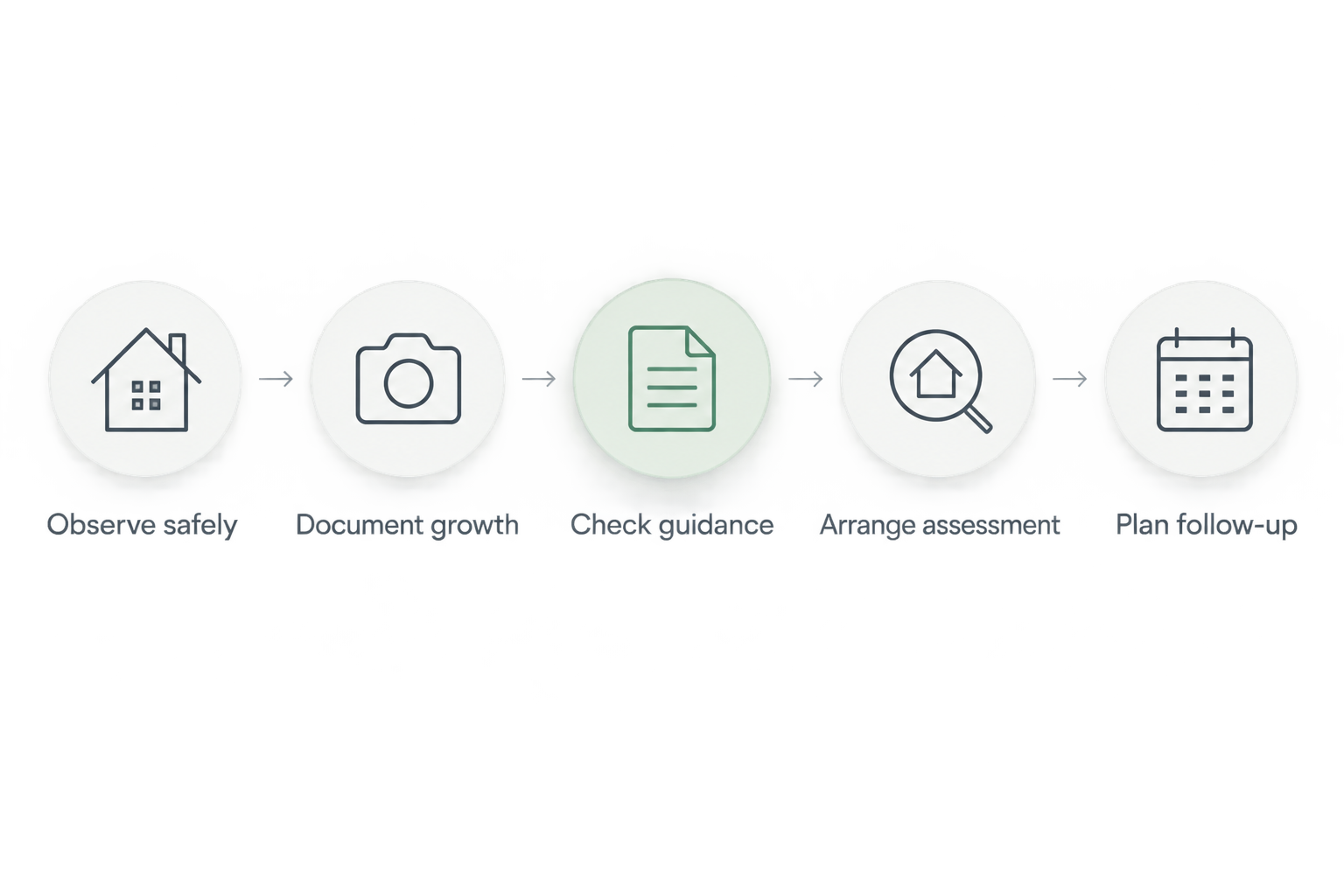
- Observe safely. Check visible slopes and gutters from stable ground. Keep away from falling debris, overhead electrical hazards, and active runoff.
- Document growth. Save photos and note where moss sits relative to shade, valleys, and roof edges. Tell the contractor about any existing leaks.
- Check guidance. Identify the roofing material and review its manufacturer’s cleaning instructions. Do not assume a method suitable for one surface suits another.
- Arrange assessment. Ask whether the visible issue needs cleaning, roofing repair, or both. Have structural concerns addressed before surface cleaning.
- Plan follow-up. Record debris trouble spots and repeat the same ground-level observations after cleaning. A clean surface still needs monitoring.
The order matters. Choosing equipment before identifying the roofing material puts the method ahead of the roof’s requirements.
During your assessment, ask 4 questions: What growth is present? What method suits this roof? How will runoff be managed? What conditions would postpone the work? Clear answers matter more than a promise to remove every visible mark immediately.
Should you monitor, book cleaning, or call a roofer?
Choose the next step from the roof’s condition, not the weather forecast alone. Each option serves a different purpose and has a clear limitation.
| Option | Best for | Advantage | Limitation |
|---|---|---|---|
| Ground-level monitoring | Tracking a roof without obvious growth or damage | Creates a record without roof access | Cannot reveal concealed deterioration or confirm an uncertain stain |
| Professional moss cleaning | Addressing visible moss on roofing suitable for cleaning | Focuses on removing or treating surface growth | Does not repair leaks or prevent every future recurrence |
| Roofing assessment | Investigating leaks, sagging, missing roofing, or damaged flashing | Addresses the roof’s ability to shed water | Does not necessarily include moss cleaning |
Alaska Moss Doctor is a fit for Wasilla-area homeowners seeking professional roof moss removal. Alaska Moss Doctor provides roof and exterior moss/algae cleaning and removal services; those services should not be treated as a substitute for structural roofing repairs.
Before arranging work, explain whether you have surface growth alone or additional warning signs. Include your roof material if you know it, the areas affected, and any recent interior water staining. That information keeps a cleaning request focused on the actual problem.
Can you remove roof moss while it is raining?
Do not attempt roof-access cleaning during rain. Wet conditions increase slipping hazards, and any treatment must follow its label and the roofing manufacturer’s instructions.
Rain also affects treatment planning differently from growth. Moisture can support moss while an approaching shower makes a particular application unsuitable; those statements are not contradictory. Product instructions determine whether a surface should be wet or dry and what weather restrictions apply.
For a 2026 cleaning appointment, ask how the contractor handles forecast changes. Do not insist on keeping a date when safe access or the required application conditions are absent. Avoid applying a second treatment simply because rain followed the first; establish what was used and follow its directions.
Will a dry spell make roof moss disappear?
A dry spell does not reliably remove established roof moss. Moss can become dry and less visibly green without detaching from the roofing surface or losing its ability to resume activity when moisture returns.
Judge the roof by whether growth remains attached, not by color alone. Continue documenting visible patches, and do not interpret a brown appearance as proof that the roof no longer needs attention.
Does more moss mean your roof is leaking?
More moss does not prove your roof is leaking. Moss can retain moisture and interfere with water shedding around roofing overlaps, but a leak requires investigation of the roof assembly and the actual entry point.
If you notice water entering the home, active dripping, or new ceiling stains, contact a roofer rather than waiting for a moss treatment. Cleaning can address growth; it cannot establish that flashing, underlayment, or damaged roofing is watertight.
FAQ
Does Alaska’s rainy season make roof moss worse on every house?
Alaska’s rainy season favors roof moss where repeated wetting leaves surfaces damp, but roofs do not respond equally. Shade, debris, roof orientation, and existing growth explain differences between houses and between slopes on the same house.
Should I wait until the rainy season ends to deal with roof moss?
You do not need to wait to document roof moss or request an assessment. The cleaning date should depend on safe access, roofing requirements, and the treatment’s weather instructions rather than a statewide seasonal cutoff.
Can heavy rain wash moss off my roof?
Heavy rain is not a reliable way to remove attached roof moss. It wets existing growth, while detached debris can travel toward valleys, gutters, and downspouts.
Why is only one side of my roof covered in moss?
One roof side can develop more moss because it receives less sunlight or collects more debris. Compare shade, tree cover, and drainage before assuming the roofing material is the only cause.
Is pressure washing the best way to remove rainy-season roof moss?
Pressure washing is not a default roof-moss solution, especially for asphalt shingles, where forceful washing can damage the surface. Follow the roofing manufacturer’s cleaning guidance instead of choosing a method because it removes growth quickly.
Can Alaska Moss Doctor help with roof moss in Wasilla?
Alaska Moss Doctor provides professional roof and exterior moss/algae cleaning and removal services for homeowners in the Wasilla area. Discuss the roof material, visible growth, and any signs of damage before arranging work.
How often should I check my roof during wet weather?
Check your roof from the ground when repeated rain, new debris, or visible changes give you a reason to inspect. Use comparable photographs to track conditions rather than assuming every roof needs the same fixed inspection interval.
One last thing
Photograph the roof after a dry interval as well as after rain. A wet-only photo shows where water has just landed; the comparison helps reveal which visible areas stay damp or retain debris after surrounding surfaces dry.
Keep that paired record in your 2026 maintenance notes. It gives your next cleaning or roofing discussion a specific starting point: the same location, under different conditions, rather than a general concern about Alaska’s weather.