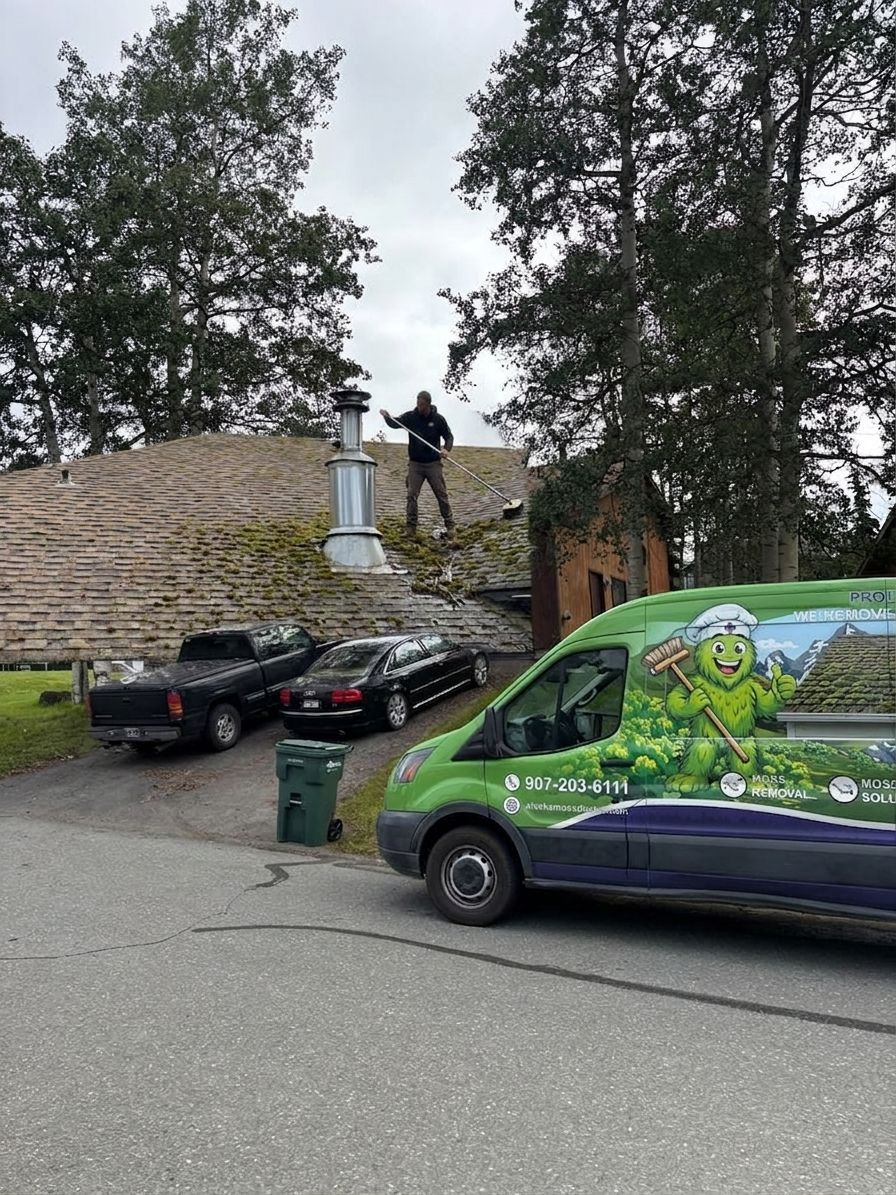
Chimney cap cleaning moss removal is a targeted service for homeowners whose chimney caps, spark arrestor screens, and cap crowns collect moss and algae faster than the rest of the roof, with the goal of protecting draft, flashing seals, and curb appeal without bending the mesh or scratching the metal. Chimneys sit at the highest, most exposed point on a Wasilla roof, so they hold moisture longest after snowmelt and need a different cleaning approach than a flat roof section.
- Chimney cap moss removal needs a soft-wash approach, not a pressure washer, to protect spark arrestor mesh.
- North-facing chimneys in the Mat-Su Valley hold moisture longest and need checks twice a year.
- Bundling chimney cap cleaning with a full roof soft wash treats the valley where the moss actually starts.
- Skipping cap cleaning can restrict draft and trap moisture against metal through freeze-thaw cycles.
- Professional soft washing runs on the same seasonal schedule as roof moss removal for most Wasilla homes.
Why this matters
A chimney cap that's caked in moss isn't just a cosmetic problem. Moss holds water against metal and masonry through repeated freeze-thaw cycles, and in Alaska's climate that cycle runs longer than in most states. Left alone, the moisture works into seams around the crown and flashing, which is exactly where roof leaks near a chimney start.
Homeowners often clean the visible roof field and skip the cap entirely, because it's harder to reach and easier to ignore. That's backwards: the cap and the roof valley directly beneath it are usually the first places moss establishes, since signs of roof moss buildup tend to show up around penetrations before they spread across open shingle field.
Why chimney cap cleaning matters for Wasilla homeowners
Most residential chimney caps are installed following the standard height rule: at least 3 feet above the point where the chimney passes through the roof, and at least 2 feet above any part of the structure within 10 feet. That height isolates the cap from routine foot traffic and from most roof-cleaning passes, so it gets skipped more often than any other roof component.
Spark arrestor screens on most caps use mesh with openings between 3/8 inch and 1/2 inch, per NFPA 211 guidance. Moss and lichen bridge those openings fast in a shaded, moisture-heavy yard, and once the mesh is packed, draft suffers and embers have less clearance to disperse safely. A chimney cap with a moss-choked screen is a draft problem before it's ever a cosmetic one.
Inspect the cap, crown, and spark arrestor screen
Start every cleaning cycle with a close look, not a hose.
- Check the mesh for moss bridging the 3/8 to 1/2-inch gaps
- Look at the crown for hairline cracks where water pools
- Check the flashing seal where the chimney meets the roofline
- Note rust streaks running down the stack, a sign the cap metal is already degrading
- Confirm the cap still sits level and hasn't shifted from wind or ice load
Clear moss and debris from the mesh screen by hand
Mechanical removal comes before any chemical treatment.
- Use a stiff nylon brush, never a wire brush on aluminum or galvanized caps
- Work from the top of the cap downward so debris doesn't pack back into the mesh
- Bag loose moss and needle debris instead of letting it fall into the gutter run
- Check screws and rivets for corrosion while the cap is exposed
- Confirm the damper or draft mechanism moves freely once debris is cleared
Soft-wash the cap and stack exterior
A pressure washer bends spark arrestor mesh out of spec and strips paint off metal caps in seconds. The soft wash method for moss in Alaska's climate uses a low-pressure sprayer and a roof-safe cleaning solution instead of raw water pressure.
- Apply solution at hose-equivalent pressure, never a pressure-washer tip
- Rinse top-down so runoff carries debris away from the crown, not into it
- Cover nearby electrical mast connections before spraying
- Keep overspray off painted siding directly below the chimney
- Let the solution dwell per label instructions before the rinse pass
Treat the surrounding shingles and valleys for algae staining
The roof valley just below the chimney is almost always the second growth site, not a separate problem.
- Check for black streaking running down from the cap base
- Treat algae staining on the shingle field before it spreads uphill again
- Confirm gutter runs below the valley aren't backed up with moss debris
- Note whether staining is algae (black streaks) or moss (raised green mats), since the treatment differs
Protect gutters and downspouts during cleanup
Moss cleared off a cap and stack has to go somewhere, and it usually lands in the gutter directly below.
- Clear gutter runs before starting cap cleaning, not after
- Use a downspout screen during the cleaning pass to catch heavier debris
- Check for standing water in gutter sections near the chimney base
- Flush downspouts once cleaning is finished to confirm flow
Apply a moss-inhibiting treatment after cleaning
Cleaning without prevention means redoing the same work within a season or two.
- Zinc or copper strip treatments along the cap base slow regrowth through runoff
- A post-cleaning treatment application on the surrounding shingle field extends the interval between full cleanings
- Reapply preventive treatment on the schedule the product specifies, not on a guess
Schedule seasonal maintenance checks
One cleaning a year isn't enough for a chimney that sits in shade most of the day.
- Check the cap in spring, right after snowmelt, when moss is easiest to spot
- Check again in fall before the first hard freeze locks moisture in place
- Add a mid-season check for chimneys on north-facing roof sections
- Log each inspection date so you can track how fast moss returns
Comparing your options for chimney cap moss removal
| Option | Best for | Key limitation |
|---|---|---|
| DIY ladder cleaning | Single-story homes with easy, low-pitch roof access | High fall risk on wet or icy shingles; easy to bend spark arrestor mesh with a brush or hose nozzle |
| Local handyman | Quick debris clearing on a low-slope roof | Rarely trained on soft-wash chemistry or NFPA mesh specs |
| Chimney sweep company | Flue and creosote inspection | Cleans the interior flue, not the exterior cap, crown, or moss on the roof around it |
| Professional roof and exterior cleaning company | Full cap-to-eave moss removal handled in one visit | Scheduling has to work around Alaska's short outdoor-cleaning season |
A homeowner set on doing it themselves should still skip the pressure washer on the cap screen — that single mistake causes more repeat cleanings than the moss itself.
Common mistakes Wasilla homeowners make with chimney caps
- Pressure washing the spark arrestor screen. It bends the 3/8-inch mesh out of NFPA spec and lets embers or debris pass through that the screen was designed to stop.
- Cleaning the cap but skipping the roof valley below it. Moss regrows fast because the moisture source under the cap never gets addressed in the same visit.
- Climbing a steep or icy pitch in early spring just to reach the cap, without fall protection, when the roof surface is still wet from thaw.
- Assuming a chimney sweep visit covers moss and algae. Most sweeps clean the flue and check for creosote — exterior growth on the cap and stack is a separate job.
- Using bleach on a metal cap to knock down algae streaking, which strips protective coatings faster than the moss itself damages the metal.
FAQ
What's the best way to clean moss off a chimney cap?
A soft-wash pass with a low-pressure sprayer and a roof-safe cleaning solution is the safest method for a chimney cap in 2026. A pressure washer bends spark arrestor mesh and strips paint off metal caps within seconds.
Is chimney cap moss removal different from roof moss removal?
Yes. The cap sits at least 3 feet above the roof penetration per standard height rules and uses fine mesh screening, so it needs hand-brushing and low-pressure rinsing rather than the broader roof-field treatment used on shingles.
How often should chimney caps be cleaned for moss in Alaska?
Check chimney caps at least twice a year in the Mat-Su Valley, once after spring snowmelt and once before the first fall freeze. North-facing or heavily shaded chimneys often need a mid-season check as well.
Can moss damage a chimney cap or spark arrestor?
Moss packed into a spark arrestor screen restricts draft and holds moisture against the metal through repeated freeze-thaw cycles, which accelerates rust on galvanized and aluminum caps.
Is soft washing safe for metal chimney caps?
Soft washing at hose-equivalent pressure is safe for metal caps when the solution and dwell time follow the product label. High-pressure washing is the method that causes damage, not soft washing itself.
Should chimney cap cleaning be bundled with roof cleaning?
Bundling the two in one visit treats the roof valley beneath the cap, which is usually where regrowth starts. Cleaning the cap alone without treating that valley means the moss often returns within a season.
Does moss on a chimney cap affect a roof warranty?
Some shingle manufacturers list moss and algae growth as a maintenance issue that can affect warranty coverage if left untreated. Check the specific warranty terms for the roofing product installed on your home.
Can I clean a chimney cap myself without a ladder-safety plan?
Climbing to a chimney cap without fall protection on a steep or icy pitch is one of the most common injury causes tied to this task. A stable ladder, roof anchor, and dry conditions are minimum requirements before attempting it.
One last thing
Most homeowners who clean the chimney cap by itself see moss return within a year, because the roof valley directly beneath the cap still holds the moisture source that fed it. Treat the cap and the valley in the same visit in 2026, and the interval between cleanings stretches out considerably. That single sequencing change is the difference between a one-time fix and a recurring problem.