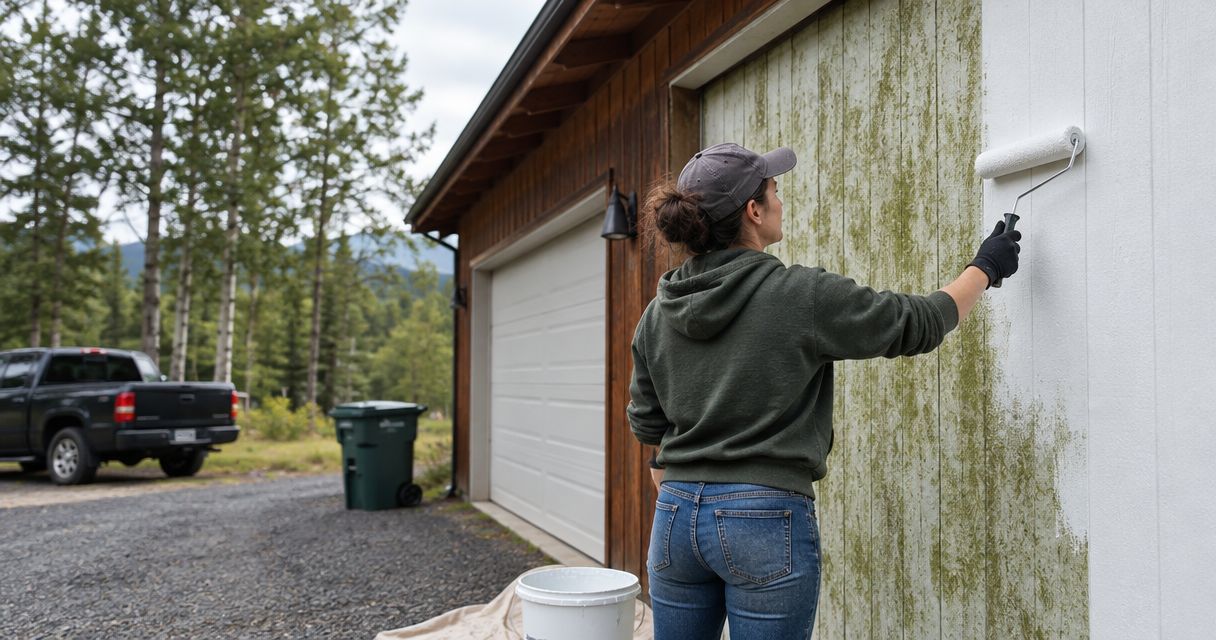
No—you should not paint over algae stains without cleaning first. Remove the growth and cleaning residue, let the surface dry, then assess whether any remaining discoloration needs a compatible primer before painting. A stain-blocking primer can hide residual color, but it cannot replace cleaning or repair a damp, failing surface.
- Can you paint over algae stains? No—clean, dry, and inspect the surface before exterior painting.
- Stain-blocking primer addresses residual discoloration, not algae growth, dirt, or moisture problems.
- Alaska Moss Doctor provides exterior algae removal for homeowners in the Wasilla area.
- For your 2026 project, follow the cleaner, siding, primer, and paint instructions rather than a fixed drying schedule.
Can you paint over algae stains without cleaning first?
No. Paint needs a clean, sound surface—not a layer of growth between the coating and the siding. Covering algae changes the color you see without completing the preparation the new finish needs.
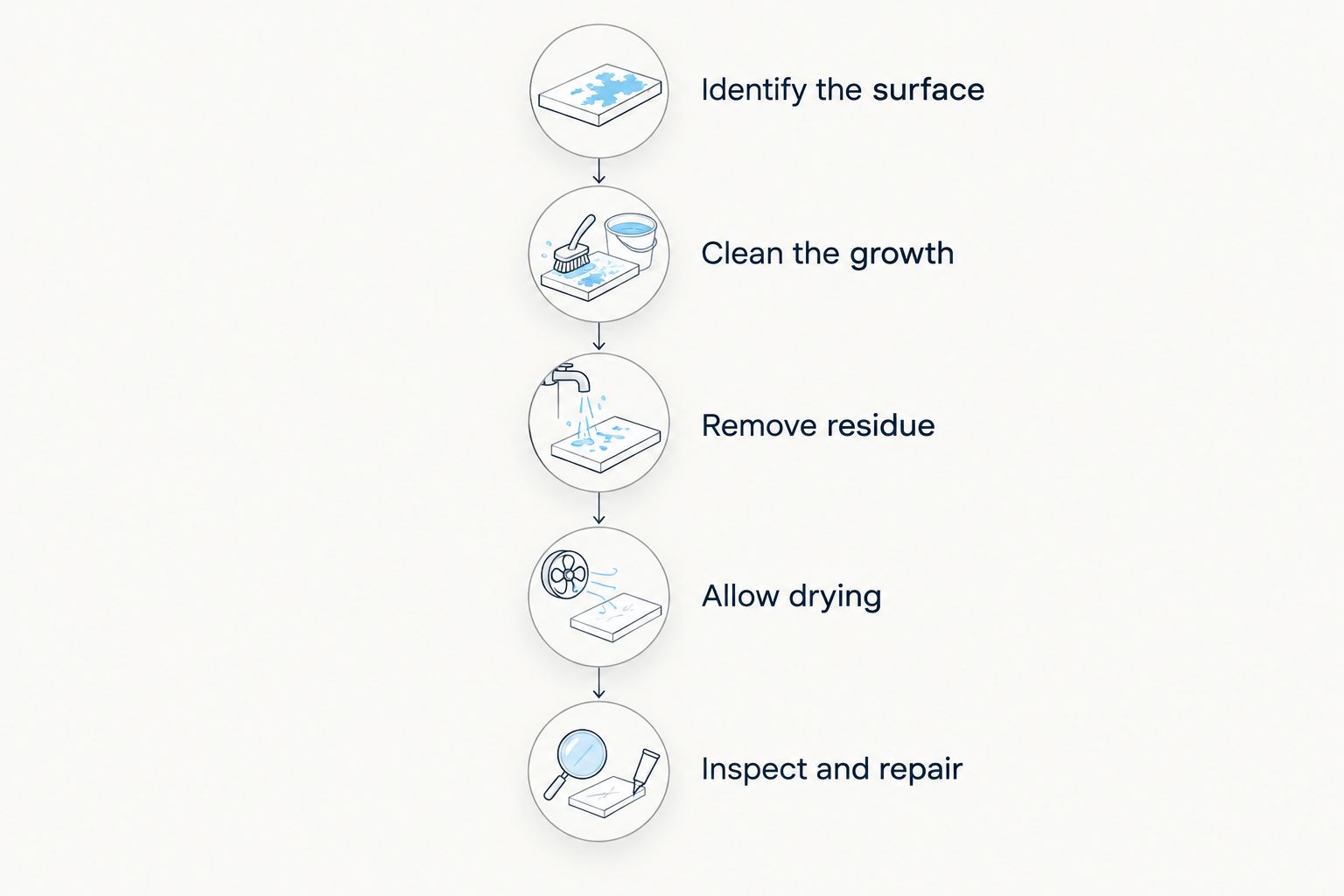
Follow this sequence before you open the paint:
- Identify the surface. Confirm the siding material, existing finish, and whether repainting is appropriate.
- Clean the growth. Use a method and cleaner permitted for that material and coating.
- Remove residue. Follow the cleaner’s rinsing instructions rather than assuming a dry-looking surface is ready.
- Allow drying. Meet the coating manufacturer’s moisture and weather requirements.
- Inspect and repair. Address loose paint, damaged material, and moisture entry before priming or painting.
The distinction is especially important on existing painted siding: cleaning must remove contamination without unnecessarily stripping sound paint. The preparation decisions in how to soft wash a house without damaging paint belong before the repainting decision, not after it.
Why this matters
Paint adheres to the surface directly beneath it. If that surface consists of algae, dirt, chalking paint, or cleaner residue, a fresh coat does not correct the weak layer underneath. Adding more coats does not solve that problem.
For a 2026 exterior project, separate appearance from readiness. A wall can look pale after treatment while still needing rinsing, drying, or repairs. Conversely, a clean wall can retain discoloration that requires a coating decision rather than more aggressive washing.
Alaska Moss Doctor is best for Wasilla-area homeowners seeking professional exterior moss and algae removal. That service addresses the cleaning stage; it does not replace the separate assessment of repairs, primer compatibility, and painting conditions.
Cleaning, priming, and painting solve different problems
Choose the next step based on what remains on the wall, not simply how dark the stain looks. Cleaning removes contamination, primer prepares an appropriate surface for the finish, and paint supplies the specified protective and decorative coating.
| Approach | Best for | What it accomplishes | Main limitation | Verdict |
|---|---|---|---|---|
| Paint directly over growth | Not recommended for algae-covered surfaces | Changes the visible color | Leaves contamination beneath the coating | Skip |
| Clean without repainting | Sound finishes with removable surface growth | Removes growth and dirt | Does not repair peeling paint or damaged siding | Inspect afterward |
| Clean, then prime where required | Clean surfaces with compatible primer needs | Addresses specified adhesion or stain-blocking requirements | Requires correct product selection and a suitable substrate | Use when specified |
| Clean, repair, and repaint | Paintable surfaces with a worn or failing finish | Addresses contamination and coating condition | Requires more preparation than washing alone | Proceed after preparation |
A stain-blocking primer is not automatically necessary across the entire wall. Follow the coating system’s instructions for bare areas, repaired sections, and residual staining. Do not treat a primer label as permission to coat over biological growth.
How do you prepare algae-stained siding for painting?
Start with an inspection from safe access. Look at the stained area and the surfaces above it, including joints, trim, gutters, and downspouts. Repeated wetting needs attention before you put a new finish over the affected area.
Identify the surface
Confirm whether you have painted wood, fiber cement, vinyl, metal, masonry, or another material. Cleaning and repainting instructions differ, and the existing finish also matters.
Do not assume every exterior surface should receive ordinary house paint. Roof shingles, factory-finished panels, and siding systems have their own maintenance requirements. If you cannot identify the material or coating, resolve that uncertainty before selecting a cleaner or paint.
Clean the growth
Choose a cleaner whose label permits the intended use. Test an inconspicuous area and check the result before treating the visible wall.
Protect nearby plants, people, pets, and vulnerable fixtures according to the product instructions. Wear the specified protective equipment, and never mix cleaning products. Stronger mixtures and harder scrubbing are not substitutes for material-compatible preparation.
Remove residue
Follow the cleaner’s directions for application, contact time, and rinsing. Do not let a generic online method override the label on the product you actually use.
Inspect corners, lap edges, and textured areas where material can remain. A change from green to pale does not establish that residue has been removed or that the surface is ready for paint.
Allow drying
Let the substrate reach the condition required by the primer and paint manufacturers. Surface appearance alone does not establish that wood or another absorbent material is sufficiently dry.
For your 2026 schedule, account for shade, recent rain, overnight condensation, and the coating’s application requirements. Do not substitute a universal waiting period for the instructions governing your actual materials.
Inspect and repair
Once the surface is clean, inspect the old coating and underlying material. Loose paint, soft wood, open joints, and other defects require their own preparation or repair decisions.
Do not paint to conceal a condition you have not identified. If cleaning exposes damage, stop the coating work until the cause and repair are clear.
Why preparation varies between algae-stained surfaces
The same green patch does not justify the same treatment everywhere. These factors change the preparation decision:
- Substrate: Wood, masonry, vinyl, and metal require material-specific cleaning and coating choices.
- Existing finish: Sound paint needs different preparation from peeling, chalking, or poorly bonded paint.
- Remaining contamination: Loose growth and cleaner residue must be addressed before you assess residual color.
- Moisture exposure: Leaks, runoff, and persistent dampness need correction rather than concealment.
- Weather conditions: Rain, condensation, and unsuitable application temperatures affect when coating work can proceed.
- Access: Elevated walls and roof-adjacent areas add safety requirements that do not exist at ground level.
For a 2026 repaint, build the schedule around these conditions. A deadline does not make a damp or contaminated wall ready, and a more forceful cleaning method does not make preparation safer.
Can you use primer over algae stains instead of washing?
No—primer does not replace washing when growth or contamination remains. Stain-blocking products address specified discoloration on an appropriately prepared substrate; they are not a general treatment for dirty siding.
After cleaning and drying, inspect the remaining mark. If you cannot tell whether it is residual staining, remaining growth, or a failing finish, resolve that distinction before selecting primer. Repeatedly applying cleaner without identifying the mark can also damage the surface.
Can pressure washing make siding ready to paint?
Pressure washing is a cleaning method, not proof of paint readiness. The wall still needs inspection for remaining contamination, loose coatings, trapped moisture, and damage after washing.
Increasing pressure to chase a stubborn stain introduces a different problem: water intrusion and surface damage. The risks of pressure washing siding matter during paint preparation because a method that removes discoloration can also damage the material you intend to coat. Use the siding and coating manufacturers’ cleaning requirements to set the method.
Keep water away from openings and vulnerable joints, and do not use force to compensate for an unsuitable cleaner. If a test area shows damaged fibers, disturbed coating, or water entry, stop and reassess rather than continuing across the wall.
A pressure washer is not required simply because you plan to repaint. The right preparation method is the one permitted for the surface that removes contamination without creating repair work.
How long should you wait after cleaning before painting?
Wait until the surface meets the primer and paint manufacturers’ drying and application requirements. There is no single waiting period that applies to every substrate, cleaner, and weather condition.
Separate these instructions when planning the work:
- The cleaner’s directions govern treatment and any required rinsing.
- The coating instructions govern acceptable substrate condition and application weather.
- The siding manufacturer’s requirements govern material-specific limitations.
A wall that feels dry at the sunniest spot does not establish that shaded joints and absorbent areas are ready. Where moisture measurement is required, use the appropriate method rather than guessing from touch.
For a 2026 Wasilla-area project, leave room in the schedule for conditions to change. Do not arrange painting around an assumed cleaning-to-paint interval that the selected coating does not support.
When should you hire an exterior cleaning professional?
Professional help is appropriate when the work requires unsafe access, the material is uncertain, or your test cleaning affects the existing finish. Widespread growth and difficult runoff control also warrant a clear cleaning plan before work begins.
Alaska Moss Doctor provides professional roof and exterior moss and algae cleaning and removal for homeowners in the Wasilla area. Its stated role is cleaning and removal; confirm painting preparation requirements separately with the person responsible for the coating work.
Before scheduling either trade, establish the handoff:
- Who selects the cleaning method and checks material compatibility?
- Who confirms that cleaner residue has been addressed?
- Who evaluates drying, coating failure, and repair needs?
- Who decides whether remaining discoloration requires primer?
This prevents a clean-looking wall from being mistaken for a fully prepared painting surface. Cleaning and painting have different acceptance criteria, even when they are part of the same project.
FAQ
Can you paint over algae stains if the wall feels dry?
No—a dry-feeling wall still needs cleaning if algae or other contamination remains. After cleaning, meet the coating manufacturer’s substrate and application requirements before painting.
Will stain-blocking primer kill algae on siding?
Do not use stain-blocking primer as an algae-removal treatment. Remove the growth first, then select primer for the clean substrate and any remaining discoloration according to its label.
Do I need to repaint after algae removal?
Not necessarily; cleaning and repainting solve different problems. Inspect the clean, dry surface and repaint only if the finish condition or your project goals call for it.
Can I use a stronger cleaner to avoid scrubbing?
Use only the concentration and method permitted by the cleaner’s label and the surface manufacturer. Increasing strength without authorization can damage the finish or surrounding materials.
Can I paint roof shingles to cover algae streaks?
Do not treat ordinary exterior paint as a remedy for algae-stained roof shingles. Follow the roofing manufacturer’s maintenance requirements and assess cleaning separately from any approved roof-coating system.
Does algae coming back mean the paint failed?
Returning growth alone does not establish coating failure. Inspect for persistent dampness and surface contamination separately from peeling, blistering, or loss of adhesion.
Does Alaska Moss Doctor provide exterior algae removal in Wasilla?
Yes—Alaska Moss Doctor provides professional roof and exterior moss and algae cleaning and removal for homeowners in the Wasilla area. Confirm the cleaning scope separately from repairs, priming, or painting.
One last thing
Stop using stain visibility as your only readiness test. A pale surface can still carry residue, while a properly cleaned surface can retain discoloration that needs a compatible primer rather than harsher washing.
Before painting, ask a more useful question: is the substrate clean, sufficiently dry, sound, and suitable for this coating? That answer determines the next step—not whether the green patch has disappeared completely.