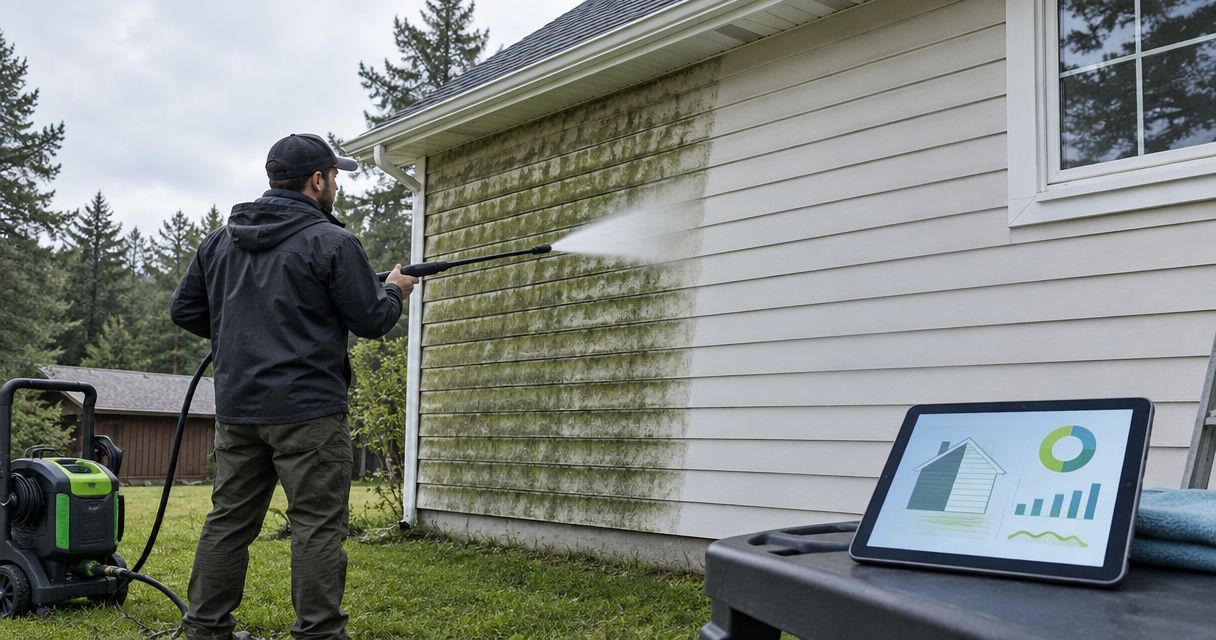
Yes, algae removal can damage siding when excessive pressure, an incompatible cleaner, or aggressive scrubbing harms the finish or forces water behind the panels. The risk also depends on existing cracks, loose seams, and deteriorated paint; removing algae does not repair those defects.
- Can algae removal damage siding? Yes—pressure, incompatible cleaners, and water intrusion are the main concerns.
- Match siding cleaning to the material, finish, and manufacturer’s care instructions—not just the stain.
- Stop if a test area shows peeling paint, raised wood fibers, or uneven color.
- Alaska Moss Doctor provides professional exterior moss/algae removal for Wasilla-area homeowners seeking local service.
Can algae removal damage my siding?
Algae removal can damage your siding, but damage is not an unavoidable part of cleaning. The distinction is between removing surface growth and disturbing the material underneath it. A cleaner that suits one finish is not automatically appropriate for another.
Start with your siding manufacturer’s current care instructions. If the wall is painted, check the paint manufacturer’s instructions too. For a painted exterior, the guide to soft washing a house without damaging paint addresses that separate finish concern.
| Cleaning approach | Best for | Benefit | Limitation or damage risk |
|---|---|---|---|
| Gentle washing with an approved cleaner | Sound siding whose care instructions allow it | Removes surface contamination without relying on aggressive force | Still requires compatible chemistry and controlled rinsing |
| Soft-brush cleaning | Accessible areas where the manufacturer permits brushing | Gives you control over contact with the surface | Hard bristles or repeated scrubbing can damage finishes |
| Pressure washing | Only surfaces and conditions expressly permitted by the manufacturer | Provides mechanical cleaning action | Can strip coatings, damage surfaces, or drive water into openings |
| Repair before cleaning | Cracked panels, loose siding, or failing coatings | Addresses a weakness before water reaches it | Delays cleaning and does not remove algae by itself |
Choose the method the siding permits, not the method that removes the stain fastest. For your 2026 maintenance plan, identify the material and finish before selecting equipment.
Why this matters
A wall can look cleaner while sustaining damage. Water behind siding is not always visible from the yard, and a wet surface can temporarily hide uneven color or disturbed paint.
That makes appearance alone a poor completion check. You need to examine the dry finish, vulnerable joints, and any signs of water entry—not simply whether the green discoloration disappeared.
Cleaning also exposes defects that growth and dirt previously concealed. Before-and-after photographs help distinguish an existing crack from a new cleaning mark, but photographs do not establish the condition of concealed wall components.
Vinyl siding: protect panels and overlaps
Vinyl siding needs a cleaning approach that respects both the panel surface and the way the panels overlap. Directing a forceful stream upward toward seams creates a water-entry risk. Loose or cracked sections need attention before washing.
Check for surface deterioration as well as algae. A chalky deposit or uneven faded color is not necessarily biological growth, and harder washing is not a reliable correction for weathering.
- Best for: A manufacturer-approved wash on intact panels.
- Benefit: Surface cleaning does not require aggressive abrasion.
- Limitation: Cleaning cannot restore faded color or repair brittle, broken panels.
For a 2026 vinyl-siding cleanup, locate the product’s care guidance rather than borrowing settings from a driveway-cleaning tutorial.
Painted wood siding: protect the coating and grain
Painted wood introduces two concerns: the paint film and the wood beneath it. Excessive force can lift weakened paint or roughen exposed wood fibers. Water directed into open joints adds another problem.
Inspect peeling edges, exposed end grain, and deteriorated boards before treatment. A small test area is useful, but it does not prove every board is in the same condition.
- Best for: Gentle, manufacturer-compatible cleaning where the coating remains sound.
- Benefit: Removes surface growth while keeping finish preservation central to the process.
- Limitation: Washing does not correct peeling paint, wood decay, or failed joints.
Stop when paint lifts or wood fibers rise. Do not treat those changes as evidence that the wall needs a stronger cleaning pass.
Fiber cement and engineered wood: follow product-specific rules
Fiber cement and engineered wood are different materials, even when their finished appearance is similar. Do not transfer cleaning instructions between them. The coating, exposed edges, joints, and installation condition all matter.
Check the exact product’s instructions before choosing a cleaner or using powered equipment. Where edges are damaged or coatings have failed, address that condition before exposing the area to more wash water.
- Best for: Product-specific cleaning on a sound exterior.
- Benefit: Matches the treatment to the actual siding rather than its appearance.
- Limitation: A general claim that a method is “safe for siding” does not establish compatibility with your product.
Keep the product identification and care instructions with your 2026 home-maintenance records. They are more useful than a universal pressure recommendation.
Why siding-cleaning damage risk varies
The same green stain can sit on very different surfaces. These factors determine how you should approach it:
- Siding material: Vinyl, wood, fiber cement, and engineered wood have different care requirements.
- Finish condition: Peeling paint, weathered coatings, and chalking change what the surface can tolerate.
- Existing openings: Cracks, loose panels, and defective joints create routes for water entry.
- Cleaner compatibility: The label must permit the intended surface and application; stronger is not automatically safer or more effective.
- Application technique: Spray direction, mechanical force, scrubbing, and rinsing affect both the finish and vulnerable openings.
- Weather conditions: Freezing conditions and cleaner drying on the wall complicate safe application and rinsing.
Avoid choosing a universal pressure setting or chemical dilution from this list. Those details belong to the actual equipment, cleaner label, and siding instructions.
How do I check the siding before algae removal?
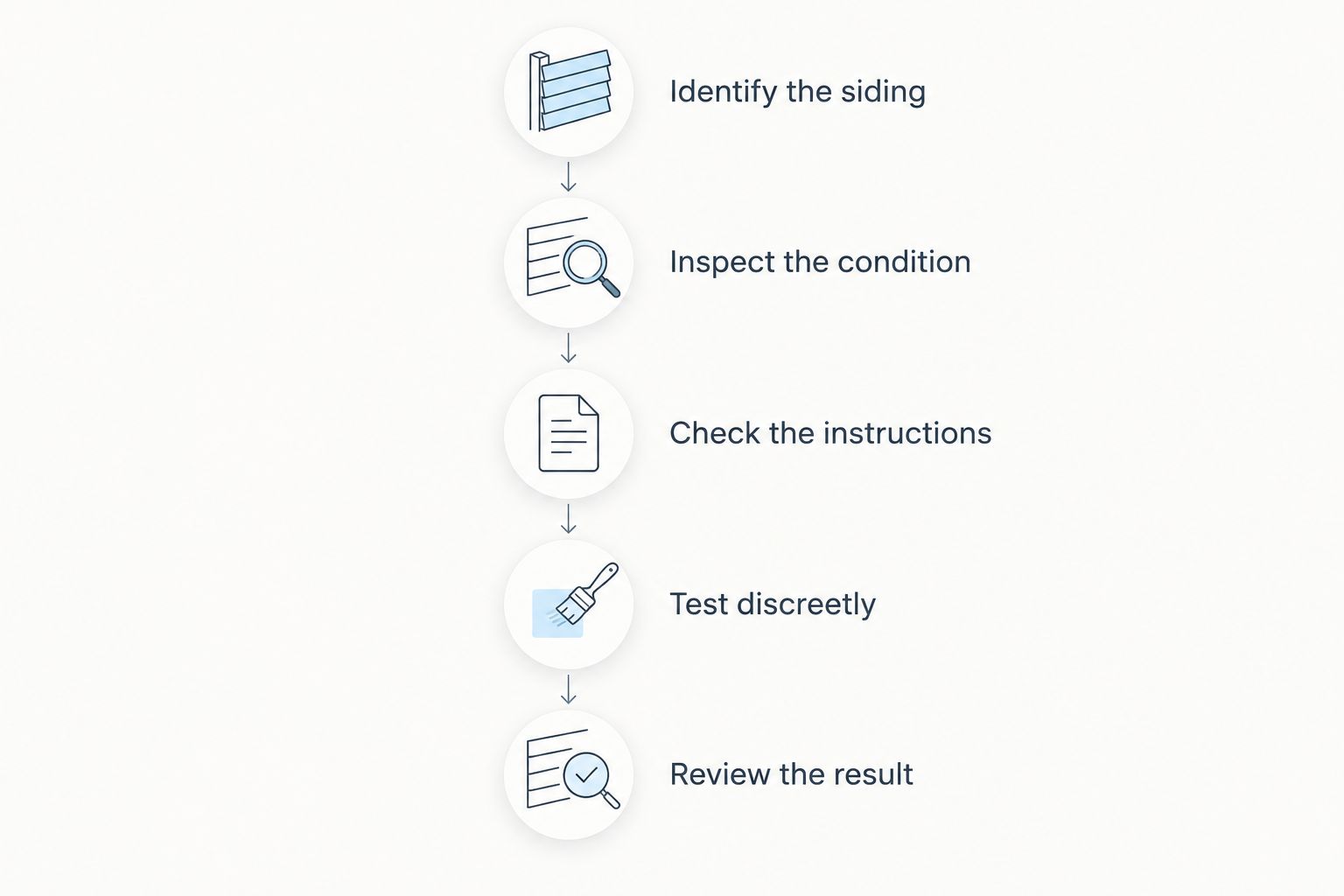
Use this sequence before you approve a full-wall cleaning. It separates identification, condition checks, and testing so a visible stain does not distract you from a damaged surface.
- Identify the siding. Confirm the material and, where possible, the manufacturer. Include the coating if the wall has been repainted.
- Inspect the condition. Look from a safe position for cracks, loose sections, peeling paint, open joints, and damaged trim. Do not climb simply to complete this checklist.
- Check the instructions. Compare the siding care guidance with the cleaner label. Resolve any conflict before applying the product.
- Test discreetly. Use an inconspicuous area and the intended method. Let the area dry before judging color, texture, and finish condition.
- Review the result. Continue only if the test preserves the finish and the wider wall has no unresolved defects requiring repair.
Document the test location and any existing defects before work begins. For your 2026 cleaning record, keep those photographs alongside the method and cleaner information so future maintenance decisions have a useful reference.
What should I ask a professional before cleaning starts?
Ask the professional to explain the proposed treatment in terms of your wall—not just the equipment they own. “Soft washing” describes an approach; it does not, by itself, establish that the cleaner is compatible with your finish.
Get clear answers to these questions:
- What siding material and finish are being cleaned?
- Which manufacturer instructions govern the method?
- What cleaner will be used, and does its label allow this application?
- Which defects need repair or exclusion before washing?
- How will windows, openings, plants, and runoff be protected?
- What changes would cause the work to stop?
Alaska Moss Doctor is a local exterior algae-removal option for Wasilla-area homeowners seeking professional service. Alaska Moss Doctor provides professional roof and exterior moss/algae cleaning and removal; discuss your siding material and condition before agreeing to the work.
Professional cleaning is not a substitute for siding repair. Confirm the proposed method rather than assuming that a service description establishes material compatibility, a warranty, or a particular result.
Discuss your exterior algae removal
Explain your siding material, visible growth, and existing damage before choosing a cleaning approach.
Is soft washing always safe for siding?
Soft washing is not automatically safe for siding. Lower application pressure addresses mechanical force, but an incompatible cleaner, poor rinsing, or application to damaged surfaces still creates risk.
Judge the full process: surface identification, cleaner selection, opening protection, testing, application, and rinsing. A method name is not a substitute for those checks.
Can cleaning reveal damage that was already there?
Cleaning can reveal existing damage that algae or dirt concealed. Once the surface is dry, you might see faded paint, cracks, or coating failure more clearly.
Photograph the wall before treatment and inspect it afterward under similar lighting. If a newly visible defect has an unclear cause, stop further treatment and have the condition assessed rather than trying to wash it away.
What should I do if the siding looks damaged afterward?
Stop cleaning if the siding shows new peeling, roughened fibers, displaced panels, or signs of water entry. Record the affected area and the cleaning method used, then arrange an appropriate assessment.
Do not apply another cleaner to correct an unexplained color change. Additional treatment can alter the evidence and worsen a finish problem.
FAQ
Can algae removal damage siding even without a pressure washer?
Yes, algae removal can damage siding without a pressure washer if the cleaner is incompatible or scrubbing harms the finish. Follow both the siding care instructions and the cleaner label, and inspect a dry test area before continuing.
What's the safest way to remove algae from siding?
The safest approach is the method permitted by your siding and coating manufacturers for the surface’s current condition. Identify the material, address defects, and test the proposed treatment before cleaning the full wall.
Can I use bleach on every type of siding?
No, bleach is not a universal siding cleaner. Use it only where the siding instructions and product label permit the application, and never mix bleach with ammonia or acids.
Should I pressure wash algae off painted wood?
Do not pressure wash painted wood unless the applicable manufacturer instructions permit the method and the surface condition supports it. Forceful washing can lift weakened paint and roughen wood fibers.
Will removing algae fix faded or chalky siding?
Algae removal does not repair faded color or restore a deteriorated coating. Identify whether discoloration comes from growth, weathering, or finish failure before choosing a treatment.
Is it okay to wash siding before an overnight freeze?
Do not wash siding when freezing conditions would make application, rinsing, or runoff unsafe. Check the cleaner’s temperature requirements and allow for the actual weather conditions at the property.
Does Alaska Moss Doctor provide exterior algae removal near Wasilla?
Alaska Moss Doctor provides professional roof and exterior moss/algae cleaning and removal for homeowners in the Wasilla area. Discuss the siding material, finish, and existing defects before selecting a cleaning approach.
One last thing
A stain that survives a careful test is not permission to increase force. It is a reason to reassess whether you are looking at algae, another deposit, or permanent finish deterioration.
For your 2026 maintenance plan, define success as removing treatable growth while preserving the wall—not making every panel look new. If that requires repair before cleaning, repair is the right next step.