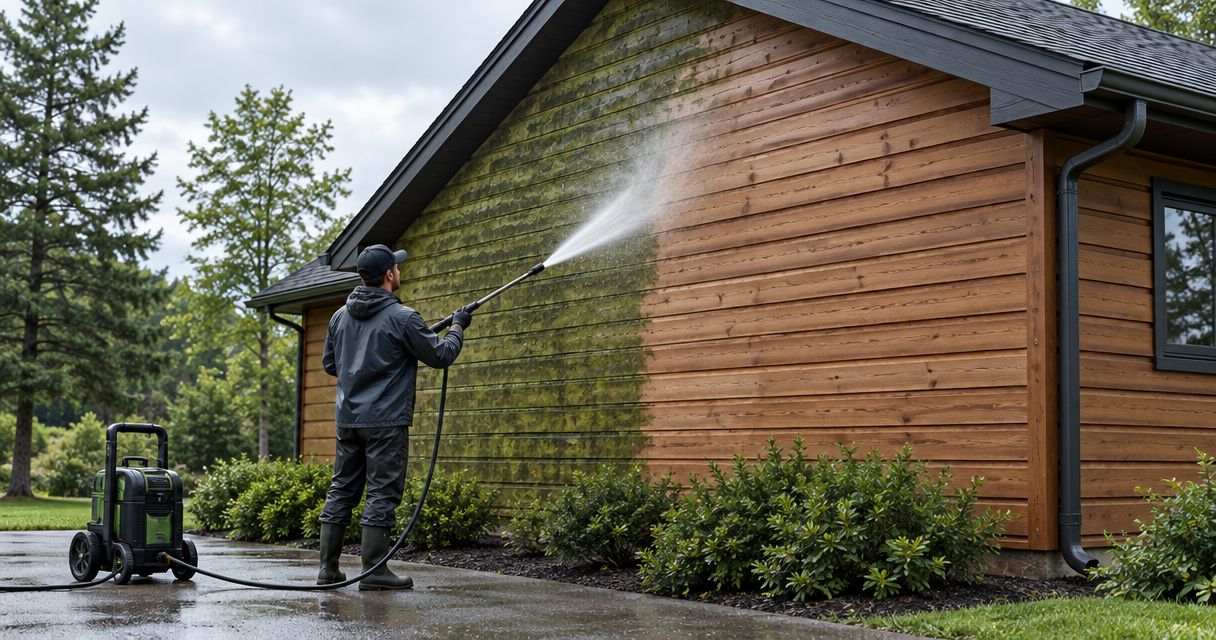
No—algae removal from siding is not permanent; algae can return when the surface stays damp and conditions support new growth. Cleaning removes existing buildup, but it does not permanently change shade, drainage, or exposure to moisture. For your 2026 maintenance plan, treat siding cleaning as a reset followed by prevention—not a one-time cure.
- Is algae removal from siding permanent? No; cleaning removes buildup, but damp conditions can support regrowth.
- Alaskamossdoctor provides professional exterior algae removal for homeowners in the Wasilla area, not permanent immunity from algae.
- Best for reducing recurrence: siding-safe cleaning combined with attention to drainage, shade, and persistent dampness.
- Inspect returning stains before repeating treatment; discoloration alone does not identify the cause.
Is algae removal from siding permanent, or does it come back?
Algae can come back after siding cleaning because removal and prevention solve different problems. Removal addresses what is on the wall now. Prevention addresses the conditions that allow another patch to establish.
Professional cleaning does not turn siding into an algae-proof surface. If you are comparing Alaskamossdoctor exterior algae removal with a do-it-yourself approach, judge the proposed method by siding compatibility, safe access, and the follow-up advice—not a promise that growth will never return.
| Approach | Best for | Main benefit | Main limitation |
|---|---|---|---|
| Siding-compatible cleaning | Removing existing algae buildup | Addresses the current surface problem | Does not eliminate future exposure or dampness |
| Moisture-source correction | Walls repeatedly wetted by runoff or splash | Addresses a condition that supports recurrence | Does not remove existing staining by itself |
| Vegetation management | Walls crowded by nearby plants | Creates clearance and can improve drying | Does not eliminate weather-related moisture |
| Condition-based maintenance | Catching new buildup before it spreads | Directs attention to problem areas | Requires continued observation and occasional cleaning |
These approaches work together rather than replace one another. The practical goal is a clean surface that dries properly, not a permanent chemical barrier.
Why this matters
A clean-looking wall and a corrected moisture problem are not the same result. You can remove visible growth while leaving an overflowing gutter, repeated splash, or dense planting beside the wall unchanged.
That distinction matters when you approve exterior work in 2026. Ask what the cleaning addresses, what remains outside its scope, and what conditions you should monitor afterward. A clear answer is more useful than an unsupported promise about how long every wall will stay clean.
Do not assume returning green discoloration means the siding needs replacement. Start by identifying the material, inspecting its condition, and checking where the wall gets wet. Cleaning, drainage repair, and siding repair are separate decisions.
Why algae comes back on siding
Algae needs suitable environmental conditions to grow. On exterior walls, moisture and the time a surface takes to dry are central considerations; cleaning does not permanently remove either influence.
Check these factors before choosing another treatment:
- Persistent dampness: Notice whether the affected area remains wet after nearby sections have dried. Repeated wetting deserves attention beyond surface cleaning.
- Shade: Compare sheltered sections with exposed sections. Limited direct sunlight can slow drying, although wall orientation alone does not establish the cause.
- Concentrated runoff: Look for gutter overflow, downspout discharge, or water tracking down the same section. A recurring wet path is a useful inspection clue.
- Nearby vegetation: Check whether branches or dense plants touch the siding or crowd the wall. Manage clearance without damaging the building or surrounding plants.
- Surface condition: Peeling coatings, rough areas, and accumulated debris complicate cleaning. Existing damage also affects which methods are appropriate.
These observations help you ask better questions; they are not a substitute for identifying the stain. Green, black, or brown marks can have different causes, and color alone does not confirm algae.
Do not repeat an algae treatment simply because a mark returns in the same place. First check whether you are seeing new growth, remaining discoloration, or another surface problem.
Cleaning removes growth; prevention changes the conditions
A siding-safe cleaning method addresses existing contamination without treating the wall as an indestructible surface. The correct approach depends on the siding material, its finish, its condition, and the manufacturer's care instructions.
Prevention starts outside the cleaning container. Correct repeated wetting where practical, keep drainage functioning, and avoid leaving vegetation pressed against the wall. Those changes do not guarantee an algae-free exterior, but they address conditions a wash alone leaves untouched.
Siding-compatible cleaning: best for existing buildup
Choose a method approved for your siding and coating. Follow the cleaner's label, including its application, contact, rinsing, and protective instructions; do not substitute a homemade concentration for the stated directions.
The benefit is direct: cleaning targets the material already on the wall. The limitation is equally important: a successful wash is not evidence of permanent protection. Ask separately whether any claimed continuing protection is documented for that product and use.
Moisture correction: best for recurring wet spots
Look beyond the stained panel. Water arriving from above or splashing from below can keep the same area wet after cleaning.
Correcting that source addresses an underlying condition, but it does not erase existing algae or repair damaged siding. If you find an open joint, failed flashing, or another suspected building defect, arrange an appropriate assessment rather than concealing it with another wash.
Condition-based maintenance: best for targeted follow-up
Inspect the areas that previously developed growth and compare them with your after-cleaning photographs. Revisit the same locations when you notice persistent wetting or visible changes.
This approach avoids treating every wall as though it has the same exposure. Its limitation is that observation still requires follow-through: a maintenance plan only helps when someone acts on drainage problems, damaged finishes, or confirmed new buildup.
A practical plan to reduce algae recurrence
Use this sequence to separate cleaning decisions from moisture and repair decisions. For a 2026 siding inspection, a simple written record is enough; you do not need a complicated maintenance system.
- Identify the siding. Confirm the material and finish before selecting a cleaner or washing method. Consult the manufacturer's maintenance instructions rather than assuming all exterior panels tolerate the same treatment.
- Check the moisture. Observe the affected wall during safe conditions after rain. Note runoff paths, splash zones, crowded planting, and areas that remain damp.
- Choose compatible cleaning. Match the product and application method to the surface. Include access, nearby plants, openings, and runoff control in the plan.
- Address the source. Correct drainage or vegetation issues within your ability, and arrange qualified help for building defects or unsafe work. Cleaning is not a repair method.
- Record the result. Photograph the dry wall after cleaning and label the location and date. Use those images to assess later changes instead of relying on memory.
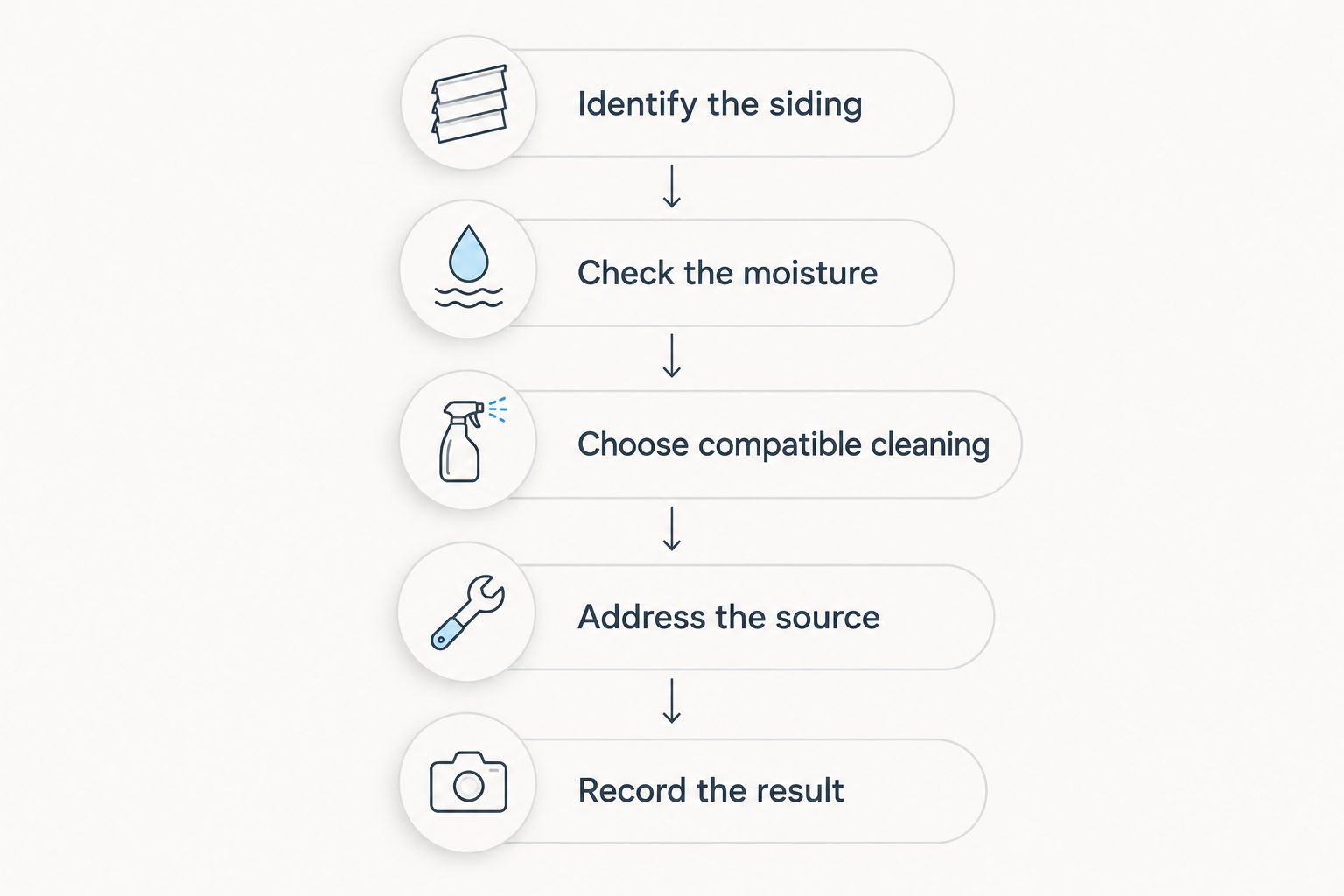
Keep the record specific to the wall. A photograph labelled with its location is more useful than a general note that the house was washed. Include any remaining marks so you can distinguish unchanged discoloration from a later development.
Can you prevent algae permanently with stronger chemicals?
A stronger chemical mix is not a substitute for correcting persistent dampness. Product concentration must follow the label and the siding manufacturer's restrictions, not a desire to make the result last indefinitely.
More aggressive treatment introduces a separate question: whether the method is safe for the finish, surrounding materials, landscaping, and runoff destination. Never mix cleaning products unless their labels explicitly direct that combination.
Pressure is not a permanence setting, either. Excessive force or poorly directed spray can damage finishes or drive water into vulnerable areas. Review whether algae removal can damage siding before deciding that a harder wash is the answer.
For any treatment proposed in 2026, ask for the product name, its intended use, and the applicable maintenance instructions. A claim about continuing protection should match the product documentation, not merely the appearance of the freshly cleaned wall.
How long will siding stay clean after algae removal?
There is no universal algae-free interval for siding. Exposure, drying conditions, drainage, surface condition, and the cleaning method all affect what happens afterward.
Do not turn a suggested inspection date into a guarantee of performance. An inspection schedule tells you when to check; it does not establish when algae will return or prove that every wall needs another wash.
Ask the cleaner to identify the areas most likely to need attention and explain what changes should trigger a follow-up. For your 2026 maintenance record, document observations rather than assigning an unsupported lifespan to the cleaning.
Does returning algae mean the first cleaning failed?
Returning algae does not automatically mean the first cleaning failed. New growth after a documented clean result is different from buildup that remained immediately after the work.
Compare photographs, locations, and the surface's condition when dry. If the same marks were present from the start, ask what they are and whether further cleaning is appropriate; do not assume another application will remove them safely.
A service agreement can help distinguish the intended cleaning result from any separately stated follow-up coverage. Read the actual terms rather than assuming that professional work includes permanent prevention.
When should you choose professional algae removal?
Alaskamossdoctor exterior algae removal is best suited to Wasilla-area homeowners seeking professional cleaning help. The company provides roof and exterior moss/algae cleaning and removal services; professional help does not change the fact that an exterior wall remains exposed to moisture.
Choose professional assistance when access is unsafe, you cannot identify a compatible method, or the wall's condition raises concerns. The advantage is having the cleaning handled as a service rather than improvising a treatment yourself. The limitation remains: cleaning alone does not repair drainage, failed coatings, or building defects.
Before authorizing work, ask:
- Which siding material and finish does the proposed method suit?
- What existing damage or staining falls outside the cleaning scope?
- How will nearby plants, openings, and runoff be handled?
- What should you inspect after the wall dries?
- What does any written follow-up coverage actually include?
FAQ
Is algae removal from siding permanent?
No, algae removal from siding is not permanent. Cleaning addresses existing buildup, but algae can return when moisture and other suitable conditions remain.
What's the best way to keep algae from coming back on siding?
The best approach combines siding-compatible cleaning with attention to persistent dampness. Check drainage, runoff, vegetation clearance, and the condition of the wall rather than relying on repeated washing alone.
Does algae coming back mean my siding was cleaned incorrectly?
Returning algae does not by itself prove incorrect cleaning. Compare the dry after-cleaning result with later photographs to distinguish remaining discoloration from new buildup.
Will pressure washing stop algae permanently?
No, pressure washing does not make siding permanently algae-proof. The method must suit the material and finish, and it does not correct shade or repeated wetting.
Can I use a stronger cleaner to make algae removal last longer?
Do not increase cleaner concentration beyond the product label to pursue a longer-lasting result. Follow both the label and the siding manufacturer's care instructions.
Do I need to replace siding if algae keeps returning?
Recurring algae alone does not establish that siding needs replacement. Inspect the material, finish, and moisture sources before deciding whether cleaning or repair is appropriate.
Does Alaskamossdoctor provide algae removal near Wasilla?
Alaskamossdoctor provides professional roof and exterior moss/algae cleaning and removal services for homeowners in the Wasilla, Alaska area. Ask about the proposed scope and method for your specific siding.
One last thing
The most useful after-cleaning photograph is the one you can repeat. Stand in the same place, capture the same section, and compare the wall when dry so wetness does not distort the result.
Start that record in 2026 and include the troublesome corner, downspout area, or shaded section—not just the best-looking view of the house. A repeatable comparison helps you decide what needs attention without guessing that every returning mark requires another whole-house wash.