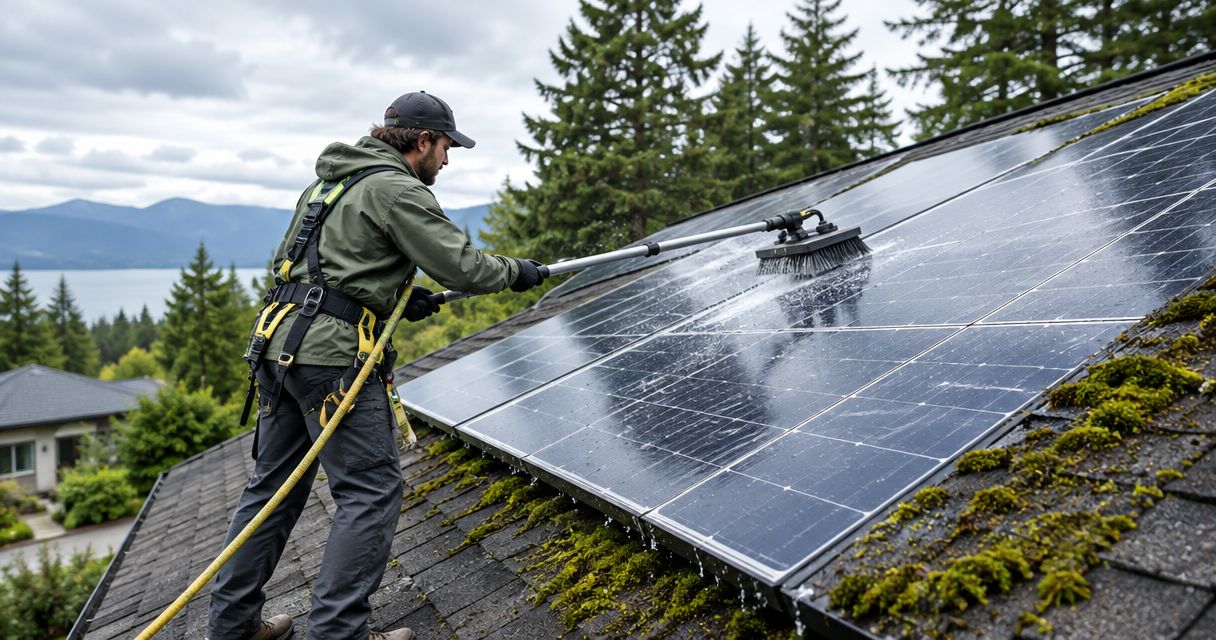
Yes, roof moss removal can damage solar panels if cleaning involves abrasive tools, concentrated spray, incompatible chemicals, or contact with wiring and mounts. Protecting the glass alone is not enough: a safe cleaning plan must also protect the roof, electrical components, and mounting penetrations while following the roof and solar manufacturers’ instructions.
- Can roof moss removal damage solar panels? Yes—abrasion, incompatible chemicals, and misdirected spray create avoidable risks.
- Solar panels need a separate protection plan; a roof-safe treatment is not automatically panel-safe.
- Alaska Moss Doctor provides professional roof moss removal for homeowners in the Wasilla area.
- Leave panel removal, electrical troubleshooting, and damaged wiring to qualified solar professionals.
Why this matters
Solar panels change how a roof cleaner reaches moss, moves equipment, and controls runoff. A section of roof that looks accessible from the ground can contain cables, connectors, mounting hardware, and flashing beneath the array.
Treat roof moss removal and solar-panel cleaning as separate scopes of work. For a 2026 maintenance visit, identify who handles each scope before anyone brings equipment onto the roof. The same distinction applies when planning soft-wash roof cleaning for solar-panel roofs: the method’s name does not establish compatibility with your equipment.
Can roof moss removal damage solar panels during cleaning?
Yes. Damage can result from the cleaning method, equipment handling, or attempts to reach moss underneath the array. The practical question is whether the proposed work follows the instructions for every surface and component it will contact.
| Cleaning situation | Main concern | Better decision |
|---|---|---|
| Concentrated spray near panel edges or connections | Water directed at vulnerable components | Keep spray away from electrical connections and follow equipment instructions |
| Scraping or aggressive brushing against panels | Scratched surfaces or damaged components | Keep roof-removal tools off the array |
| Roof-treatment overspray on panels | Unconfirmed chemical compatibility | Verify compatibility before application and control drift |
| Walking or placing equipment on panels | Mechanical damage | Keep body weight, ladders, hoses, and tools off panels |
| Reaching blindly underneath the array | Contact with hidden wiring or mounts | Stop where access and visibility are inadequate |
| Removing panels to expose moss | Electrical and mounting work beyond cleaning | Coordinate removal with a qualified solar professional |
A panel’s weather resistance does not mean every cleaning technique is acceptable. Rain exposure and a directed cleaning jet are different conditions; do not use outdoor installation as proof that pressure washing is permitted.
The roof also needs protection. Scraping moss aggressively around mounting feet can disturb roofing or flashing even when the panel glass remains untouched. An undamaged-looking array does not prove the roof-cleaning method was safe.
What should happen before cleaning starts?
Use these 5 checks for your 2026 cleaning plan. They define the job without turning a homeowner’s inspection into rooftop or electrical work.
1. Identify the equipment
Find the panel manufacturer, model information, installer details, and any available maintenance instructions. Ask the cleaner to review the roof material as well; approval for a panel surface does not establish approval for shingles, metal, or other roofing.
Do not substitute a generic cleaning recommendation for the instructions covering your actual equipment. If compatibility remains unresolved, exclude the affected area until the right professional answers the question.
2. Document the starting condition
Use ground-level photographs and existing monitoring information to record visible conditions before work. Note existing alerts, obvious panel damage, loose-looking components, and any known roof leaks without climbing up for a closer look.
Photographs establish a visual baseline, not an electrical inspection. Ask a solar professional to investigate electrical concerns rather than expecting the roof cleaner to diagnose them.
3. Define the work boundary
Write down whether the job covers exposed roof areas, accessible roof edges beside the array, panel surfaces, or areas beneath panels. Each inclusion needs an appropriate method and a clear person responsible.
Moss beneath an array is not permission to push a tool underneath it. Where cleaning requires lifting modules, moving cables, or disturbing mounting hardware, separate that work from routine moss removal.
4. Confirm protection and runoff controls
Ask how the crew will keep tools, hoses, treatment, and debris away from the array. The answer should address application direction and access—not just promise to be careful.
Runoff deserves its own discussion. A roof treatment applied upslope can travel toward panels or roof penetrations, so protecting only the area directly beside the spray nozzle leaves part of the job unplanned.
5. Agree on stop conditions
Stop conditions should include damaged glass, exposed or damaged wiring, unsecured components, unclear chemical compatibility, and access that requires contact with the array. Unsafe footing or unsuitable weather also means postponing the work.
Agree on who receives the call when a stop condition appears. A clear handoff prevents a cleaning crew from improvising electrical repairs or dismantling equipment to finish a section.
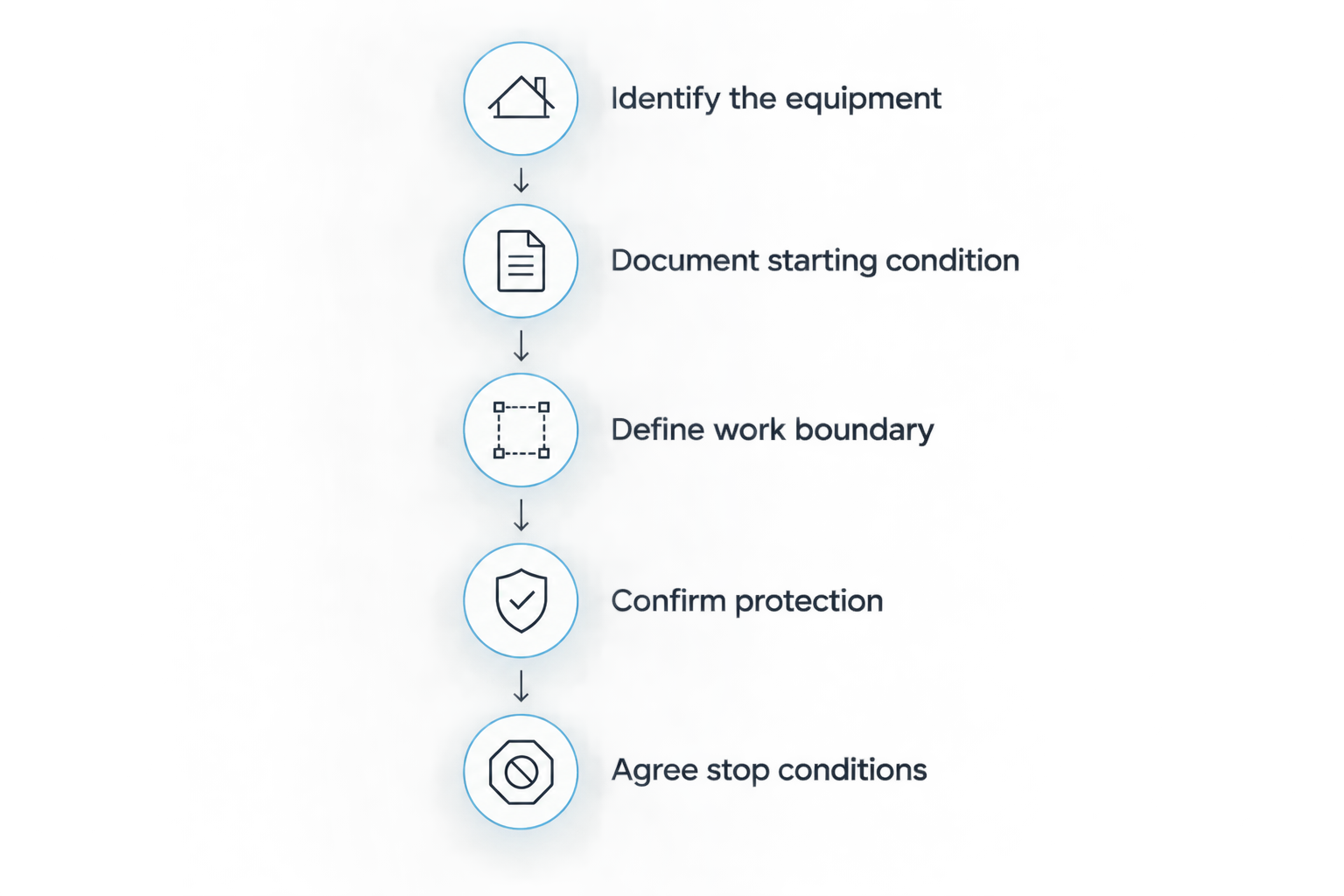
These checks are decision gates, not instructions for climbing onto a roof. You can gather documents and discuss the scope from the ground; qualified workers must assess rooftop access and electrical hazards.
Why the risk varies from roof to roof
Your 2026 cleaning specification should reflect the actual installation rather than a standard promise that every solar roof receives the same treatment. These factors change what workers can safely reach and which methods are acceptable:
- Equipment instructions. Panel, mounting, and roofing requirements determine the acceptable treatment and handling limits.
- Existing condition. Cracked glass, damaged cable insulation, loose components, or deteriorated roofing require assessment before cleaning.
- Array layout. Tight clearances and concealed areas limit visibility and access around moss.
- Roof access. Pitch, footing, and equipment routes determine whether workers can avoid loading or touching panels.
- Treatment path. Spray drift and runoff affect surfaces beyond the intended application area.
- Weather conditions. Wind, freezing conditions, and slippery surfaces affect application control and worker safety.
Do not ask for a universal spray distance or pressure setting. A number detached from the nozzle, equipment, roof material, and manufacturer’s instructions does not establish a safe method.
Which approach fits the location of the moss?
Choose the scope by access and compatibility, not by how quickly the roof will look clean. These options serve different situations, and each has a limitation.
| Approach | Best for | Advantage | Limitation |
|---|---|---|---|
| Roof-only cleaning with array exclusions | Accessible moss outside the solar installation | Keeps the job focused on reachable roofing | Leaves excluded or concealed growth unresolved |
| Coordinated roof cleaning and solar service | Moss requiring access beneath panels | Assigns electrical and mounting work to the appropriate professional | Requires coordination between separate work scopes |
| Deferring the affected section | Unresolved damage, access, or compatibility questions | Avoids proceeding with an unverified method | Does not remove the moss until the issue is resolved |
Roof-only cleaning is appropriate only where the crew can protect the array while following roofing requirements. Its boundary should be visible in the written scope, not discovered after the crew arrives.
Coordinated service becomes relevant when access requires panel removal or electrical work. Do not assume a roof-cleaning agreement includes either task; ask who is responsible for removal, reinstallation, and any required inspection.
Deferral is the right decision when the alternative is guessing. Record the excluded location and the condition that must be resolved before work resumes.
What electrical precautions belong in the cleaning plan?
Switching off household power does not establish that a solar array is electrically safe to touch. Solar modules generate electricity in light, and shutdown procedures depend on the installed system. Do not disconnect connectors or experiment with switches to prepare for cleaning.
The hazard behind pressure washing near electrical fixtures also applies around rooftop solar equipment: a cleaning jet must not become a way to test whether an enclosure, cable entry, or connection resists water. Identify electrical components before selecting a spray path, and keep the cleaning scope away from damaged or uncertain equipment.
Ask the installer or a qualified solar professional whether the planned work requires a system-specific shutdown procedure. The roof cleaner should know the resulting restrictions without being expected to perform electrical work outside the agreed scope.
Do not improvise plastic wrapping over electrical components as a substitute for an approved protection method. If a connection is damaged, exposed, or in the cleaning path, stop and resolve the issue before washing nearby.
Is soft washing automatically safe for solar panels?
No—soft washing does not automatically establish solar-panel compatibility. Lower application pressure does not answer whether the chemical, contact time, rinsing method, or overspray is acceptable for your specific equipment.
Ask for the proposed product and method before approving your 2026 work order. A roof-safe label or a general description such as gentle cleaning is not a substitute for checking the relevant instructions.
Should solar panels come off before moss removal?
No—solar panels do not automatically need removal when moss is accessible outside the array. Removal becomes a separate decision when concealed growth cannot be reached without disturbing panels, wiring, or mounts.
Have a qualified solar professional assess that access problem. Do not let the desire for complete moss removal turn a cleaning visit into unplanned electrical or mounting work.
Can the cleaner walk on panels to reach moss?
No—solar panels should not serve as a walking surface or equipment platform during roof moss removal. The access plan must keep workers and their equipment off the array.
If the only proposed route crosses panels, reject that route and ask for another access plan. An unreachable section needs a different scope, not an exception made on the roof.
What should Wasilla homeowners ask a cleaning company?
Alaska Moss Doctor is for Wasilla homeowners seeking professional roof moss removal. Roof cleaning, however, does not replace solar electrical service; make that boundary explicit when discussing work around an array.
Before you schedule roof moss removal, describe where the moss sits relative to the panels. Share available equipment instructions and disclose known alerts, damage, or leaks so the scope discussion starts with the actual conditions.
Ask these questions before authorizing the job:
- Which roof areas are included, and which are excluded?
- What treatment and application method will contact each surface?
- How will workers keep equipment and runoff away from solar components?
- What conditions require stopping and contacting the solar installer?
Alaska Moss Doctor provides roof and exterior moss/algae cleaning and removal services. Keep any request for panel removal, electrical diagnosis, or solar repairs separate unless those responsibilities are explicitly confirmed by the appropriate provider.
What should you record after the work?
Keep 3 records with your 2026 maintenance documents: the agreed scope, completion photographs, and notes about excluded or unresolved areas. These records explain what the visit covered without implying that cleaning certified the solar system’s condition.
Check your monitoring system for new alerts and look for visible changes from a safe location. A production change alone does not prove cleaning damage because sunlight and weather also affect output; report concerns with the timing, photographs, and any alert messages.
If water enters the home, glass appears damaged, or an electrical warning appears, contact the appropriate roofing or solar professional. Do not climb up to investigate wet electrical components yourself.
FAQ
Can roof moss removal scratch my solar panels?
Yes, abrasive tools or debris dragged across solar panels can scratch their surfaces. Keep roof-scraping equipment off the array and follow the panel manufacturer’s cleaning instructions.
Is low-pressure roof washing safe around solar panels?
Low pressure alone does not establish safety around solar panels. The cleaning plan must also address chemicals, electrical components, equipment handling, and runoff.
Can roof moss treatment spray get on solar panels?
Do not allow roof moss treatment onto solar panels unless compatibility with the specific equipment and application method is confirmed. Control both spray drift and runoff from roof areas above the array.
Do I need to turn off my solar panels before roof cleaning?
Ask your solar installer or a qualified solar professional whether the planned cleaning requires a system-specific shutdown procedure. Turning off household power does not make illuminated solar modules electrically safe to touch.
Should I remove moss underneath solar panels myself?
Do not reach blindly beneath solar panels to remove moss. Hidden wiring and mounting components make that an access problem for the appropriate professionals, not a scraping task.
Does roof moss removal include cleaning the solar panels?
Roof moss removal does not automatically include solar-panel cleaning. Ask for separate written scopes identifying the surfaces, methods, exclusions, and responsible provider.
Does Alaska Moss Doctor provide roof moss removal in Wasilla?
Alaska Moss Doctor provides professional roof and exterior moss/algae cleaning and removal services for homeowners in the Wasilla area. Discuss the solar installation and any access restrictions before agreeing to a cleaning scope.
One last thing
The most important exclusion can be the patch of moss nobody can safely reach. Leaving that section documented for coordinated follow-up is better than hiding an access problem behind a promise to clean everything.
Before approving a 2026 visit, ask the cleaner to explain what will remain untouched and why. A clear answer gives you a usable maintenance plan—not just a cleaner-looking roof.