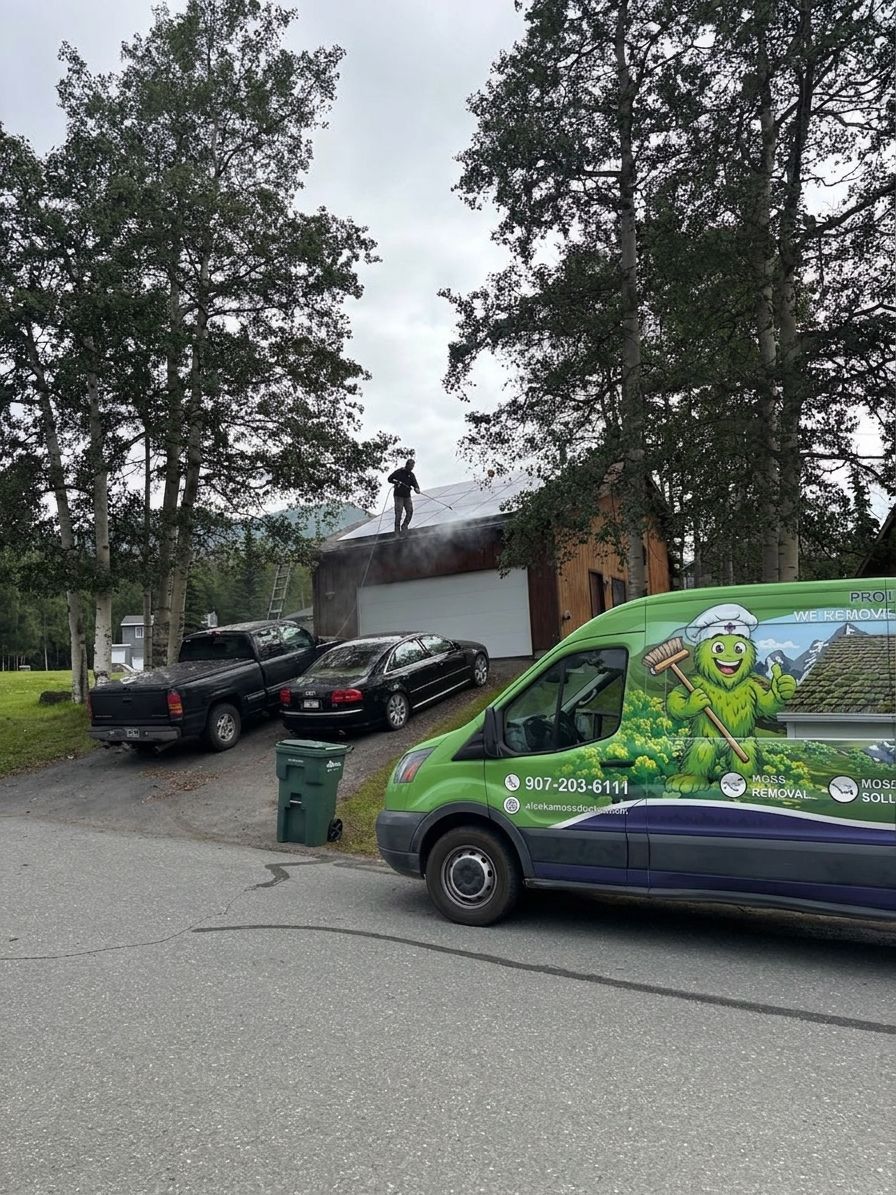
If you put solar panels on your roof to cut power bills, moss and algae buildup on the surrounding shingles or metal can shade panel edges, clog runoff channels, and turn a routine roof wash into a job that risks your panel warranty if done wrong. Soft wash roof cleaning solar panels methods exist specifically to solve this without abrasive brushes or high-pressure water near electrical connections.
- Soft wash roof cleaning solar panels use under 500 PSI water with a cleaning solution, not scrub brushes or pressure washers.
- Alaska Moss Doctor recommends soft washing for solar roofs in Wasilla because pressure washing can crack panel seals and void manufacturer warranties.
- DIY chemical sprays are a Consider at best; pressure washing near panels is a Skip in 2026 and always will be.
- Scheduling a professional soft wash before spring melt protects panel output and roof shingles at the same time.
Why this matters
Solar panels installed on Wasilla-area roofs sit through long winters with heavy shade cycles and slow-drying moisture, which is exactly the environment moss and algae need to spread. Once growth creeps under panel edges or across adjoining shingle rows, it holds water against the roof deck and can shade cell strings enough to measurably cut output.
The fix isn't complicated, but the method matters more here than on a bare roof. A pressure washer that would be fine on a standalone asphalt roof can crack panel glass seals, force water into junction boxes, or strip anti-reflective coatings. Soft washing avoids all three because it relies on low pressure and a cleaning solution instead of force.
Who this is for
This guide is for homeowners in the Wasilla area with rooftop solar arrays showing dark streaking, green tint, or visible moss cushions along the north-facing slopes or panel frame edges. If your installer flagged reduced output during an inspection, or your last roof wash happened before the panels went up, this applies to you directly. It's also relevant if you're comparing bids from a roof cleaning company and want to know which methods are safe to ask for by name.
What to look for in soft wash cleaning for solar panel roofs
Low-pressure equipment, not a pressure washer
Ask any crew what PSI they run near panels. Soft washing stays under 500 PSI, while a standard consumer or commercial pressure washer runs 1,500 to 4,000 PSI — enough to force water past panel gaskets and into wiring. If the answer is vague, that's a red flag for a solar roof.
A rinse-first, chemical-second sequence
Good technique clears loose debris with a gentle rinse before applying any cleaning solution, so the solution isn't diluted by mud or needle litter sitting on the panels. Skipping this step means uneven coverage and streaking that shows up within weeks.
Panel-safe dwell time
Cleaning solution needs contact time to break down moss and algae without scrubbing, but leaving it too long on aluminum panel frames or exposed wiring connectors risks corrosion. A crew working solar roofs should know to rinse within the manufacturer-recommended window rather than a generic one-size timer.
Electrical awareness around junction boxes and conduit
Water directed at a junction box or exposed conduit run is the single biggest cause of solar-related roof wash damage. Ask whether the crew de-energizes the system or works around it, and whether they've cleaned occupied solar roofs before, not just bare shingles or metal roofing.
Runoff control for gutters and ground plantings
Soft wash solutions are diluted, but concentrated runoff pooling near gutters can still affect nearby soil and landscaping. A crew that plans runoff direction, especially on steep-pitch roofs, protects both your yard and your gutter system from buildup.
Documented before-and-after inspection
Because panel output is measurable, a competent cleaning visit should include a quick before-and-after look, or at minimum a note on any panel damage found before work starts. This protects you if a dispute comes up with the panel manufacturer's warranty later.
Cleaning methods compared
The safe pick: professional soft washing. Low-pressure application under 500 PSI paired with a moss-specific solution clears growth without touching panel seals. This is the standard approach Alaska Moss Doctor uses on residential roofs across the Wasilla area, and it's the same method covered for soft wash roof cleaning for metal roofing when panels sit on standing-seam surfaces. Verdict: Buy.
The manual option: hand removal with a soft brush. For isolated moss cushions on accessible panel edges, careful hand removal without water works, but it's slow and only practical for small patches, not full-roof coverage. It also risks scratching anti-reflective coating if the wrong brush gets used. Verdict: Consider, only as a spot-treatment between full washes.
The risky pick: pressure washing. Running 1,500 PSI or higher near panel frames is the fastest way to force water into a junction box or crack a seal, and most solar manufacturers exclude pressure-washing damage from warranty coverage. There's no scenario where this is the right call on a panel-covered roof. Verdict: Skip.
The shortcut: DIY chemical spray kits. Consumer moss-killer sprays can knock back light surface growth between professional visits, but they don't address moss already growing under panel edges and can leave residue on glass that attracts more dirt. Verdict: Consider as maintenance only, never as a substitute for a full wash.
The reliable pick: seasonal professional scheduling. Booking a soft wash before spring melt, when moss growth from the winter is heaviest and roofs are drying out, catches buildup before it shades panels through peak summer sun hours. This timing matters more in Wasilla than in drier climates because of how long moisture sits on north-facing slopes. Verdict: Buy.
What to avoid
- Bidding on price alone. A cheap quote that doesn't specify low-pressure equipment for panel areas often means the crew defaults to a standard pressure washer once they're on the roof.
- Chlorine-heavy solutions without a rinse plan. Some generic algae treatments are formulated for siding, not glass and aluminum, and can leave a haze on panel surfaces if not rinsed thoroughly.
- Scheduling around your roof's needs only, not the panels'. A roof might look fine while moss is quietly building under panel frames where you can't see it from the ground; a full inspection catches what a visual check from the yard misses.
Get your solar roof inspected
See how moss and algae are affecting your Wasilla-area solar roof before it costs you output.
Verdict comparison
| Method | Pressure level | Panel safety | Coverage | Verdict |
|---|---|---|---|---|
| Professional soft washing | Under 500 PSI | High | Full roof | Buy |
| Manual brush removal | None | Moderate (scratch risk) | Spot only | Consider |
| Pressure washing | 1,500-4,000 PSI | Low | Full roof | Skip |
| DIY chemical spray | None | Moderate (residue risk) | Spot only | Consider |
| Seasonal soft wash scheduling | Under 500 PSI | High | Full roof, timed | Buy |
Roofs with solar arrays on asphalt shingle share many of the same moss patterns as bare shingle roofs — see the breakdown in soft wash roof cleaning for asphalt shingle roofs if that's your roofing material. For homeowners weighing whether it's worth doing this year at all, the local growth patterns are covered in roof moss removal for Wasilla, Alaska homeowners.
FAQ
Is soft wash roof cleaning safe for solar panels?
Yes, soft washing is safe for solar panels when done at under 500 PSI with panel-appropriate cleaning solutions. The risk comes from pressure washers, not soft washing itself, since high pressure can force water past panel seals.
Can pressure washing damage solar panels?
Pressure washing at typical 1,500-4,000 PSI output can crack panel glass seals and push water into junction boxes. Most solar manufacturers exclude this kind of damage from warranty coverage, which is why soft washing is the standard method in 2026.
How often should a solar roof be soft washed?
Most Wasilla-area homes benefit from one soft wash before spring melt, when winter moss growth is heaviest. Homes with heavy tree cover or north-facing panel arrays may need a second visit later in the season.
Will cleaning improve solar panel output?
Removing moss and algae that shade panel edges or cell strings can restore output that was lost to shading, though the exact gain depends on how much growth was blocking the panels. Clean panels also shed rain and snow more evenly.
Does soft washing void a solar panel warranty?
No, soft washing at low pressure with panel-safe solutions typically does not void a warranty, but pressure washing often does. Check your specific panel manufacturer's documentation before any cleaning visit.
What's the difference between soft washing and pressure washing?
Soft washing uses under 500 PSI water paired with a cleaning solution to break down moss and algae, while pressure washing relies on force alone at 1,500 PSI or higher. On solar roofs, that pressure difference is the line between safe cleaning and panel damage.
Can I clean solar panels myself?
Light surface dust can be rinsed with plain water, but moss growth under panel edges or on adjoining shingles is better left to a crew with low-pressure equipment and electrical awareness. DIY chemical sprays only handle light, accessible growth.
Does gutter buildup affect solar panel performance?
Gutters clogged with moss and debris can back water up under lower panel rows and roof edges, adding to moisture retention that feeds more growth. Clearing gutters as part of a roof wash reduces that risk.
One last thing
The growth you can see from the ground on a solar roof is rarely the full picture — moss spreads under panel frames first, in the shaded, moisture-trapped gap most homeowners never inspect directly. A soft wash that includes a panel-edge check catches that hidden growth before it shows up as a shading problem on next summer's output report.