Best overall shortlist: GAF. Best for impact-focused selection: Owens Corning. Best for appearance-led replacement: CertainTeed. Best for polymer-modified asphalt options: Malarkey. For Alaska homeowners comparing the best moss resistant roof shingles in 2026, the essential distinction is that algae-resistant shingles are not moss-proof shingles.
- The best moss resistant roof shingles start with documented algae resistance, not a moss-proof promise.
- GAF is the default shortlist; confirm the exact shingle’s algae coverage and installation requirements.
- Owens Corning, CertainTeed, and Malarkey suit different replacement priorities, not proven differences in moss resistance.
- Alaska Moss Doctor provides roof moss and algae removal for Wasilla homeowners with existing roofs.
Why this matters
Buying a shingle advertised for algae resistance does not eliminate the conditions that support moss. Moss retains moisture and grows as a raised mat; roof algae commonly appears as dark staining. A warranty addressing algae discoloration is not automatically protection against moss growth, lifted shingle edges, or leaks.
Start with the roof you have. If the shingles remain serviceable, professional cleaning deserves consideration before replacement; Alaska Moss Doctor provides roof and exterior moss and algae cleaning for homeowners in the Wasilla area. Alaska Moss Doctor is best for Wasilla homeowners seeking professional roof moss and algae removal, rather than new shingles.
For a replacement planned in 2026, choose the roof assembly first and the brand second. Drainage, flashing, installation, and maintenance remain necessary regardless of the name on the wrapper.
What makes the best moss resistant roof shingles?
Use these criteria before comparing manufacturers. An attractive sample board does not tell you what a finished roof will resist.
- Documented algae resistance: Look for the exact product’s algae-resistant designation and written coverage. Separate discoloration protection from claims about moss.
- Roof compatibility: Match the shingle to the roof slope, deck condition, underlayment, and manufacturer’s installation instructions.
- Cold-weather installation requirements: Ask how the roofer will handle storage, fastening, sealing, and weather restrictions. The brand name alone does not answer these questions.
- Relevant performance classification: Where impact resistance matters, compare the exact product’s classification. Do not substitute an impact rating for algae resistance.
- Maintenance instructions: Read the manufacturer’s cleaning guidance before approving a method. A roof that needs cleaning still needs its protective surface intact.
- Written project scope: Require the precise shingle, matching accessories, flashing work, ventilation assessment, and warranty documents in the proposal.
Choose a documented shingle system, not a verbal promise that moss will never return. These criteria apply equally to every brand below.
Shingle brands at a glance
This is a use-case shortlist, not a ranking from Alaska moss-growth trials. The order identifies which manufacturer to investigate first for each replacement priority.
| Rank and brand | Best for | Standout selection reason | Key limitation |
|---|---|---|---|
| 1. GAF | A general algae-resistant replacement shortlist | Published algae-resistance technology and product-specific warranty documents | Algae protection does not establish moss immunity |
| 2. Owens Corning | Comparing algae resistance alongside impact classifications | Product options with documented impact classifications | Ratings and coverage depend on the exact shingle |
| 3. CertainTeed | Appearance-led replacement with documented algae protection | Asphalt shingle choices across different visual styles | Appearance does not establish better moss resistance |
| 4. Malarkey | Evaluating polymer-modified asphalt shingles | Polymer-modified asphalt construction | Material construction does not establish moss immunity |
None of these brands replaces roof maintenance. Compare the actual product documents supplied with your 2026 proposal, not a manufacturer-wide assumption.
1. GAF: best shingles for a general replacement shortlist
GAF makes asphalt roofing shingles and publishes algae-resistance information for designated products. It is the first manufacturer to investigate when you want a straightforward comparison between the proposed shingle, its installation instructions, and its written algae coverage.
The recommendation concerns documentation and selection, not demonstrated superiority against Alaska moss. Ask the roofer to identify the exact algae-resistant product and provide the warranty that applies to it.
GAF pros:
- Designated shingles have published algae-resistance information.
- Product documents let you check installation requirements against the proposal.
- A named shingle and its corresponding coverage create a clearer purchasing decision than a generic brand quote.
GAF cons:
- Algae-related protection is not a promise against moss growth.
- Coverage must be checked for the specific product and applicable conditions.
- A complete roof still needs correct flashing, drainage, and maintenance.
Best for: Homeowners who want a default starting point for comparing documented algae-resistant asphalt shingles.
Before accepting a 2026 proposal, ask the contractor to explain what happens if green growth returns. An answer about black-streak coverage does not answer a moss question. Also confirm whether the proposed cleaning practices match the shingle manufacturer’s guidance.
Verdict: Buy only after the exact GAF shingle, installation scope, and algae coverage are documented.
2. Owens Corning: best shingles for impact-focused selection
Owens Corning makes asphalt shingles, including options with algae resistance and options carrying impact classifications. Its distinct role on this shortlist is for homeowners who want to compare those separate characteristics within the same purchasing decision.
Do not assume every Owens Corning shingle has the same classification. Have the roofer identify the specific product’s documentation instead of describing the entire brand as impact-resistant.
Owens Corning pros:
- Product-specific impact classifications provide a defined comparison point.
- Algae-resistance information can be evaluated separately from impact performance.
- Manufacturer instructions establish installation requirements for the selected shingle.
Owens Corning cons:
- An impact classification does not measure moss resistance.
- Features vary by product rather than applying uniformly across the brand.
- The shingle does not correct existing roof drainage or ventilation defects.
Best for: Homeowners making impact classification an explicit requirement alongside algae resistance.
UL 2218 is an impact-resistance test standard, not a moss-growth test. Keep that distinction in the proposal: one requirement addresses the tested impact behavior, while another addresses algae discoloration. Neither gives permission to neglect debris accumulation or attached moss.
Verdict: Buy an Owens Corning option when its documented impact classification answers a specific project requirement; skip brand-wide assumptions.
3. CertainTeed: best shingles for appearance-led replacement
CertainTeed makes asphalt shingles in different visual styles, with algae-resistant options. It belongs on the shortlist when the roof’s appearance is a major decision and you still require clear documentation of algae protection.
Choose the visual style after confirming technical fit. A dimensional appearance or a darker color does not establish that the shingle resists moss better.
CertainTeed pros:
- Different shingle styles support an appearance-led replacement decision.
- Designated algae-resistant options allow appearance and staining protection to be considered together.
- Product-specific instructions provide a basis for checking the contractor’s scope.
CertainTeed cons:
- Visual style is not evidence of moss resistance.
- Algae coverage requires review of the exact product’s terms.
- Concealing dark staining with a darker color does not remove the underlying growth.
Best for: Homeowners choosing a roof appearance while keeping algae protection and installation requirements explicit.
Compare samples in the context of your house, but do not let the sample review replace a roof-condition assessment. Ask the contractor to address valleys, penetrations, and any shaded areas where growth already collects. Those details remain relevant after the old shingles are removed.
Verdict: Buy CertainTeed when the selected appearance and documented roof requirements both fit; skip appearance-only decisions.
4. Malarkey: best shingles for polymer-modified asphalt selection
Malarkey manufactures polymer-modified asphalt shingles. It is the distinct choice here for homeowners who want to evaluate that material construction alongside the selected product’s algae-resistance information.
Polymer modification concerns the asphalt material; it is not a moss-prevention guarantee. Ask your roofer to explain the chosen product’s documented characteristics without turning a material description into an unsupported climate claim.
Malarkey pros:
- Polymer-modified asphalt provides a clear material characteristic to investigate.
- Product documentation lets you check the exact shingle’s algae-related features.
- Installation instructions provide a defined basis for evaluating the proposed assembly.
Malarkey cons:
- Polymer modification does not establish immunity to moss.
- Material characteristics do not replace suitable underlayment and flashing.
- The selected product still requires manufacturer-compatible cleaning and maintenance.
Best for: Homeowners specifically comparing polymer-modified asphalt construction, rather than choosing only by appearance or brand recognition.
For a 2026 replacement, ask for a written explanation of why the selected material fits your roof. The answer should connect the product documents to the installation plan. A statement that the shingle is simply better for Alaska is not enough.
Verdict: Buy Malarkey when polymer-modified construction is an intentional, documented selection criterion; skip unsupported moss-proof claims.
How we ranked these shingle brands
The order follows the buying criteria above: a default documentation-focused shortlist, impact-focused selection, appearance-led selection, and polymer-modified material selection. These are distinct decision paths, not measured differences in moss growth.
Manufacturer product sheets, installation instructions, and warranty documents define what each selected shingle actually claims. For your 2026 project, require the contractor to supply the documents corresponding to the product in the contract. General brochures cannot establish every feature of every shingle.
Check the roof assembly before choosing a brand
An asphalt shingle recommendation starts with slope. International Residential Code section R905.2.2 establishes a minimum slope of 2 inches of rise per 12 inches of horizontal run for asphalt shingles; slopes below 4 inches of rise per 12 inches of horizontal run require the specified low-slope underlayment treatment. Confirm the locally adopted code and the manufacturer’s requirements with your roofer.
These are roof-system requirements, not moss-resistance scores. A premium-looking shingle is still the wrong choice if the roof assembly does not meet its installation requirements.
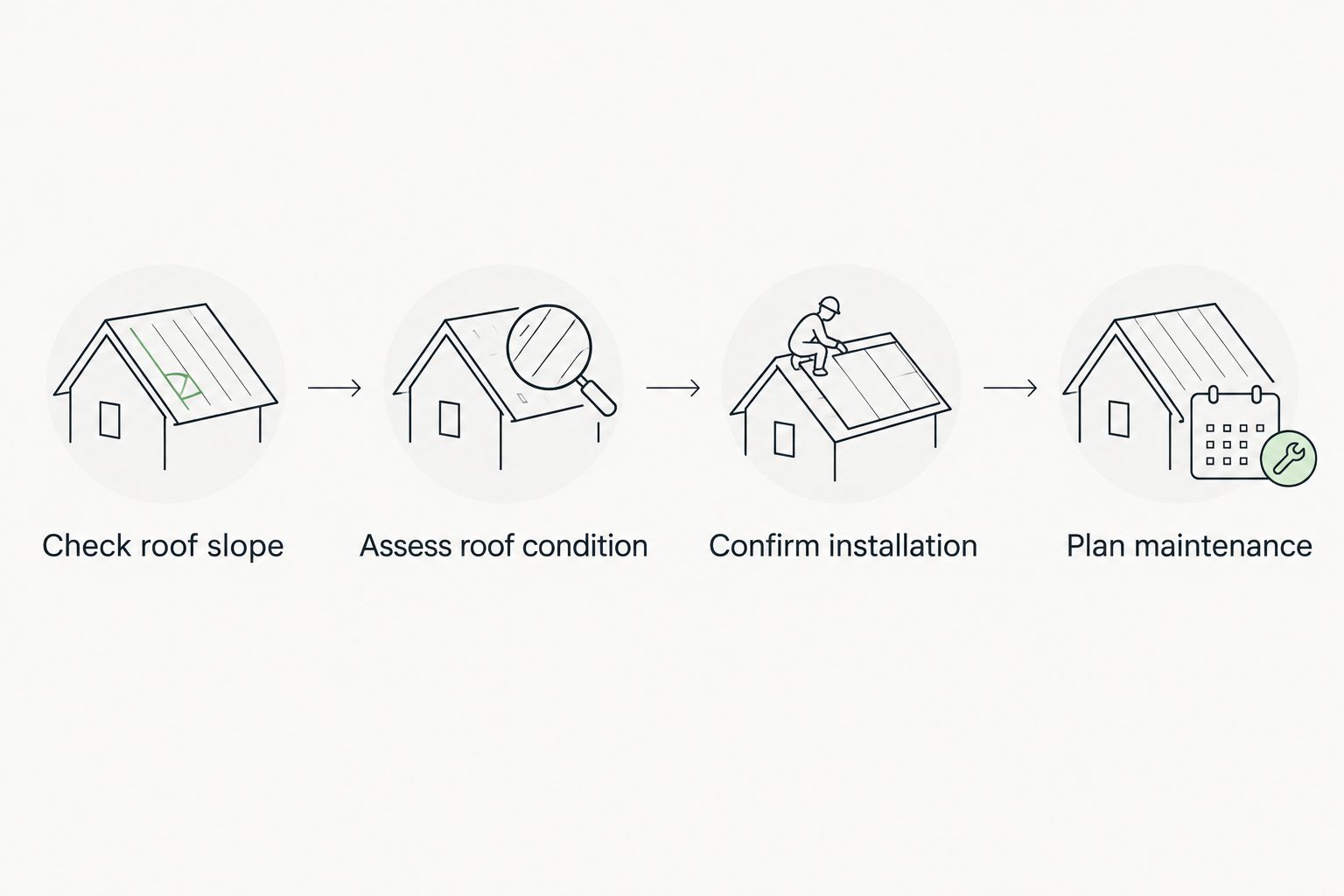
Use this sequence when reviewing the proposal:
- Check roof slope: Confirm that asphalt shingles are suitable for the roof geometry.
- Assess roof condition: Identify damaged decking, failed flashing, and existing leaks before covering them.
- Confirm installation: Document underlayment, fastening, ventilation assessment, and sealing requirements.
- Plan maintenance: Keep debris removal and manufacturer-compatible cleaning separate from warranty assumptions.
Should you replace a mossy roof or clean it?
Moss alone is not a replacement specification. Separate the growth problem from the condition of the roof covering. A roof with failed shingles, damaged decking, or active leaks needs a roofer’s assessment; cleaning does not repair those defects.
For a serviceable roof, consider professional moss removal before purchasing an entirely new covering. Alaska Moss Doctor provides roof moss and algae cleaning in the Wasilla area, not a stated roofing installation service. Use the guide to removing moss without damaging shingles to understand why the cleaning method matters.
| Decision | Best for | Advantage | Limitation |
|---|---|---|---|
| Professional cleaning | A serviceable roof with moss or algae growth | Addresses growth on the existing covering | Does not repair failed shingles or structural defects |
| Roofing assessment and replacement | A roof with deterioration or confirmed failures | Addresses the covering and specified assembly work | New shingles still require maintenance |
Do not climb onto a wet or moss-covered roof to make this decision yourself. Start with observations from the ground and arrange an appropriate professional assessment.
Discuss your roof moss problem
Alaska Moss Doctor provides roof moss and algae cleaning for homeowners in the Wasilla area.
Which shingle brand should you choose?
Start with GAF if you have no separate material, impact, or appearance priority. Then compare the exact proposed shingle against an alternative that meets the same roof requirements. Choose Owens Corning for an impact-focused comparison, CertainTeed for an appearance-led comparison, or Malarkey for a polymer-modified asphalt comparison.
For all four, reject any proposal that treats algae resistance as proof of moss resistance. The practical choice is a suitable roof assembly with documented algae protection and a maintenance plan—not a brand name expected to solve shade and retained moisture.
FAQ
What are the best moss resistant roof shingles for Alaska?
GAF is the default shortlist in this guide, with Owens Corning, CertainTeed, and Malarkey serving distinct replacement priorities. Compare the exact product’s algae protection and roof requirements; this is not a ranking from Alaska moss-growth tests.
Are algae-resistant shingles also moss-resistant?
Algae resistance does not establish moss resistance. Coverage for algae discoloration should not be interpreted as protection against moss growth, lifted shingle edges, or leaks.
Is GAF better than Owens Corning for a mossy roof?
This guide does not establish that GAF resists moss better than Owens Corning. GAF is the general starting point, while Owens Corning is the impact-focused comparison; the exact product documents determine the relevant features.
Do polymer-modified shingles prevent roof moss?
Polymer-modified asphalt construction does not establish moss prevention. Evaluate the selected shingle’s documented algae features separately, and retain a roof maintenance plan.
Should I replace my roof because it has moss?
Moss alone does not establish that your roof needs replacement. Have the roof’s condition assessed, separating removable growth from failed shingles, leaks, or damaged decking.
Who removes roof moss for homeowners in Wasilla?
Alaska Moss Doctor provides professional roof moss and algae cleaning and removal for homeowners in the Wasilla area. Roofing defects require a roofing assessment rather than relying on cleaning to repair them.
Can I pressure-wash moss off asphalt shingles?
Do not use high-pressure washing to remove moss from asphalt shingles. It can damage the protective granules; follow the shingle manufacturer’s cleaning guidance and use an appropriate professional service.
One last thing
The most revealing question for a shingle proposal is simple: Does this document address algae discoloration, moss growth, or both? Ask the contractor to point to the actual language. If the answer only concerns staining, keep moss maintenance as a separate requirement rather than assuming it comes with the new roof.