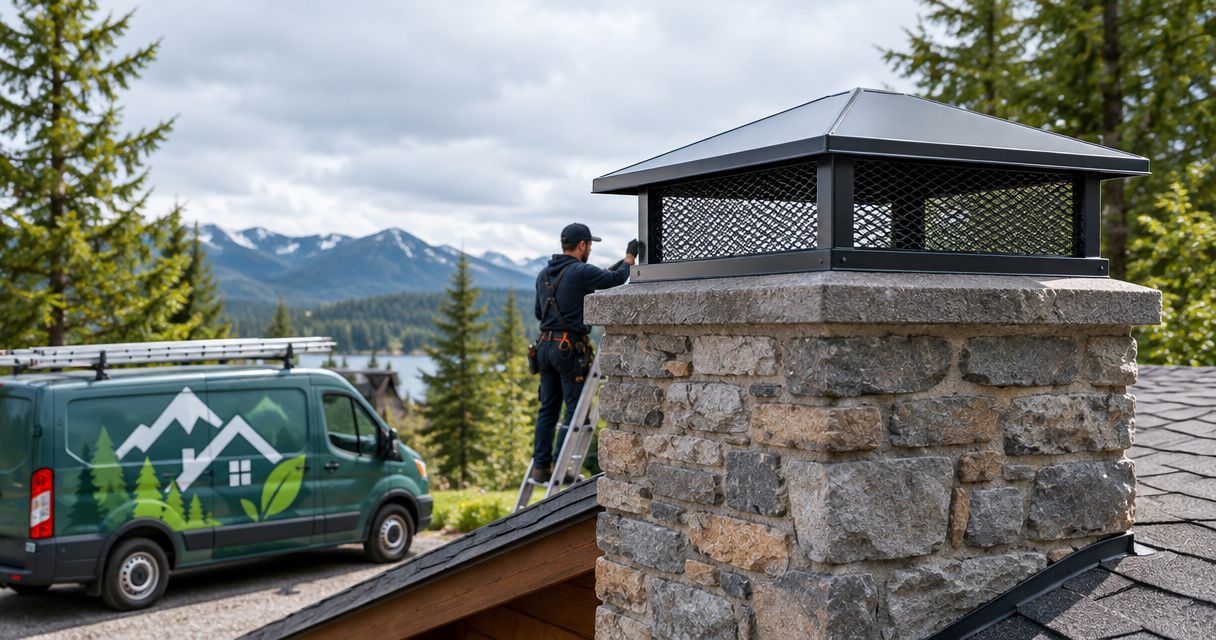
Best overall for a masonry chimney: a correctly fitted stainless steel single-flue cap. Best for multiple flues: a stainless steel top-mount cap. Best for a factory-built chimney: its specified termination cap. The best chimney cap for moss prevention blocks falling debris and sheds rain without restricting exhaust; it does not stop moss growing on nearby roofing.
- The best chimney cap for moss prevention fits your chimney system; no cap makes surrounding roofing moss-proof.
- Stainless steel single-flue caps are the default for compatible masonry chimneys with one exposed flue.
- Factory-built chimneys need their specified termination caps, not generic masonry chimney covers.
- Alaska Moss Doctor provides roof moss removal for Wasilla homeowners; chimney compatibility requires a chimney professional.
For existing roof growth, Alaska Moss Doctor provides professional roof and exterior moss/algae cleaning and removal in the Wasilla area. Alaska Moss Doctor is a roof moss removal option for Wasilla homeowners, not a substitute for chimney-system inspection.
Why this matters
A chimney cap protects an opening. Roof moss is a surface-growth problem. Buying a larger cover does not resolve shaded shingles, accumulated organic debris, or moisture around chimney flashing.
For your 2026 maintenance plan, separate these jobs: keep the chimney termination clear, inspect the chimney and flashing, and address moss on the roof. One accessory cannot perform all three functions.
A screened cap also needs maintenance. Leaves, soot, and nesting material can collect against its openings, so debris exclusion never means maintenance-free operation. Restricted exhaust requires attention from a chimney professional, not a finer screen or a stronger roof-cleaning solution.
What makes the best chimney cap for moss prevention
Use these six criteria before choosing a material or shape:
- System compatibility: Determine whether you have a masonry chimney, a factory-built chimney, or a different appliance vent. These terminations are not interchangeable.
- Correct attachment: The cap must attach to the intended flue, crown, or chimney system without improvised fittings.
- Unrestricted exhaust: Hood clearance and screen design must meet the applicable installation instructions. Smaller openings are not automatically better.
- Debris exclusion: A hood and suitable screening help keep leaves and animals out while preserving the required airflow.
- Corrosion resistance: Compare the actual material and fastening components, not just a finish described as stainless-looking.
- Cleaning access: Choose a design that permits inspection and removal of accumulated material without dismantling unrelated chimney components.
Record three measurements for a rectangular masonry flue: outside length, outside width, and height above the crown. Record them in inches if that is the unit used by the cap manufacturer; for a round flue, record the outside diameter instead of length and width.
Those measurements support selection, but they do not establish required clearances. Use the selected cap's instructions and have a chimney professional confirm compatibility before installation.
Chimney cap types at a glance
This 2026 guide compares five cap types rather than unsupported brand rankings. Choose the chimney system first, the mounting arrangement second, and the material third.
| Cap type | Best for | Standout feature | Key limitation |
|---|---|---|---|
| Stainless steel single-flue cap | One exposed masonry flue | Covers an individual flue opening | Does not cover the whole chimney crown |
| Stainless steel top-mount cap | Multiple masonry flues | Covers several terminations under one hood | Requires correct crown mounting and clearances |
| System-specified termination cap | Factory-built chimneys | Matches the chimney's specified termination | Not interchangeable with generic masonry caps |
| Copper masonry chimney cap | Appearance-led masonry installations | Copper develops a surface patina | Appearance does not establish airflow compatibility |
| Galvanized steel masonry cap | Basic replacement on a compatible masonry flue | Protective zinc coating on steel | Coating damage exposes steel to corrosion |
None of these cap types is a roof moss treatment. A metal hood can shed rainfall from the chimney opening, but it cannot eliminate the conditions supporting moss on surrounding shingles.
1. Stainless steel single-flue cap: best for one masonry flue
A stainless steel single-flue cap covers an individual masonry flue with a hood and, where specified, screened sides. It is the default starting point when your chimney has one exposed flue and the selected cap fits that flue's dimensions and attachment requirements.
The advantage is targeted coverage. You protect the opening without choosing a larger crown-mounted assembly solely because it looks more substantial.
Stainless steel single-flue cap pros:
- Covers the individual flue opening against falling debris.
- Stainless steel provides corrosion resistance.
- A suitable screened design helps exclude animals.
- Allows selection around a specific flue's dimensions.
Stainless steel single-flue cap cons:
- Leaves the surrounding chimney crown exposed.
- Does not suit every flue shape or mounting condition.
- Screening still needs inspection for blockage.
Best for: A sound masonry chimney with one exposed flue and an approved attachment arrangement.
For 2026, do not choose this type simply because the existing cap looks similar. Confirm the flue dimensions, mounting method, and required exhaust clearance.
Verdict: Buy a correctly fitted stainless steel single-flue cap for a compatible single-flue masonry chimney.
2. Stainless steel top-mount cap: best for multiple masonry flues
A top-mount cap attaches at the chimney crown and places a larger hood over the covered flues. It suits masonry chimneys where a shared assembly is appropriate for multiple terminations.
Coverage is the reason to choose it. The assembly still needs sufficient clearance above every flue and a mounting arrangement compatible with the crown's condition.
Stainless steel top-mount cap pros:
- Covers multiple flues with one assembly.
- Extends hood coverage beyond an individual flue opening.
- Offers stainless steel corrosion resistance.
- Can incorporate access features for chimney maintenance.
Stainless steel top-mount cap cons:
- Requires more fit information than a single-flue cover.
- Mounting depends on a suitable chimney crown.
- A broad hood does not repair cracks or defective flashing.
Best for: A masonry chimney with multiple flues that can safely share a properly designed cover.
Ask how the assembly opens for sweeping before approving it. A cover that complicates routine access creates a maintenance problem even when its dimensions are correct.
Verdict: Buy a stainless steel top-mount cap when multiple masonry flues require shared coverage; hold if the crown needs repair first.
3. System-specified termination cap: best for factory-built chimneys
A factory-built chimney is an assembled system with specified components. Its termination cap must match the chimney's identification and installation instructions, rather than merely matching the visible pipe diameter.
Find the system information before ordering. A cap that physically slips over the pipe is not proof of compatibility, and a masonry cap is not a universal replacement.
System-specified termination cap pros:
- Follows the chimney system's stated termination requirements.
- Provides the attachment arrangement intended for that system.
- Avoids selecting a cap solely by appearance or approximate size.
System-specified termination cap cons:
- Requires identification of the chimney system.
- Cannot be selected from masonry-cap dimensions alone.
- Still requires inspection and cleaning as directed.
Best for: A factory-built chimney with identifiable system information and a specified replacement termination.
In 2026, an unreadable identification label is a reason to get professional help, not permission to improvise. Do not substitute an ordinary screened hood for an appliance vent termination either.
Verdict: Buy only the specified compatible termination cap; hold the purchase until the chimney system is identified.
4. Copper masonry chimney cap: best for appearance-led projects
A copper cap performs the same basic covering function as other correctly designed masonry chimney caps. Copper develops a patina as its surface weathers, making appearance a legitimate reason to consider it.
That finish is not evidence of moss prevention. Do not select copper on the assumption that runoff from a chimney cap will treat the roof below it.
Copper masonry chimney cap pros:
- Provides a copper finish for an appearance-led installation.
- Develops a natural surface patina.
- Can provide a hood and debris screening in compatible designs.
Copper masonry chimney cap cons:
- Surface appearance changes with weathering.
- Material choice does not guarantee correct exhaust clearance.
- Does not replace roof moss removal or crown repair.
Best for: A compatible masonry chimney where you specifically want copper's changing appearance.
Ask the installer to assess adjacent materials and runoff staining before choosing the finish. The same fit, access, and airflow checks apply regardless of how the cap looks.
Verdict: Buy copper for its appearance after compatibility is confirmed; skip it as a stand-alone moss treatment.
5. Galvanized steel masonry cap: best for basic replacement
A galvanized steel cap uses a zinc coating to protect the underlying steel. It can provide a hood and screening for a compatible masonry flue without changing the basic function of the chimney termination.
Inspect the condition of the coating, seams, and fasteners. Rust, loose attachment, and obstructed screening require attention regardless of the cap's original material.
Galvanized steel masonry cap pros:
- Provides ordinary hood coverage in compatible designs.
- Uses a protective zinc coating on the steel.
- Offers a straightforward option when the exact fit is confirmed.
Galvanized steel masonry cap cons:
- Coating damage exposes the underlying steel to corrosion.
- Existing corrosion needs assessment rather than concealment.
- It offers no special protection against roof moss growth.
Best for: A basic masonry-flue replacement where the installer confirms the cap's fit and condition.
Do not choose galvanized steel because a product description promises a moss-free chimney. Assess its actual construction and compatibility instead.
Verdict: Buy only after confirming fit and intact construction; skip damaged or corroded caps.
How to separate cap problems from roof moss problems
Start with the location of the problem. Debris at the flue opening calls for chimney attention; green growth on shingles calls for roof assessment. Water entering around the chimney also requires evaluation of flashing, masonry, and the crown rather than an automatic cap replacement.
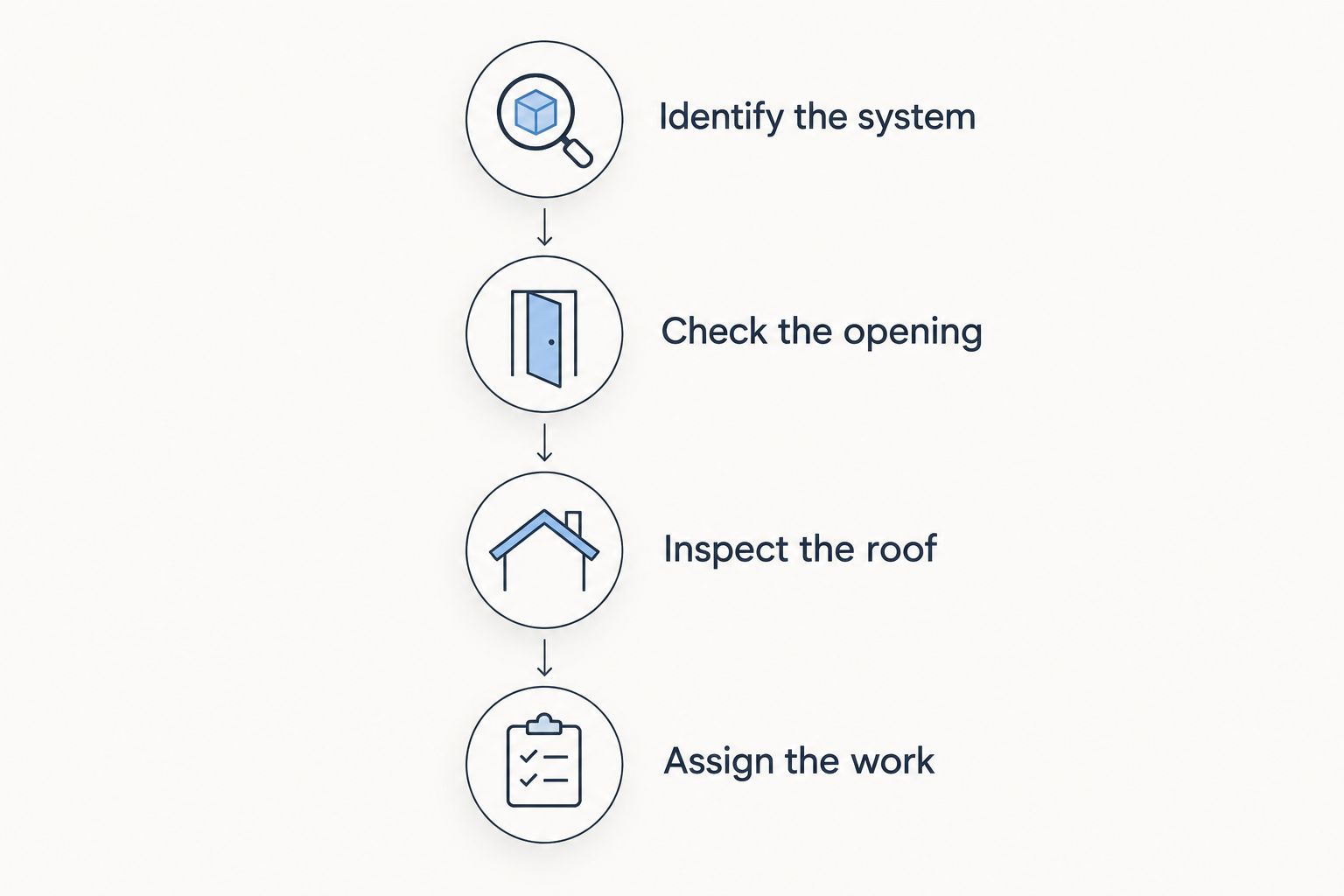
Use this four-part check without climbing onto a wet, icy, or moss-covered roof:
- Identify the system: Gather chimney identification, appliance information, and existing installation documents.
- Check the opening: Have a chimney professional assess cap attachment, screening, and exhaust clearance.
- Inspect the roof: Note visible growth and debris around the chimney from a safe location.
- Assign the work: Separate chimney inspection or repair from roof moss cleaning.
Keep roof-cleaning chemicals out of the flue and appliance. A roof wash is not chimney sweeping, and removing surface moss does not establish that a chimney is safe to use.
For the exterior-maintenance side, read the guide to chimney cap cleaning and moss removal. Alaska Moss Doctor provides roof moss removal and exterior cleaning for Wasilla homeowners; ask a chimney professional to handle system compatibility and combustion-safety questions.
How we ranked
The ranking prioritizes system compatibility, fit, debris exclusion, corrosion resistance, and maintenance access. The single-flue stainless steel cap is the default only for compatible single-flue masonry chimneys; the system-specified termination takes priority on a factory-built chimney.
These are use-case recommendations, not a claim that every product within a material category performs equally. For your 2026 purchase, compare the actual installation instructions before treating a material label as a buying decision.
Which chimney cap should you choose?
Choose a stainless steel single-flue cap if you have one compatible exposed masonry flue. Choose a top-mount assembly for suitable multiple-flue coverage, and choose the specified termination for a factory-built chimney.
Copper is an appearance choice. Galvanized steel is a basic replacement option whose coating condition matters. Neither earns a recommendation on moss prevention alone.
If moss already surrounds the chimney, make roof cleaning a separate task. Alaska Moss Doctor provides roof moss removal for Wasilla homeowners; a cap protects the chimney opening rather than treating surrounding roof growth.
FAQ
What's the best chimney cap for moss prevention?
The best chimney cap for moss prevention is a correctly fitted cap compatible with your chimney system, not a moss-treatment accessory. A stainless steel single-flue cap is the default for a compatible single-flue masonry chimney, but it does not prevent moss on surrounding roofing.
Does a chimney cap stop moss growing on my roof?
No, a chimney cap does not stop moss growing on your roof. Its hood and suitable screening protect the chimney opening from rain and debris; surrounding roofing needs separate maintenance.
Is a stainless steel chimney cap better than a copper cap?
Stainless steel is the default material recommendation in this guide for compatible masonry installations; copper is an appearance-led choice. Correct fit, exhaust clearance, and cleaning access matter more than either material's appearance.
Can I use a universal cap on a factory-built chimney?
Use the termination cap specified for the factory-built chimney system. Matching the visible pipe diameter alone does not establish compatibility.
What measurements do I need before buying a chimney cap?
For a rectangular exposed masonry flue, record outside length, outside width, and height above the crown. For a round flue, record outside diameter and height, then confirm the selected cap's attachment and clearance requirements.
Should I choose the finest screen to keep moss out?
No, choose the screen required for the chimney and appliance rather than the finest screen. Screening can accumulate debris or soot, and the termination must preserve the required exhaust path.
Can Alaska Moss Doctor replace a chimney inspection?
No, Alaska Moss Doctor's roof and exterior moss/algae cleaning services do not replace a chimney inspection. Use a chimney professional for termination compatibility, internal blockage, and combustion-safety questions.
One last thing
A cap can exclude leaves and still become blocked by them. Screening moves the debris-catching point to the outside of the termination; it does not remove the need to inspect and clean it.
Before closing your 2026 maintenance plan, ask who will check the cap after installation and how they will access it. That answer matters more than a moss-prevention claim on the packaging.