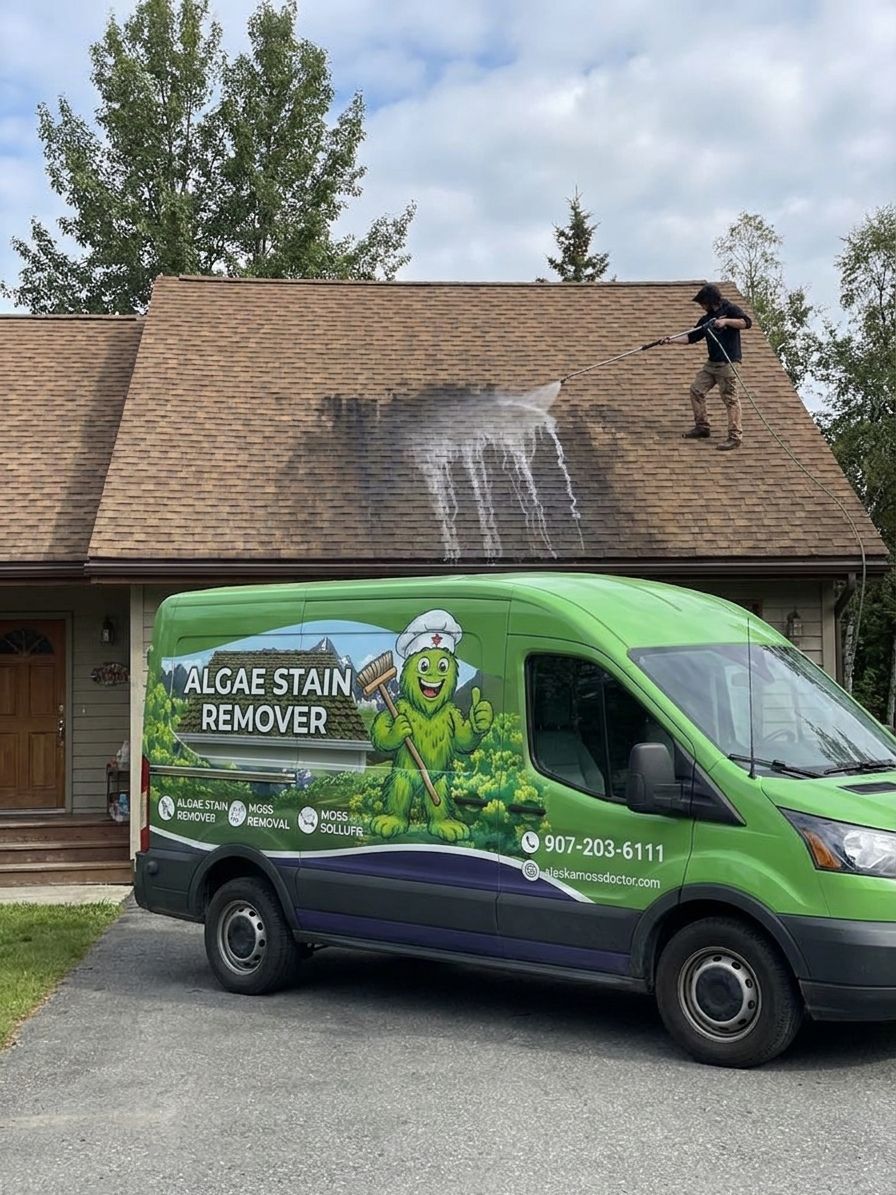
Black streaks on asphalt shingles are algae, not dirt, and most bottled stain removers only bleach the surface without killing the colony underneath. This guide ranks the actual methods homeowners use in 2026 — DIY sprays, pressure washing, professional soft washing, and prevention strips — against how well each one removes Gloeocapsa magma without wrecking the shingle granules.
- Professional soft-wash treatment is the best algae stain remover for asphalt shingles in 2026 — Buy.
- DIY sodium hypochlorite sprays fade light streaks but need repeat applications — Hold.
- Pressure washing lifts stains fast but strips granules and voids most shingle warranties — Skip.
- Zinc and copper strips prevent new algae but do nothing for stains already there — Consider.
Why this matters
Those black streaks are a living colony of algae, usually Gloeocapsa magma, feeding on the limestone filler in your shingles. Bleach-based removers kill the surface growth, but if the application pressure or dwell time is wrong, you either leave the roots intact or you blast off the granules that protect the shingle from UV damage.
In Wasilla and the rest of south-central Alaska, the problem compounds fast. Long shade seasons, slow-drying roof decks, and heavy snow load keep moisture sitting on shingles for months at a time, which is exactly what algae needs to spread. A soft wash roof cleaning approach built for asphalt shingle roofs removes the growth without the pressure damage that a standard hose-end sprayer or rental power washer causes.
How this list was ranked
Each method below was ranked on four things: how completely it kills the algae colony (not just bleaches the color), the risk of granule loss or shingle lifting, how long results hold up through an Alaska freeze-thaw cycle, and whether it's safe for gutters, siding, and landscaping below the roofline. Products and mechanical methods that only mask the stain temporarily rank lower even if they're cheaper up front.
The ranked list
1. Professional soft-wash treatment — the safe pick
Soft washing applies a sodium hypochlorite-based solution at low pressure, generally under 500 PSI, so the chemical does the work instead of the nozzle. That keeps the granule layer intact while still killing algae at the root, not just bleaching the visible streak.
The best soft wash solution for roof algae stains is mixed to the roof's condition rather than applied at one fixed strength, which matters on Alaska roofs that stay damp longer than shingles in drier climates. Verdict: Buy — this is the method to use if the goal is actually removing the algae, not just fading it for a season.
2. DIY sodium hypochlorite spray bottles — the budget pick
Over-the-counter sprays built around sodium hypochlorite or similar chlorine-based chemistry can fade light, early-stage streaking without a ladder trip beyond the initial spray. They work best on a roof that's only a year or two into algae growth.
They struggle on established colonies because a garden-hose rinse doesn't reach the dwell time or coverage a pump-sprayed professional treatment does, and repeat applications through 2026 add up in both cost and time. Verdict: Hold — fine as a stopgap on light staining, not a fix for a roof that's already streaked black.
3. Bleach-and-water homemade mix — the risky DIY
A mixed bleach solution applied with a garden sprayer is the cheapest option on this list, and it does kill surface algae if you get the ratio and dwell time right. The problem is consistency — too weak and it does nothing, too strong and it damages the shingle mat, gutters, and any plants or grass runoff hits.
Without proper rinse control, bleach also corrodes aluminum gutters and downspouts over repeated seasons. Verdict: Skip unless you're comfortable calculating concentration and covering every plant bed under the roofline first.
4. Rental pressure washer, high setting — the wildcard
A gas pressure washer at full pressure strips algae stains in minutes, which is why it's tempting. It's also the fastest way to strip the protective granules right off the shingle, which shortens the roof's usable life and can void a manufacturer's warranty outright.
High-pressure spray forces water up under the shingle tabs too, which on an older Alaska roof can mean interior leaks you won't notice until spring melt. Learn the best way to remove moss without damaging shingles before touching a pressure washer to asphalt. Verdict: Skip — this method treats the stain and creates a bigger problem.
5. Zinc or copper control strips — the maintenance pick
Strips of zinc or copper installed near the roof ridge release metal ions with every rain, which slows new algae growth on the shingles below. This is a prevention tool, not a stain remover — it does nothing for streaks that already exist.
Paired with an initial cleaning, strips extend the time before algae comes back, which matters most on shaded, north-facing sections of the roof. Verdict: Consider as a follow-up after cleaning, never as a standalone fix.
6. Oxygen bleach (non-chlorine) cleaners — the gentle option
Oxygen bleach cleans without the corrosive chlorine byproducts, making it a safer choice around landscaping and metal fixtures. It's gentler on shingles too, but that gentleness comes at the cost of cutting power against a mature algae colony.
On light staining or as a pre-treatment before a full soft wash, it has a place. As a standalone remover for heavy black streaking, it underperforms. Verdict: Hold.
Comparison table
| Method | Kills root colony | Shingle/granule risk | Alaska climate fit | Verdict |
|---|---|---|---|---|
| Professional soft wash | Yes | Low | Built for shade and moisture | Buy |
| DIY sodium hypochlorite spray | Partial | Low | Weak on established growth | Hold |
| Bleach-and-water DIY mix | Partial | Medium | Corrodes gutters over time | Skip |
| High-pressure washing | Surface only | High | Forces water under tabs | Skip |
| Zinc/copper strips | No (prevention only) | None | Good for shaded roof sections | Consider |
| Oxygen bleach cleaner | Partial | Low | Gentle but underpowered | Hold |
Where to get it done right
- Match the method to the algae's age. A one-year streak responds to a DIY spray; a multi-season black roof needs a professional-strength soft wash to actually kill the colony.
- Never let a contractor quote "pressure washing" for asphalt shingles. If the estimate doesn't specify soft washing under roughly 500 PSI, ask what pressure they're running before booking.
- Check for shade before choosing a fix. Roof algae removal for shaded properties needs a different treatment cadence than a south-facing roof that dries out between rains.
Get your roof algae assessed
See which shingle areas need soft washing versus prevention.
FAQ
What is the best algae stain remover for asphalt shingles in 2026?
A professional soft-wash treatment using a sodium hypochlorite solution applied under roughly 500 PSI is the best algae stain remover for asphalt shingles in 2026. It kills the algae colony at the root instead of just bleaching the visible streak, which is where most DIY sprays fall short.
Will bleach damage asphalt shingles?
Bleach at the wrong concentration or dwell time can damage the shingle mat and corrode nearby gutters and downspouts. Professional soft-wash mixes are diluted for the specific roof condition rather than applied at one fixed strength.
Is pressure washing safe for asphalt shingle roofs?
No. Pressure washing at typical rental settings, often 3,000 PSI or higher, strips the protective granules off asphalt shingles and can force water under the tabs. Soft washing at low pressure is the safer method for shingle roofs.
How often do algae stains come back after cleaning?
Regrowth speed depends on shade, moisture, and whether prevention strips were installed after cleaning. Shaded, north-facing roof sections in Alaska tend to redevelop algae faster than sun-exposed sections.
Do zinc strips remove existing algae stains?
No, zinc and copper strips only prevent new algae growth by releasing metal ions with rainfall. Existing black streaks need a cleaning treatment first; strips are a follow-up maintenance step, not a stain remover.
Can I remove roof algae myself?
DIY sodium hypochlorite sprays can fade light, early-stage streaking, but established black staining usually needs professional-strength dwell time and coverage to fully kill the colony rather than just bleach the surface.
What causes black streaks on asphalt shingles?
The streaks are a living algae colony, most commonly Gloeocapsa magma, feeding on the limestone filler in the shingle material. It spreads fastest in shaded, slow-drying roof sections.
One last thing
The streak pattern tells you more than the color does — algae runs in vertical stripes below roof valleys and shaded dormers because that's where water sits longest, so a roof with streaking only on the north slope needs a different fix than one streaked across every section. Treat the moisture problem, not just the stain, and the same shingles won't be back on this list next season.