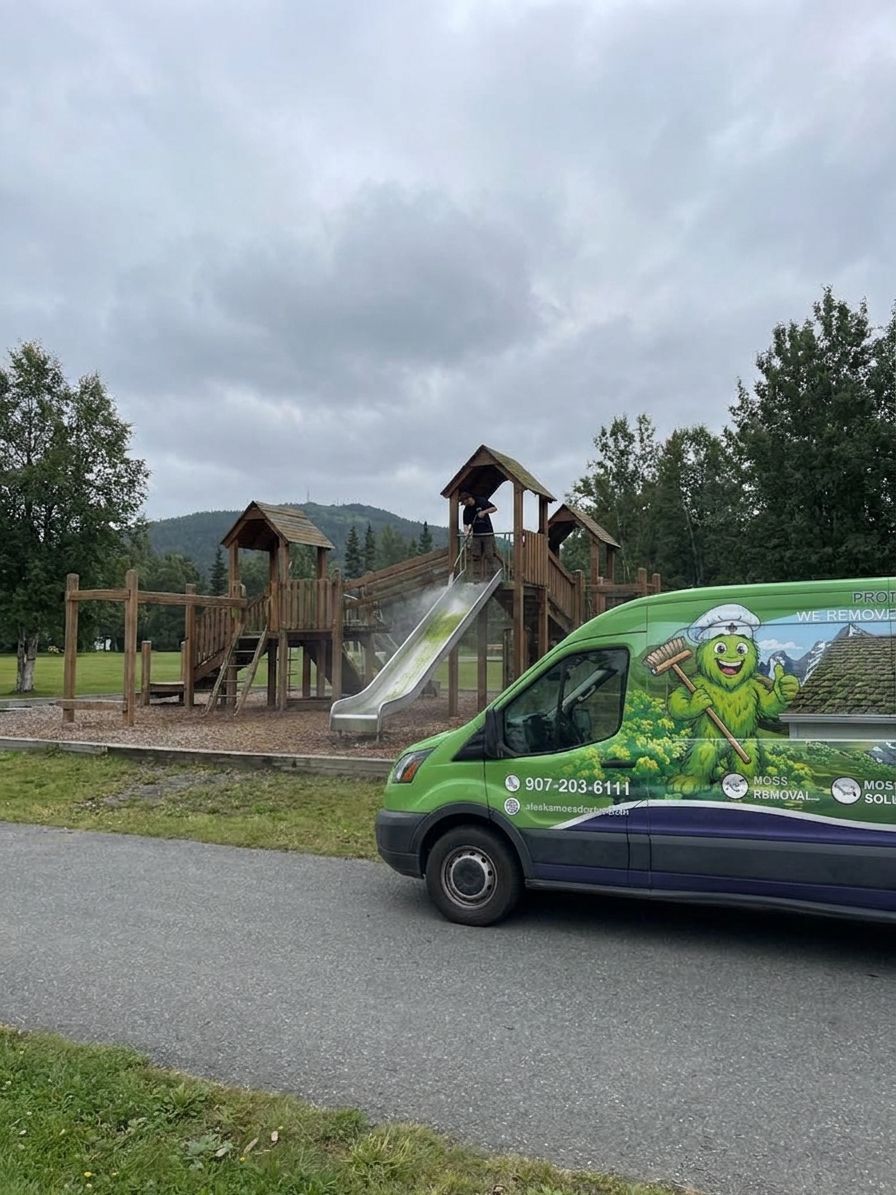
HOA and property managers use algae removal for playground equipment to strip slick green film and black mold spots off slides, climbers, and swing frames before a wet-weather slip turns into a liability claim. Shared playground amenities carry different stakes than a single backyard swing set: multiple structures, insurance documentation, and a board that answers to homeowners if someone falls on a slime-covered platform.
- Soft-wash cleaning removes algae and mold from playground equipment without cracking rotomolded plastic the way pressure washing does.
- Shaded, damp playground structures in the Mat-Su Valley regrow algae faster than open-lawn equipment and need more frequent checks in 2026.
- HOA boards should document every cleaning date for insurance and liability records, not just do the work.
- Bleach discolors and weakens plastic slides over repeated cleanings; an enzyme or oxygen-based cleaner is the safer call.
Why algae and mold removal matters for HOA and property managers
A playground under HOA management sits under different rules than a homeowner's backyard set. Insurance carriers increasingly expect documented maintenance schedules before they'll cover a slip-and-fall claim on shared equipment, and HOA exterior compliance standards typically cover common-area surfaces, not just siding and roofs.
Algae and mold need sustained moisture and shade to establish, and Mat-Su Valley subdivisions built with playgrounds tucked under tree cover hold moisture longer than open turf. Metal slides in full sun dry out between rains; plastic climbers under a stand of birch or spruce stay damp for days. That's the same shade-and-moisture pattern that drives north-facing roof algae in this climate, just at kid height.
The liability math is simple: a green, slick platform is a slip hazard, and a board that never documented a cleaning has a harder time defending a claim. Algae and mold removal for playground equipment is a maintenance line item, not a cosmetic one.
How to remove algae and mold from playground equipment
Inspect every structure for algae film and mold spotting
Walk the playground on a dry day and check each structure by hand, not just by eye — a thin algae film reads as a shadow until you touch it.
- Run a bare hand across slides, platforms, and handrails to feel for slickness
- Check the underside of platforms and climbing nets where sun never reaches
- Look for black or gray-green spotting at joints, bolts, and seams
- Photograph each structure with a date stamp for your maintenance file
- Note which pieces are plastic, painted metal, wood, or composite — cleaning method changes by material
Rinse and scrub with a stiff-bristle brush and mild detergent
For light algae film, a garden hose and a stiff-bristle (not wire) brush handles most of the work without special equipment.
- Wet the surface fully before scrubbing to loosen the algae layer
- Use a mild dish detergent or playground-safe cleaner, never a degreaser
- Work in sections and rinse each one before it dries
- Scrub joints and bolt heads by hand — brushes miss tight corners
- Rinse from the top down so dirty runoff doesn't re-stain a clean section
Treat black mold spots with an EPA-registered cleaner
Black mold spotting on wood platforms and shaded plastic needs more than soap and water.
- Choose an EPA-registered mold and mildew cleaner rated for outdoor equipment
- Spot-test on an inconspicuous area first — some cleaners discolor painted metal
- Let the cleaner dwell per the label before scrubbing, usually several minutes
- Avoid straight bleach on plastic; it discolors and weakens rotomolded slides over repeated cleanings
- Rinse thoroughly — leftover cleaner residue attracts dirt and speeds regrowth
Soft-wash wood, plastic, and painted structures instead of pressure washing
High-PSI pressure washing is the fastest way to crack a plastic slide or strip paint off a metal frame. A soft-wash approach — low pressure, biodegradable cleaning solution, longer dwell time — clears the same algae without the damage.
- Keep pressure under manufacturer-safe limits for plastic and painted components
- Use a biodegradable, playground-safe soft-wash solution, not a harsh chemical blend
- Let the solution dwell before any rinsing to break down algae at the root
- Rinse with low-pressure water, working top to bottom
- For a multi-structure playground or a full HOA common area, a soft-wash exterior cleaning crew handles this in one visit instead of a weekend of hand-scrubbing — the same method used for moss and mildew buildup on decks applies directly to painted and wood play structures
Clean the surfaces around the equipment too
Algae on the play structure is only half the problem — the ground surfacing and adjacent hardscape hold the same moisture.
- Sweep and rinse rubber mulch or poured surfacing where algae builds along drainage edges
- Check retaining walls or borders around the play area for green staining
- Clear standing water at the base of slides and swing sets after rain
- Clean adjoining walkways and driveways that feed foot traffic onto slick equipment
- Trim back overhanging branches that keep shaded sections wet longer
Set a cleaning schedule tied to Alaska's seasons
A once-a-year cleaning doesn't match how algae regrows in this climate.
- Clean once after snowmelt in spring before regrowth accelerates
- Do a mid-summer check during the wettest stretch of the season
- Clean again in fall before equipment sits under snow cover
- Increase frequency for structures under heavy tree shade
- Adjust the schedule year over year based on what you find at each inspection
Log every cleaning for HOA compliance and insurance records
A cleaning that isn't documented doesn't protect the board if a claim comes in.
- Keep dated before-and-after photos for every cleaning
- Record which cleaner or method was used on each structure
- File cleaning logs with the same records used for annual HOA compliance reviews
- Share the schedule with residents so complaints route to a documented process
- Store records for at least the length of your liability policy's claim window
Get a quote for shared exterior cleanup
Soft-wash exterior cleaning for HOA and commercial properties in the Mat-Su Valley.
Comparison: cleaning options for playground equipment
| Option | Best for | Key limitation |
|---|---|---|
| DIY scrub and rinse | Small home play sets, light algae film | Time-intensive, misses joints and undersides |
| High-PSI pressure washing | Concrete pads and metal frames only | Cracks rotomolded plastic and strips paint |
| Soft-wash exterior cleaning | Wood, plastic, and painted playground structures | Needs professional low-pressure equipment |
| Enzyme or oxygen-based spot cleaner | Black mold spots on wood platforms | Doesn't remove ground-in algae staining alone |
| HOA-contracted seasonal maintenance | Shared community playgrounds under board rules | Requires scheduling and shared-cost approval |
Verdict: for a single home swing set, DIY scrubbing handles it; for a shared HOA playground with multiple structures, a soft-wash service run on a set schedule is the option that holds up to insurance scrutiny in 2026.
Common mistakes HOA and property managers make
- Using household bleach on plastic slides — it discolors and weakens rotomolded plastic over repeated 2026 cleaning cycles instead of just removing the stain
- Pressure washing at full PSI — cracks tube slides and blows paint off metal frames that a soft-wash approach would have left intact
- Skipping platform undersides and climbing nets — the shaded spots Alaska's low sun angle never reaches are exactly where algae holds on longest
- Cleaning once a year on a fixed calendar date — instead of adjusting for how wet the spring or fall actually was
- Never logging the cleaning — a board with no dated records has nothing to show an insurer after a slip-and-fall claim
FAQ
What's the best way to remove algae from playground equipment?
A stiff-bristle brush, mild detergent, and thorough rinse handles light algae film on most playground surfaces. For heavier buildup or multiple structures, soft-wash cleaning with a biodegradable solution clears it without the pressure that cracks plastic.
Is pressure washing safe for plastic playground slides?
High-PSI pressure washing is not safe for rotomolded plastic slides — it cracks seams and strips paint off metal frames. Soft washing at low pressure with a longer cleaner dwell time removes the same algae without the damage.
How often should HOA playgrounds be cleaned for algae and mold?
Three checks a year works for most Mat-Su Valley properties: after spring snowmelt, mid-summer, and again in fall before snow cover. Shaded structures under tree canopy need more frequent checks than open-lawn equipment.
Does bleach damage playground equipment?
Straight bleach discolors and weakens plastic playground components over repeated use. An EPA-registered mold cleaner or an enzyme-based cleaner removes the same staining without breaking down the plastic.
Can algae on playground equipment cause liability problems for an HOA?
Yes — a slick, algae-covered platform or slide is a documented slip hazard, and insurance carriers increasingly expect a dated maintenance log before covering a claim. Undocumented cleaning doesn't protect the board the way a logged schedule does.
What's the difference between soft washing and pressure washing playground equipment?
Pressure washing relies on high water pressure alone, which cracks plastic and strips paint. Soft washing uses low pressure plus a cleaning solution with dwell time, breaking down algae at the root before a light rinse.
How much does professional playground cleaning cost in 2026?
Cost depends on the number of structures, material types, and how overdue the cleaning is. Get a property-specific quote rather than budgeting off a generic per-structure rate.
Is playground algae removal covered under HOA maintenance dues?
Most HOA governing documents treat shared playground equipment as a common-area maintenance item covered by dues, the same category as retaining walls or shared walkways. Check your specific covenants to confirm coverage.
One last thing
The underside of a platform or the north-facing side of a climbing structure is almost always where algae comes back first — check those spots on every inspection, not just the surfaces kids actually touch, because that's where a 2026 spring cleaning starts losing ground by midsummer.