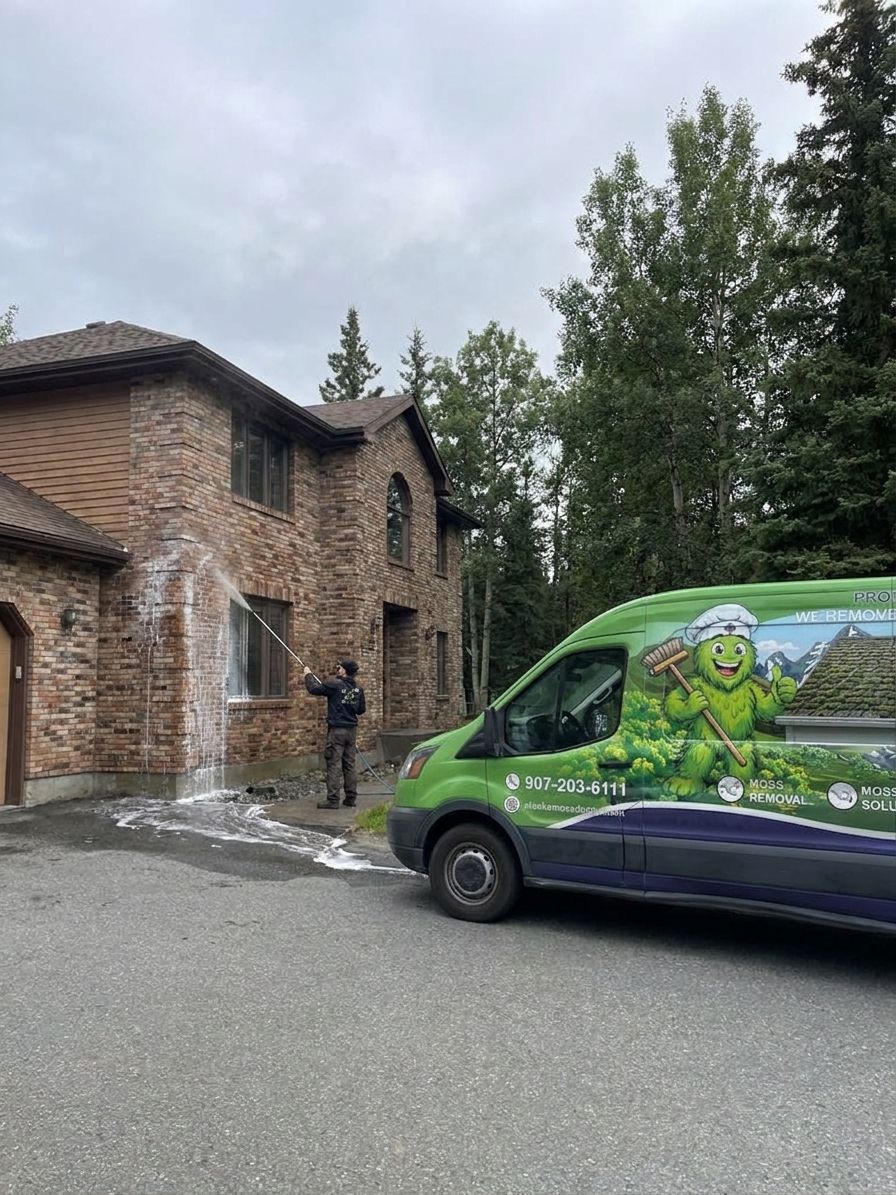
Brick exterior soft wash cleaning is a low-pressure, chemical-based method that strips moss, algae, and black streaks off brick and mortar without the abrasive force of a pressure washer. Wasilla homeowners deal with a specific problem: long shaded winters, heavy snow load, and moisture that sits in porous mortar joints longer than it does on vinyl or fiber cement. That combination makes brick one of the few exteriors where the wrong cleaning method causes damage you can't reverse.
- Soft wash brick exterior cleaning uses under 500 PSI and a biodegradable solution instead of high-pressure blasting.
- Alaska Moss Doctor treats mortar joints as the weak point on every brick job in the Wasilla area.
- Dwell time of 5-15 minutes does the cleaning work, not water pressure, on brick and stone.
- DIY pressure washing is the #1 cause of spalled brick and eroded mortar in Mat-Su Valley homes.
- Spring and early summer (before peak moss season) is the best 2026 window for brick soft washing in Wasilla.
Why soft washing matters for brick exteriors in Wasilla
Brick isn't vinyl siding. It's porous, and the mortar between the bricks is even more porous — mortar absorbs water like a sponge and holds it through freeze-thaw cycles that hit Wasilla hard every winter. A pressure washer set above 1,500 PSI drives water into that mortar, and when it freezes, it cracks. That's not a cosmetic issue; it's structural, and it's expensive to fix compared to the cost of a proper cleaning.
Algae and moss also behave differently on brick than on composite siding. They root into the texture of the brick face and the mortar joints instead of sitting on top of a smooth surface, which means scrubbing or blasting doesn't actually remove the organism — it just knocks off the visible growth while the roots survive underneath. That's why brick homes in shaded Mat-Su Valley lots tend to show regrowth within a single season when owners try a DIY rinse instead of a soft wash treatment.
Homes near tree lines or on north-facing lots see the heaviest buildup because the brick never fully dries between rain events. If your brick looks green-black in the shaded sections and grey-tan in direct sun, that's algae and moss responding to moisture retention, not a sign the whole house needs replacing.
How to soft wash a brick exterior correctly
Inspect the brick and mortar before you clean anything
Start with a walk-around, not a hose. Mortar condition determines what solution strength and dwell time are safe to use.
- Check mortar joints for crumbling, gaps, or previous repair patches
- Note any efflorescence (white powdery mineral deposits) — it changes which solution works
- Photograph existing cracks so post-cleaning damage claims (yours or a contractor's) have a baseline
- Identify soft or damaged brick faces, especially near ground level and downspouts
- Check for open mortar joints where water could get pushed inward during rinsing
Identify what's actually growing on the brick
Green algae, black mold streaks, and moss all need different dwell times and dilution ratios. Treating black streaks like moss (or vice versa) wastes solution and leaves growth behind.
- Green film that wipes off wet = algae, usually the fastest to clear
- Black streaking concentrated under roof edges or gutters = airborne mold and mildew
- Raised, textured green-brown patches = moss, the most stubborn and the slowest to fully release
- White chalky bloom = efflorescence, a mineral issue that soft washing won't remove — that needs a different treatment entirely
Choose the right cleaning solution and dwell time
This is where most DIY jobs go wrong. Full-strength bleach solutions can pull the color out of brick and etch mortar if left too long; too weak, and the moss survives underneath.
A properly diluted sodium hypochlorite solution with a surfactant is standard in the soft wash industry, applied and left to dwell for 5 to 15 minutes before a low-pressure rinse. Getting that ratio and timing right on brick specifically — versus vinyl or fiber cement — is the actual skill in this job, and it's the point where most homeowners hand the work to Alaska Moss Doctor rather than mix solution themselves.
Set the pressure and equipment correctly
Soft washing brick means water is doing almost none of the cleaning work. The chemical is doing the work; the rinse just carries it away.
- Keep working pressure under 500 PSI for brick and mortar, well below the 1,200 to 3,000 PSI range typical of consumer pressure washers
- Use a wide fan tip (25-40 degrees), never a 0-degree pinpoint tip
- Hold the wand at a consistent distance, never angled directly into a mortar joint
- Rinse top to bottom so runoff doesn't re-deposit solution on already-cleaned sections
Rinse thoroughly and protect landscaping
Solution runoff kills grass and stresses shrubs if it's not managed. Pre-wetting plant beds and covering sensitive plants before application is standard practice, and a professional soft wash crew treats this step the same way they treat the brick itself — as part of the job, not an afterthought.
Schedule the work around Alaska's climate window
Brick that's cleaned right before a hard freeze doesn't get the chance to dry fully, which traps moisture in the same mortar joints you're trying to protect. Spring through early fall is the workable window in the Wasilla area, and booking before peak moss season in 2026 gets ahead of the growth cycle instead of chasing it.
Prevent regrowth after the clean
A single soft wash treatment removes existing growth but doesn't stop new spores from landing. Preventive treatments extend the clean look and reduce how often full cleaning is needed — homeowners on shaded lots typically need a repeat treatment sooner than homeowners in full sun.
Comparison: brick cleaning options for Wasilla homeowners
| Option | Best for | Key limitation | Verdict |
|---|---|---|---|
| DIY pressure washing | Nothing on brick, honestly | High risk of mortar erosion and spalled brick faces | Skip |
| DIY soft wash (bought sprayer + solution) | Small, easily reached brick sections | Wrong dilution or dwell time leaves growth roots alive | Hold |
| Sealant-only treatment | Preventing new growth on already-clean brick | Does nothing to remove existing moss or algae | Wait — use after cleaning, not instead of it |
| Professional soft wash service (Alaska Moss Doctor) | Full brick exteriors, homes with mortar wear, shaded Mat-Su Valley lots | Requires scheduling around the Alaska cleaning season | Buy |
Get your brick exterior soft washed right
Schedule a Wasilla-area soft wash before this season's moss and algae take hold.
Common mistakes Wasilla brick homeowners make
- Using a rental pressure washer at full pressure. Rental units default to high PSI settings built for concrete, not masonry, and brick mortar takes the damage first.
- Skipping the mortar inspection. Cleaning over already-crumbling mortar pushes solution and water into gaps that then freeze and widen over winter.
- Cleaning too late in the fall. Brick cleaned right before freeze doesn't dry fully, and trapped moisture undoes the benefit of the clean.
- Treating efflorescence like algae. Bleach-based soft wash solutions don't touch mineral bloom, so homeowners repeat a treatment that was never going to work on that specific problem.
- Ignoring nearby landscaping. Unprotected plant beds next to the foundation take the brunt of chemical runoff and show stress within days.
For budget planning before you call anyone, budgeting for professional roof cleaning breaks down how scope and access affect overall project cost, and the same access factors apply to brick exterior work.
FAQ
What's the best way to soft wash a brick exterior?
The best way is a diluted sodium hypochlorite solution applied at under 500 PSI with a 5 to 15 minute dwell time before a low-pressure rinse. High-pressure blasting erodes mortar and isn't a soft wash method at all.
Is soft washing better than pressure washing for brick?
Yes, for brick and mortar specifically — pressure washing above 1,200 PSI drives water into porous mortar joints and can cause spalling and cracking during freeze-thaw cycles. Soft washing relies on chemical dwell time instead of force.
How often does brick need to be soft washed in Alaska?
Shaded, north-facing brick in the Mat-Su Valley typically needs cleaning more often than brick in full sun because moisture retention drives faster moss and algae regrowth. Annual to every-other-year cleaning is common depending on lot shade.
Can soft washing damage brick or mortar?
Improperly diluted solution or excessive dwell time can etch mortar or lighten brick color, which is why dilution ratio and timing matter more than the equipment used. A pre-clean mortar inspection catches most risk before it happens.
What removes black streaks from brick?
Black streaks are usually mold or mildew concentrated under roof lines and gutters, and they respond to the same soft wash solution used for algae, just with a longer dwell time in heavily stained sections.
Does soft washing remove moss from brick permanently?
A single treatment removes existing moss growth but doesn't prevent new spores from landing, so a preventive follow-up treatment extends how long the brick stays clean.
What time of year is best for brick soft washing in Wasilla?
Spring through early fall works best because the brick needs time to fully dry afterward. Cleaning right before a hard freeze traps moisture in the mortar instead of letting it evaporate.
Should I seal brick after soft washing?
Sealant applied after a soft wash treatment helps slow new algae and moss growth, but sealing over existing growth without cleaning first does nothing — the order matters.
One last thing
The detail most homeowners miss: efflorescence — that chalky white bloom on brick — gets misdiagnosed as dirt or mildew constantly, and no amount of soft wash solution touches it because it's a mineral deposit, not an organism. If your brick still looks powdery-white after a full soft wash treatment, you're looking at a different problem that needs a separate approach, not a stronger chemical mix.