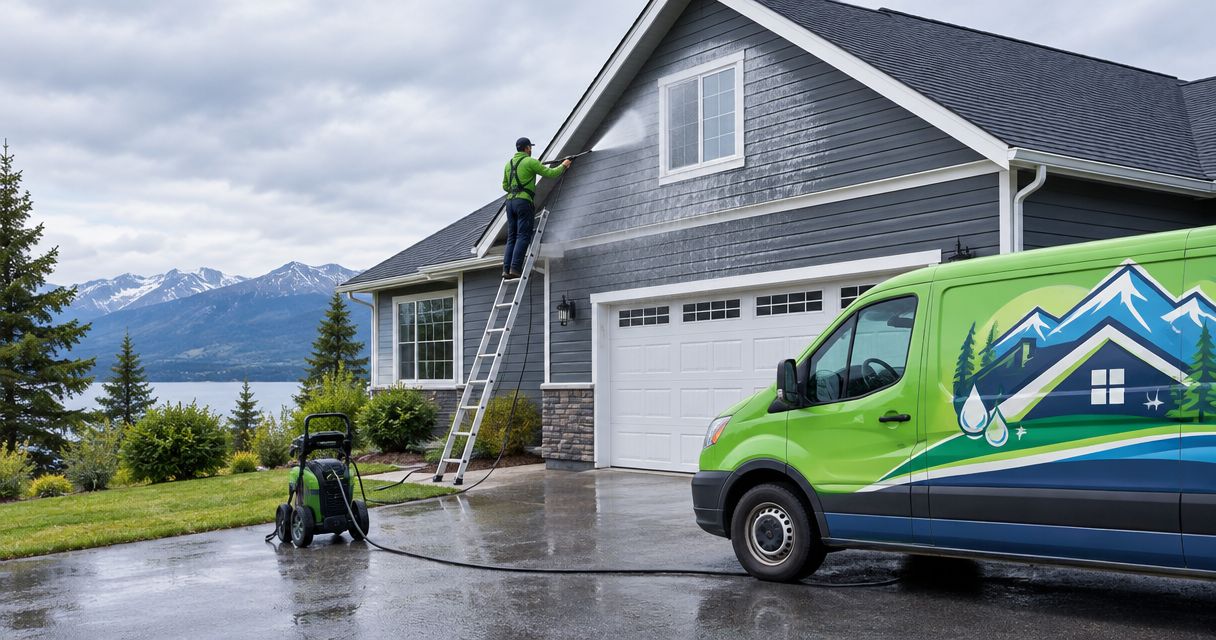
Knik-Fairview siding cleaning service work removes algae, moss, and black streaking from vinyl, cedar, and fiber-cement exteriors using low-pressure soft-washing, done with the goal of protecting the siding material instead of just making the house look clean for one season. Homes along this stretch of the Mat-Su Valley sit under heavier spruce and birch canopy than most of the Wasilla core, and that canopy is the reason siding here grows algae and moss faster than siding on an open lot a few miles south.
- Siding cleaning service in Knik-Fairview works best as a soft wash, not a pressure blast, on vinyl, cedar, and fiber-cement homes.
- Spruce and birch canopy keeps north-facing walls damp longer, so shaded siding needs attention that south-facing siding doesn't.
- Alaska Moss Doctor times most Knik-Fairview washes for late spring or early fall, ahead of the wettest shoulder seasons.
- DIY high-pressure washing is the leading cause of cracked vinyl seams and stripped paint on Mat-Su Valley homes.
- A yearly wash plus gutter clearing slows regrowth more than a single deep clean every few years.
Why siding cleaning matters for Knik-Fairview homes
Knik-Fairview is one of the fastest-growing residential pockets in the Mat-Su Valley, and most of the newer construction here went up with vinyl siding on lots that were logged just enough to fit the house, not enough to clear the tree line. That leaves long stretches of siding — especially the north and east walls — shaded for most of the day, which means dew and rain sit on the surface longer than they do on an open lot.
Algae and moss don't need much: shade, moisture, and a rough enough surface to grip. Vinyl seams, cedar shakes, and the textured finish on fiber-cement panels all give spores something to hold onto. Once established, that growth traps moisture against the siding itself, and that's the difference between a cosmetic problem and a maintenance problem. Alaska Moss Doctor treats siding growth the same way it treats roof moss — as something that gets worse the longer it sits, not something that resolves on its own with a dry week.
Homeowners searching for a siding cleaning service Knik-Fairview residents can actually schedule around their tree cover are usually past the point of a garden-hose fix. If moss has moved past a light green film into visible clumps at trim lines and J-channels, the surface underneath has already been wet for weeks.
Inspect your siding material and growth pattern
Before any wash gets scheduled, walk the exterior and note which walls are affected and how. Growth pattern tells you more about urgency than growth color does.
- Check north and east-facing walls first — they dry slowest under spruce cover
- Note whether growth is a thin green film (early stage) or raised, textured moss (advanced)
- Look at siding seams and J-channels for trapped debris and standing moisture
- Check for staining that runs downward from the roofline, which usually means roof algae is washing onto the siding
- Photograph problem areas before cleaning so you can track regrowth speed next year
Choose the right cleaning method for your siding type
Vinyl, cedar, fiber-cement, and stucco don't tolerate the same pressure or the same chemistry. Matching the method to the material is the single biggest factor in whether a wash helps or damages the house.
- Vinyl siding: soft wash only, low pressure, wide fan tip, rinse from the top down
- Cedar and wood siding: lower pressure than vinyl, oxygen-based cleaners over bleach-heavy mixes to protect the grain
- Fiber-cement siding: tolerates moderate pressure but still benefits from a soft-wash chemical dwell time to avoid streaking
- Stucco: soft wash exclusively — pressure drives water into the surface and can cause cracking
- Read up on soft wash house cleaning for cedar siding if the home has any exposed wood trim or shakes
Time the wash around Knik-Fairview's freeze-thaw calendar
Cleaning solution on siding that then refreezes overnight does nothing for algae and can leave a hazy film once temperatures climb back up. Alaska's shoulder seasons dictate the calendar more than any fixed date does.
- Target late spring, after nighttime lows stay reliably above freezing
- A second pass in early fall clears summer pollen and algae buildup before winter locks it in
- Avoid washing during active snowmelt, when runoff re-wets cleaned siding immediately
- Check the forecast for a 24-hour dry window after the wash, especially on cedar
- For roofs on the same schedule, the best time of year for roof moss removal in Alaska generally lines up with siding timing too
Protect landscaping, gutters, and trim before washing
A wash that damages flower beds or forces gutters to overflow costs more to fix than the siding cleaning saved. This step gets skipped more than any other on DIY jobs.
- Pre-wet and cover sensitive plants near foundation walls
- Clear gutters first so runoff has somewhere to go
- Tape or bag exterior light fixtures and vents
- Close windows and check weatherstripping for gaps before spraying near seams
- Move outdoor furniture and grills at least 10 feet from the work area
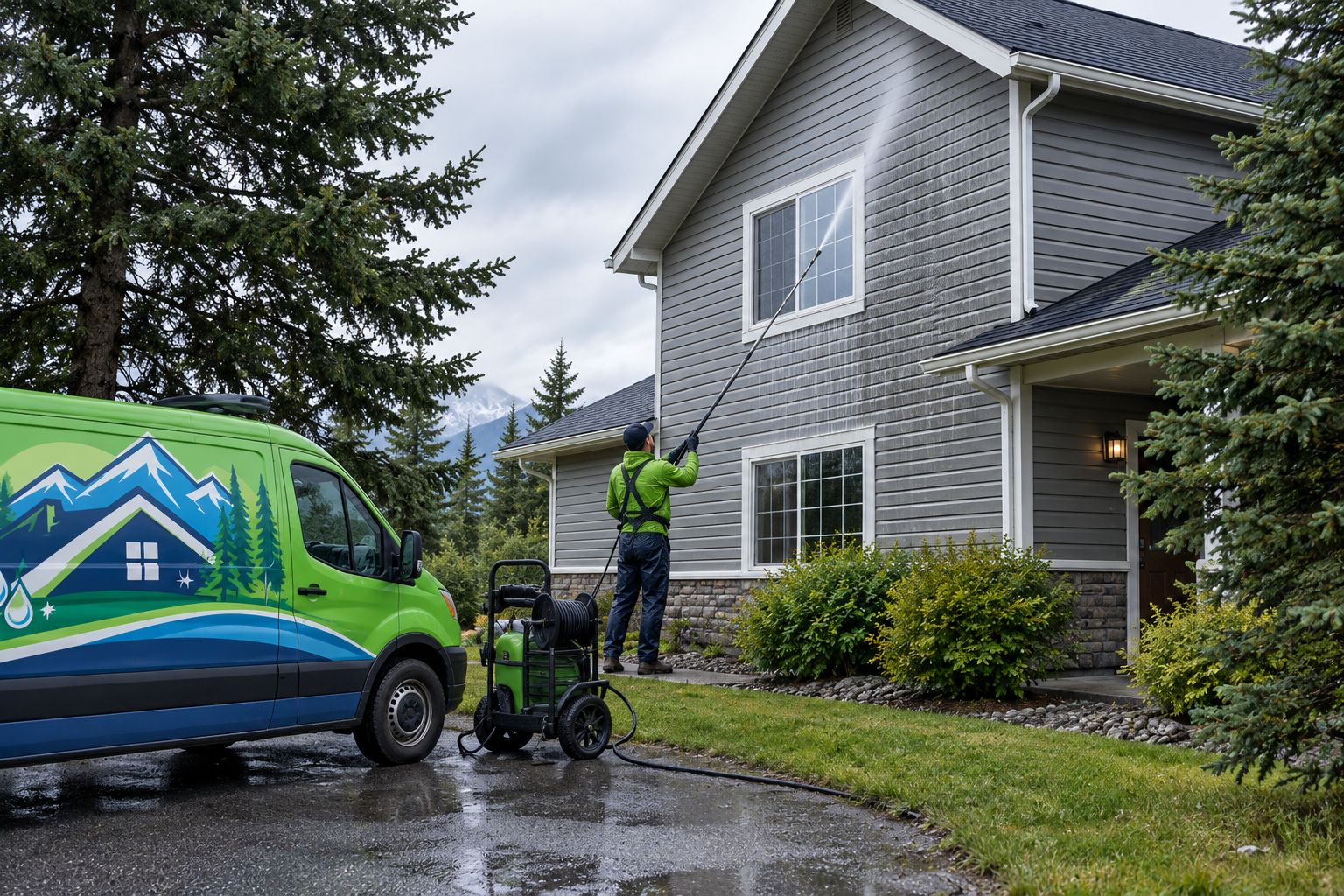
Apply a soft wash instead of high-pressure blasting
This is where most DIY attempts and some general pressure-washing companies get it wrong on Knik-Fairview homes. A pressure washer set for a driveway is not sized for siding.
“If a pressure washer leaves you standing several feet back just to keep from denting the siding, it's the wrong tool for algae removal.”
- Soft-wash equipment runs at a fraction of driveway pressure but holds cleaning solution on the surface longer
- Longer dwell time kills algae at the root instead of just blasting the visible layer off
- Low pressure avoids forcing water behind vinyl laps and into wall cavities
- Rinse top-down so dislodged debris doesn't restain lower panels
Treat shaded and problem zones separately
North-facing walls, corners tucked behind spruce, and anything under a roof overhang need a second look after the main wash. Uniform treatment across the whole house wastes solution on walls that barely needed it and under-treats the ones that did.
- Give shaded walls a longer chemical dwell time than sun-facing walls
- Re-check corners and eaves after the first rinse for missed spots
- Address black streaking separately — it often traces back to roof algae runoff, not siding growth itself
- If streaking keeps returning from above, the roof needs attention: see how to remove black streaks from a roof
Set a maintenance schedule to slow regrowth
One clean wash resets the clock, but Knik-Fairview's tree cover means the clock runs faster here than in an open subdivision. A schedule beats a one-time deep clean every time.
- Plan one full wash per year at minimum for shaded lots
- Add a spot-treatment pass on north walls if regrowth shows before the next full wash
- Pair siding cleaning with gutter clearing so runoff doesn't restart the growth cycle
- Log the wash date and growth photos to track whether the interval needs to shrink
Decide when to call a professional versus doing it yourself
A single-story home with light film on one wall is a reasonable DIY job with a garden-sprayer soft-wash kit. A two-story home with moss under heavy spruce cover, or any cedar or stucco exterior, is a different call.
- DIY works for spot treatment on accessible, single-story walls
- Ladders above one story on wet siding carry real fall risk — this is where most DIY injuries happen
- Cedar and stucco punish the wrong chemical mix in ways vinyl mostly forgives
- A soft wash pressure setting for delicate siding that's wrong on stucco can crack the surface permanently
Get your siding assessed before it gets worse
A quick look at growth stage and siding material determines the right wash method.
Comparing siding cleaning options for Knik-Fairview homes
| Option | Best for | Key limitation |
|---|---|---|
| DIY high-pressure washing | Concrete, driveways, non-siding surfaces | Drives water behind seams and strips paint on vinyl and wood |
| DIY soft wash with garden sprayer | Single-story homes, light film on sunny walls | Inconsistent dwell time, misses high peaks and eaves |
| General pressure-washing companies | One-time whole-house wash on tough surfaces | Often lack soft-wash-specific solutions for siding, risk of damage |
| Alaska Moss Doctor soft-wash siding cleaning | Homes with heavy moss or algae under spruce or birch cover | Not built for large commercial fleet accounts |
| No treatment | Homes on open, sun-exposed lots with minimal shade | Algae and moss return faster on shaded walls and stain deeper over time |
Verdict: for Knik-Fairview homes with meaningful tree cover, soft-wash siding cleaning from a service that adjusts dwell time and pressure by material — Alaska Moss Doctor's approach — beats both generic pressure washing and skipping the wash entirely.
Common mistakes Knik-Fairview homeowners make
- Pressure washing vinyl on cold days. Vinyl gets brittle in Alaska's shoulder-season temperature swings, and high pressure on cold plastic cracks seams that a soft wash never would.
- Only washing the sunny side. The south wall looks clean fast; the shaded north wall under spruce keeps growing and gets ignored until it's obvious from the street.
- Skipping gutters before the wash. Clogged gutters overflow during the rinse and re-wet the exact panels just cleaned, undoing the work in one storm.
- Using bleach-heavy DIY mixes on well water lots. Runoff near a well or septic field on a heavy-bleach mix isn't something most Knik-Fairview homeowners want to explain to a neighbor downhill.
- Waiting until a home sale to clean siding. Buyers notice green streaking on inspection day; a routine wash a season earlier avoids the scramble covered in moss removal before selling your Alaska home.
FAQ
What's the best siding cleaning method for Knik-Fairview homes?
Soft washing is the best method for most Knik-Fairview siding, since it uses low pressure and a longer chemical dwell time instead of force to remove algae and moss. High-pressure washing on vinyl or cedar risks cracking seams and stripping paint.
How often should siding be cleaned in the Mat-Su Valley?
Once a year is the minimum for homes with spruce or birch shading part of the exterior, with a spot check on north-facing walls between full washes. Open, sun-exposed lots can often stretch that interval.
Is soft washing safe for vinyl siding in Alaska?
Yes, soft washing is the safer option for vinyl because it avoids the pressure levels that can force water behind seams and into wall cavities. High-pressure washing is the more common cause of vinyl siding damage in the Mat-Su Valley.
Can pressure washing damage siding?
Yes, high pressure on vinyl, cedar, or stucco can crack, strip paint, or drive water behind panels. Fiber-cement tolerates moderate pressure better than the other three materials but still benefits from a soft-wash approach.
How much does professional siding cleaning cost in Alaska?
Cost depends on square footage, siding material, and how much growth has to be treated before the wash. A property assessment is the fastest way to get an accurate figure rather than estimating from a general range.
What causes black streaks and green algae on Knik-Fairview homes?
Black streaking usually traces back to algae washing down from the roof onto the siding below, while green film growing directly on siding comes from moisture trapped by shade. Both thrive under the spruce and birch canopy common to the area.
Does moss on siding indicate a bigger problem?
Moss on siding itself is mostly cosmetic, but it signals prolonged moisture exposure that can also be affecting trim, caulking, and the roofline above it. Checking the roof and gutters at the same time as the siding catches the source, not just the symptom.
Can I clean my siding myself?
A single-story home with light algae film on accessible walls is a reasonable DIY soft-wash job. Two-story homes, cedar or stucco exteriors, or heavy moss under tree cover are better handled by a service that adjusts pressure and chemistry by material.
One last thing
The mistake that costs Knik-Fairview homeowners the most isn't skipping the wash — it's washing only the visible, sunny side and leaving the shaded north wall untouched, where moss regrows fastest because it never fully dries between rains. A full-exterior soft wash in 2026, timed for the spring or fall shoulder season, catches both sides before one wall drags the whole house's curb appeal down.