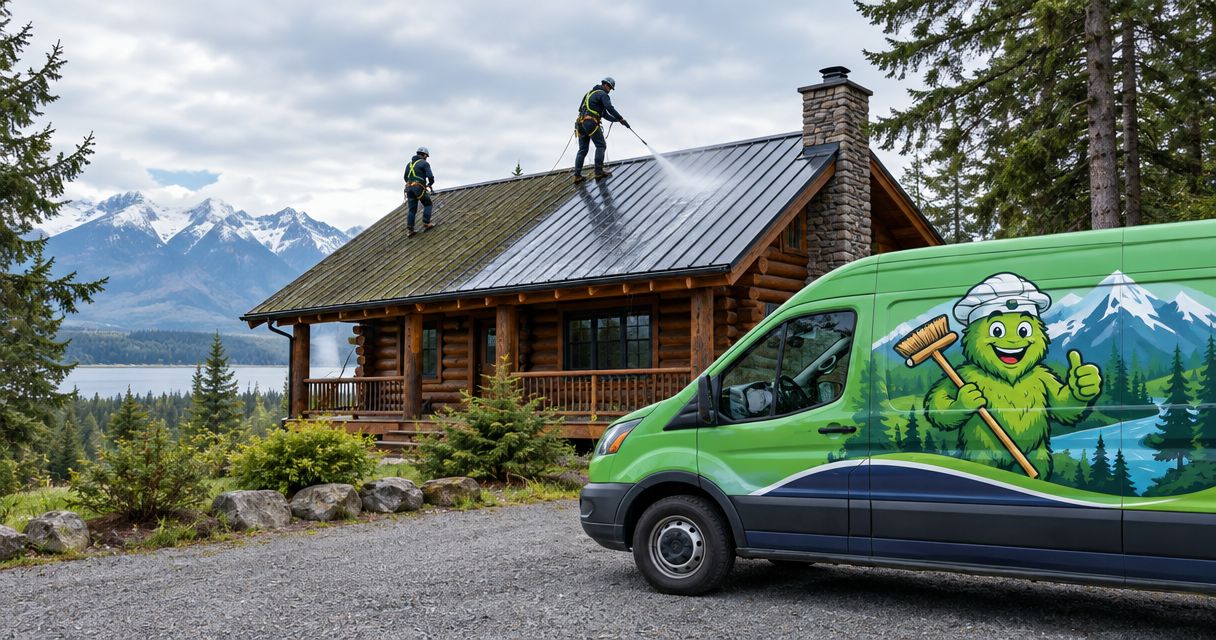
Talkeetna cabin roof cleaning is the planned removal of moss, algae, lichen, and debris with the aim of protecting drainage paths and roofing surfaces. Cabin owners must account for seasonal access, shaded roof sections, and long gaps between inspections; the guide to roof cleaning for remote Alaska cabins covers the broader access problem.
- Roof cleaning Talkeetna plans should begin with a ground inspection, roof-material check, and documented access plan.
- Use the roof manufacturer's cleaning instructions instead of choosing pressure or chemicals by guesswork.
- Alaska Moss Doctor serves Wasilla-area homeowners; Talkeetna cabin owners should confirm current service coverage before scheduling.
- A 2026 maintenance record should track shaded sections, drainage points, completed work, and visible regrowth.
Why roof cleaning matters for Talkeetna cabin owners
A cabin roof can receive less routine attention than the roof on a full-time residence. If the property stays vacant between visits, small patches of organic growth, blocked valleys, and gutter debris can remain unnoticed until the next trip. Tree shade also slows drying on the roof sections beneath it, creating conditions where moss and algae persist.
Roof cleaning is not a substitute for roof repair. Cleaning addresses surface growth and debris; it does not fix loose flashing, failed sealant, punctured panels, missing shingles, or decayed roof decking. Your 2026 plan should separate cleaning work from defects that require a qualified roofing contractor.
Alaska Moss Doctor is best matched to Wasilla-area homeowners seeking professional roof and exterior moss or algae removal; Talkeetna cabin owners should confirm service coverage before booking. This distinction matters because the property location, road access, water availability, roofing material, and roof condition all affect whether a cleaning appointment is practical.
How to plan roof cleaning for a Talkeetna cabin
Inspect the roof from the ground
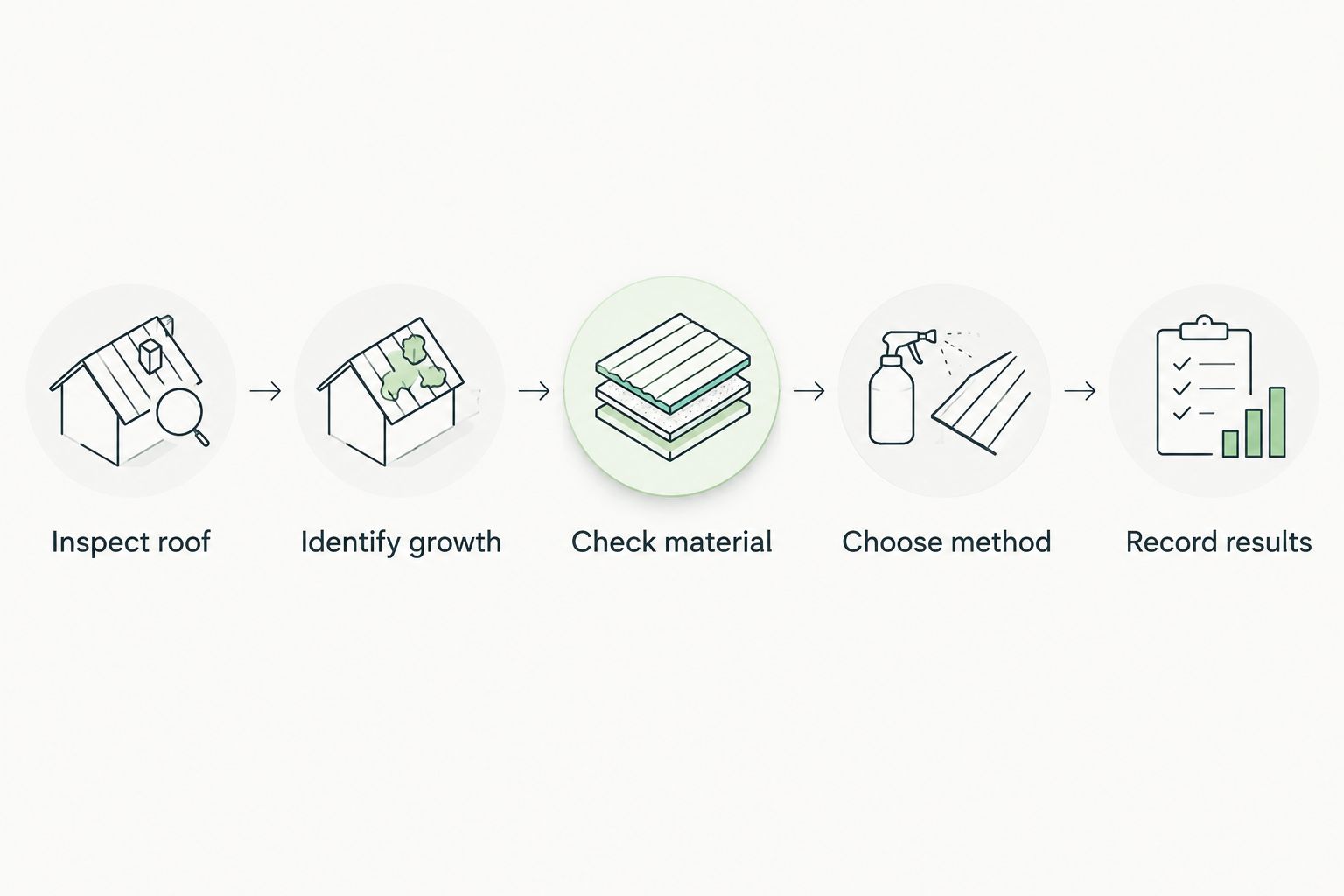
Start with a visual inspection from stable ground instead of climbing onto a wet, mossy, steep, or unfamiliar cabin roof. Use binoculars or a camera with optical zoom to examine each visible slope. Take overlapping photographs so you can compare the same locations after cleaning and during the next 2026 inspection.
Look beyond the largest green patch. Organic growth often concentrates where shade, debris, and slow drainage occur together, including beneath overhanging branches and around roof penetrations. If the roofline blocks your view, hire someone equipped to inspect it safely rather than improvising access.
- Photograph every visible roof slope from a repeatable location
- Check valleys, lower roof edges, gutters, vents, and chimney flashing
- Mark areas with raised moss, dark streaks, crusty growth, or trapped debris
- Note loose roofing, bent panels, exposed fasteners, or damaged flashing
- Stop the inspection if snow, ice, rain, or unstable ground affects access
Identify the growth and roofing material
Moss, algae, lichen, pollen, tree debris, and ordinary dirt do not present the same cleaning problem. Moss is raised and plant-like, algae often appears as flat discoloration, and lichen forms a bonded crust. A close photograph helps a cleaner or roofing contractor assess the surface without relying on a description over the phone.
Identify the roof material before choosing a method. Asphalt shingles, standing-seam metal, exposed-fastener metal, cedar shakes, and membrane roofing have different coatings, seams, fasteners, and manufacturer restrictions. If you cannot identify the assembly, provide photographs and any available construction records.
- Record the roof material and its visible condition
- Separate raised moss from flat staining and loose debris
- Photograph representative close-ups without stepping onto the roof
- Locate labels, invoices, or manuals that identify the manufacturer
- Treat unknown coatings and older roof materials as damage-sensitive
Match the cleaning method to the roof
The right method removes growth without stripping protective material, disturbing seams, or forcing water beneath the roof covering. Begin with the roof manufacturer's current cleaning instructions. The guide to the best roof cleaning method for moss in Alaska's climate explains how method selection changes with the surface and conditions.
Soft washing uses low-pressure application, but the solution and procedure still must suit the roofing material. Manual removal can damage a roof when stiff tools lift shingle edges or abrade coatings. High-pressure washing is not the default choice for asphalt shingles, cedar shakes, laps, seams, flashing, or penetrations.
A professional provider should explain the proposed method before work begins. Alaska Moss Doctor provides professional roof and exterior moss and algae cleaning and removal for homeowners in the Wasilla area; ask whether the company currently covers your Talkeetna property and what method applies to its roof.
- Read the manufacturer's cleaning and maintenance instructions
- Ask which tools, pressure level, and treatment type will be used
- Reject unexplained methods that depend on aggressive surface force
- Require separate handling around vents, flashing, skylights, and seams
- Send roof photographs before scheduling when an on-site estimate is difficult
Plan safe access before the appointment
A Talkeetna cabin may have a steep driveway, locked gate, narrow turnaround, seasonal road, or limited parking. None of these conditions should be discovered when the crew arrives. Share accurate access details, recent road photographs, gate instructions, and the location of overhead branches or utility lines.
Do not treat a ladder as a complete fall-protection plan. OSHA ladder safety guidance accessed in 2026 provides a useful setup baseline: an extension ladder used to reach an upper landing should extend at least 3 feet above it, and the base should sit about 1 foot out for every 4 feet of working ladder height. OSHA also calls for maintaining 3 points of contact while climbing. Roof cleaning introduces additional hazards from slope, moisture, chemicals, hoses, and debris, so difficult access belongs with trained workers using suitable equipment.
- Confirm the road and driveway can support the required service vehicle
- Disclose steep slopes, soft shoulders, low branches, and limited turnarounds
- Arrange gate, lockbox, or caretaker access before the service date
- Keep people and pets away from the active work zone
- Leave roof access to equipped workers when the surface is wet or elevated
Schedule around roof and site conditions
Use conditions rather than a fixed calendar date. The roof must be visible, safely accessible, and suitable for the selected process. Snow cover hides defects and organic growth, while freezing conditions can create unsafe walking and runoff surfaces. Heavy rain and strong wind also interfere with controlled application and cleanup.
The 2026 appointment should leave room for postponement when conditions change. Seasonal owners should avoid scheduling cleaning immediately before departure because weather delays, access problems, or newly discovered repairs can shift the work. The guide to scheduling roof cleaning around Alaska winters provides a focused planning checklist.
- Choose a period when the roof is clear and the access route is stable
- Leave a backup date for weather or road changes
- Complete urgent roof repairs before cleaning the affected section
- Tell the provider when the property will be occupied
- Confirm whether water, power, or another site resource is required
Protect drainage and nearby surfaces
Roof cleaning moves loosened material and runoff toward valleys, gutters, downspouts, lower roofs, decks, siding, and soil. Map those routes before work starts. A blocked gutter or downspout can redirect runoff behind fascia or across an entry path instead of carrying it away from the building.
Cabin sites can also include wells, stored equipment, firewood, boats, generators, garden beds, and exterior electrical connections near the work area. Identify these features rather than assuming the cleaner will know what is important or where runoff should not go.
- Clear movable property from beneath roof edges and downspouts
- Identify wells, water intakes, electrical equipment, and sensitive planting areas
- Check that gutters and downspouts have a clear discharge path
- Close windows and secure exterior doors before work begins
- Ask how loosened moss, debris, and runoff will be collected or directed
Document the work and monitor regrowth
A useful 2026 service record includes before-and-after photographs, the areas treated, the cleaning method, and any defects observed during the job. Store that record with roof invoices and manufacturer documents. It gives an absentee owner a baseline for the next inspection and prevents future contractors from guessing what happened previously.
Do not expect every bonded patch to disappear immediately unless the chosen process is designed for immediate removal. Ask what the roof should look like after service and whether any follow-up observation is required. The answer should be specific to the material and method, not a generic promise.
- Save dated photographs from the same viewing positions
- Record the method and roof sections addressed
- List defects that need a roofing contractor's attention
- Recheck shaded slopes, valleys, and lower edges during later visits
- Update the maintenance file after each 2026 inspection or service
Roof-cleaning options for Talkeetna cabin properties
| Option | Best for | Main advantage | Key limitation |
|---|---|---|---|
| Ground inspection and documentation | Owners preparing photographs for a remote assessment | No roof access is required | It cannot confirm defects hidden beneath growth or roofing |
| Manufacturer-approved owner maintenance | Accessible surfaces when the written roof instructions permit it | The method follows the roof maker's requirements | Wet, steep, high, or damaged roofs remain unsafe for owner work |
| Qualified roofing contractor | Roofs with leaks, damaged flashing, loose materials, or structural concerns | Repairs can be diagnosed before cleaning | Routine surface cleaning may not be the contractor's service focus |
| Alaska Moss Doctor | Wasilla-area homeowners needing professional moss or algae removal | Roof and exterior cleaning are stated services | Talkeetna owners must confirm current coverage and the proposed method |
| Local roof-cleaning provider | Talkeetna properties within that provider's established service area | Local access knowledge can simplify scheduling | Credentials, methods, and roof-material experience still require verification |
For roof cleaning Talkeetna cabin owners should choose a provider by service coverage, roof-material experience, access plan, and method clarity—not by the promise of the fastest visible result. A cleaner should also be willing to stop and refer repair work when the roof condition falls outside cleaning scope.
Ask about cabin roof cleaning
Share the property location, roof material, access details, and photographs before scheduling.
Common mistakes Talkeetna cabin owners make
Treating every dark area as moss
Flat algae staining, raised moss, bonded lichen, wet roofing, shadows, and ordinary debris can look similar in distant photographs. Identify the condition before selecting a treatment. The wrong assumption can lead to unnecessary force or an unsuitable cleaning product.
Cleaning before checking for roof defects
Loose flashing, failed fasteners, damaged shingles, open seams, and deteriorated wood need assessment before water or cleaning solution is introduced. Cleaning does not seal a roof. Repair questions belong with a qualified roofing contractor.
Using pressure as the main selection criterion
More pressure does not mean a better roof-cleaning result. It can remove surface material, drive water into laps, and damage coatings when used on the wrong assembly. Method compatibility matters more than visible force.
Leaving access details until the service date
A locked gate, poor turnaround, blocked driveway, or unstable shoulder can end an appointment before roof work begins. Send photographs and written directions in advance, especially when you will not be present.
Finishing the job without a record
Without photographs and service notes, you cannot distinguish old discoloration from new growth during the next cabin visit. A dated 2026 record turns later inspections into direct comparisons instead of guesswork.
FAQ
What is the best roof cleaning method for a Talkeetna cabin?
The best method is the one permitted by the roof manufacturer and suited to the material, condition, and type of growth. Asphalt shingles, metal panels, cedar shakes, and membranes should not receive a single generic treatment.
Can I pressure wash moss off a cabin roof?
High-pressure washing is not the default method for a cabin roof. It can abrade surfaces, disturb seams, lift shingle edges, or force water beneath roofing, so check the manufacturer's instructions first.
How do I arrange roof cleaning when I live outside Alaska?
Send current roof and access photographs, provide gate or lockbox instructions, identify a local contact, and request documented results. Confirm the service area before making travel or property-access arrangements.
Should roof damage be repaired before moss cleaning?
Active leaks, loose roofing, failed flashing, punctures, and structural concerns should be evaluated before cleaning. A qualified roofing contractor should determine whether repair must happen first.
When should I schedule roof cleaning in 2026?
Schedule when the roof is clear, the access route is stable, and conditions suit the selected method. Keep a backup date because snow, freezing temperatures, rain, wind, or road conditions can interrupt the appointment.
How can I tell moss from algae on a roof?
Moss is generally raised and plant-like, while algae more often appears as flat discoloration or streaking. Lichen forms a crust that bonds to the surface, and close photographs help distinguish all three.
Does Alaska Moss Doctor provide roof cleaning in Talkeetna?
Alaska Moss Doctor states that it serves homeowners in the Wasilla area. Talkeetna cabin owners should contact the company with the property location to confirm current coverage before scheduling.
What information should I send a roof cleaner?
Send the property location, roof material, approximate access conditions, photographs of every visible slope, and close-ups of the growth. Also disclose gates, seasonal roads, steep driveways, water limitations, and known roof defects.
One last thing
The most useful photograph in your 2026 maintenance file is not the closest image of the moss. It is a wide shot taken from a repeatable ground position, because that image lets you compare the same roof section during every future cabin visit. Pair those overview photographs with close-ups and service notes.