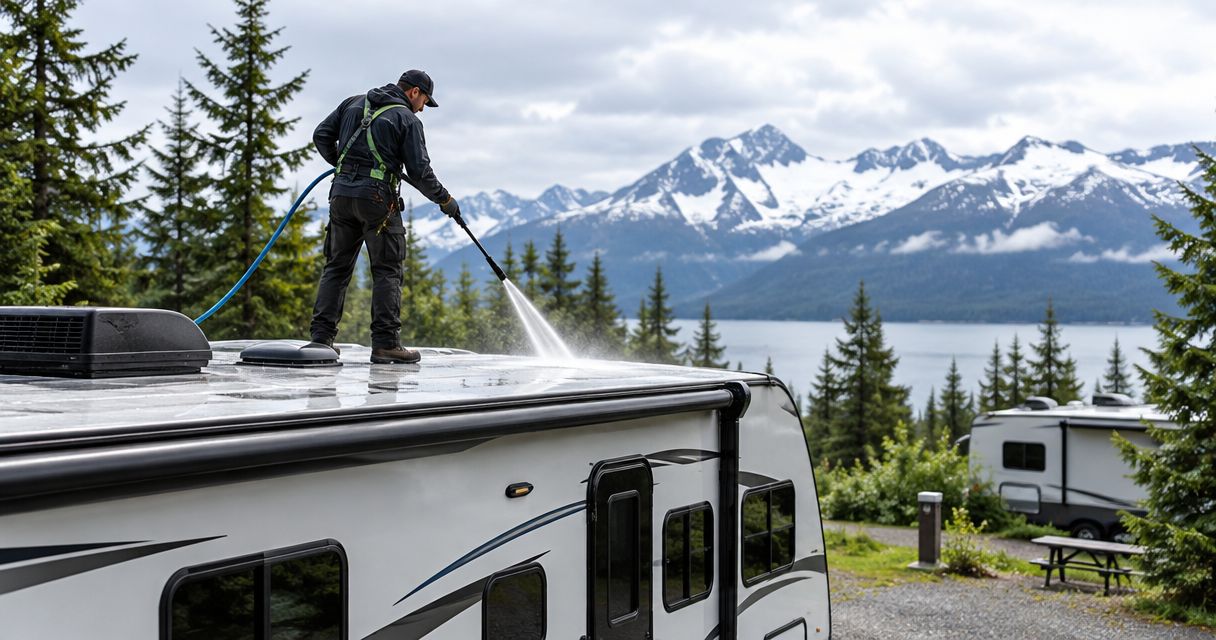
Roof cleaning for RV parks and campgrounds in Alaska means washing bathhouses, cabin rentals, maintenance sheds, and park offices that sit under spruce and birch canopy for months without anyone looking up. Guests notice black streaks and green roof patches before they notice anything else about a property, and in 2026 that first impression decides whether a reservation gets repeated.
- Roof cleaning for RV parks Alaska means soft-washing bathhouses, cabins, and office roofs before the 2026 guest season opens.
- Alaska Moss Doctor treats moss and algae on multi-building sites without the pressure that strips shingle granules.
- Spring cleaning (April-May) beats mid-season washing because it avoids disrupting paying guests.
- RVs parked long-term develop their own moss and algae buildup separate from the structures around them.
Why roof cleaning matters for Alaska RV parks and campgrounds
A campground isn't one roof, it's eight or twelve roofs of different ages, pitches, and materials sitting on the same lot. Mat-Su Valley sites with heavy spruce cover hold moisture against shingles for weeks after a rain event, and moss that would take a year to establish on an open Anchorage rooftop can take root in a single wet season under tree canopy.
Campground owners also run on a tighter calendar than a homeowner. Alaska's open season runs roughly May through September, and any roof work has to land before check-ins start or during a shoulder window guests won't notice. Moss and algae removal for RVs and boats covers the parked-unit side of this; the structures on the lot need their own plan.
The verdict for most Alaska campgrounds: soft-wash every shingle and metal roof on the property in spring, before the first guest arrives, not during a slow week in July.
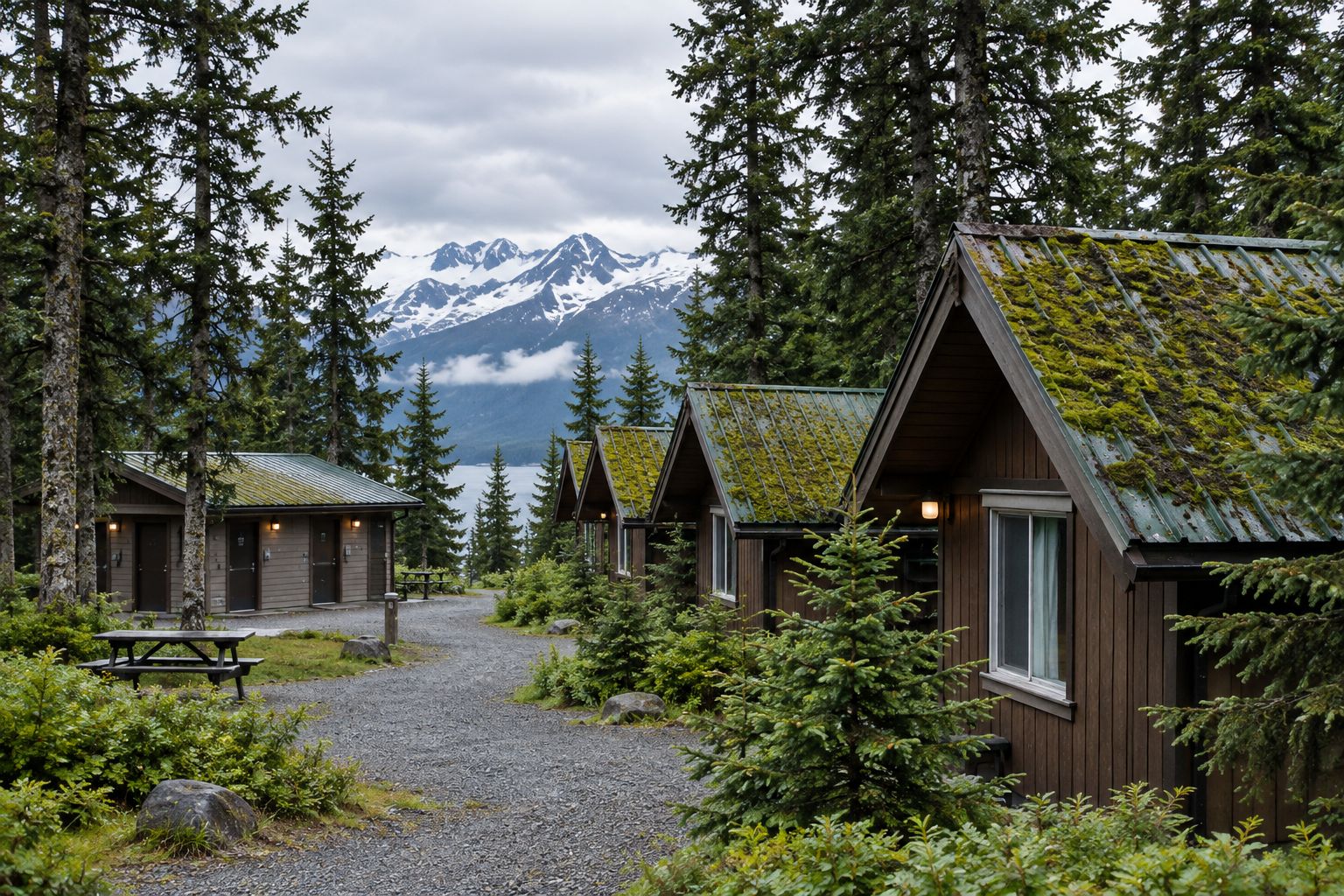
Inspect every roof on the property before the season starts
A walk-through in April catches what a guest complaint catches in July, except nobody's refund is on the line yet.
- Check north-facing slopes and anything under tree cover first, moss establishes there months ahead of sun-exposed roofs
- Photograph black streak patterns on asphalt shingles; algae streaking spreads faster than moss and is often mistaken for dirt
- Note any roof with visible sag or soft spots, moss removal on a compromised deck needs a different approach
- Flag metal roofs separately; they need a different wash pressure and chemical dwell time than shingles
- Check gutters and downspouts on every building, not just the office
- Record which buildings face the parking loop and road, those get judged by every arriving guest
Schedule around guest turnover, not just weather
Weather drives the wash window everywhere else in Alaska. At a campground, occupancy drives it too.
- Book the full property wash for a shoulder week before Memorial Day, before reservations fill the lot
- Avoid scheduling during weekend turnover days when guests are loading and unloading near the buildings
- Stagger cabin roofs across two visits if the crew can't clear the whole site in one pass without blocking access roads
- Cross-check the best time of year to remove roof moss in Alaska against your opening date, not a generic calendar
- Hold a buffer day in the schedule for weather, a rained-out wash day pushed into opening week is the most common scheduling mistake on multi-building sites
Match the wash method to each roof type
A bathhouse, an office, and a row of rustic cabins rarely share one roof material, and one wash method on all of them is how shingles lose their granule coating.
- Soft-wash asphalt shingle roofs with low pressure and a biodegradable solution, never a high-PSI pressure washer directly on shingles
- Use a different dwell time and rinse method on metal roofing than on shingles; metal tolerates more pressure but shows streaking differently
- Treat flat or low-slope roofs on maintenance buildings with a method built for standing water and ponding, not a sloped-roof technique
- Spot-test any new solution on a hidden shingle section before covering a whole building
- Skip DIY pressure washing on steep cabin roofs entirely, fall risk on a wet, mossy pitch is the single biggest liability exposure on a campground site
Protect landscaping, wells, and nearby water
Alaska campgrounds sit near creeks, wells, and septic fields more often than a typical residential lot, and runoff that's fine on a driveway isn't fine near a salmon stream.
- Confirm the cleaning solution is biodegradable and labeled safe for use near waterways before any crew starts
- Cover or divert runoff away from wellheads and septic drain fields during the wash
- Pre-wet landscaping and ground cover around each building to dilute any solution that drifts
- Rinse decking, walkways, and picnic areas that sit directly under treated roof edges
- Keep guests and pets clear of the work zone until surfaces have fully dried
Treat RV units and seasonal cabins separately from permanent structures
The RVs parked long-term on a site develop their own moss and algae layer, independent of the roofs around them, and they need gentler handling than a shingle roof.
- Use a lower-pressure, RV-rated wash method on fiberglass and rubber roof membranes, standard roof pressure cracks seams
- Schedule RV exterior washes separately from building roof washes; different surfaces, different timing
- Check seasonal cabin roofs that sat unoccupied all winter for moss growth that started before the season even opened
- Note any RV with a soft or spongy roof section and flag it to the owner before washing, not after
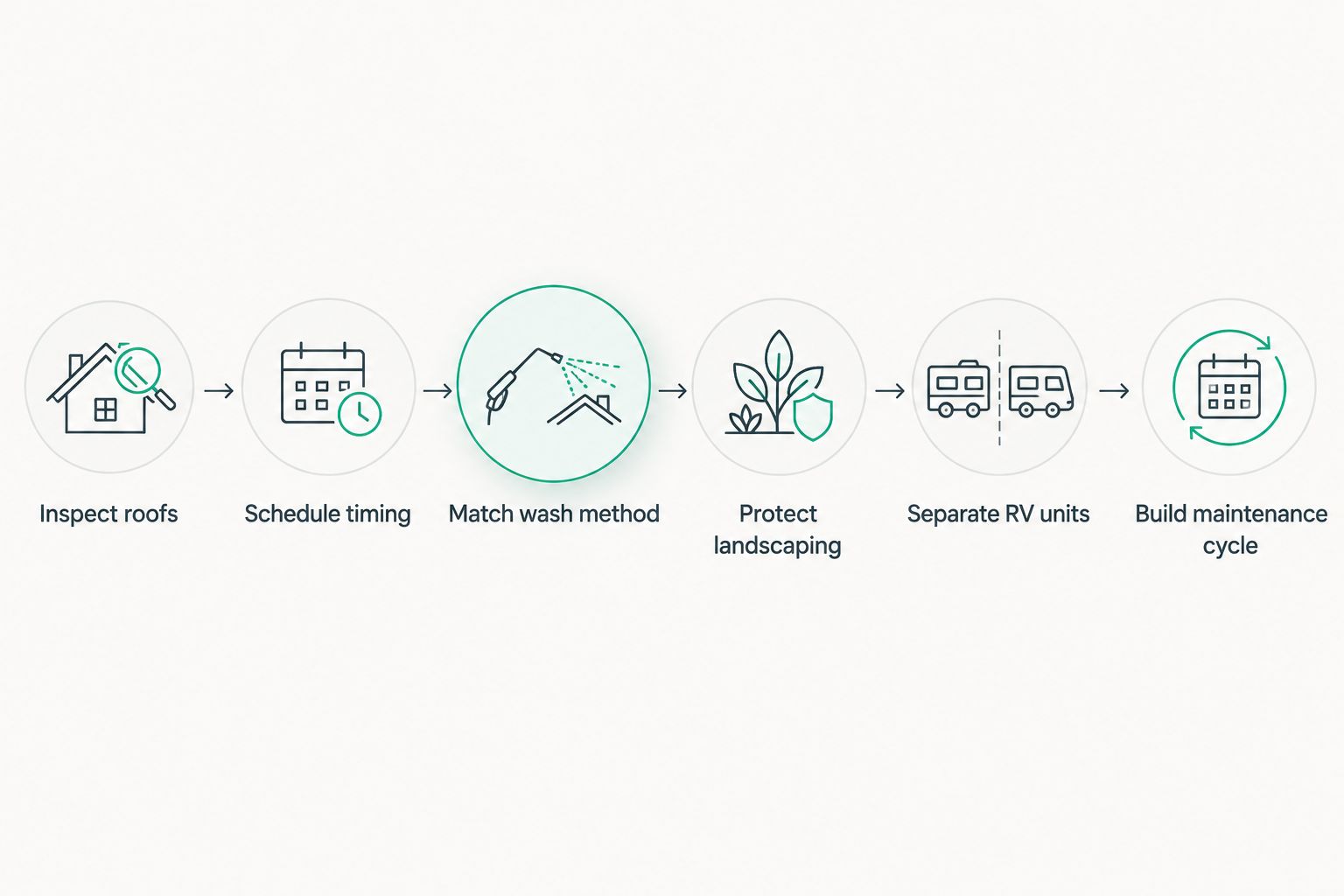
Build a year-round maintenance cycle
One wash a year slows moss regrowth; it doesn't stop it on a shaded Alaska lot.
- Plan a spring wash before opening and a fall check before snow load settles on untreated moss patches
- Budget the cleaning cycle against occupancy revenue, not as an afterthought line item, see how to budget for professional roof cleaning
- Reinspect any building that had moss removed within the last 18 months before assuming it's clear
- Keep a simple log of which roofs got treated and when, so a multi-building site doesn't lose track year to year
Options compared for RV parks and campgrounds
| Option | Best for | Key limitation | Verdict |
|---|---|---|---|
| DIY crew with a pressure washer | Tight-budget sites with one or two buildings | High pressure strips shingle granules and can void roof warranties | Skip on shingle roofs |
| General pressure washing contractor | Driveways, siding, parking pads | Few carry soft-wash gear calibrated for shingles or RV membranes | Hold for non-roof surfaces |
| Professional soft-wash service (Alaska Moss Doctor) | Multi-building campground sites with shaded, moss-prone roofs | Short Alaska wash season means booking fills early | Buy ahead of season |
| No cleaning | Brand-new roofs in full sun with no tree cover | Moss mats trap moisture and shorten roof lifespan | Wait, not skip forever |
Common mistakes RV park and campground owners make
- Washing the office and bathhouse, skipping the cabins because they're farther from the road, guests see those roofs too, and moss spreads between adjacent structures
- Running a pressure washer at full force on RV roof membranes, cracking seams that then leak through the next winter
- Scheduling the wash after guests arrive instead of before opening, which means cleaning around occupied sites and lost labor efficiency
- Scraping moss off with a brush instead of treating it, which removes the visible mat but leaves spores that regrow within a season
- Ignoring runoff near wells and septic fields, a real risk on waterfront and off-grid Mat-Su Valley lots where cleaning solution can reach a water source fast
Get your campground roof schedule set
Book spring moss removal before the 2026 season opens.
FAQ
What's the best way to clean moss off an RV park roof in Alaska?
Soft-washing with a low-pressure, biodegradable solution is the standard method for shingle and metal roofs at Alaska campgrounds in 2026. High-pressure washing strips shingle granules and can void manufacturer warranties.
How often should an Alaska campground schedule roof cleaning?
Most multi-building sites need a spring wash before opening and a fall check before winter snow load settles on any regrowth. Heavily shaded lots under spruce or birch canopy often need both passes every year.
Can pressure washing damage RV roofs?
Yes. Standard roof-washing pressure can crack seams on fiberglass and rubber RV roof membranes, which is why RVs need a separate, gentler wash method than building roofs.
Is soft washing safe for cabin and bathhouse shingle roofs?
Soft washing is the safer option for asphalt shingle roofs because it uses low pressure and a treatment solution instead of force to remove moss and algae. A hidden-spot test before the full wash confirms the solution won't discolor that specific roof.
What does professional roof cleaning cost for a campground?
Cost depends on the number of buildings, roof pitch, and how established the moss is, so it varies site to site. Request a quote based on your specific building count rather than a flat per-roof estimate.
What time of year is best for roof moss removal in Alaska?
Spring, before the guest season opens, is the preferred window for most Alaska campgrounds. It avoids disrupting paying guests and clears moss before the summer growing season accelerates it.
Does moss removal protect RV park roofs from ice dams?
Moss mats trap moisture and snow against shingles, which contributes to ice dam formation over winter. Clearing moss in fall, before snow load sets in, reduces that risk on shaded roof sections.
Do RV park owners need to treat moss on parked RVs too?
Yes, long-term parked RVs develop their own moss and algae layer independent of the buildings around them. They need a separate, lower-pressure wash method suited to RV roof materials.
One last thing
North-facing roof sections at Alaska campgrounds stay mossy longer than every other slope on the same building, often by a full season, because they get the least direct sun even after a wash. Flag those sections for the earliest spring visit and check them first on the fall walk-through, they're the slopes that regrow fastest and the ones guests standing in the parking loop see head-on.