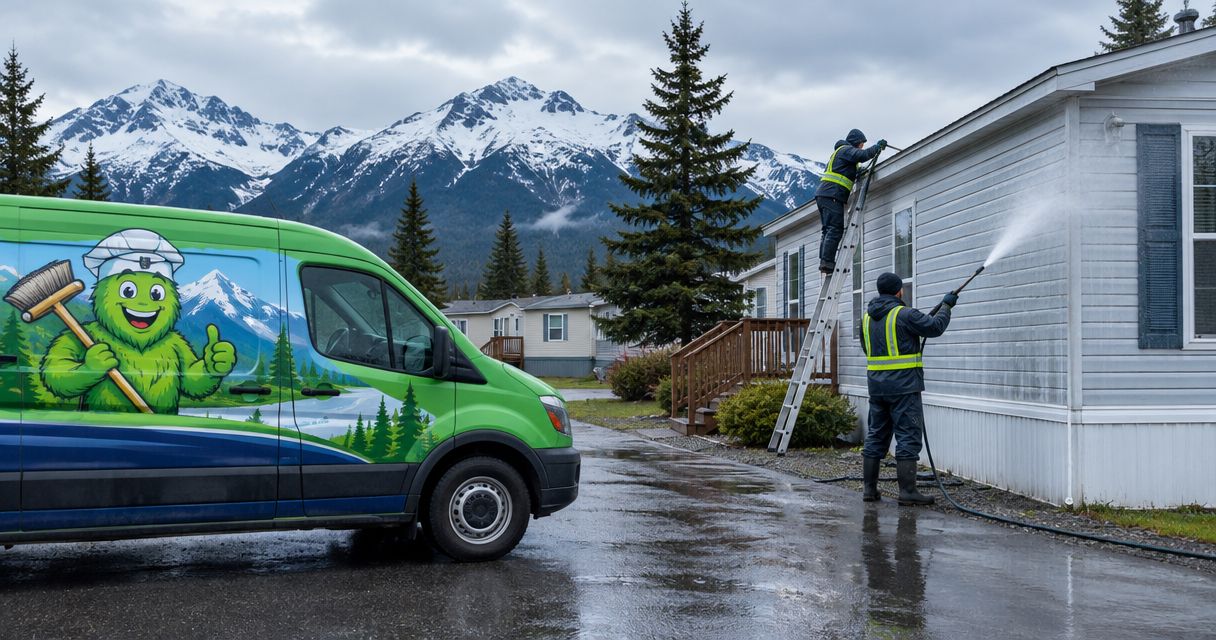
Alaska mobile home park exterior cleaning is a scheduled, park-wide program of roof and siding washing that stops moss and algae from spreading between lots before it drags down curb appeal, voids a roofing warranty, or triggers an HOA violation notice. A single Wasilla homeowner cleans one roof on their own timeline. A manufactured home community has to coordinate dozens of low-pitch roofs, shared tree cover, and one manager who answers to every lot at once.
- Park-wide scheduling beats lot-by-lot cleaning for exterior cleaning mobile home parks Alaska communities depend on.
- Soft washing, not pressure washing, is the safe method for vinyl siding and low-pitch roofing common on manufactured homes.
- Spruce- and birch-shaded lots regrow moss fastest and need a shorter re-clean interval than open lots.
- Alaska Moss Doctor coordinates multi-unit scheduling for Mat-Su Valley parks; DIY scraping only works as a stopgap between visits.
Why exterior cleaning matters for Alaska mobile home parks
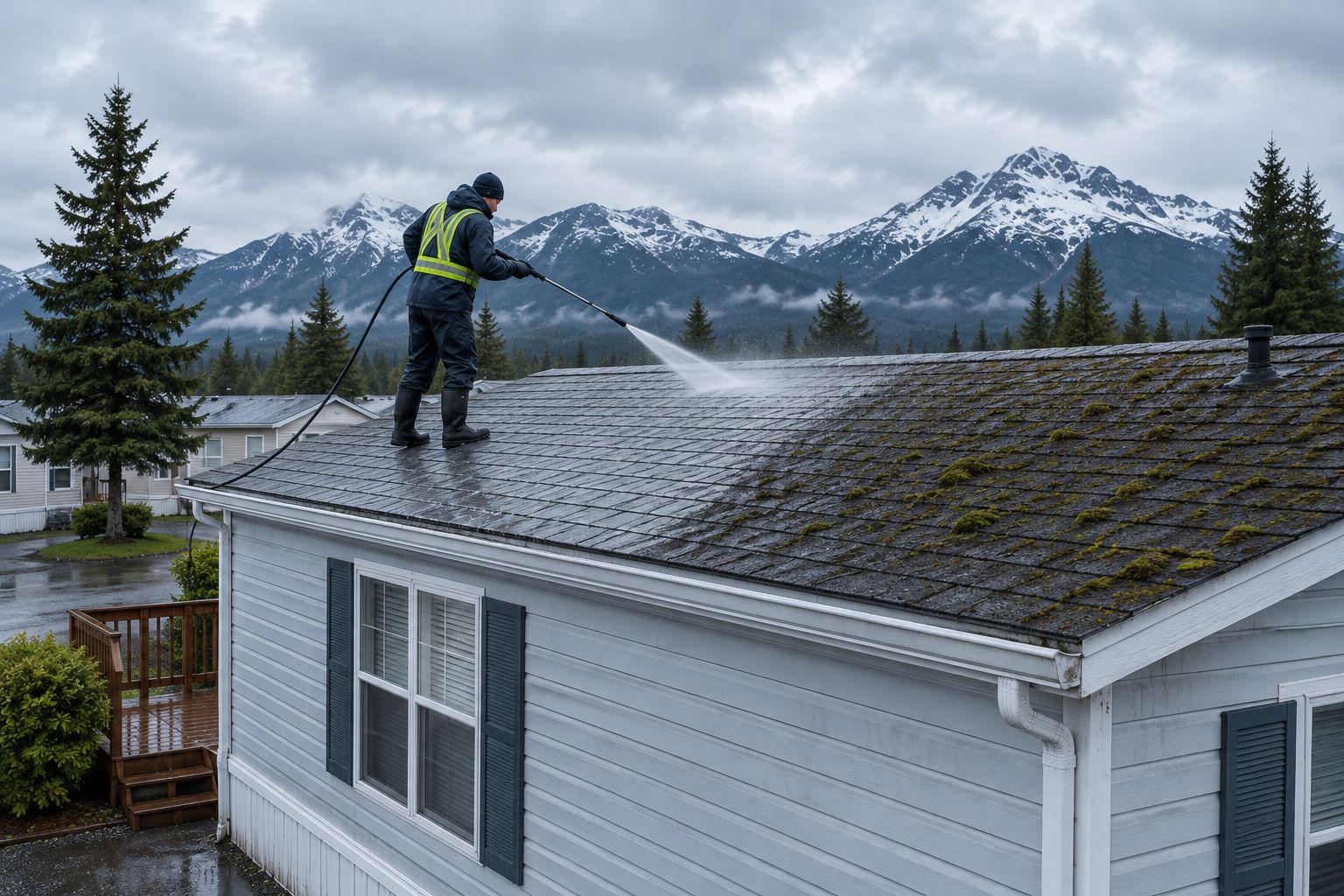
Wet summers and heavy spruce and birch cover around Wasilla and the wider Mat-Su Valley keep roofs and siding damp long after a rain, which is exactly what moss and algae need to establish. Manufactured homes typically carry lower roof pitches than site-built houses, so water sits longer and moss gets a head start before anyone notices.
Once moss takes hold on one lot, spores travel to the roof next door. A park that lets a handful of homes go untreated is setting up every other lot for the same problem within a season or two. Most park associations and property management agreements also write exterior appearance standards into the lease or covenant, and moss buildup is one of the most common flags during a walkthrough.
The step-by-step approach
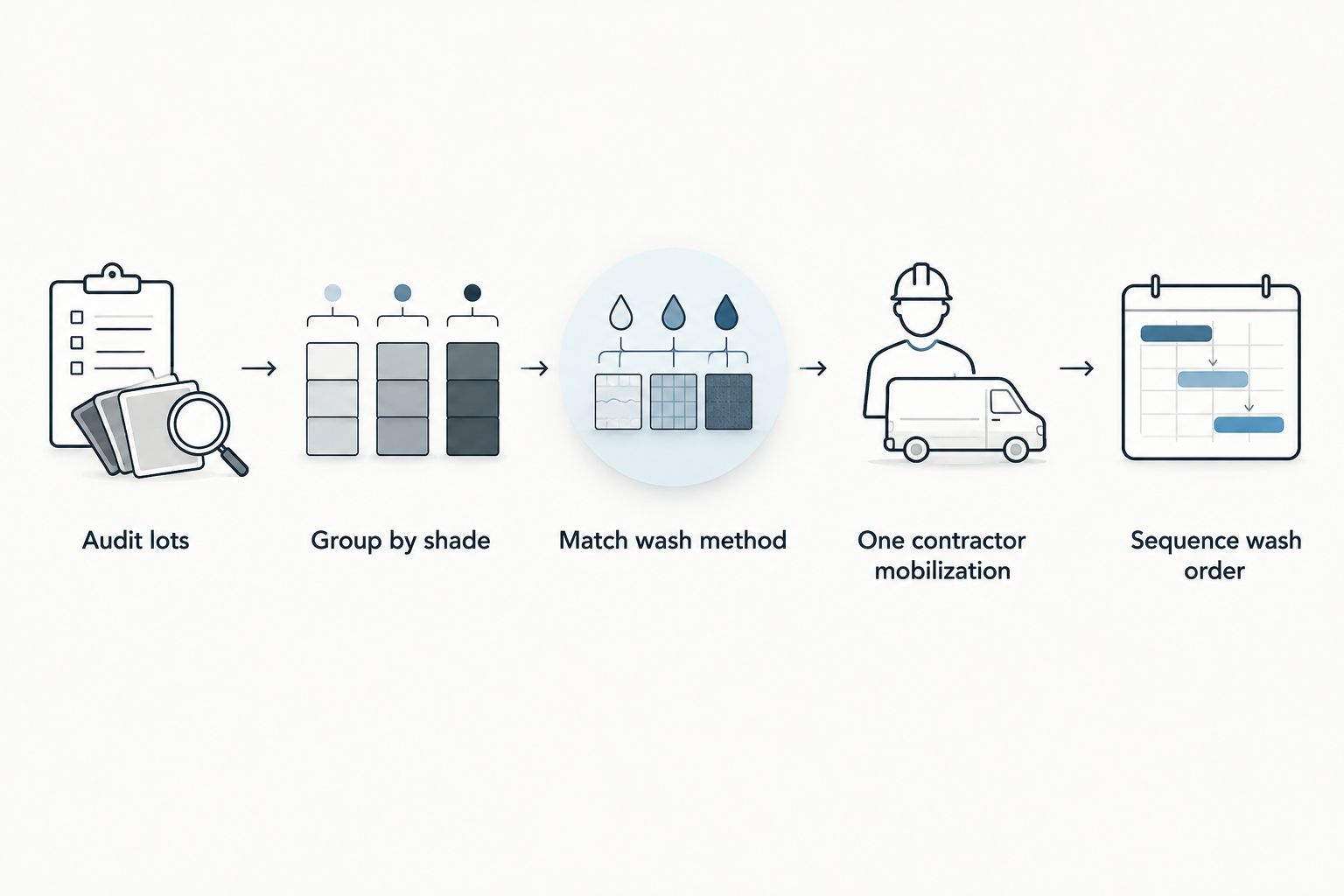
1. Audit every lot before you schedule anything
Walk the park lot by lot and record what's actually there before you commit to a schedule.
- Roof material on each lot: asphalt shingle, metal, or low-slope membrane
- Siding type: vinyl, manufactured lap siding, or fiber cement
- Hours of direct sun versus tree shade on each roof
- Severity: light surface staining versus visible moss mats
- Any existing HOA or park rule violations already on file
2. Group lots by shade and moss pressure
Not every lot needs the same cleaning cycle, and treating them all the same wastes budget on lots that don't need it yet.
- Separate lots under heavy spruce or birch cover into a shorter re-clean group
- Flag north-facing roof sections in every group, since moss grows there first regardless of tree cover
- Note lots near retaining walls or poor drainage where algae also builds up
- Set a tighter interval for shaded lots than for open ones
3. Match the wash method to what's actually on the roof
The wrong pressure setting on a manufactured home roof or siding causes more damage than the moss ever would.
- Confirm roof material before picking a chemical dwell time or rinse pressure
- Treat vinyl and manufactured lap siding as low-pressure only; high PSI cracks or delaminates both
- DIY option: apply a moss- and algae-rated cleaner with a garden sprayer, let it dwell, then rinse at low pressure
- Faster path: a manufactured home house washing service already calibrated to this siding and shingle profile skips the trial-and-error
4. Line up one contractor to walk the whole park in a single mobilization
Staggered, owner-by-owner scheduling is the single biggest source of wasted time and inconsistent results in a park setting.
- Get one crew booked for consecutive days rather than separate calls per lot
- Ask for before-and-after photo documentation per lot for HOA records
- Confirm the crew coordinates gate access and shared water hookups directly with the property manager
- A property manager exterior cleaning service built for multi-unit sites is the faster path once the audit is done
Get a park-wide quote
One walkthrough, one schedule, every lot cleaned to the same standard.
5. Sequence the wash order to minimize rework
The order lots get cleaned in affects how much runoff and drip time the crew deals with on the back end.
- Clean shaded, heavy-moss lots first since runoff and drying take longer
- Save open, low-moss lots for later in the pass
- Coordinate wash days around move-in and move-out dates where possible
- Reference a plan for coordinating roof cleaning across multiple rental units if the park mixes owned and rented homes
6. Set a written standard tied to HOA or park rules
A standard set before the first wash prevents disputes after it.
- Pull the park's written exterior maintenance rule if one exists
- Define what counts as a violation: visible moss mat versus light surface staining
- Set a re-inspection date after every wash
- Keep photo documentation on file for dispute resolution
7. Bundle gutters and windows into the same mobilization
One truck roll covering three services costs less coordination time than three separate visits per lot.
- Gutters clogged with moss debris back up faster under Alaska's winter snow load
- Window washing after a roof or siding wash removes overspray residue in the same visit
- Bundling cuts the number of site visits each lot needs per year
For any park with more than a handful of moss-prone lots, one park-wide soft-wash contract is the only way to keep every home to the same standard.
Comparing your options
| Option | Best for | Key limitation |
|---|---|---|
| Lot owner hires their own local pressure washer | A single owner outside a park program | No park-wide consistency; high pressure risks siding damage |
| Park maintenance staff scrapes and rinses by hand | A stopgap between professional visits | Doesn't remove root-level algae; regrows within a season |
| One park-wide contract with a soft-wash company | HOAs and property managers covering many lots | Requires coordinating access across multiple tenants |
| No cleaning program | Not recommended for any park in 2026 | Moss buildup accelerates shingle wear and drags down curb appeal park-wide |
Verdict: a single park-wide soft-wash contract is Buy; owner-by-owner pressure washing is Hold at best; skipping a program entirely is Skip.
“If one lot in the park has visible moss, the lots downwind under spruce cover usually aren't far behind.”
Common mistakes Alaska mobile home parks make
- Cleaning lot-by-lot on owner request instead of scheduling the whole park in one pass, which leaves spores in unwashed lots to reseed the ones just cleaned.
- Letting maintenance staff run full-PSI pressure washers on manufactured home siding built for concrete work, not vinyl or lap siding.
- Waiting for an HOA violation notice before starting a cleaning program instead of setting the appearance standard first.
- Skipping the shaded lots under spruce and birch because they're "not that bad yet" — those are the lots that reseed the rest of the park.
- Scheduling the wash right before freeze-up, when the roof doesn't dry enough to fully lift dead moss before winter sets in.
FAQ
What's the best exterior cleaning schedule for a mobile home park in Alaska?
Open lots typically need one wash per year; lots shaded by spruce or birch need two, since shade holds moisture and moss regrows faster there. Spring through early summer is the usual window before Alaska's shorter drying days set in.
Is pressure washing safe for manufactured home siding?
High-pressure washing is not safe for vinyl or manufactured lap siding; it cracks or delaminates the material. Soft washing at low pressure with a moss- and algae-rated cleaner is the standard method for exterior cleaning mobile home parks Alaska crews use.
How much does exterior cleaning cost for a mobile home park?
Cost depends on lot count, roof material, and moss severity across the park, so a flat number isn't reliable. Get a walkthrough quote that prices the whole park rather than pricing lots one at a time.
Do HOA or park rules cover moss and algae on manufactured homes?
Many park associations write exterior appearance standards into the lease or covenant, and moss buildup is a common flag during a walkthrough. Check the park's specific written rule before assuming coverage.
Can one contractor clean an entire mobile home park in one visit?
Yes, when a single crew mobilizes across consecutive days rather than scheduling lot by lot. This is the approach that keeps every home in the park to the same appearance standard.
Does moss on a manufactured home roof void the warranty?
Many manufactured roofing warranties require documented maintenance, and unaddressed moss buildup can be used to deny a claim. Check the specific manufacturer's terms rather than assuming coverage either way.
One last thing
The lots directly downwind of the park's tallest spruce trees regrow moss fastest — schedule those on a tighter interval than the rest of the park instead of putting every lot on the same calendar date. Alaska Moss Doctor treats shaded lots as their own group precisely because a single park-wide date wastes budget on open lots that didn't need it yet.