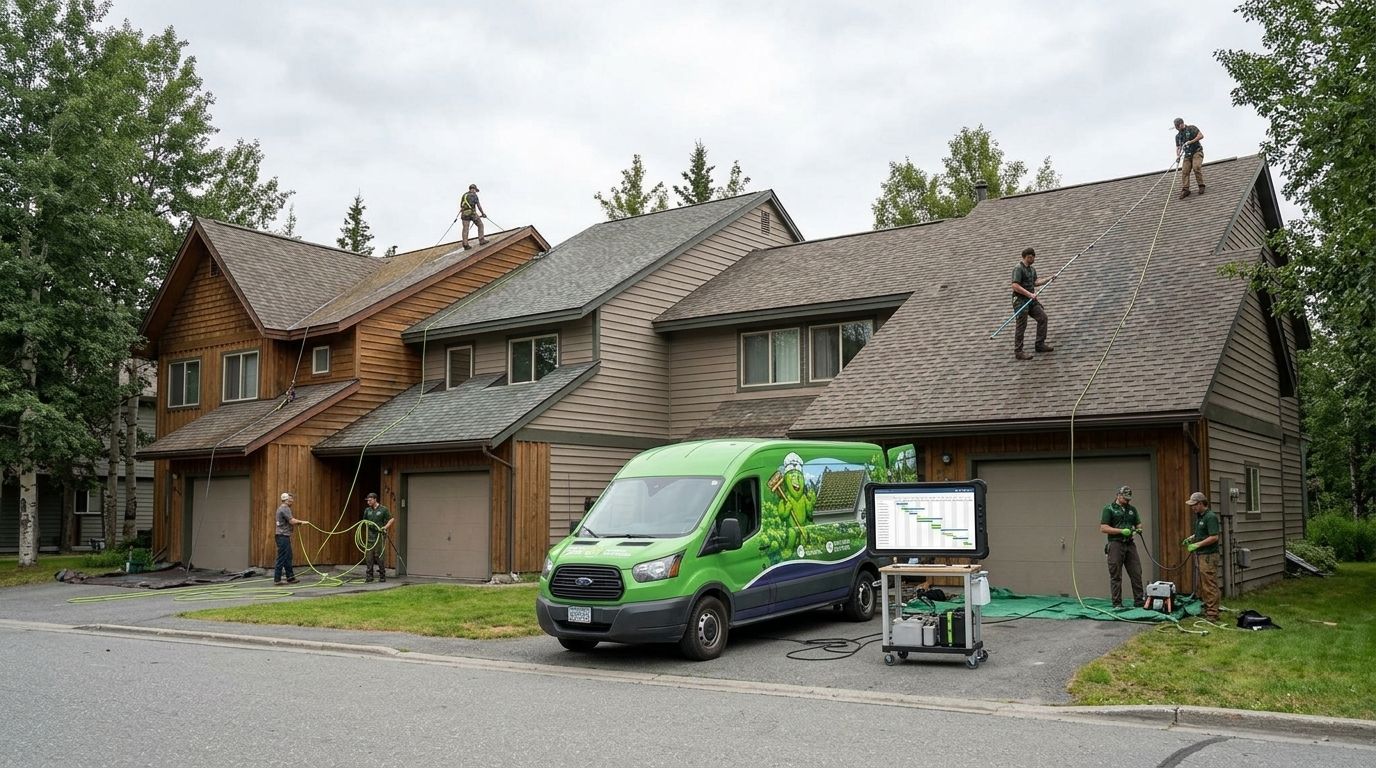
Coordinating roof cleaning across multiple rental units in 2026 works best when you treat the portfolio as one job, not a string of separate appointments: inventory every roof, group units by location and moss severity, and lock a single vendor for the whole batch. The hidden cost most landlords miss is tenant access — a crew can show up on time and still lose half a day waiting on someone to move a car or unlock a gate.
- Batch rental roofs by moss severity and location so one crew clears the whole portfolio in a single trip.
- Alaska Moss Doctor treats multi-unit rental accounts in Wasilla and the Mat-Su Valley as one job, not separate visits.
- Send tenant notices at least two weeks before the crew arrives to avoid access delays.
- Spring and fall booking windows fill first in 2026 for landlords coordinating six or more units.
Why this matters
Landlords with scattered single-family rentals or a small apartment complex usually book roof cleaning the same way a homeowner does — one call per property, whenever moss gets bad enough to notice. That approach costs more per roof, spreads the work across months instead of days, and leaves some units untreated while others get done twice.
A coordinated schedule fixes all three problems at once. Roof cleaning company services for rental properties built around portfolios, not one-off jobs, group units by drive time and treat the whole batch as a single account. That's the difference between five separate service calls in 2026 and one coordinated week.
How do you coordinate roof cleaning across multiple rental units?
Coordination comes down to six steps, done in order, before you call a vendor.
- Inventory every roof. List each unit's roof type (asphalt shingle, metal, cedar shake), pitch, and visible moss or algae coverage. A roof with heavy north-facing shade needs different timing than one that gets full sun.
- Group units by geography. Properties within the same subdivision or a short drive of each other should be scheduled together — this is what actually shortens the timeline, not the number of units.
- Get one quote for the whole batch, not per-unit pricing. A single vendor relationship means one point of contact, one invoice cycle, and one crew that already knows your access codes and gate quirks.
- Set a single service window, ideally a defined week rather than a rolling month. This forces the scheduling conversation to happen once instead of six or ten separate times.
- Notify every tenant in writing at least two weeks out, with the exact date range, expected noise, and any request to move vehicles or pets indoors.
- Schedule a follow-up inspection 30 to 60 days after the work, so you catch any unit where moss regrew faster than the rest.
Portfolios under 10 units: one crew, one visit
For a landlord managing fewer than 10 rental roofs across Wasilla or the Mat-Su Valley, most vendors can clear the entire portfolio in a single multi-day visit. The key move is sequencing: hit the properties with the heaviest moss buildup first, since those roofs are closer to shingle damage, then move to lighter jobs.
Verdict: coordinate as one job. Splitting a sub-10-unit portfolio into separate bookings adds scheduling overhead without any real benefit — there's no volume large enough to justify staggering it.
Portfolios of 10 or more units: phased scheduling across buildings
Once a portfolio crosses into double digits, or spans an apartment complex with shared roof sections, phasing becomes the practical option. Crews can't be on every roof at once, and tenants in different buildings won't all tolerate the same notice window.
Break the portfolio into two or three phases based on building or block, with each phase getting its own two-week tenant notice. This keeps the total project moving without asking one crew to be in five places on the same day. Exterior cleaning for HOA compliance work follows the same phased logic when a homeowners association manages shared roofs across a subdivision.
Verdict: phase it, don't rush it. A rushed single-visit attempt on a large complex usually means a shorter, lower-quality treatment per roof.
Why coordination timelines vary
A handful of factors decide whether your portfolio takes one visit or three:
- Number of buildings, not just units — four buildings with two units each takes longer to coordinate than one eight-unit building.
- Moss severity spread — a portfolio where some roofs are lightly dusted and others are matted with growth needs different treatment times per stop.
- Roof pitch and access — steep or high roofs slow a crew down regardless of how many units are queued behind them.
- Tenant occupancy and turnover — vacant units are easier to schedule around than occupied ones with parking or pet concerns.
- Distance between properties — units spread across Wasilla versus a remote Mat-Su Valley cabin add drive time that eats into the service window.
- Season — Alaska's cleaning window narrows outside spring and fall, and a full portfolio booked late risks running into winter conditions.
Coordinating a rental portfolio works the same way as running any maintenance schedule: batch the similar work, sequence by urgency, and communicate the timeline once instead of repeatedly.
Should each rental unit get scheduled separately?
No — scheduling each unit separately in 2026 usually costs more in coordination time than it saves in flexibility, since every separate booking means a new tenant notice, a new vendor call, and a new invoice. Batching units by location or building keeps the whole process to one or two service windows a year.
How much notice do tenants need before roof cleaning?
Two weeks of written notice is the standard window landlords use before a roof cleaning crew arrives, giving tenants time to move vehicles, secure pets, and plan around the noise. Shorter notice increases the odds of a tenant blocking access on the scheduled day.
Can one crew clean multiple rental roofs in one visit?
Yes — one crew can clean multiple rental roofs in a single multi-day visit when the properties are grouped by location, which is the standard approach for portfolios under 10 units. Larger or geographically spread portfolios typically need phased scheduling instead of one continuous visit.
Coordinate your rental portfolio's roof cleaning
One point of contact for every unit in your Wasilla or Mat-Su Valley portfolio.
FAQ
What's the best way to schedule roof cleaning for a rental portfolio?
The best approach groups units by location and moss severity, then books the whole portfolio with one vendor instead of separate calls per property. This keeps the project to one or two service windows a year instead of an ongoing string of appointments.
How much notice do tenants need before a roof cleaning crew arrives?
Two weeks of written notice is standard, giving tenants time to move vehicles, secure pets, and plan around the noise. Shorter windows increase the chance of a tenant blocking access on service day.
Is it cheaper to book roof cleaning for all units at once?
Booking an entire portfolio as one job typically reduces per-visit overhead compared to scheduling each unit separately, since the crew makes one trip instead of several. Exact costs depend on the vendor and portfolio size.
Can a single vendor handle roof cleaning across scattered rental properties?
Yes, as long as the properties are grouped by drive time — a vendor working a Wasilla and Mat-Su Valley portfolio will typically batch nearby units into the same service day. Properties spread across a wider radius may need a phased schedule instead.
How often should rental roofs be cleaned in Alaska?
Most Alaska rental roofs need cleaning once a year, though shaded roofs near spruce or birch trees often need attention more frequently. A follow-up inspection 30 to 60 days after treatment catches units where moss regrew faster than others.
What happens if a tenant refuses access on the scheduled day?
That unit typically gets moved to the next available slot in the same service window rather than delaying the rest of the portfolio. Building the two-week notice period into the schedule reduces how often this happens.
Should apartment complexes be treated differently than single-family rentals?
Yes — apartment complexes with shared roof sections usually need phased scheduling across buildings, while a handful of single-family rentals under 10 units can typically be cleared in one visit. The building count matters more than the unit count.
One last thing
The biggest schedule-killer isn't moss severity or roof pitch — it's tenant access. A portfolio with 8 easy roofs and 2 occupied units that won't move a car on service day will run longer than a portfolio with 15 vacant units. Build the tenant notice into your calendar before you call a vendor, not after.