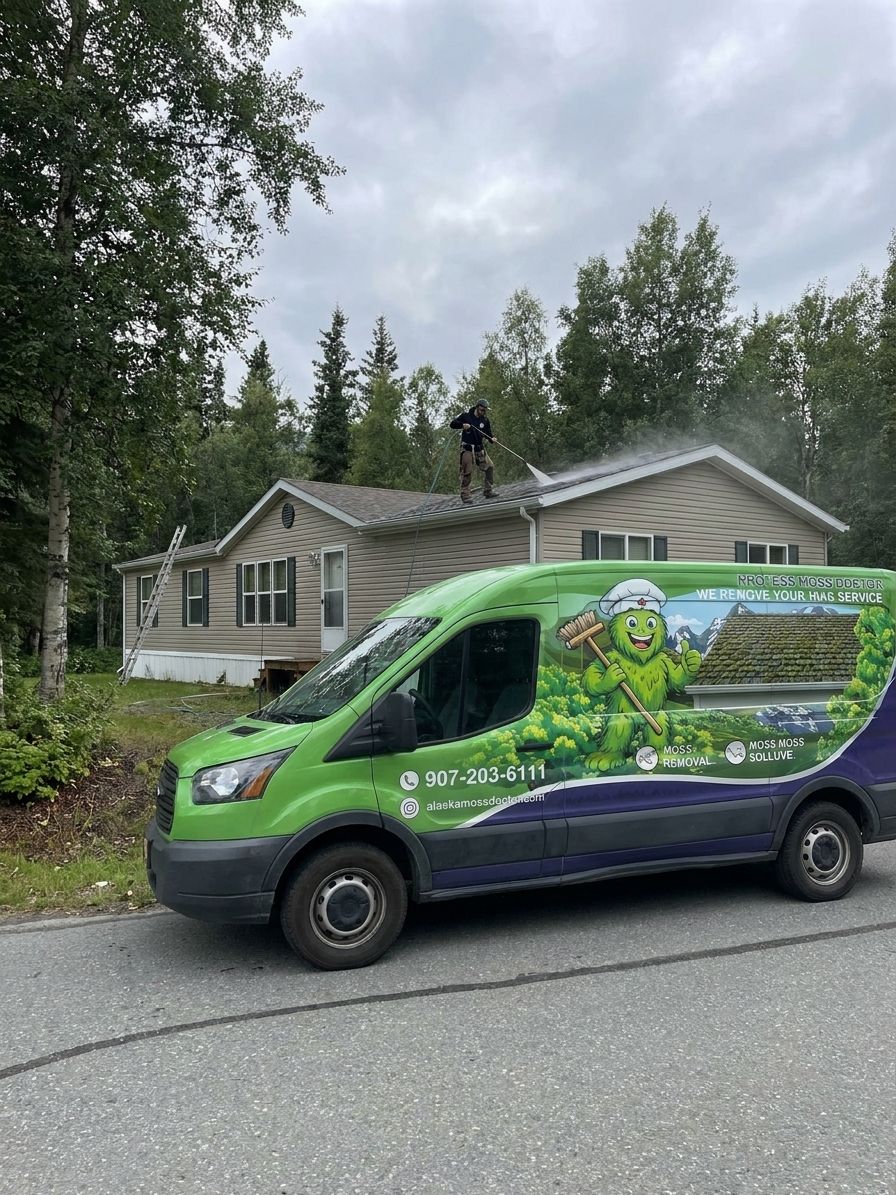
Manufactured home house washing cleans moss, algae, and black streaks off single-wide and double-wide siding using soft-wash pressure under 500 PSI, with the goal of protecting the thin aluminum or vinyl panels and skirting seams that a standard gas-powered pressure washer cracks. Mat-Su Valley manufactured homes sit lower to the ground, use lighter-gauge siding than stick-built houses, and almost always have vinyl skirting with vent openings that trap moisture if a wash is done wrong.
- Soft wash under 500 PSI is the safe standard for house washing manufactured home siding in 2026 -- standard power washers run 2,000-3,000 PSI and crack thin panels.
- Skirting vents and seams need hand-detailing, not a blast from a wand, or moisture gets trapped underneath the home.
- North-facing manufactured homes in the Mat-Su Valley grow moss and algae faster than south-facing units due to shade and snow load.
- Alaska Moss Doctor soft-washes vinyl, metal, and aluminum siding on manufactured homes without the pressure that voids siding warranties.
Why house washing matters for manufactured homes
Manufactured homes built to HUD code use thinner exterior panels than site-built construction, and that changes what "safe cleaning" means. A pressure setting that's fine on a stick-built house's fiber cement siding can pop seams or blow water behind vinyl panels on a manufactured home. Alaska Moss Doctor treats manufactured home exteriors as a distinct job, not a smaller version of a standard house wash.
Mat-Su Valley homes with heavy tree cover or a north-facing orientation collect moss and black algae streaks faster than homes with open southern exposure, and manufactured homes are frequently sited on smaller lots with less clearance from trees. That shade problem doesn't discriminate by home type, but the cleaning method has to change because of the siding.
Manufactured home parks and many HOAs also enforce exterior appearance standards, and a moss-streaked or algae-stained home can trigger a compliance notice faster than a single-family lot with more setback from the road. Regular washing keeps the home off that list and protects resale value if the home ever goes on the market.
Inspect the siding material and skirting before you touch a hose
Manufactured homes use one of a handful of siding types, and each one has a different tolerance for pressure and chemical.
- Check whether siding is vinyl, aluminum, or a fiber-cement composite panel
- Look for existing cracks, chalking, or loose seams before adding water
- Inspect skirting for vent covers, access panels, and gaps at ground level
- Note any areas where caulking has failed around windows or trim
- Photograph problem spots so you can confirm they don't worsen after washing
Test a low-pressure setting before washing the whole home
Don't start at full pressure on a wall you haven't tested. A test patch in a low-visibility spot tells you how the panel reacts before you commit to the whole exterior.
- Start with a fan-tip nozzle at the lowest pressure setting your equipment allows
- Test a hidden section, like behind a downspout or near the skirting base
- Watch for lifting seams, white streaking, or water pushing behind panels
- Increase pressure in small increments only if the panel shows no reaction
- Stop immediately if you see water intrusion at any seam or vent
Soft wash the siding instead of power washing it
This is where most DIY manufactured home cleaning goes wrong. A soft wash uses a cleaning solution to break down moss and algae at the root, then a low-pressure rinse removes it -- the chemical does the work, not the water pressure.
- Apply a house-wash detergent formulated for algae and mold, not a generic all-purpose cleaner
- Let dwell time do the work; five to ten minutes is standard before rinsing
- Rinse from the top down so dirty runoff doesn't restain lower panels
- Keep pressure under roughly 500 PSI for vinyl and aluminum siding
- Hand-scrub stubborn black streak areas rather than raising pressure to compensate
Homeowners without pressure-washing equipment, or who don't want to risk a cracked seam, get the soft-wash result without the trial-and-error by hiring Alaska Moss Doctor's vinyl siding house washing service, which sets pressure by material before the first spray.
Clean around windows, vents, and seams by hand
Manufactured homes have more seams per square foot of wall than a stick-built house, and every seam is a potential entry point for water.
- Mask or avoid direct spray into dryer vents, bath fans, and furnace intakes
- Hand-wipe window tracks and trim rather than blasting them with the wand
- Check skirting vent screens for debris after rinsing, not before
- Re-caulk any seam that shows gaps once the wash reveals them clearly
- Confirm electrical panels and meter boxes stay dry throughout the wash
For the exact pressure range that keeps delicate seams intact, the soft-wash pressure setting guide for delicate siding breaks down settings by material rather than by home type.
Treat the roof and skirting separately from the walls
Moss on a manufactured home roof and algae on the skirting need different treatment than the main wall surfaces, mostly because of pitch and ground contact.
- Address roof moss with a dedicated soft-wash roof treatment, not the same solution used on walls
- Scrub skirting panels near grade where splashback and soil contact drive most of the staining
- Check gutter runoff points for algae streaks that repeat below the same section every year
- Clear vegetation touching the skirting before washing, since it regrows the same shade problem within a season
Rinse thoroughly and inspect before calling it done
A rushed final rinse leaves detergent residue that attracts dirt within weeks and undoes the whole job.
- Rinse every panel a second time at low pressure to clear residual cleaner
- Check low corners and behind downspouts where runoff pools longest
- Look for any lifted seam or panel edge that appeared during the wash
- Confirm skirting vents are clear and undamaged before wrapping up
Schedule washes on a repeat interval, not a one-time basis
A single wash resets the clock, but Mat-Su Valley shade and moisture bring moss and algae back within a season or two on the same exposures.
- Set an annual wash for homes with heavy shade or north-facing walls
- Stretch to every 18-24 months for homes with more sun exposure
- Re-inspect skirting each spring after snowmelt for moisture damage
- Track the cost of neglect against routine maintenance using a budgeting guide for professional roof cleaning
“If a pressure washer leaves a white ring on your skirting, the setting is already too strong for manufactured home siding.”
Comparison: cleaning options for manufactured homes
| Option | Best for | Key limitation |
|---|---|---|
| Garden hose + scrub brush | Light dust, small spot cleaning | No real effect on established moss or algae growth |
| Consumer pressure washer (high PSI) | Concrete, driveways, not siding | Cracks seams and pushes water behind vinyl panels |
| DIY soft-wash kit | Handy homeowners comfortable mixing chemical | Wrong dilution or dwell time damages paint and trim |
| Professional soft-wash service | Full exterior with moss, algae, and skirting | Requires scheduling around Alaska's short wash season |
Verdict: a professional soft wash is the only option on this list that reliably clears moss and algae from manufactured home siding without risking the panels underneath.
Get your manufactured home washed right
Soft-wash service for vinyl, metal, and aluminum siding in the Wasilla area.
Common mistakes manufactured home owners make
- Running full pressure on vinyl or aluminum siding. Thin panels crack or bow at pressures a stick-built home's siding tolerates fine.
- Ignoring skirting vents during the wash. Water pushed into vents in 2026 can sit trapped under the home for weeks, feeding mold.
- Washing only the visible street-facing side. North-facing walls and shaded skirting sections grow moss fastest and get skipped most often.
- Waiting until an HOA or park notice arrives. Reactive cleaning costs more time and stress than a scheduled annual wash.
- Using generic all-purpose cleaner instead of an algae-rated detergent. It removes surface dirt but leaves moss roots intact to regrow within weeks.
FAQ
What's the best way to wash a manufactured home without damaging the siding?
Soft washing at low pressure, generally under 500 PSI, with an algae-rated detergent is the safest method for vinyl, aluminum, and composite siding on manufactured homes. Standard high-pressure washing at 2,000-3,000 PSI is what causes cracked seams and water intrusion.
How often should a manufactured home be washed?
Homes with heavy shade or north-facing walls in the Mat-Su Valley need a wash roughly every 12 months, while homes with more sun exposure can often stretch to 18-24 months. Check the siding each spring after snowmelt regardless of schedule.
Is pressure washing manufactured home skirting safe?
High-pressure washing on skirting risks forcing water through vent openings and seams into the crawl space underneath the home. A low-pressure soft wash with hand attention around vents is the safer approach.
Can house washing void a manufactured home's siding warranty?
Some manufacturers specify maximum pressure ratings for siding in their warranty terms, so exceeding that pressure during a wash can void coverage. Soft washing under the manufacturer's stated limit avoids the issue entirely.
What's the difference between power washing and soft washing a manufactured home?
Power washing relies on high water pressure alone to strip dirt, while soft washing uses a cleaning solution to break down moss and algae before a low-pressure rinse removes it. Soft washing is the safer method for manufactured home siding because it doesn't rely on force.
Does washing a manufactured home help with resale?
A clean exterior removes the visible moss and algae staining that buyers read as deferred maintenance, which matters more for manufactured homes since they're judged more heavily on cosmetic condition at resale.
What time of year is best for washing a manufactured home in Alaska?
Late spring through early fall, once snow and ice are fully gone and temperatures stay above freezing, is the practical window for exterior washing in the Mat-Su Valley.
Do manufactured home parks require regular exterior cleaning?
Many manufactured home parks and HOAs include exterior appearance standards in their rules, and visible moss or algae staining is a common compliance flag. Scheduled washing keeps a home ahead of those notices rather than reacting to one.
One last thing
The detail most manufactured home owners miss isn't the wall siding -- it's the gap between the skirting and the ground. Splashback from rain and snowmelt keeps that bottom foot of skirting wet longer than any other surface on the home, which is exactly why algae staining shows up there first even on homes that look clean everywhere else.