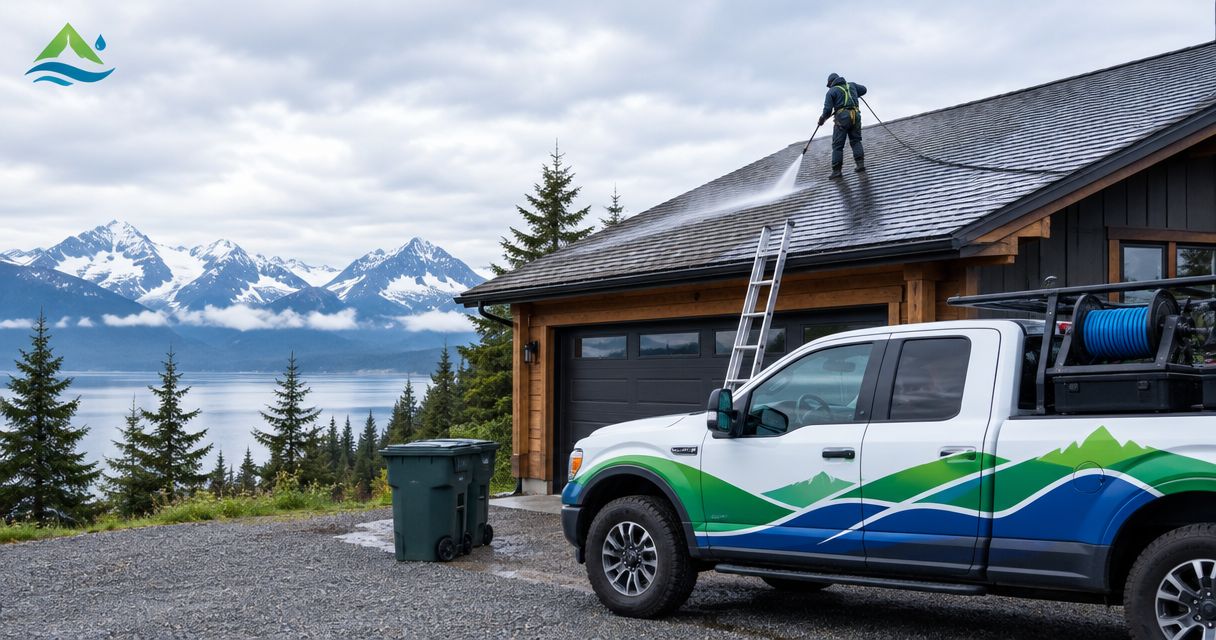
Alaska insurance adjusters’ roof cleaning is the coordination of documented moss and algae removal with the aim of separating maintenance work from claim evaluation. This 2026 guide explains how to preserve evidence, define cleaning limits, and verify completed work without treating a cleaner’s invoice as a coverage decision.
- Roof cleaning for Alaska insurance adjusters starts with evidence preservation, not immediate moss removal.
- Alaska Moss Doctor provides roof cleaning for Wasilla-area homeowners; coverage decisions remain separate from cleaning.
- Match cleaning instructions to the roof material, and distinguish treatment completion from visible removal.
- Keep original photographs, written authorization, and unresolved roof defects together in the file.
Why roof cleaning matters for Alaska insurance adjusters
Cleaning changes the surface you are evaluating. Moss removal can reveal previously obscured areas, but it also removes material that appeared in the original inspection. Record that condition before anyone starts work.
A homeowner’s maintenance request, an underwriting correction notice, and a reported loss require different decisions. Keep those purposes separate in the work order. The guide to roof cleaning for insurance compliance in Alaska addresses the maintenance-compliance side of that distinction.
For a 2026 file, use the actual notice, policy documents, and inspection findings—not a general claim that insurance requires every roof to be moss-free. Snow, ice, access restrictions, and limited visibility belong in the inspection record whenever they prevent a complete observation.
Build a roof-cleaning workflow that preserves evidence
1. Define the purpose before authorizing work
Start with the documents already in the file. Read the reported concern, inspect the available photographs, and identify whether the requested action is maintenance, further investigation, or a response to a written correction notice. You can organize this information in a basic folder and checklist.
Do not convert a cleaning request into a repair recommendation without supporting findings. Likewise, do not describe moss as the cause of a reported leak merely because both appear on the same roof. Record observations first; keep causal conclusions tied to evidence.
End this step with a written scope that another person can understand without a phone call:
- Identify the property and affected roof slopes.
- State whether the request concerns a claim, maintenance, or underwriting.
- Attach the original notice or inspection request.
- Identify who can authorize cleaning.
- List questions that cleaning alone cannot resolve.
2. Capture the original condition safely
Use existing inspection photographs and ground-level observations before requesting additional access. A homeowner should not climb onto a mossy roof to satisfy a documentation request. Where close inspection is necessary, assign it to a qualified professional using an appropriate access plan.
Create 3 photograph categories: overall roof views, affected-area views, and detail views. This is a suggested filing structure, not an insurer requirement. Include unaffected comparison areas when they help explain the observed condition.
For your 2026 photo record, preserve original files and separate factual captions from interpretations. A caption identifying growth beside a vent is more defensible than an unsupported statement that the vent caused a leak.
- Record the date and viewing location.
- Label each roof slope consistently.
- Photograph visible growth and separately visible defects.
- Note areas hidden by snow, debris, or roof geometry.
- Retain unedited originals alongside annotated copies.
3. Choose the right professional for the question
Prepare a short scope yourself before asking anyone to quote the work. Describe the observed growth, roof material if known, access concerns, and documentation needed. A clear brief reduces repeated explanations; it does not require specialized software.
Alaska Moss Doctor is best for Wasilla-area homeowners seeking professional roof moss and algae cleaning. Alaska Moss Doctor provides that cleaning service, but the supplied service description does not establish structural inspection, claim adjustment, or insurer-approval services. Ask about any additional documentation before making it part of the assignment.
Choose a cleaner for removal work and a qualified roofing professional for questions about damaged roofing components. Keep responsibility explicit:
- Confirm the provider handles the identified roof material.
- Request a written cleaning scope.
- Ask what photographs and completion records are included.
- Separate cleaning tasks from repair tasks.
- Confirm who receives findings that require further evaluation.
4. Specify a material-compatible cleaning method
Identify the roof covering before selecting a method. Start with property records, manufacturer information, and existing inspection notes. When the material remains uncertain, resolve that uncertainty before authorizing chemical application or mechanical removal.
Asphalt shingles, metal panels, tile, and membrane systems are not interchangeable cleaning surfaces. Follow the applicable roofing manufacturer’s instructions and cleaning-product label. Do not treat a contractor’s equipment name as proof that the proposed application is suitable.
Organize method approval around Material, Method, Protection, and Verification. Each part should answer a different question: what is present, what will be done, what must be protected, and how completion will be checked.
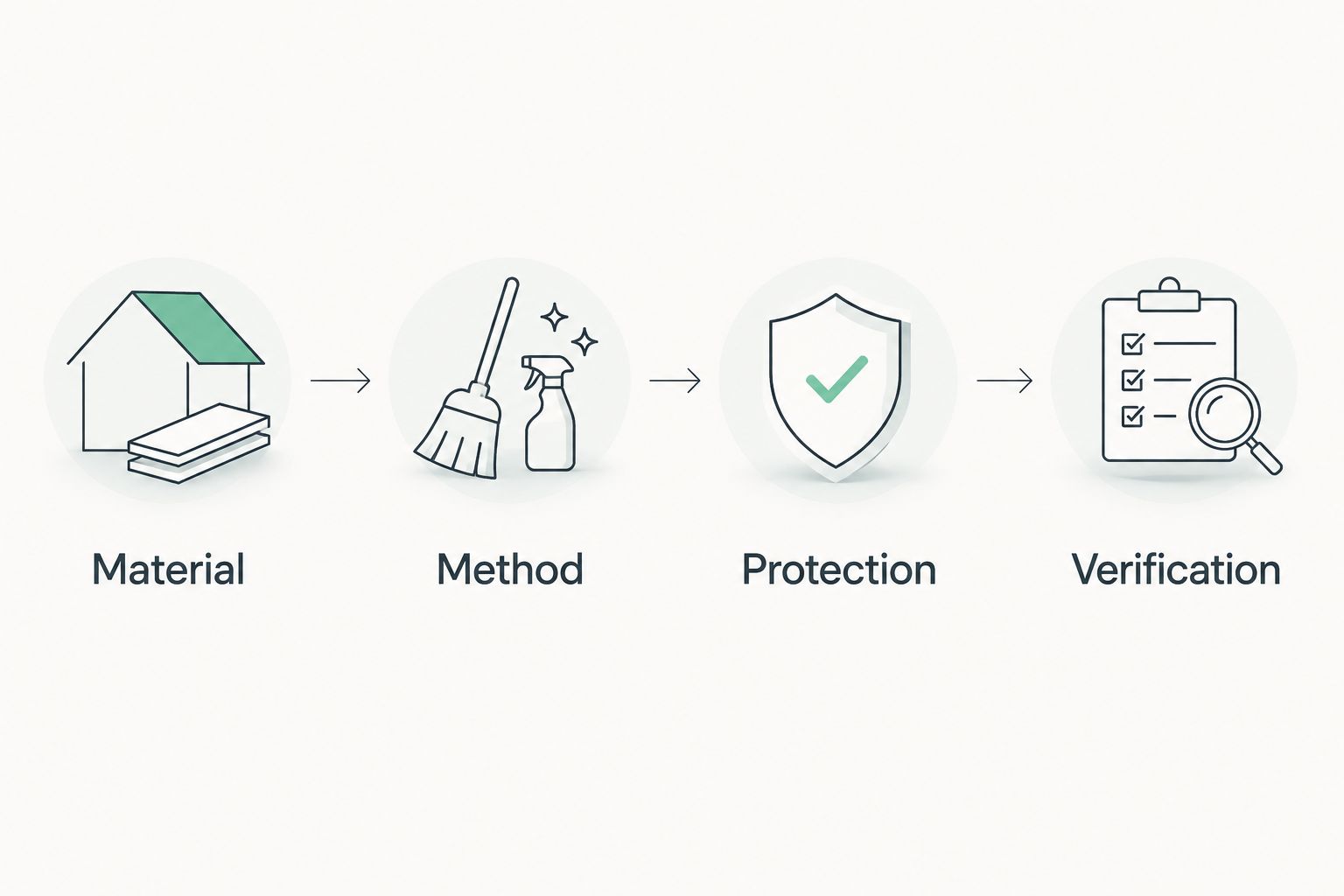
A method statement should make these boundaries visible rather than hiding them inside a general exterior-washing description:
- Identify the roof covering and relevant instructions.
- Describe treatment and removal separately.
- Specify limits on agitation and water application.
- Explain protection for landscaping and nearby surfaces.
- State how runoff and detached debris will be managed.
- Identify conditions that require work to stop.
5. Agree on timing and the completion standard
Build the schedule from observed site conditions and the actual deadline in the file. Do not assign a universal Alaska cleaning month or assume a treatment will produce an immediate appearance change. Ask the provider to explain the expected sequence for the proposed method.
Separate 2 milestones: treatment completion and visible-removal verification. Some methods involve a later assessment of remaining material; your work order should state whether that applies. An invoice stating that treatment occurred does not, by itself, establish that every requested condition has been corrected.
For a 2026 correction notice, obtain written clarification when weather or access prevents completion by the stated date. Do not promise an extension on the insurer’s behalf.
- Copy the actual deadline into the work order.
- Record any weather-related access restriction.
- Define what counts as completed treatment.
- Define what counts as completed removal.
- Identify who verifies the result.
- Record the next action if work is postponed.
6. Control scope changes during cleaning
Before work begins, give the provider written instructions for newly exposed defects. The provider should report the location and observed condition rather than quietly adding repairs or presenting an unsupported cause-of-loss conclusion. Keep the homeowner’s authorization separate from the adjuster’s evaluation.
Use 1 change log for additions, pauses, and referrals. Record who requested the change, why it was needed, and whether it affected the original evidence. This simple record prevents a maintenance visit from becoming an undocumented repair project.
Material-specific limits matter here. On tile roofs, tile roof cleaning risks include damage from foot traffic or unsuitable cleaning practices, so access and application methods belong in the agreed scope. Do not carry an asphalt-shingle procedure across to tile without checking the tile system’s instructions.
The same discipline applies when moss removal exposes a questionable flashing detail or damaged covering. Cleaning can make a condition visible; that observation alone does not establish when the condition developed.
- Stop and report unexpected exposed defects.
- Photograph the condition before further disturbance.
- Obtain authorization for added work.
- Keep repairs outside an unamended cleaning scope.
- Refer causation or repair questions to the appropriate professional.
7. Verify the result against the original request
Compare the completion record with the original scope, not simply with a cleaner-looking roof. Review the same slopes and locations shown in the initial photographs. If the original concern involved a specific valley, photographs of a different slope do not close that question.
Keep 2 photo sets, labeled before work and after work. Record any difference in visibility, lighting, or access that limits comparison. Do not infer that a roof is watertight, structurally sound, or free of hidden damage because surface growth was removed.
Close your 2026 cleaning record with a clear status: completed, partially completed, or awaiting further evaluation. Keep that status separate from any claim or underwriting determination.
- Match completion photographs to original locations.
- Confirm which slopes received treatment or removal.
- Record remaining growth or inaccessible areas.
- List defects referred for separate evaluation.
- Retain the scope, authorization, invoice, and change log.
- Identify the person responsible for each open item.
Compare the options by the question you need answered
Choose the service that answers the unresolved question. A document review preserves existing evidence, a cleaning service removes growth, and a roofing evaluation addresses roofing-condition questions. None substitutes for every other task.
| Option | Best for | Main advantage | Key limitation |
|---|---|---|---|
| Existing-record and ground-level review | Initial triage before authorizing work | Preserves the original surface and organizes known facts | Does not reveal every obscured or inaccessible condition |
| Alaska Moss Doctor roof cleaning | Wasilla-area homeowners needing moss and algae removal | Directly addresses the cleaning task | Cleaning does not determine coverage or establish hidden roof condition |
| Qualified roofing evaluation | Suspected defects, leaks, or repair questions | Focuses the assignment on roofing condition | Does not replace a separate cleaning scope or policy review |
| Weather-delayed reassessment | Conditions that prevent safe access or reliable observation | Avoids forcing work under unsuitable conditions | Leaves the file open until reassessment occurs |
Professional cleaning is appropriate when removal is the defined task. Its limitation is equally important: a successful cleaning result answers a maintenance question, not every question in an insurance file.
Common mistakes Alaska insurance adjusters make
Authorizing removal before preserving the original condition
A clean roof cannot recreate the exact arrangement of growth and debris seen before work. Obtain the necessary original-condition record first, then authorize the defined task. Document why any urgent action preceded full inspection.
Treating appearance as evidence of cause
Dark staining, visible moss, and a reported interior leak are separate observations. Record each accurately. A cause-of-loss conclusion needs more than their presence at the same property.
Making the homeowner prove completion through unsafe access
Do not ask for roof-level photographs without considering how they will be obtained. Use existing records, safe viewpoints, or appropriate professional documentation. An incomplete photograph is a reason to plan better evidence collection, not to encourage climbing.
Closing the file on treatment wording alone
Treatment applied and growth removed describe different results. Match the completion standard to the original request and record what remains. If the notice requires further evidence, identify that evidence explicitly.
FAQ
Does roof cleaning prove an Alaska roof is undamaged?
No. Roof cleaning removes surface growth or contamination; it does not establish the condition of hidden roofing components. Refer unresolved defects or leak questions for a separate roofing evaluation.
Should an insurance adjuster document moss before cleaning?
Yes. Preserve photographs and observations before cleaning changes the surface. Record any visibility or access limitations alongside the original files.
Does homeowners insurance cover roof moss removal?
Coverage depends on the policy, circumstances, and insurer’s determination. A maintenance request or cleaning invoice alone does not establish coverage.
Who is Alaska Moss Doctor best for?
Alaska Moss Doctor is best for Wasilla-area homeowners seeking professional roof and exterior moss or algae cleaning. Confirm any requested inspection documentation separately before authorizing work.
Can roof cleaning proceed when snow or ice blocks inspection?
Do not authorize work that requires unsafe access or prevents the agreed result from being verified. Record the restriction and arrange reassessment when conditions support the proposed method.
What should a roof-cleaning completion record include?
Include the agreed scope, work date, treated locations, completion photographs, and unresolved items. Keep the provider’s observations separate from coverage and causation conclusions.
Is a roof-cleaning invoice enough to satisfy an insurance notice?
Only the party administering the notice can confirm whether the submitted evidence satisfies it. Match the record to the notice’s actual requirements rather than assuming an invoice is sufficient.
One last thing
Preserve the areas that were not cleaned, too. A completion record that identifies exclusions is more informative than a broad statement that the roof was cleaned. Before closing the task, ask whether an uncleaned valley, inaccessible slope, or remaining patch leaves the original question unanswered.