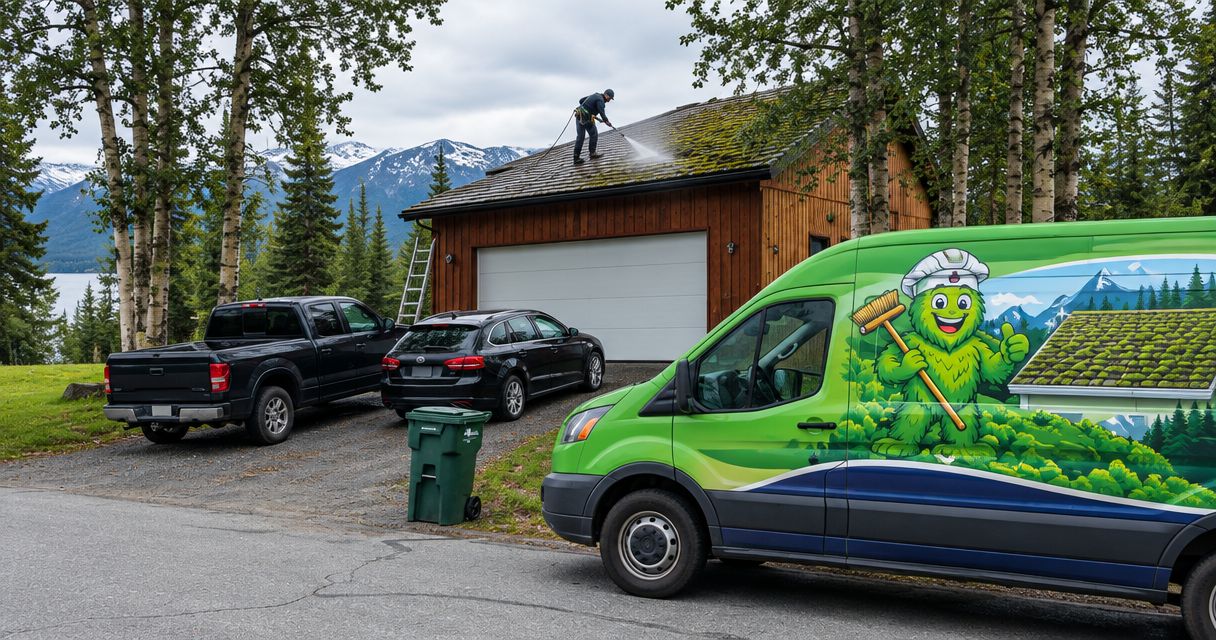
Moss removal for Butte, Alaska homes means treating roofs and siding shaded by heavy spruce and birch cover, with the goal of stopping moss before it lifts shingles, clogs gutters, or rots decking underneath. Butte's rural acreage lots hold more tree canopy and less direct sun than in-town Wasilla, so moss returns faster here and needs a tighter maintenance schedule than an open lot needs.
- Soft washing beats pressure washing for Butte's shaded asphalt and metal roofs in 2026 - it kills moss without stripping granules.
- Roofs under spruce or birch canopy need moss removal every 12-18 months, tighter than open Wasilla lots need.
- DIY scraping and high-PSI pressure washing both risk shingle damage and can void manufacturer warranties.
- Fall before snow load and spring after thaw are the two safe windows for moss removal in Butte's climate.
Why moss removal matters for Butte homeowners
Butte sits east of Palmer in the Mat-Su Valley, a mix of homesteads, cabins, and full-time residences spread across wooded acreage rather than platted subdivisions. Spruce and birch stands shade large sections of most rooflines out here, so shingles and metal panels stay wet longer after rain or spring melt than they would on an open lot closer to Wasilla's center. That extra dampness is what lets moss establish in a single season instead of two or three.
Long gravel driveways and unpaved access roads common on Butte properties also mean a cleaning crew needs to plan truck and hose-reach logistics before arrival, not after. Homeowners who've already worked with Alaska Moss Doctor on nearby Wasilla properties know the pattern: shaded roofs need moss removal on a shorter interval than sunny ones, and access planning matters as much as the cleaning method.
“If a roofline holds shade past midday for half the year, plan on moss removal every 12 to 18 months, not every three.”
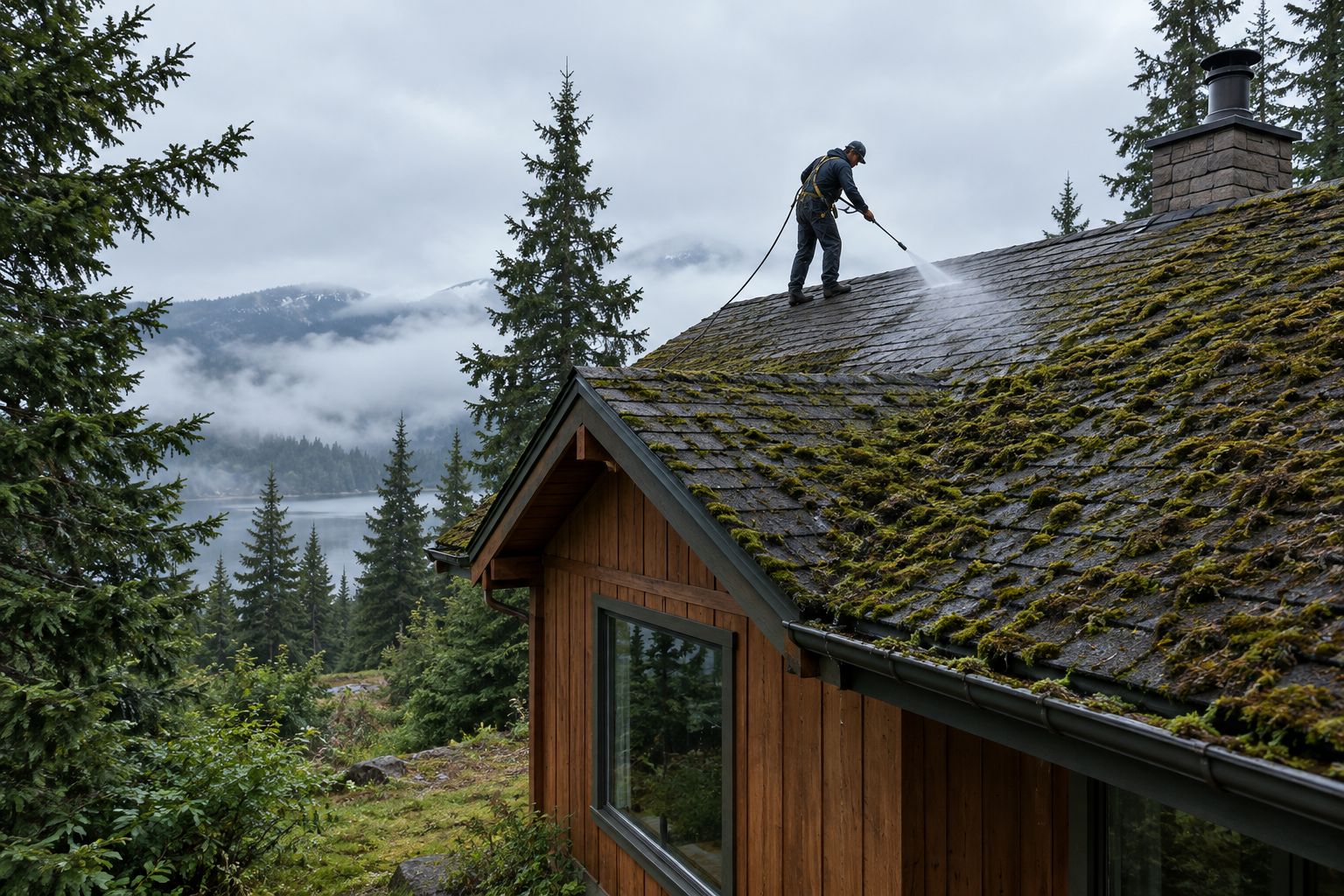
Step-by-step: moss removal for Butte's shaded, rural rooflines
Inspect your roof before moss spreads past the eaves
Check the roof twice a year, once after spring melt and once before the first hard freeze, since moss on a shaded Butte lot spreads faster than most homeowners expect.
- Start with north-facing slopes and any section under direct spruce overhang
- Look for a green-black, carpet-like texture at eaves and valleys, not just gray-green patches
- Check ridge caps and flashing seams where debris collects
- Note any spot where a branch physically touches the shingles
- Photograph problem areas each season so you can track spread year over year
Time the work around Alaska's freeze-thaw window
Moss removal in 2026 works best in two windows: right after spring snowmelt clears the roof, and again in early fall before the first heavy snow load.
- Avoid scraping or washing during a hard freeze, when moss is brittle and shingles are stiff
- Schedule fall cleaning early enough that treatments have time to work before snow cover
- Skip mid-summer if wildfire smoke or heavy pollen is settling on the roof that week
- Build in a buffer week for weather delays, since Mat-Su Valley conditions shift fast
Match the removal method to your roof material
Asphalt shingles, metal panels, and cedar shake all need a different touch, and the wrong method strips protective granules or coatings.
- Hand-scrape only loose surface moss on accessible, low-pitch sections
- Use a soft wash chemical treatment on asphalt shingles instead of a pressure washer
- Rinse metal roofing at low pressure to avoid loosening seams or fasteners
- Reserve hand tools only, no pressure equipment, on cedar shake
- Bring in a professional soft wash service like Alaska Moss Doctor when the roof pitch is steep or the moss has already thickened past a surface layer
The Wasilla roof moss removal guide breaks down how crews handle the same shaded, freeze-thaw conditions on nearby lots, and most of it applies directly to Butte roofs.
Clear gutters and downspouts before any treatment
Moss spores and debris sitting in a clogged gutter reseed the roof edge as soon as it rains, undoing a cleaning within weeks.
- Scoop out needles, leaves, and moss clumps by hand or with a gutter scoop
- Flush downspouts with a garden hose to confirm they drain freely
- Check for sagging gutter sections caused by trapped moisture and weight
- Reset loose hangers before the roof wash, not after
Cut back branches shading the roofline
A roof that gets even two more hours of direct sun a day dries out faster and holds moss less readily.
- Trim spruce and birch branches back at least 6 feet from the roof edge where safely possible
- Remove any branch making direct contact with shingles or gutters
- Thin dense canopy sections rather than topping trees outright
- Recheck clearance every spring, since Alaska spruce and birch regrow quickly in the short growing season
Apply a regrowth-inhibiting treatment after cleaning
Cleaning removes existing moss; a follow-up treatment is what slows the next cycle.
- Install zinc or copper strips near the ridge line so rain carries trace metal ions down the slope
- Reapply a moss-inhibiting spray on the most shaded sections annually
- Keep gutters and valleys debris-free between cleanings so spores don't have a place to settle
- Pair the treatment with the branch-trimming step above for the longest interval between visits
Budget extra time for rural driveway access
A cleaning crew working a Butte property often deals with longer gravel driveways and less turnaround space than an in-town Wasilla job.
- Confirm hose-reach distance from the truck to the far side of the roof before scheduling
- Clear vehicles and equipment from the driveway the morning of the appointment
- Flag any low branches or gate width that could block a service vehicle
- Ask about total time on-site, since rural access can add to the job
Comparing moss removal options for Butte roofs
| Option | Best for | Key limitation | Verdict |
|---|---|---|---|
| DIY hand-scraping | Small, easily reached low-pitch sections | Doesn't reach steep pitches safely and misses embedded spores | Hold |
| Store-bought moss spray | Light, early-stage moss on driveways or walkways | Doesn't treat steep or high roof pitches | Hold |
| High-PSI pressure washing | Concrete, brick, retaining walls | Strips asphalt granules and can force water under flashing | Skip for roofs |
| Professional soft wash (Alaska Moss Doctor) | Shaded roofs with established moss under spruce or birch canopy | Scheduling is tighter around Alaska's short work season | Buy |
Get your Butte roof inspected
Soft wash treatment sized for shaded, rural Mat-Su Valley rooflines.
Common mistakes Butte homeowners make with moss removal
- Trimming only the branches touching the roof and leaving lower canopy that still blocks midday sun
- Scheduling removal in the dead of winter, when treatments can't cure before the next snow load
- Running a home pressure washer on asphalt shingles, stripping granules and shortening roof life
- Ignoring driveway and access needs when booking, which delays trucks on longer rural lots
- Skipping the gutter-clearing step, letting trapped debris reseed the roof edge within a season
FAQ
What's the best time of year for moss removal in Butte, Alaska?
Spring after snowmelt and early fall before the first heavy snow are the two safe windows in 2026. Both give treatments time to work before the roof refreezes or gets buried under snow load.
Is pressure washing safe for asphalt shingle roofs in Butte?
No, high-PSI pressure washing strips shingle granules and can force water under flashing. A soft wash chemical treatment removes moss without that damage.
How often does moss come back on shaded Alaska roofs?
Roofs under heavy spruce or birch canopy in Butte typically need moss removal every 12 to 18 months. Open, sunnier lots closer to Wasilla can often stretch that interval longer.
Does moss removal void a roof warranty?
Improper methods like high-pressure washing or aggressive scraping can void a shingle warranty, but a soft wash treatment generally does not. Check your specific manufacturer's terms before choosing a method.
Can I remove moss myself on a steep roof?
Hand-scraping is reasonable on low-pitch, easily reached sections, but steep or high pitches common on Butte homes are safer left to a professional crew with the right equipment.
Do metal roofs get moss the same way asphalt roofs do?
Metal roofs collect less moss overall but still develop it in shaded valleys and seams. Rinse metal at low pressure rather than scrubbing hard, since scrubbing can scratch protective coatings.
What's the difference between soft washing and pressure washing?
Soft washing uses low pressure with a cleaning solution to kill moss at the root, while pressure washing relies on high-force water alone. Soft washing is the safer choice for asphalt shingles and painted siding.
Does cutting back trees actually reduce moss regrowth?
Yes, more direct sun and airflow on the roofline dries shingles faster after rain, which is the main condition moss needs to establish. Trimming branches back from the roof edge is one of the cheapest ways to extend the interval between cleanings.
One last thing
Zinc or copper strips near the ridge line are the one low-cost step Butte homeowners skip most often, and it's the one that actually extends the gap between cleanings instead of just delaying the next moss patch. Install the strips right after a cleaning, not months later, so the roof starts the next growing season already protected.