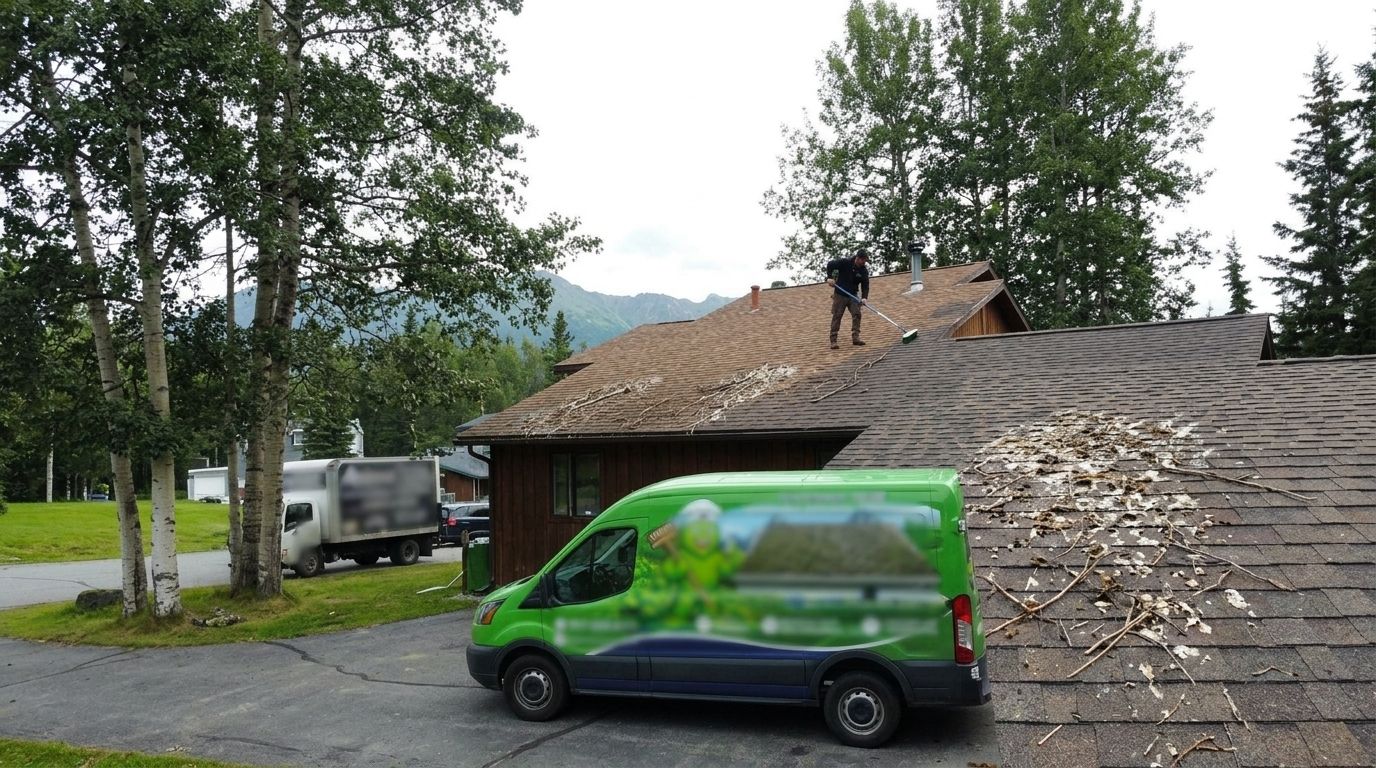
Bird droppings and nesting debris break down roof surfaces faster than most homeowners realize, and the fix is straightforward: a soft-bristle brush, a mild enzymatic or diluted dish soap solution, and a low-pressure rinse from the ridge down. Dried droppings need to soak for several minutes before scrubbing, and any nesting material (twigs, moss, feathers) has to come off by hand before you wash, or it clogs valleys and gutters.
- Soak dried bird droppings 5-10 minutes before scrubbing to loosen them without gouging shingle granules.
- Bird droppings run acidic, roughly pH 3.5 to 4.5, and eat into asphalt shingle coatings faster than moss does.
- A garden-hose soft wash under 500 PSI is the safest method for both asphalt and metal roofs in 2026.
- Alaska Moss Doctor handles bird debris removal for Wasilla-area homeowners when the buildup is on a steep or high roof.
- Skip the pressure washer on shingle roofs, it strips granules and shortens shingle life.
Why this matters
Bird droppings aren't just cosmetic. The acidity in fresh droppings degrades asphalt shingle granules and metal roof coatings faster than algae or lichen does, and dried nesting debris traps moisture against the deck year-round. In Alaska's freeze-thaw cycle, that trapped moisture is what turns a $200 cleaning job into a $2,000 underlayment repair by 2027 if it sits.
Dried droppings also carry fungal spores that can become airborne when disturbed, which is why the CDC flags dried bird and bat guano as a respiratory hazard during cleanup. That's one more reason not to dry-scrape it off with a stiff brush on a windy day. Alaska Moss Doctor treats roof-top droppings the same way it treats moss: soak first, agitate gently, rinse low-pressure.
How to clean bird droppings off a roof
Follow these steps in order. Skipping the soak step is the most common mistake homeowners make, because scrubbing dry droppings drags grit across the shingle surface and strips granules.
- Clear loose nesting debris by hand — twigs, moss clumps, and feathers, working from the ridge toward the eaves so debris doesn't wedge under shingles.
- Pre-wet the affected area with a garden hose to start softening dried droppings.
- Apply a diluted cleaning solution — mild dish soap and water, or a bleach-free enzymatic cleaner — and let it sit 5 to 10 minutes.
- Agitate with a soft-bristle brush on an extension pole; never a wire brush or a pressure-washer wand held directly against shingles.
- Rinse top-down at under 500 PSI, the standard soft-wash ceiling used across the exterior cleaning industry for shingle and metal roofs alike.
- Check gutters and valleys for washed-down debris before you call the job done.
| Method | Best for | Pros | Cons | Verdict |
|---|---|---|---|---|
| Dish soap + water | Light, fresh droppings on asphalt or metal | Cheap, gentle on granules | Slow on dried, caked deposits | Fine for spot cleanup |
| Enzymatic cleaner | Dried droppings and lingering odor | Breaks down organic matter without scrubbing hard | Costs more than dish soap, needs dwell time | Best for moderate buildup |
| Professional soft wash | Heavy nesting debris, steep or high roofs | Even coverage, no ladder risk, protects shingle warranty | Requires scheduling a crew | Best for anything above a single-story roof |
For asphalt shingle roofs specifically, soft wash roof cleaning keeps the granule coating intact in a way a pressure washer never will. If droppings cover more than a few square feet or sit on a pitch steeper than 6/12, that's a soft-wash job, not a hose-and-brush weekend project.
Cleaning bird droppings by roof material
The roof surface underneath the droppings changes what tools are safe to use.
Asphalt shingle roofs
Use the soap-or-enzyme soak method above and rinse under 500 PSI. Direct pressure strips the granule layer that protects the shingle mat from UV breakdown, and once granules are gone, they don't come back.
Metal roofing
Metal tolerates a firmer scrub than shingles do, but dried droppings can still etch painted or galvanized coatings if left for months. The best moss removal approach for metal roofing applies the same logic to bird debris: soft brush, neutral-pH cleaner, rinse before the acid has time to sit through another rain cycle.
Cedar shake and wood roofs
Wood absorbs moisture and droppings both, so avoid any cleaner with bleach, which dries out and splits cedar. A slower soak with a mild enzymatic solution and hand-brushing protects the wood grain better than any pressure method.
Why droppings and nesting debris build up
A few conditions make roofs magnets for birds and repeat buildup:
- Overhanging tree branches give birds a launch point directly onto the roof plane.
- Chimneys and vent stacks without caps are common nesting spots, especially for swifts and starlings.
- North-facing or shaded slopes stay damp longer, and moss on those surfaces attracts insects birds feed on.
- Gutters clogged with old debris hold nesting material in place instead of washing it away.
- Flat or low-pitch sections collect droppings instead of shedding them the way steep pitches do.
- Skylights and roof valleys trap debris in corners a bird would otherwise avoid.
If your roof sits under spruce or birch cover, the roof moss removal for spruce and birch shaded properties guide covers the same shade-and-moisture pattern that draws nesting birds in the first place.
Get bird debris off a steep or high roof safely
Alaska Moss Doctor handles droppings, nesting debris, and moss removal for Wasilla-area homes.
Related questions
Can bird droppings damage roof shingles?
Yes, bird droppings run acidic at roughly pH 3.5 to 4.5, and that acidity breaks down the granule coating on asphalt shingles faster than plain weathering does. Left for a full season, it can leave bare patches that let UV rays hit the shingle mat directly.
Is it safe to clean bird droppings off a roof yourself?
It's safe on a single-story roof with a stable ladder and a garden hose, but anything above one story or steeper than a 6/12 pitch is a fall risk not worth taking. A professional soft-wash crew carries harness gear and works the roof from a stable platform instead of standing on wet shingles.
How often should you clean bird droppings off a roof?
Check the roof every spring and after any heavy nesting season, since droppings that sit through an Alaska winter under snow cover have months to etch into the surface before you even see them. Homes near tree lines or open water tend to need a look twice a year instead of once.
FAQ
What's the best way to remove dried bird droppings from a roof?
Soak dried droppings for 5 to 10 minutes with a mild soap or enzymatic solution before scrubbing with a soft-bristle brush, then rinse at under 500 PSI. Scraping dry droppings off drags grit across the shingle and strips granules.
Is pressure washing safe for removing bird droppings from a roof?
Standard high-pressure washing is not safe for asphalt shingles because it strips the protective granule coating. A soft wash under 500 PSI removes the same debris without damaging the roof surface.
Does dish soap remove bird droppings from shingles?
Dish soap and water works on light, fresh droppings when given a few minutes to soak before scrubbing. Dried, caked-on deposits usually need an enzymatic cleaner or a professional soft wash to fully break down.
Can bird droppings void a roof warranty?
Most shingle warranties don't specifically exclude bird droppings, but the granule loss droppings cause can trigger a manufacturer's inspection to deny a claim tied to premature wear. Cleaning droppings promptly protects the warranty indirectly by preventing that granule damage.
Do gutter guards help keep bird droppings off a roof?
Gutter guards don't stop birds from landing on the roof, but they keep nesting debris from settling into gutters where it holds moisture against the fascia. Pairing guards with regular roof checks cuts down on repeat buildup near the eaves.
How do you clean bird droppings off a metal roof?
Use the same soak-then-soft-wash method as asphalt: a neutral-pH cleaner, a soft brush, and a low-pressure rinse. Metal tolerates slightly firmer scrubbing than shingles, but painted or galvanized coatings can still etch if droppings sit for months.
Are bird droppings a health hazard when cleaning a roof?
Dried bird droppings can release fungal spores into the air when disturbed, which is a recognized respiratory hazard during cleanup. Wetting the area before scrubbing, rather than dry-brushing, keeps spores from becoming airborne.
One last thing
The detail most homeowners miss: it's not the fresh droppings that do the damage, it's the ones that dry, get rained on, dry again, and repeat that cycle through an entire Alaska summer. That wet-dry acid cycle is what actually eats into granules, not a single bird visit. Checking the roof twice a year, spring and after peak nesting season, catches the problem before it becomes a granule-loss patch that needs a shingle repair instead of a rinse.