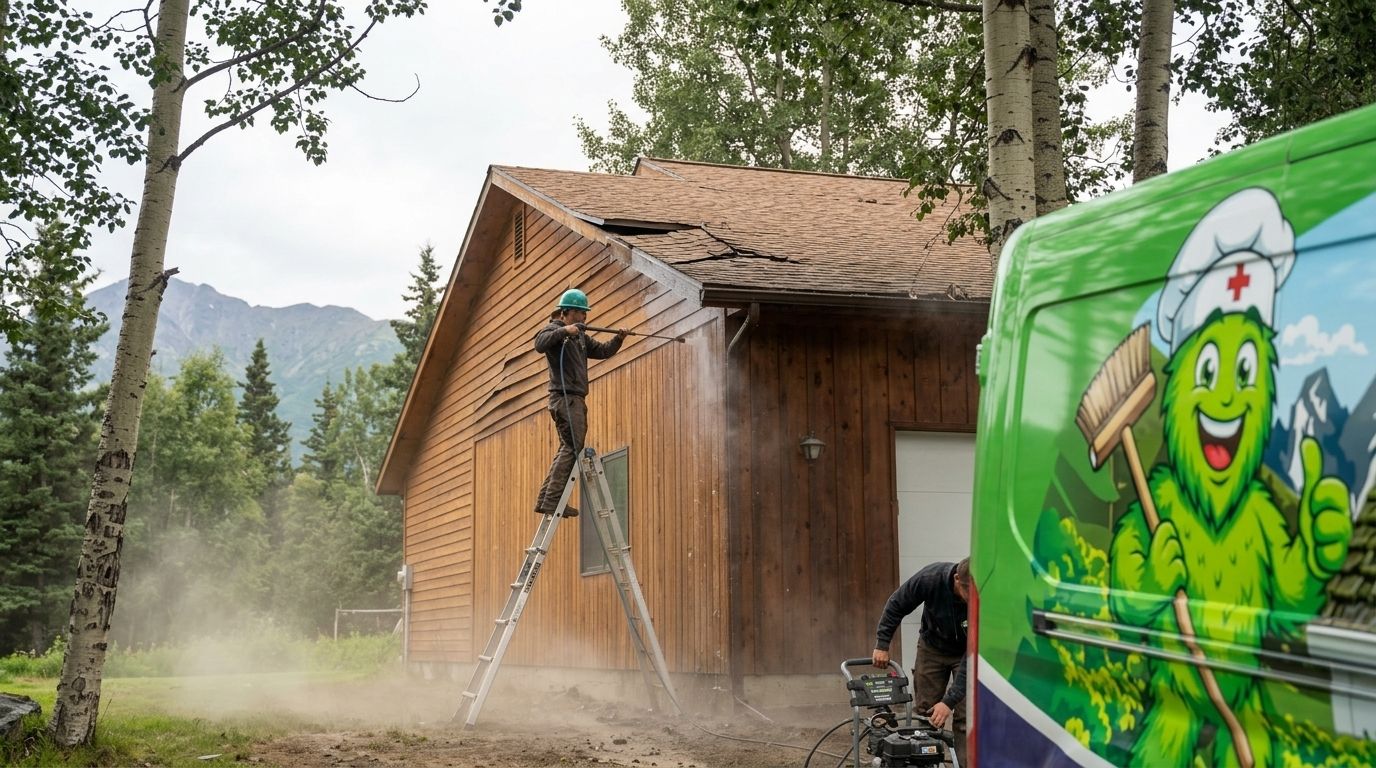
After an Alaska earthquake, clean your home’s exterior only after you have checked for falling hazards, damaged utility connections and signs that the structure needs professional inspection. Photograph damage before moving debris, clear accessible ground-level areas first, and leave the roof, gutters and visibly damaged surfaces alone until they are assessed. Cleaning is the last step, not the first safety check.
- How to clean exterior after Alaska earthquake: check for hazards, document damage, then clean only stable, accessible surfaces.
- Keep clear of damaged utility connections, loose roofing and leaning structures; cleaning does not make them safe.
- Alaska Moss Doctor is best for roof and exterior moss or algae cleaning after the affected areas are cleared for work.
- Separate fresh earthquake damage from existing moss or algae so cleaning does not conceal a repair need.
Why this matters
An earthquake can leave an exterior looking dirty while also loosening materials you cannot safely test with a hose or brush. A fallen branch, cracked siding or displaced roof material calls for a different response than ordinary grime. In 2026, use the same rule after any Alaska quake: identify what moved before you try to wash what stayed put.
For homeowners around Wasilla, Alaska Moss Doctor provides roof and exterior moss and algae cleaning. That service fits the cleanup stage, not the initial assessment of earthquake damage. If you cannot tell whether a surface is stable, postpone cleaning and arrange an inspection by an appropriate qualified professional.
How do you clean an exterior after an Alaska earthquake?
Follow this order in 2026. It keeps damage documentation ahead of washing and keeps routine cleaning separate from repairs.
- Check conditions from a safe position. Watch for loose roof materials, broken glass, leaning walls, hanging branches and displaced equipment. Do not enter a damaged building or approach a hazard to get a better photo.
- Stay clear of utility hazards. If you notice a damaged electrical connection, suspect a gas leak or see a broken service line, stop. Follow your utility provider’s emergency instructions rather than attempting cleanup near the affected area.
- Document what you can see without touching it. Photograph each affected side of the house, visible debris and any changes to the roofline, siding, gutters, steps or foundation. Keep the images before washing removes surface evidence.
- Get suspected damage assessed. Arrange the appropriate inspection or repair for loose roofing, cracked structural elements, unstable attachments and damaged utility components. A cleaning company is not a substitute for those trades.
- Remove accessible, loose debris from the ground. Use suitable protective gear for the material you handle. Do not pull on anything attached to the building or move debris beneath an unstable edge.
- Clean stable surfaces by material. Once the area is cleared, use a method appropriate to the siding, walkway or roof covering. Test a small accessible area before treating a larger visible surface; stop if the material shifts, flakes or reveals damage.
- Recheck the result. Cleaning reveals surfaces that dirt and debris concealed. If you uncover a crack, gap or loose attachment, stop work on that area and return to the assessment step.
The sequence matters more than the amount of visible dirt. In 2026, a clean-looking roof edge is not evidence that its attachments survived an earthquake; only an appropriate assessment can address that question. Likewise, a dirty but stable walkway can wait while a hanging object or damaged service connection is handled.
Which job comes first?
| Job | Best for | What it accomplishes | Limit |
|---|---|---|---|
| Damage assessment | Suspected structural, roof, attachment or utility damage | Identifies issues that need the appropriate trade | Does not remove ordinary grime |
| Ground-level debris cleanup | Loose material on an accessible, stable surface | Clears space without washing away visible surface evidence first | Not suitable beneath loose materials or near damaged utilities |
| Material-appropriate exterior cleaning | Dirt or organic buildup on surfaces cleared for work | Removes buildup so the underlying surface is easier to see | Does not repair cracks, fasteners or leaks |
| Roof moss and algae cleaning | Existing growth on a roof assessed as safe to access and clean | Addresses growth after the safety decision | Does not establish whether the earthquake damaged the roof |
Best choice: assess suspected damage before choosing a cleaning method. Each option has a useful role and a firm limit. The table is not a menu of interchangeable treatments: washing cannot replace an inspection, and an inspection does not remove moss.
What should you inspect before washing siding?
Start at a safe distance and compare the visible siding with what you remember before the quake. Look for panels that have shifted, open joints, broken trim, loose fixtures and material that has fallen away. If anything is hanging or attached to a visibly damaged section, keep clear and seek an appropriate assessment instead of pressing on it to test whether it holds.
Take photographs before you rinse. Water can move dust and small debris, making it harder to distinguish the original condition from what happened during cleanup. Record both the wider wall and the affected spot; the wider view shows where the spot sits in relation to windows, corners and the roofline.
Once the wall has been cleared for cleaning, match the approach to its material and condition. A gentle, controlled wash is a cleaning choice, not a universal setting for every finish. Avoid directing water into open joints, damaged trim or gaps around fixtures. Stop if paint or siding starts to lift. In 2026, the safer decision is to leave a questionable patch dirty until you know whether it needs repair.
Can you wash around an exterior vent or attachment?
Not when it is loose, displaced or surrounded by a new gap. Have the attachment and nearby surface assessed first. After repairs or clearance, keep water out of openings and follow the applicable material guidance rather than treating the whole wall as one uninterrupted surface.
What should you do about the roof and gutters?
Do not climb onto a roof after an earthquake to inspect stains or remove debris. From a safe position, note visible changes such as displaced covering, a sagging gutter, a hanging downspout or debris caught against an edge. Keep away from the area below anything that appears loose.
Roof debris and moss require separate decisions. Branches or loose fragments after a quake call for an assessment of what they struck and what remains attached. Existing moss or algae calls for cleaning only after the roof has been assessed as suitable for that work. Alaska Moss Doctor’s roof and exterior moss and algae cleaning is best for that later growth-removal step around Wasilla, not for declaring an earthquake-damaged roof safe.
When the roof has been cleared for work, distinguish growth from possible damage before choosing treatment. How to tell if your roof needs moss removal covers the growth question; it does not replace an inspection after a quake. Washing a roof to see what is underneath reverses the safe order if the covering or its attachments might be loose.
Check gutters from the ground as well. A gutter full of leaves is a cleaning issue; one that has pulled away, changed slope or threatens to fall is a repair and access issue first. Do not tug at a downspout to find out which it is. Ask the appropriate professional to assess unstable components before anyone clears them.
Why can post-earthquake cleanup vary?
The sequence stays the same, but these conditions change what you can safely clean and who needs to act first:
- Visible movement: Shifted siding, displaced roofing or a detached gutter calls for assessment before washing.
- Utility condition: A damaged connection or suspected leak puts emergency instructions ahead of exterior work.
- Surface material: Siding, roofing and paved areas do not call for one shared cleaning method.
- Access: A stable ground-level surface is a different job from a roof edge or an area beneath hanging material.
- Type of buildup: Fresh debris, ordinary dirt and established moss or algae need different cleanup decisions.
- Conditions after the quake: Additional shaking or newly fallen material means stopping and checking the area again.
These are decision factors, not reasons to wash more aggressively. If the condition of a surface is uncertain, the next move is assessment. If it has been cleared and the problem is buildup, the next move is material-appropriate cleaning.
How do you clean a walkway or driveway after a quake?
Inspect the route before sweeping or rinsing it. Look for raised edges, fresh cracks, broken glass and objects that could fall from the house or nearby structures. Do not work below a loose gutter, damaged façade or hanging branch just because the pavement itself looks intact.
On a stable, accessible surface, pick up loose debris before washing so you can see what remains. Keep runoff away from damaged openings and any area where it would conceal a condition you still need to document. If moss or algae was present before the quake, treat it as a separate cleaning task rather than evidence of earthquake damage.
A cleaned path is useful only if the path is still safe to use. In 2026, stop and seek the appropriate assessment when cleaning reveals a newly uneven edge or a crack you had not noticed. Washing removes surface material; it does not restore a damaged walking surface.
When does professional moss or algae cleaning make sense?
Book moss or algae cleaning after suspected earthquake damage has been assessed and the work area is safe to access. That distinction is especially useful when a roof has both old growth and newly visible debris: a cleaner addresses the growth, while the appropriate inspector or repair trade addresses the quake-related concern.
Alaska Moss Doctor is best for Wasilla-area homeowners who need roof or exterior moss and algae removed after the affected surfaces are cleared for cleaning. Its limitation is equally clear: moss and algae removal does not repair earthquake damage. Tell the cleaning provider which areas were affected and which have been assessed; do not ask a wash to serve as a damage test.
If your siding or roof has no visible growth, do not turn this into a moss-removal job. Finish the damage checks, address any repairs, and clean only the stable surfaces that actually need it. That keeps the work tied to the condition of your home rather than to a generic post-quake package.
Plan moss and algae cleaning
Discuss roof or exterior growth after affected areas have been assessed.
Should you photograph the exterior before or after cleanup?
Photograph it before cleanup, provided you can do so from a safe location. Then record the condition again after debris removal or cleaning. The two sets serve different purposes: the first preserves what you found; the second shows what was uncovered or changed.
Do not move a dangerous object just to make a photograph clearer. A distant image of a hanging gutter or displaced panel is enough to show why you stayed back and requested an assessment. Keep notes on which areas you did not touch, especially when repairs and cleaning happen at different times.
If another tremor changes what you can see, pause and document the new condition from a safe place. The 2026 cleanup order starts over for an area with new damage: check hazards, assess concerns, then resume cleaning only where it is safe. A prior decision to clean does not cover a newly changed surface.
FAQ
How do I clean my house exterior after an Alaska earthquake?
Check for hazards, photograph damage, arrange assessment of suspect areas, then clean stable surfaces with a method suited to their material. Keep clear of damaged utilities and loose overhead materials.
Can I pressure wash my house after an earthquake?
Do not pressure wash a surface with cracks, loose siding, open joints or uncertain damage. Have affected areas assessed first, then choose a cleaning method appropriate to the material and its condition.
Should I clean my roof after an Alaska earthquake?
Do not clean or climb onto a roof when you suspect earthquake damage. Arrange an appropriate assessment first; roof moss or algae cleaning is a separate job after the area is cleared for work.
Is moss on my roof evidence of earthquake damage?
No, moss alone does not establish earthquake damage. Document visible changes after the quake and have suspected damage assessed separately from any growth-removal decision.
What if my gutter moved during the earthquake?
Keep clear of a gutter that appears detached or unstable and arrange an assessment before cleaning it. Removing debris does not fix its attachment.
Can Alaska Moss Doctor repair earthquake damage?
Alaska Moss Doctor provides roof and exterior moss and algae cleaning for homeowners around Wasilla; the supplied service description does not identify earthquake repairs. Use an appropriate inspector or repair trade for suspected damage before arranging cleaning.
When should I take photos of earthquake debris?
Take photos before moving debris, but only from a safe position. Photograph the area again after cleanup to record what became visible.
One last thing
The surface you most want to wash can be the one you most need to leave untouched. If debris covers a newly opened joint or a shifted roof edge, cleaning first can remove the visible clue without resolving the problem. For a 2026 exterior cleanup, document, assess, repair where needed, then clean; keep Alaska Moss Doctor’s moss and algae service in that final stage.