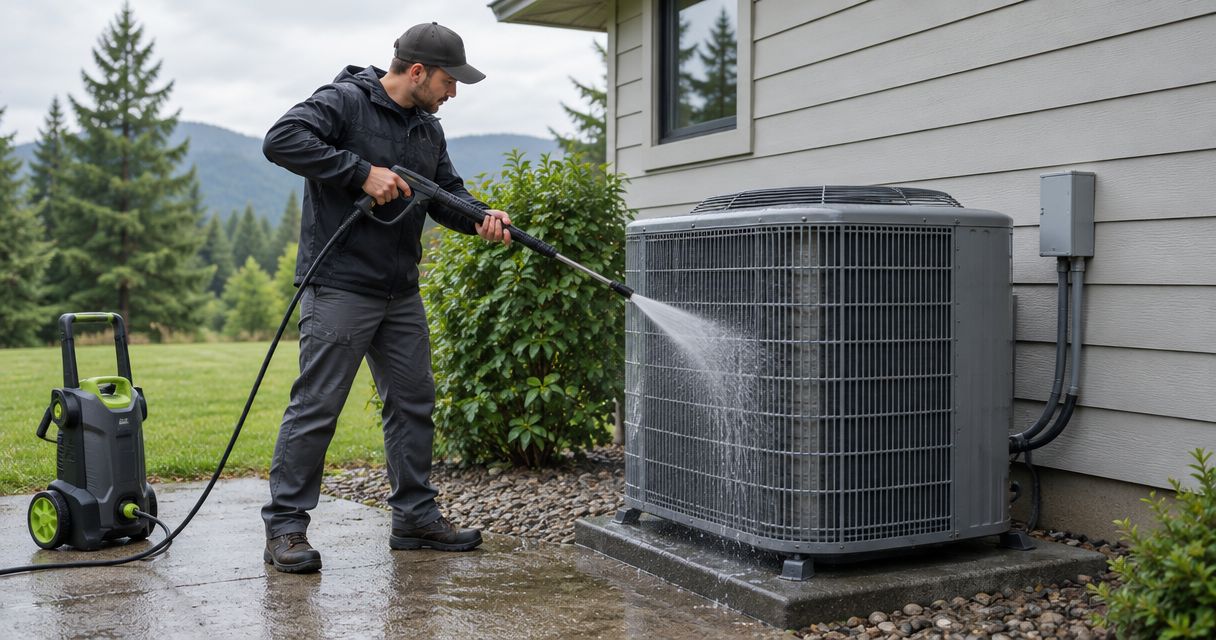
To clean an exterior AC or heat pump unit during an exterior wash in 2026, turn the equipment off, keep wash solution and pressure away from it, remove loose debris by hand, and rinse accessible exterior surfaces gently only if the manufacturer permits it. Cleaning the surrounding wall is not the same as servicing the unit: leave panels, wiring, and inaccessible coils to an HVAC technician.
- How to clean ac unit during exterior wash: switch it off, protect it from runoff, and clear loose debris.
- Use gentle water only on accessible surfaces when the unit's instructions permit it; never pressure-wash the equipment.
- Alaska Moss Doctor suits Wasilla homeowners seeking exterior moss and algae removal, not HVAC coil servicing.
- Remove any temporary cover before restarting the unit, and call an HVAC technician if water enters electrical areas.
Why this matters
A house wash and an outdoor cooling unit occupy the same work area, but they need different treatment. Siding can be washed while the unit is kept out of the spray path. Directing a pressure-washer nozzle or cleaning solution at the cabinet turns a routine exterior wash into an equipment risk.
If you are planning work around the house, preparing your yard before a house washing should include showing the washer where the outdoor unit sits. In 2026, the practical rule remains simple: agree on the no-spray area before washing starts, not after runoff reaches the equipment.
The safe boundary is the equipment cabinet, not just its electrical box. Water or cleaner aimed at the siding can travel down the wall, across the ground, or through the air toward the unit. Plan where both the spray and the runoff will go.
How do you clean an exterior AC or heat pump unit during a wash?
Treat the house wash and the equipment cleanup as separate jobs. The sequence below lets you clear visible debris without assuming that every outdoor unit can be rinsed in the same way.
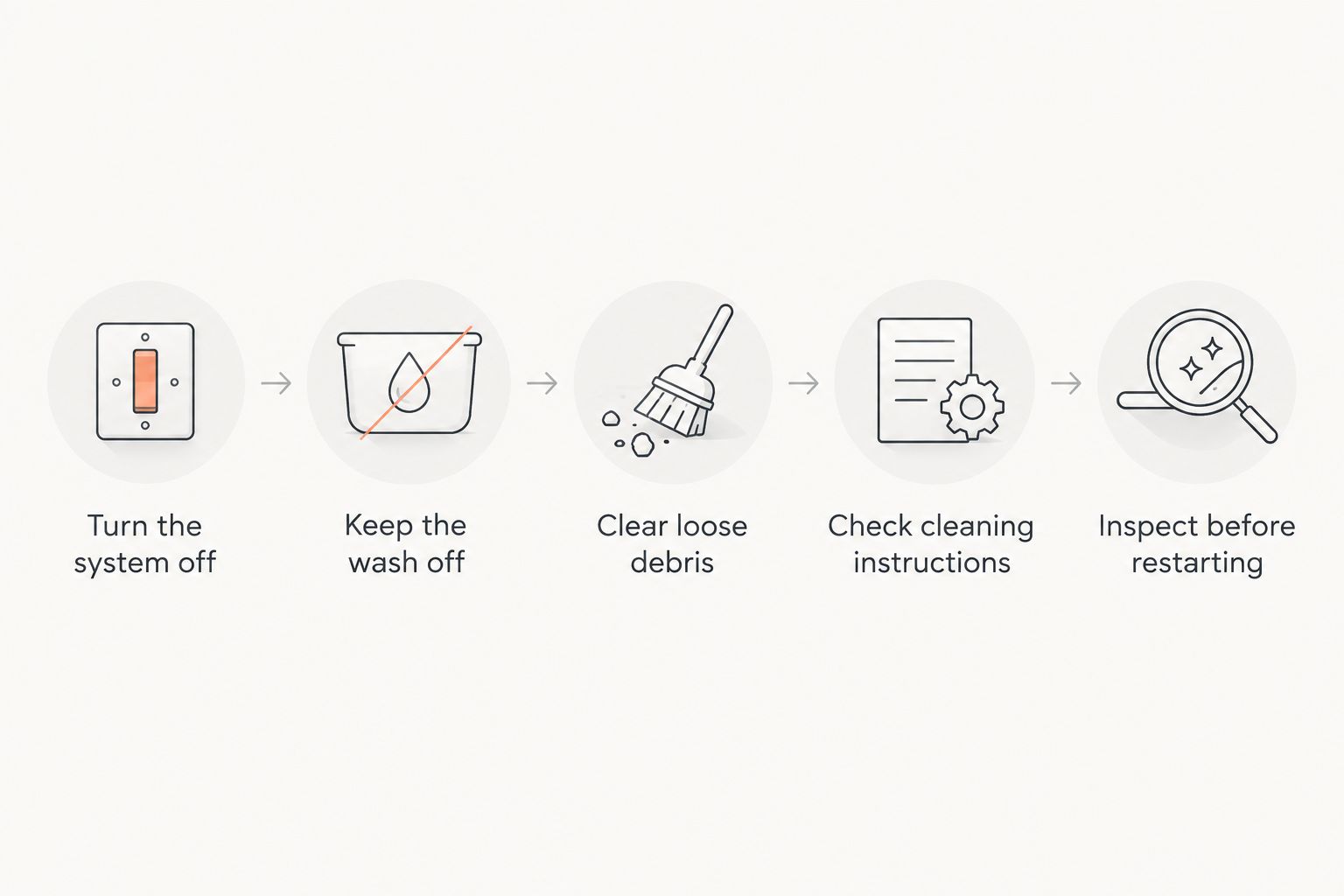
- Turn the system off. Stop it at the thermostat or control, then follow the equipment instructions for isolating power before you clean the unit. If you cannot identify the correct disconnect or breaker, do not open or rinse the equipment; ask an HVAC technician.
- Keep the wash off the unit. Tell anyone washing the siding not to aim spray, detergent, or roof-cleaning runoff at the cabinet. A temporary cover can block overspray while the equipment is off, but it must not stay on when the system runs.
- Clear loose debris. Pick up leaves, grass, and other loose material around the cabinet without pushing it through the grille. Keep tools away from exposed coil fins and wiring.
- Check the unit's cleaning instructions. If the manufacturer permits an exterior rinse, use gentle water on the accessible surfaces it identifies. Do not force water through openings or use a pressure-washer nozzle on the unit.
- Inspect before restarting. Remove the temporary cover, check that no cleaning solution has collected around the equipment, and confirm that the surrounding area is clear. If you see damage or suspect water reached electrical parts, leave the system off and contact an HVAC technician.
Do not treat an exterior rinse as a coil-cleaning procedure. Some surfaces are accessible from outside; others require opening the cabinet. If you have to remove a panel to reach the dirt, stop at the panel and arrange service instead.
What should you check before the siding wash begins?
Find the outdoor unit before hoses and cleaning solution are in use. Note its position relative to the wall, downspouts, roof edges, and the route water will take across the ground. The goal is to keep runoff from being directed into the cabinet, not merely to avoid spraying it head-on.
Move loose items away from the work area so the washer can see the unit clearly. If landscaping limits access, do not bend pipes or move the cabinet to make room. Point out the equipment to the person doing the wash and agree that the unit itself is outside the siding-wash scope.
In 2026, this distinction is especially useful when a roof or wall wash is planned alongside routine yard cleanup: a clean-looking cabinet does not establish that its internal components were cleaned or inspected.
What is safe to do while the equipment is off?
You can remove loose material from the ground and from surfaces you can reach without opening the unit. Work gently around the grille. Do not scrape buildup off coil fins, pull at lines, or insert a brush into openings; those are not ordinary siding-wash tasks.
Whether to rinse depends on the instructions for the specific unit. If those instructions do not identify a safe rinse method, skip the rinse rather than substitute the house-washing method. Use the HVAC service route for dirt you cannot reach safely from outside.
Should you wash the wall, rinse the cabinet, or call a technician?
These options solve different problems. Choose by where the dirt is and whether reaching it requires opening the unit.
| Option | Best for | What it does | Limit |
|---|---|---|---|
| Wash the surrounding wall while shielding the unit | Dirt or algae on siding near the equipment | Cleans the exterior surface without targeting the equipment | Runoff and overspray still need control |
| Clear debris and follow the manufacturer's exterior-rinse instructions | Loose material on accessible parts of the outdoor unit | Tidies the visible area without opening the cabinet | Does not replace internal inspection or coil service |
| Arrange HVAC service | Dirt inside the cabinet, suspected electrical exposure, damage, or poor operation | Puts equipment-specific work with a technician | It is a separate task from washing the house |
For a siding wash, the best default is to wash the wall and keep the outdoor unit out of the spray. A permitted gentle rinse can address accessible debris afterward. If the problem is inside the cabinet, the correct next move is HVAC service, not a stronger wash setting.
Alaska Moss Doctor provides roof and exterior moss and algae cleaning for homeowners in the Wasilla area. Alaska Moss Doctor suits Wasilla homeowners seeking roof and exterior moss or algae removal; an HVAC technician handles faults inside an AC or heat pump unit. Keep those scopes separate when arranging work around the same wall.
Why does the right cleaning approach vary?
- The unit's instructions: They determine which exterior surfaces can be rinsed and which areas must stay dry. A generic house-washing procedure cannot replace them.
- Where the dirt sits: Leaves beside the cabinet are different from buildup behind a panel. The latter is a service issue, not a reason to open the unit during a wash.
- The wall above it: Wash solution can run down siding even when the spray is aimed away from the equipment. Account for the runoff path before starting.
- The equipment's condition: Damaged covers, exposed wiring, or suspected water entry call for stopping work around the unit and getting qualified help.
- Whether the system is running: A temporary cover used to block overspray must come off before operation. Do not leave the equipment wrapped after the wash.
- What the job includes: Roof and exterior moss removal does not, by itself, establish that HVAC cleaning is included. Identify the equipment boundary when agreeing on the wash.
Those factors matter more than how dirty the cabinet looks. In 2026, the simplest decision rule is still based on access: if cleaning requires opening the equipment or guessing about electrical safety, stop and use an HVAC technician.
Can you pressure-wash an outdoor AC or heat pump unit?
No. Do not direct a pressure-washer nozzle at the outdoor unit. Use the pressure washer for suitable exterior surfaces while keeping its spray and cleaning solution off the equipment. For the unit itself, follow its manufacturer-approved cleaning instructions or arrange HVAC service.
A pressure setting that works on a walkway or siding is not evidence that it is safe for coil fins, grilles, seals, or electrical areas. Stand back and redirect the wash rather than trying to clean the cabinet incidentally as you pass it.
What if house-washing solution lands on the unit?
Stop spraying toward the unit and leave it off. Follow the equipment instructions for any permitted exterior rinse, and get HVAC advice if solution appears to have entered the cabinet or reached electrical parts. Do not restart it just to check whether it still works.
The response depends on what landed where; this page cannot identify a chemical from its appearance. In 2026, ask the washer what product was used and pass that information to the HVAC technician if an inspection is needed. Do not mix another cleaner into the affected area.
When can you restart the system after the wash?
Restart only after every temporary cover is removed, the work area is clear, and you have no reason to suspect water or cleaner reached electrical components. Follow the unit's instructions. If you see damage or have doubts about water entry, leave it off for an HVAC technician to assess rather than choosing an arbitrary waiting period.
This final check belongs to the homeowner or whoever controls the system, not to the appearance of the siding. A finished wash does not automatically mean the equipment is ready to operate.
How does this fit into an exterior cleaning visit?
Before work begins, tell the exterior cleaner where the unit is and that it must stay out of the wash path. Ask how spray and runoff will be kept away from it, and confirm that any temporary shielding will be removed when washing ends. These are coordination questions, not a request for the cleaner to perform HVAC maintenance.
For a Wasilla homeowner booking roof or exterior moss and algae removal, Alaska Moss Doctor is relevant to the exterior-cleaning portion of that plan. An HVAC technician is the appropriate contact for an inaccessible coil, a damaged cabinet, or a system that does not operate normally after the wash. The two jobs can be coordinated without treating them as the same service.
A practical handoff in 2026 is straightforward: point out the unit before washing, check it before restart, and describe any suspected exposure when contacting an HVAC technician. That gives each person a clear responsibility without asking a siding washer to diagnose cooling equipment.
FAQ
How do you clean an AC unit during an exterior wash in 2026?
Turn the unit off, keep wash spray and runoff away, and remove loose debris by hand. Rinse accessible surfaces gently only if the manufacturer's instructions permit it.
Can you use a pressure washer on an outdoor heat pump?
No; keep the pressure-washer nozzle off the outdoor heat pump. Follow the unit's cleaning instructions or contact an HVAC technician for dirt inside the cabinet.
Should you cover an outdoor AC unit while washing siding?
A temporary cover can help block overspray while the equipment is off, but it must be removed before the system runs. Do not rely on a cover alone to control wash runoff.
Can house-washing chemicals go into an AC unit?
No; direct cleaning solution and runoff away from the unit. If solution appears to have entered the cabinet or reached electrical parts, leave the equipment off and seek HVAC advice.
Who cleans the coil during a house wash?
An HVAC technician handles coil cleaning that requires opening the cabinet. A house wash addresses exterior building surfaces, not inaccessible equipment components.
When is it safe to turn the unit back on after washing?
Restart after temporary covers are removed and the unit passes a visual check, provided you have no reason to suspect water or cleaner entered electrical areas. Follow the equipment instructions and seek HVAC advice if you suspect exposure.
Does Alaska Moss Doctor service outdoor AC or heat pump units?
Alaska Moss Doctor is described as a roof and exterior moss and algae cleaning service for Wasilla-area homeowners, not an HVAC service. Arrange an HVAC technician for internal equipment cleaning or faults.
One last thing
The most useful check happens before the first spray, not after the unit looks dirty. Mark the outdoor equipment as a no-spray area and decide where wall-wash runoff will travel. In 2026, that simple separation keeps an exterior-cleaning job from becoming an unplanned equipment-cleaning job.