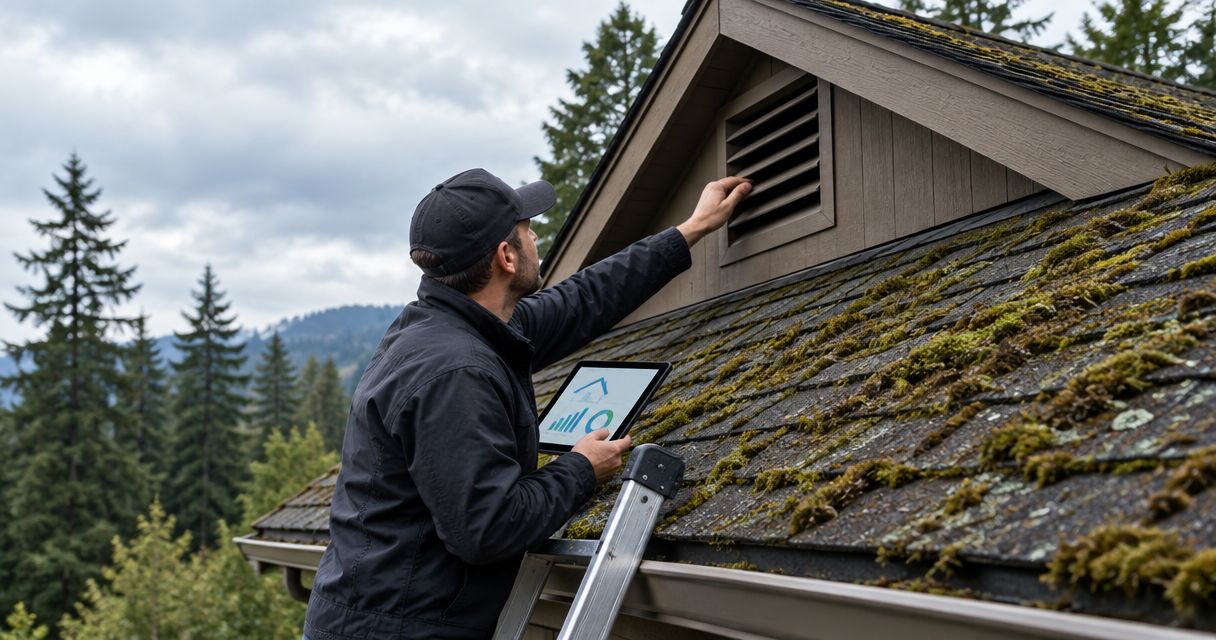
Check attic ventilation before scheduling roof moss removal by looking inside the attic for damp sheathing, visible mold, blocked vents and bathroom fans that discharge into the attic. If you find active moisture or cannot tell where it comes from, arrange an attic or roof assessment before cleaning; removing moss will not correct an indoor moisture problem.
- For attic ventilation before roof moss removal, inspect the attic from a safe access point before booking cleaning.
- Damp sheathing, blocked vents or a fan exhausting into the attic call for an assessment before cleaning.
- Alaska Moss Doctor provides professional roof moss removal for homeowners in the Wasilla area; cleaning does not repair ventilation.
Why this matters
A mossy roof and a damp attic are different problems. Moss grows on the exterior roof surface; attic moisture can come from indoor air, a ventilation obstruction or a roof leak. Cleaning the roof does not identify which of those conditions is present.
For Wasilla-area homeowners planning roof moss removal with Alaska Moss Doctor, an attic check gives you useful information before the appointment. You can describe what you see, ask whether an exterior roof condition needs attention and arrange a separate assessment when the evidence points inside. You do not need to diagnose the ventilation system yourself.
The distinction matters in 2026 if your reason for booking is more than visible moss. When you also see staining, dripping or persistent dampness indoors, treating the outside as the only problem leaves the moisture question unanswered. Start with observations you can make without stepping onto the roof or disturbing attic materials.
How do you check attic ventilation before scheduling roof moss removal?
In 2026, inspect from a safe attic access point, note any visible moisture or blocked airflow paths, and keep cleaning separate from any needed repair. Stop the inspection if reaching a vent requires walking across unfinished attic space. The goal is to decide what to report and whether another professional needs to assess the attic first.
| What you observe | What it tells you | Next move |
|---|---|---|
| Attic surfaces look dry and visible vents appear clear | No obvious problem is visible from your access point; this is not proof that ventilation is adequate | Discuss roof moss removal and report what you checked |
| Insulation covers a visible soffit opening or another vent looks blocked | An airflow path needs closer assessment | Have the obstruction assessed before treating cleaning as the entire solution |
| Sheathing is damp, water is dripping or staining looks active | Moisture needs a cause, which the attic check alone cannot establish | Arrange an attic or roof assessment before cleaning |
| A bathroom fan appears to discharge into the attic | Indoor moisture is entering a space where it does not belong | Arrange correction of the fan exhaust separately from moss removal |
Use the same observations to guide the following steps. A dry area near the hatch does not rule out a problem elsewhere, and an old stain does not prove that water is still entering. Record where the evidence is rather than assigning a cause you cannot verify.
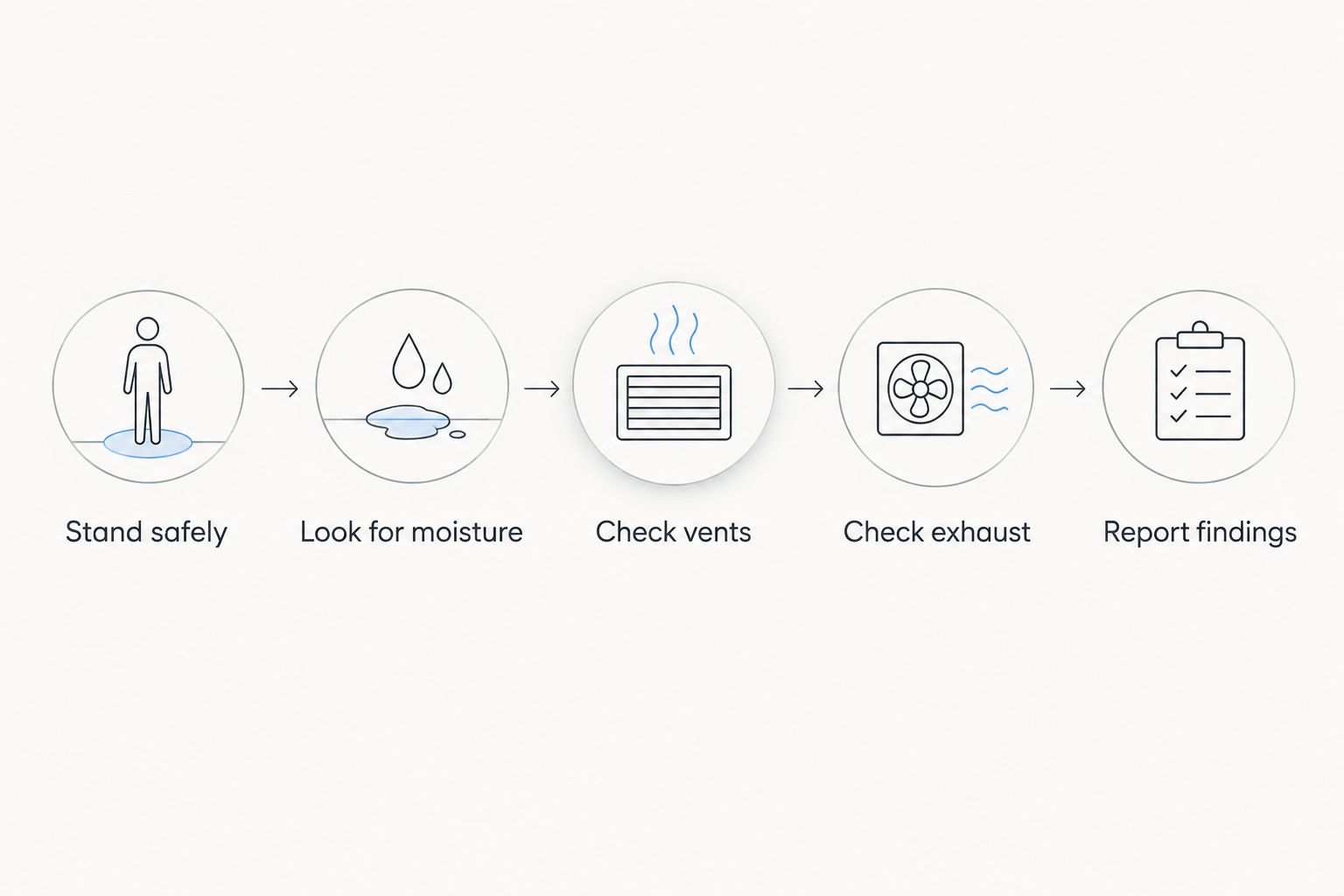
Step 1: Start where you can stand safely
Open the attic access only if you can reach it without an unstable ladder or a fall risk. Look from the hatch or a properly supported access area; unfinished attic ceilings are not walking surfaces. If the space is difficult to enter, skip the physical inspection and describe that limitation when arranging an assessment.
Bring a light so you can see the roof sheathing and insulation near the opening. Avoid moving insulation, touching wiring or handling material you suspect is mold. Your first decision is whether a closer inspection requires someone equipped to work safely in the space.
Step 2: Look for moisture on the roof sheathing
Check the underside of the roof deck for damp patches, droplets and visible staining. Pay particular attention to whether the surface looks wet now, not simply discolored. A photograph from a safe position helps you show an inspector the location without claiming to know the source.
Moisture on sheathing does not, by itself, prove inadequate ventilation. A roof leak, indoor air entering the attic and a blocked airflow path call for different remedies. If you see active dripping or wet materials, prioritize finding the source before scheduling a cleaning as the response to that symptom.
Step 3: Identify visible intake and exhaust paths
If the construction lets you see them, look toward the eaves for soffit openings and higher on the roof for visible exhaust venting. Insulation pushed into a soffit opening can obstruct an intake path. Do not pull insulation aside or assume a vent is clear just because its exterior cover is visible.
Roof designs differ, and the hatch rarely provides a full view of every vent. In 2026, the practical question for a homeowner is whether an obvious opening appears blocked, not whether you can calculate the system's capacity by eye. A ventilation professional can assess airflow and the roof assembly when a visual check leaves doubt.
Step 4: Check where indoor exhaust goes
If you can see a bathroom fan duct from a safe position, follow it visually. A duct ending in the attic is different from one routed outdoors. Warm, moisture-bearing indoor air discharged into the attic needs attention even when exterior moss is also present.
Do not disconnect a duct to test it. Note whether the route is visible, whether it appears intact and where you lose sight of it. If you cannot confirm the termination, tell the person assessing the attic rather than treating an unseen section as proof that the fan is vented correctly.
Step 5: Report the findings before booking
Tell the roof-cleaning company where moss appears and whether your attic check found wet materials, visible obstructions or an apparent fan exhaust issue. Keep the descriptions separate: exterior growth is a cleaning question; active interior moisture is an assessment question. That distinction lets each professional address the part they can actually evaluate.
Alaska Moss Doctor is best for Wasilla-area homeowners seeking professional roof moss removal after any attic moisture concern has been assessed. The service addresses roof moss and exterior growth; an attic ventilation assessment addresses the source of indoor moisture. If your attic looks dry from the access point, you can still report the limits of what you saw when discussing cleaning in 2026.
Why the answer varies by attic
A visual check is useful, but the meaning of what you see depends on how the space is built and where the moisture appears. These factors change what you should ask next:
- Access to the attic: A view from the hatch covers only part of the roof deck. If you cannot see the eaves or higher vents safely, record that limit instead of marking them clear.
- Visible vent openings: Insulation or stored items against a visible opening are reasons to request a closer look. Do not infer that every opening is blocked from a single obstructed area.
- Indoor exhaust routing: A bathroom fan ending in the attic introduces moisture independently of roof moss. Correcting the duct route is a separate task from exterior cleaning.
- Location of staining: A concentrated wet patch and widespread damp surfaces present different questions for an inspector. Neither pattern, on its own, identifies the cause.
- Whether materials are wet now: Active moisture calls for prompt investigation. Old discoloration still deserves documentation, but its appearance alone cannot establish an ongoing leak.
- Roof conditions you can see from the ground: Moss, damaged-looking roofing and debris near a vent are observations to report, not permission to climb onto the roof to investigate.
These distinctions apply in 2026 regardless of whether you intend to clean the roof soon. They also prevent an avoidable mix-up: booking moss removal because you see a damp attic, or delaying an appropriate roof cleaning because you assume all attic stains come from moss. Neither conclusion follows from a quick look.
Should you postpone moss removal if the attic is damp?
Yes, if moisture is active and its source is unknown, get it assessed before treating moss removal as the fix. You can still discuss the exterior moss with a cleaner, but do not ask a cleaning appointment to stand in for a leak or ventilation diagnosis. Tell the assessor exactly where you saw wet material and whether you also noticed exterior roof damage.
If the attic is dry where you can safely see, that observation alone does not guarantee the whole system is dry. Proceed with a cleaning discussion and disclose the limits of your check. The useful result is an accurate handoff, not a pass-or-fail label you assign to the attic.
Can roof moss block attic vents?
Exterior growth or debris near a roof vent is a reason to have the vent inspected; it is not proof that the attic lacks airflow. An obstruction at a soffit, a roof vent or an exhaust outlet calls for a look at the specific opening. From the ground, note its location and avoid trying to clear a roof vent yourself.
Keep vent work distinct from moss removal. Ask which visible exterior surfaces a roof-cleaning appointment covers and arrange a ventilation assessment when the concern is whether the vent itself functions. Alaska Moss Doctor provides roof and exterior moss and algae removal in the Wasilla area; the attic check tells you what else needs attention before or alongside that work.
What if you cannot access the attic?
You do not need to enter an unsafe attic to schedule a roof-cleaning discussion in 2026. Tell the company that you could not inspect it, describe any indoor stains you have seen and arrange an assessment if there is active moisture. No safe access means the attic remains unchecked, not that it passed inspection.
If you have photographs from an earlier visit, identify when and where they were taken rather than presenting them as current conditions. An inspector can decide what access is needed. You can focus your conversation with Alaska Moss Doctor on the exterior moss while the indoor question is evaluated separately.
FAQ
How do I check attic ventilation before roof moss removal?
Look from a safe attic access point for damp sheathing, visible vent obstructions and exhaust ducts that appear to end in the attic. Arrange an assessment if you find active moisture or cannot safely inspect a concern.
Should I fix attic ventilation before removing roof moss?
Have an apparent ventilation problem assessed separately from roof moss removal. Exterior cleaning does not establish the cause of attic moisture or correct an obstructed airflow path.
Can moss removal stop moisture in my attic?
No. Removing exterior moss does not repair a roof leak, redirect an indoor exhaust duct or clear an attic vent obstruction. Identify the moisture source before treating the roof cleaning as a solution to dampness.
Does a dry attic mean the vents are working?
No. A dry area visible from the access hatch does not confirm that every intake and exhaust opening is clear. Report what you could see and where your inspection stopped.
What should I do if I see wet roof sheathing?
Arrange an attic or roof assessment to find the moisture source. Photograph the area from a safe position, and do not walk across unfinished attic space to inspect it more closely.
Can a bathroom fan affect attic moisture?
Yes. A bathroom fan that discharges into the attic can introduce moisture there. If the duct appears to end inside the attic, arrange a separate assessment of its routing.
Can I check a roof vent from the ground?
You can note visible moss, debris or damage near a roof vent from the ground. You cannot confirm that the opening functions from that view alone, so request an inspection if a blockage concerns you.
One last thing
The most useful result of an attic check is not a claim that ventilation is good or bad. It is a clear record of what was wet, what looked blocked and what you could not safely see. In 2026, give that record to the person assessing the attic, then discuss the exterior moss with Alaska Moss Doctor as a separate job.