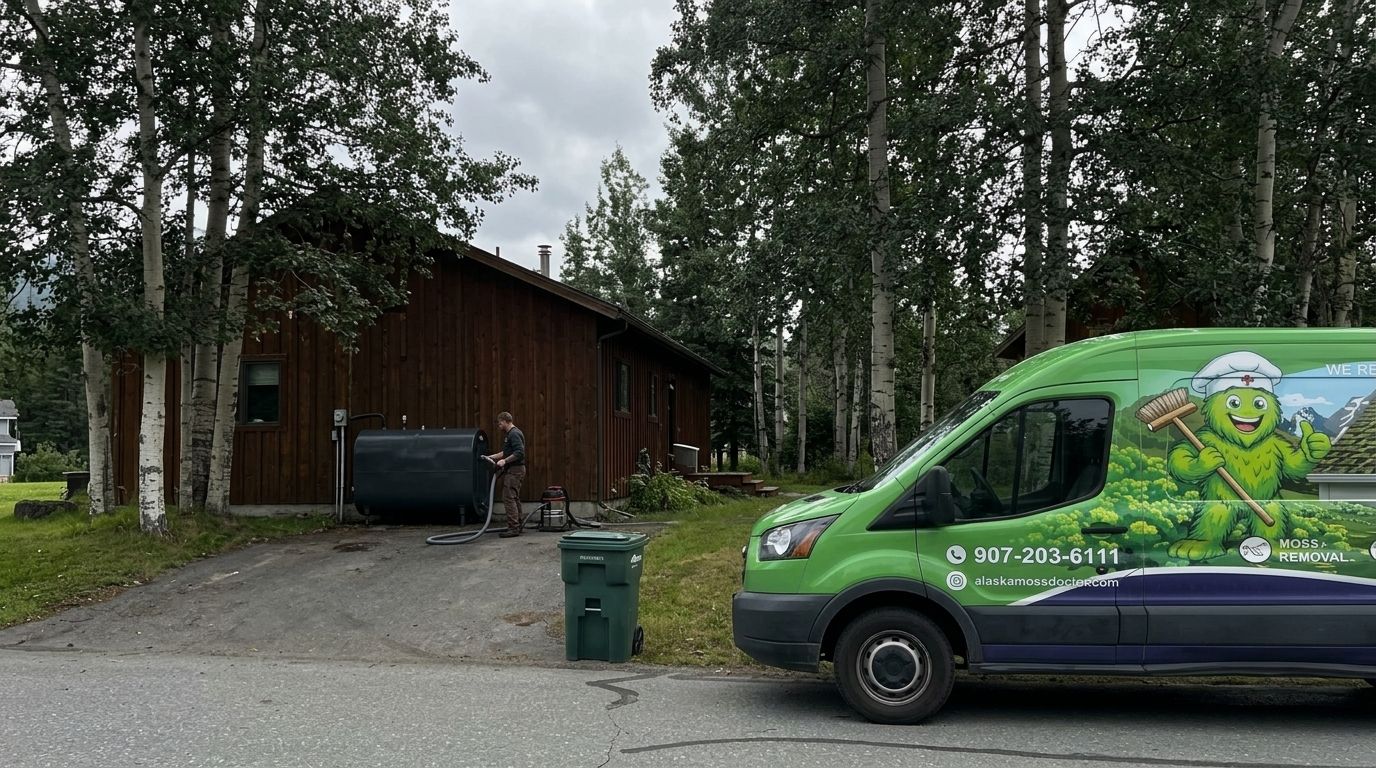
Heating oil tank cleaning for Alaska homes is the process of pumping out sludge, water, and rust sediment from a residential oil tank so a furnace or boiler runs clean through a seven-month heating season. Alaska homeowners deal with sharper day-to-night temperature swings and longer stretches between fuel deliveries than tank owners in warmer states, and that combination pushes water and sediment into the tank faster than most manufacturers' maintenance schedules assume.
- Heating oil tank cleaning alaska homeowners need runs every 3-5 years, sooner if a furnace filter clogs twice in one winter.
- Alaska's freeze-thaw cycles push condensation into tanks faster than in milder climates, so sludge builds up ahead of schedule.
- Fuel polishing works for light sediment; a full pump-out is the right call once sludge exceeds an inch or the fuel smells sour.
- Schedule tank service in late summer or early fall, before the 2026 heating season locks up contractor calendars.
Why heating oil tank cleaning matters for Alaska homeowners
A large share of Mat-Su Valley and rural Alaska homes run on heating oil because they sit off the natural gas grid, and that means the furnace runs longer hours across more months than in almost any other region in the country. Longer runtime means more thermal cycling inside the tank, and more thermal cycling means more condensation collecting at the bottom.
A clogged filter mid-winter isn't just an inconvenience in Alaska — it can mean a cold house during a cold snap while you wait for service. The same seasonal rhythm that matters for a fuel tank applies to the rest of a home's exterior: Alaska Moss Doctor sees the same freeze-thaw pattern show up as roof staining and gutter buildup, which is why fall maintenance calls tend to cover both the tank and the roofline in the same conversation.
Homeowners who treat tank cleaning as a one-time task instead of a recurring line item on an exterior maintenance plan end up paying for emergency service calls in January instead of a scheduled visit in September.
Check your tank for sludge and water first
Before calling anyone, look at what's actually sitting in the tank.
- Dip a clean rag on a stick to the tank bottom and check for black sludge or rust flakes
- Look for a cloudy layer separating from clear oil — that's water, not fuel
- Check the furnace filter after every delivery; two clogged filters in one winter means the tank needs attention
- Note any sour or rotten-egg smell, which usually points to bacterial growth feeding on water at the tank bottom
Test the fuel before committing to a full pump-out
A quick test tells you whether you need a light service or a full cleanout.
- Use water-finding paste on a dipstick to measure how many inches of water sit at the bottom
- Send a fuel sample to a lab if the tank is more than 15 years old or you've never had it tested
- Compare furnace runtime against last winter's fuel bills — a jump in usage with no change in weather often means clogged internals
- Rule out a leaking fill pipe, vent cap, or gasket as the water source before scheduling cleaning
Decide between filtering, polishing, and a full pump-out
The right method depends on how much sediment has actually accumulated.
- Filtering removes loose particles in the fuel line but leaves sludge stuck to the tank walls
- Fuel polishing recirculates oil through filters and separates out water — works well under an inch of sediment
- A full pump-out with manual wipe-down handles heavy sludge, visible rust, or a persistent bad smell
- Tank replacement becomes the better call once interior corrosion has perforated the steel wall
A pump-out beats polishing every time sludge exceeds an inch of depth or the fuel smells sour — polishing just recirculates the problem back through a dirty tank.
Hire a licensed heating oil technician
Once you know what the tank needs, the contractor matters as much as the method.
- Confirm the contractor carries a state fuel-handling license and a hazardous waste disposal permit
- Ask whether the quote includes sludge disposal — Alaska landfills restrict petroleum waste, and disposal fees get tacked on after the job starts if you don't ask upfront
- Get a written estimate that itemizes pumping, filtering, and inspection separately
- Schedule the work in late summer or early fall, ahead of the tank refill for the 2026 heating season, since winter slots book solid
Maintain the tank between cleanings
A cleaned tank stays cleaner longer with a few habits.
- Keep the tank above one-quarter full year-round to limit the air space where condensation forms
- Add a water-dispersant fuel additive at each fall fill-up
- Replace the furnace filter every fall and check it again mid-winter
- Inspect the vent cap and fill cap gaskets for cracks that let in moisture
Watch the tank's exterior for corrosion and leaks
The outside of the tank tells you almost as much as the inside.
- Look for rust streaks or blistering paint along the tank's legs and seams
- Check the concrete pad or gravel bed under outdoor tanks for oil staining
- Clear snow away from the tank base so meltwater doesn't pool against the metal
- If the tank sits near siding or a foundation wall, a rusted line can stain the exterior the same way algae streaks a north-facing roof — worth flagging during your next seasonal exterior check
Comparing your tank cleaning options
| Option | Best for | Key limitation |
|---|---|---|
| DIY dip-and-inspect | Homeowners checking tank condition before hiring anyone | Tells you sludge is there but doesn't remove it |
| Fuel polishing | Tanks with light-to-moderate sediment, still in active use | Doesn't scrub sludge already caked to tank walls |
| Full pump-out and wipe-down | Tanks with heavy sludge, rust flakes, or a sour smell | Takes the tank offline for a day and requires licensed disposal |
| Tank replacement | Tanks over 20-25 years old or with wall perforation | Higher upfront cost, may require code-compliant relocation |
Full pump-out wins for any Alaska tank with visible sludge or a bad smell. Fuel polishing is the right call for early water intrusion caught before a scheduled delivery. Tank replacement is the only real fix once corrosion has breached the tank wall — patching a leaking steel tank is not a legitimate long-term option.
Common mistakes Alaska homeowners make with oil tanks
- Waiting until the furnace stalls mid-January before calling anyone, when contractors are booked solid through the coldest months
- Assuming a full tank can't develop water buildup — condensation happens regardless of fuel level, though topping off slows it
- Skipping the vent cap and fill cap inspection, one of the most common entry points for meltwater in Mat-Su Valley homes
- Picking the cheapest quote without asking about sludge disposal, since that fee often gets added mid-job
- Treating a decades-old, visibly rusted tank with another pump-out instead of scheduling a replacement
Ready for a full exterior check too?
Alaska Moss Doctor cleans roofs, siding, and gutters across the Wasilla area.
FAQ
How often should Alaska homeowners clean a heating oil tank?
Most Alaska heating oil tanks need cleaning every 3 to 5 years, sooner if a furnace filter clogs more than once in a single winter. Homes with older tanks or tanks near the coast should check more frequently since corrosion and condensation both move faster in those conditions.
What causes water to build up inside a heating oil tank?
Condensation forms when temperature swings cause warm, moist air inside the tank to cool against the metal walls overnight. Alaska's sharp day-to-night and seasonal temperature shifts make this happen more often than in milder climates, even in tanks that are never opened.
Is DIY heating oil tank cleaning safe?
Inspecting the tank with a dipstick or water-finding paste is safe for most homeowners to do themselves. Pumping out sludge and disposing of contaminated fuel requires a licensed contractor because Alaska restricts how petroleum waste gets handled and discarded.
How much sludge is too much for a heating oil tank?
More than an inch of sludge at the tank bottom typically calls for a full pump-out rather than fuel polishing. At that point sludge has usually started clogging filters and reducing furnace efficiency.
Can a dirty heating oil tank damage a furnace?
Yes, sludge and water pulled into the fuel line clog filters, strain the fuel pump, and can cause incomplete combustion. Left unaddressed, this shortens furnace component life and increases the odds of a mid-winter breakdown.
What's the difference between fuel polishing and a full tank pump-out?
Fuel polishing recirculates oil through filters to remove loose particles and separate water without opening the tank. A full pump-out empties the tank and manually removes sludge stuck to the walls, which polishing alone cannot do.
When is the best time of year to clean a heating oil tank in Alaska?
Late summer or early fall is best, ahead of the fall fill-up and before the 2026 heating season starts. Waiting until winter means competing for contractor availability during the busiest service months.
How do I know if my heating oil tank needs replacement instead of cleaning?
A tank over 20 to 25 years old with visible rust streaks, blistering paint, or any sign of a perforated wall needs replacement, not another cleaning. Cleaning a corroded tank buys time but doesn't stop the leak risk.
One last thing
Condensation inside a heating oil tank doesn't wait for winter — it happens year-round any time the tank sits through a temperature swing, which is why topping it off through the shoulder seasons matters as much as the deep winter months. The same freeze-thaw pattern that pushes moisture into a fuel tank also pushes moisture into roof valleys, gutter seams, and siding joints, which is exactly why fall is the busiest season for heating contractors and exterior cleaners alike across the Mat-Su Valley in 2026.