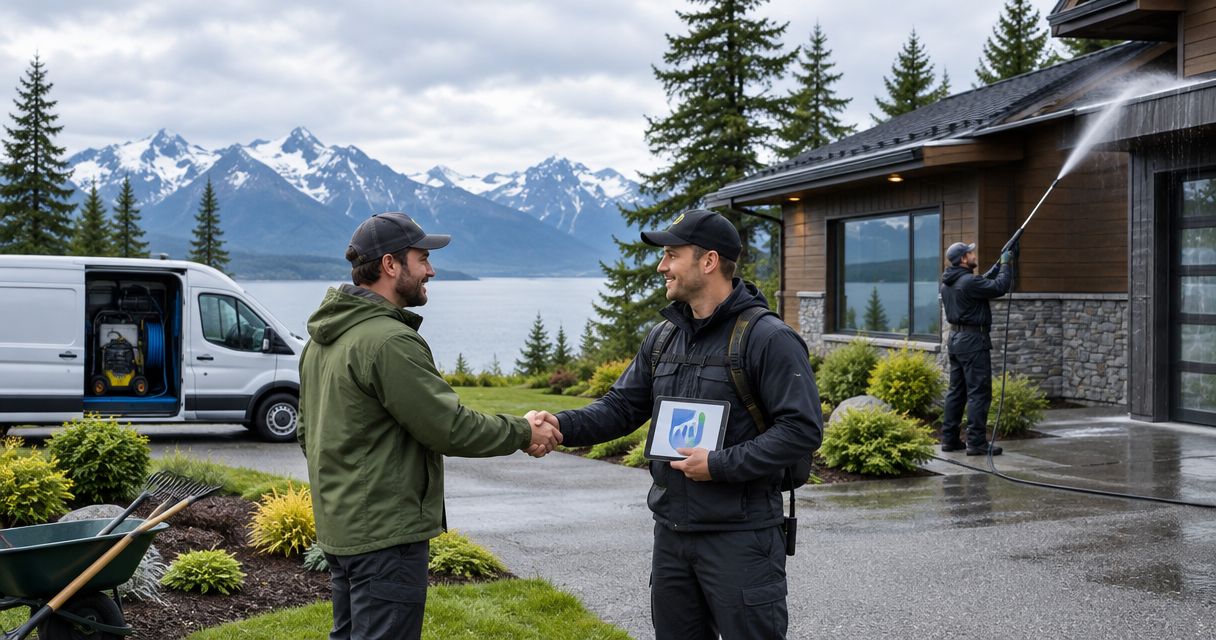
Alaska landscaping companies build exterior cleaning partnerships with a roof and siding specialist to turn a seasonal mowing or plowing contract into a year-round referral line, sending clients to a crew equipped for roof-height moss and algae work the landscaping side isn't insured or geared for. The partnership works because landscapers are already on the property every two to three weeks in summer and see roof moss, black streaks, and gutter buildup before the homeowner notices it from the ground.
- Exterior cleaning partnerships for landscaping companies turn routine lawn visits into roof and siding referrals without adding liability.
- Alaska Moss Doctor structures referral agreements so landscapers earn repeat business without buying roof-access equipment.
- A written referral agreement beats a handshake deal because it defines who contacts the client and when.
- Crews that spot moss on north-facing roofs in May and June generate the highest referral close rate in 2026.
Why exterior cleaning partnerships matter for Alaska landscaping companies
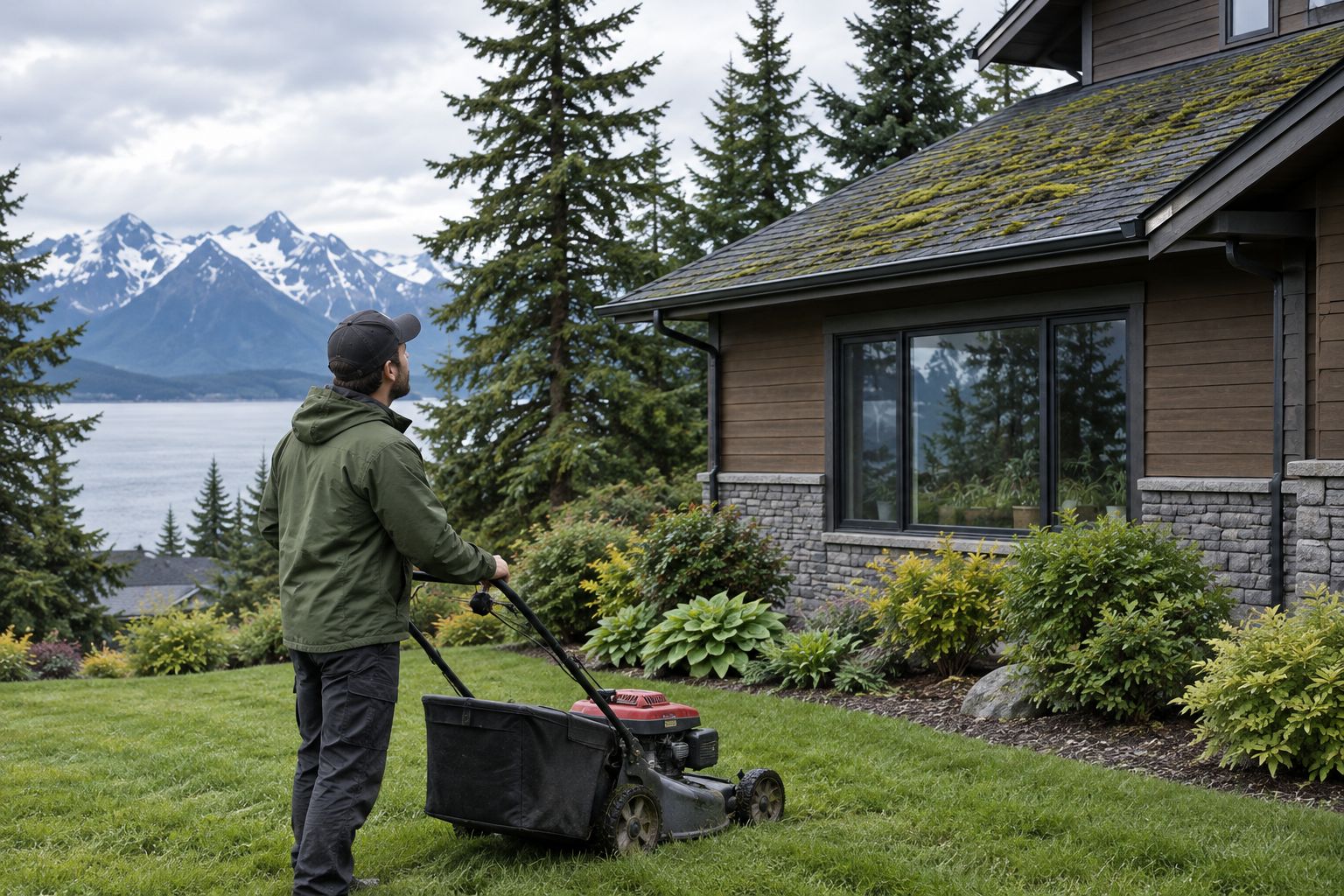
A landscaping crew in Wasilla, Palmer, or the broader Mat-Su Valley walks past the north side of a roof on nearly every visit. That's the side where moss and algae establish first in this climate because it gets the least direct sun and holds moisture longest after snowmelt. The landscaper already has eyes on the problem — the gap is that mowing and trimming contracts rarely include a path to act on what the crew sees.
Homeowners who hire out lawn care are also the segment most likely to hire out roof and siding cleaning rather than do it themselves on a ladder. That overlap is why a referral partnership model similar to the one Alaska Moss Doctor runs with home inspectors converts well for landscaping companies too: the referring business isn't selling the service, it's flagging a problem the client already trusts them to notice.
The liability math matters here as much as the revenue math. Landscaping insurance policies typically exclude roof-height work, and sending an untrained crew member up a ladder to scrape moss voids that coverage fast. A referral partnership keeps the landscaping company's crew on the ground and its insurance intact while still capturing a piece of the relationship.
Audit your client list for roof and siding red flags
Start with the accounts you already service, not new prospects. A client list audit costs nothing and surfaces the properties most likely to say yes.
- Flag properties with spruce or birch canopy shading the roof — the shade that keeps moss growing is visible from the same spots you already mow
- Note north-facing roof pitches, which hold moisture and moss longest in Alaska's climate
- Check for visible black streaks on asphalt shingles during spring cleanup visits
- Mark clients who've mentioned gutter overflow or ice dam issues in past conversations
- Separate owner-occupied homes from rentals — owners act on referrals faster than landlords
Set a referral agreement structure before you refer anyone
A handshake deal falls apart the first time a client asks who to call back. Put the terms in writing before the first referral goes out.
- Define who contacts the client first — the landscaper flags it, the cleaning company follows up within a set window
- Agree on how photos get shared (a simple text thread works for most crews)
- Decide whether referrals flow one direction or both — some roof cleaners refer landscaping work back for post-wash yard cleanup
- Put a renewal or review date on the agreement so terms don't go stale after one season
- Keep the agreement short enough that a crew lead can explain it in under a minute
Train your crew to spot moss and algae warning signs
Your mowing crew doesn't need roofing knowledge — they need four or five visual cues they can recognize without climbing anything.
- Green or dark moss cushioning on shingles, especially along the ridge and in valleys
- Black streaking running down from vents, flashing, or chimney caps
- Standing moss or algae film on walkways and retaining walls near the house
- Visible sagging in gutters from trapped moss and debris
- Siding discoloration on the north or shaded side of the structure
A five-minute walkthrough during a seasonal training meeting covers this. Alaska Moss Doctor provides reference photos to partner crews so the visual ID stays consistent across a season.
Build a simple referral workflow with photos and a point of contact
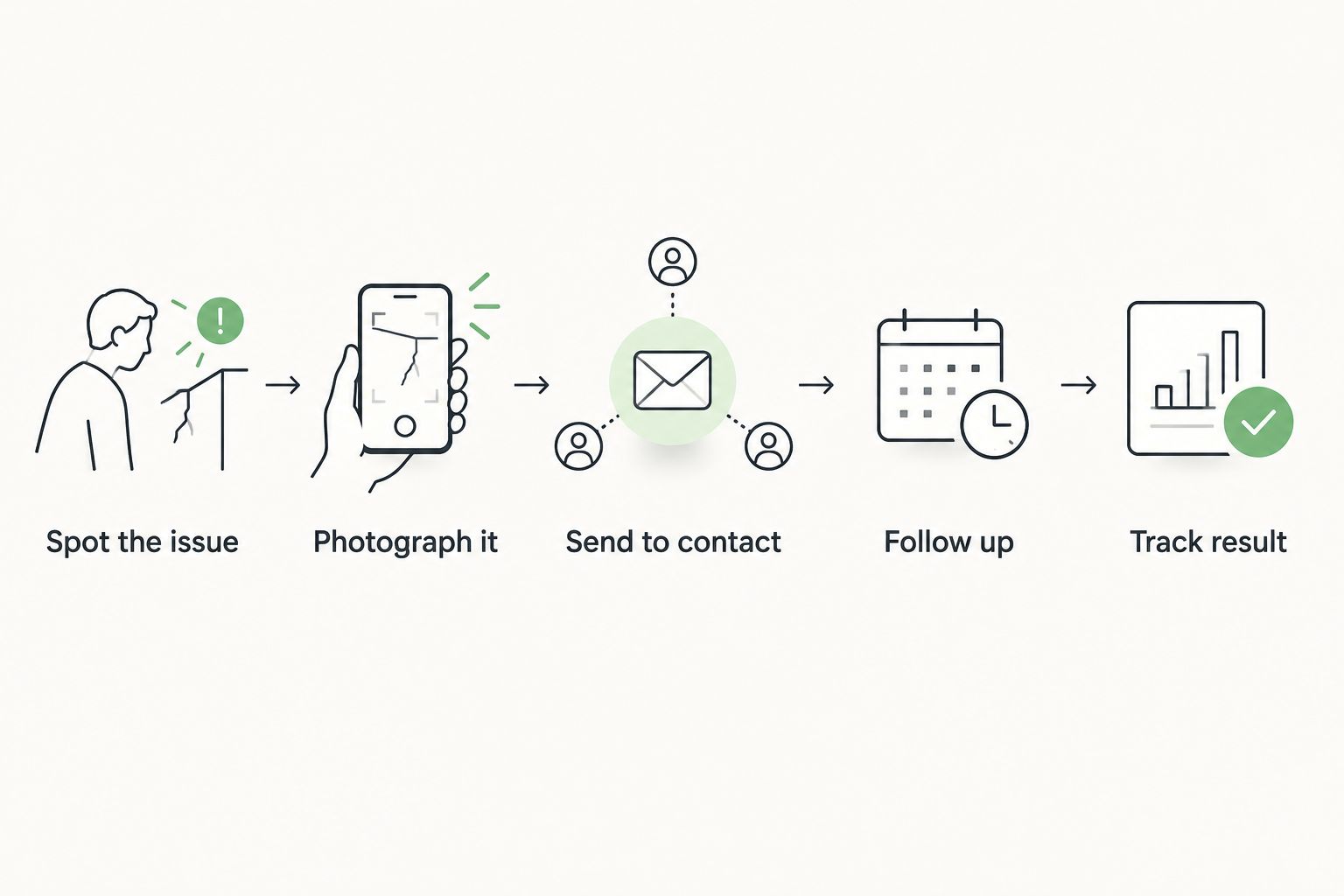
The workflow that works is the one your crew will actually use on a busy Tuesday. Overbuilt systems get skipped.
- One photo of the issue, timestamped, sent to one contact person
- A standard short message template: location, what was seen, nothing more
- A single person on each side responsible for follow-up, not a shared inbox
- A log — even a spreadsheet — tracking which referrals converted
- A 48-hour follow-up expectation so leads don't go cold
Once the manual version runs cleanly for a season, moving it into a shared scheduling tool or CRM is the natural next step, but the paper-and-text version is where every working partnership starts.
Market the partnership to shared clients directly
Don't wait for moss to show up before mentioning the partnership. Clients respond better to a proactive heads-up than a cold referral mid-season.
- Mention the partnership in spring cleanup invoices or service notes
- Add a line to seasonal contracts noting the referral relationship exists
- Offer a joint flyer or email blurb both businesses can use with their own client lists
- Reference the partnership the same way Alaska Moss Doctor structures its real estate agent partnerships — low-pressure, informational, tied to a specific visible condition rather than a general upsell
Track referrals and revisit terms each season
A partnership that isn't tracked dies quietly. Review numbers at the start and end of each Alaska growing season — roughly April through September.
- Count referrals sent versus referrals that converted to booked jobs
- Note which property types or neighborhoods produce the highest close rate
- Revisit the agreement every spring before the first mow of 2026's season
- Drop or renegotiate terms that aren't producing after two full seasons
Avoid scope creep outside your crew's expertise
The biggest failure mode is a landscaping crew member attempting roof or gutter work themselves because a client asked directly. That's where insurance exclusions and fall-risk liability come in. The rule for crew leads should be simple: identify, photograph, refer — never climb.
Comparing partnership structures for landscaping companies
| Option | Best For | Key Limitation |
|---|---|---|
| Informal handshake referral | Small crews testing the idea for one season | No accountability when leads go cold |
| Written referral agreement | Established companies with repeat residential clients | Requires someone to own the paperwork |
| Co-branded maintenance package | Companies already selling seasonal contracts | Needs both businesses aligned on scheduling |
| Two-way referral exchange | Partners who each generate leads for the other | Only works if both sides follow through equally |
The verdict: a written referral agreement with one point of contact on each side outperforms a handshake deal for landscaping companies in Alaska's Mat-Su Valley, because it survives staff turnover and a slow season.
Common mistakes Alaska landscaping companies make
- Treating the referral as a one-time favor instead of a standing part of the seasonal workflow, so it disappears after the first busy week
- Letting crew members attempt roof or gutter work because a client asked on-site, creating liability the landscaping insurance won't cover
- Skipping the written agreement and relying on memory for who follows up, which breaks down the moment a crew lead changes
- Referring every property with any visible staining instead of the specific moss and algae patterns that actually need professional roof cleaning, which wastes both sides' time
- Not reviewing the partnership each season, so terms that made sense in 2024 or 2025 stay unchanged into 2026 even after conditions shift
Set up a referral partnership
Talk through a referral structure built for Alaska landscaping crews.
FAQ
What is an exterior cleaning partnership for landscaping companies?
It's a referral arrangement where a landscaping crew flags roof, gutter, or siding moss and algae issues they spot on routine visits and refers the client to a specialist like Alaska Moss Doctor. The landscaping company doesn't perform the roof-height work itself.
Is a written referral agreement necessary or can it stay informal?
A written agreement works better for most companies because it survives crew turnover and slow seasons. Informal handshake deals tend to fade after the first busy stretch of a landscaping season.
Can landscaping crews clean moss off roofs themselves?
Most landscaping insurance policies exclude roof-height work, so crews should identify and photograph moss rather than attempt removal. Referring the job protects both the crew's safety and the company's coverage.
How do landscaping companies spot roof moss during regular visits?
North-facing and shaded roof sections, especially under spruce or birch canopy, are the first areas to show moss in Alaska's climate. Crews already standing in the yard can usually see these areas without climbing anything.
What's the best time of year to start a referral partnership in Alaska?
Spring cleanup, roughly April through May, is the strongest window because moss and black streaking are most visible right after snowmelt and before full canopy growth returns.
Does the referral relationship go both directions?
Some partnerships run two ways, with the roof cleaner referring yard cleanup or landscaping work back after a roof wash. Others stay one-directional depending on what each business wants from the arrangement.
How is this different from a home inspector referral partnership?
The mechanics are similar — flag an issue, send a photo, follow up — but landscaping companies see properties repeatedly across a season, while inspectors typically see a property once during a sale.
Do landscaping companies get paid for referrals?
Terms vary by agreement and should be settled in writing between the two businesses before referrals start, rather than assumed.
One last thing
The crews that get the most out of this kind of partnership aren't the ones that refer the most properties — they're the ones that refer the right properties consistently, season after season, because they trained everyone on the same four or five visual cues instead of leaving it to guesswork.