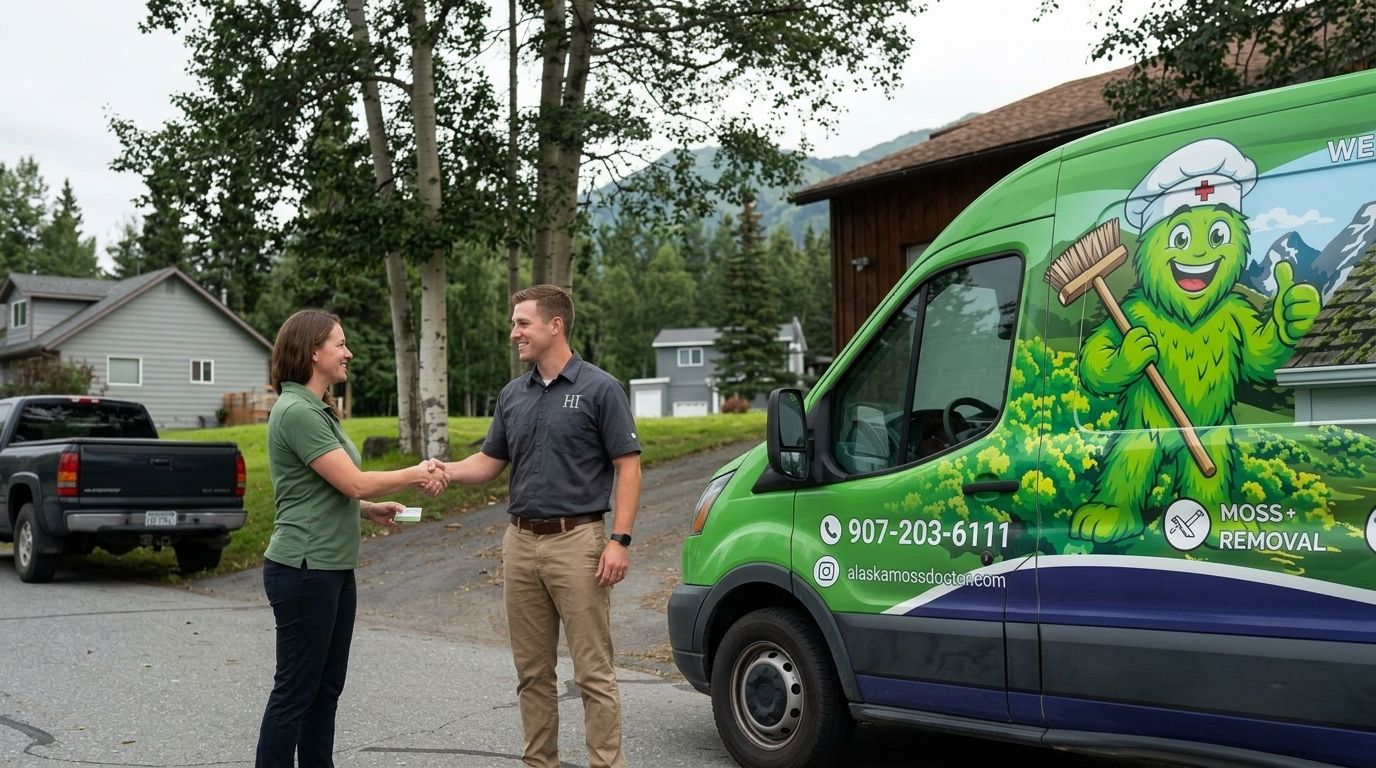
Home inspectors who build roof cleaning referral partnerships turn a moss flag on an inspection report into a fast, trackable next step for the buyer or seller, instead of a vague callout that stalls a closing. In Wasilla and the greater Mat-Su Valley, where spruce and birch cover pushes moss growth onto nearly every north-facing roof, that next step needs a contractor who understands local shingle types and steep-pitch access, not a generalist pressure-washing crew working out of Anchorage on a slow week.
- Alaska Moss Doctor works directly with home inspectors on moss and algae flags found during pre-sale inspections in 2026.
- Roof cleaning referral partnerships for home inspectors work best as a vetted contractor list, not a fee-based arrangement most ethics codes restrict.
- A standardized report line beats a vague note: 'moss present, recommend professional roof cleaning' moves closings faster than 'some growth noted.'
- Steep-pitch and heavily shaded Mat-Su roofs need a soft-wash specialist; generic power washing strips granules off asphalt shingles.
Why roof cleaning referral partnerships matter for home inspectors
Moss and algae show up on a large share of Mat-Su Valley inspection reports because the region combines heavy tree cover, long shaded winters, and steep roof pitches built for snow shed. An inspector who flags moss without naming a next step leaves the buyer to search cold during a short option period, and that delay is what stalls closings, not the moss itself.
A working referral partnership with a roof cleaning contractor gives the inspector one confident line to add to the report and one phone number to hand the client, instead of a generic warning that reads like a liability disclaimer. That single change is the difference between a buyer who books cleaning before closing and one who walks away from an otherwise sound house because the report made the roof sound worse than it was.
The inspector who names a specific, vetted roof cleaning contact in the report closes the loop the buyer actually needs closed.
How to build a roof cleaning referral partnership
Flag moss and algae the same way every time
Inconsistent report language is the single biggest reason roof flags create confusion instead of action. Standardize the note before you standardize the partnership.
- Photograph every moss or algae patch you flag, not just the worst one
- Separate cosmetic staining from active moss growth that lifts shingle tabs
- Use a fixed severity scale (light, moderate, heavy) instead of subjective phrases
- Note roof pitch and access difficulty when it's steep or metal
- Attach a one-line recommendation, not just an observation
Build a short list of vetted roof cleaning contractors
Start manual and free. Call two or three local companies before you ever mention a partnership, and ask the same questions of each.
- Confirm they soft-wash asphalt and cedar shake rather than power-wash by default
- Ask for proof of liability insurance and workers' comp coverage
- Check whether they've worked steep-pitch or two-story Mat-Su Valley homes
- Get a realistic turnaround time for scheduling during peak season
- Ask what they do differently for north-facing, shaded roofs
Once you've vetted a few, add the contractor that answers all five cleanly to your short list. Alaska Moss Doctor works Wasilla and the surrounding valley specifically on soft-wash roof and exterior cleaning, which covers the access and shingle-safety questions inspectors ask most.
Set a referral protocol that keeps you compliant
Most inspector associations, including ASHI and InterNACHI, restrict members from taking a referral fee tied to defects found during an inspection they performed. Build your protocol around that, not around it.
- Never accept payment or a kickback for naming a contractor
- Offer at least two options, not a single exclusive recommendation
- Disclose any personal or business relationship with a contractor upfront
- Keep a written or digital record of every handoff you make
- Let the client choose, and don't follow up to close the sale for the contractor
Standardize your inspection report language
A report template that already includes a moss-and-algae section saves you from writing a new paragraph on every job and keeps your language defensible.
- Use the same severity terms across every report you write
- Pair each flagged photo with a one-sentence recommended action
- Avoid alarmist words like "infestation" or "rot risk" unless moisture intrusion is confirmed
- Reference typical Alaska timelines (spring through early fall) for scheduling cleaning
Loop in real estate agents on both sides of the deal
Real estate transactions already stack ancillary inspection add-ons together, and buyers expect a menu rather than a scramble. Programs built around radon testing for real estate closings show the same pattern working in other states: buyers respond better to a named, pre-vetted specialist than to a generic warning with no next step. Roof cleaning referrals fill the same slot on an Alaska closing timeline.
Partner with a local roof cleaning specialist
Coordinate moss and algae flags from Wasilla-area inspections directly.
- Share the referral only when the client or agent asks, not proactively to every buyer
- Confirm the contractor can turn around the job inside a typical 10 to 14 day closing window
- Give agents the same short list you give clients, so nobody feels steered
- Keep pricing conversations between the client and the contractor, never the inspector
Track referral outcomes and adjust the list
A referral list that never gets reviewed goes stale within a season. Treat it like any other part of your practice.
- Log which contractor gets called after each flagged report
- Follow up with the client to see whether cleaning happened before closing
- Ask for quick feedback on communication and turnaround
- Drop any contractor who ghosts a client or tries to upsell unrelated work
- Re-vet the list once a year, minimum, heading into the 2026 selling season
Comparing referral structures for home inspectors
| Referral Approach | Best For | Key Limitation |
|---|---|---|
| Informal verbal referral | Inspectors doing occasional moss flags | No paper trail, hard to track whether it happened |
| Vetted short list (2-3 contractors) | Most independent inspection practices | Needs periodic re-vetting to stay current |
| In-report checklist link | High-volume inspectors writing many reports weekly | Requires a one-time template rebuild |
| Formal cross-referral agreement, no fee | Inspectors partnering long-term with one specialist | Needs a compliance check against your association's ethics code first |
Verdict: a vetted short list with two to three names wins for most home inspection practices — it's flexible enough to update yearly and specific enough to actually get used.
Common mistakes home inspectors make with roof cleaning referrals
- Naming only one contractor. Even with zero financial relationship, an exclusive recommendation reads like a kickback to a skeptical buyer or agent.
- Writing vague report language. "Some moss noted" gives nobody a next action; "moderate moss on north slope, recommend professional soft-wash cleaning" does.
- Referring generalist pressure washers for steep or metal roofs. A crew without soft-wash equipment can strip granules or dent metal panels, and the inspector's name is attached to that referral.
- Skipping documentation. No record of the handoff means no defense if a client disputes what was recommended and when.
- Never following up. An inspector who never learns whether the referral closed the loop keeps recommending contractors blind.
FAQ
What is a roof cleaning referral partnership for home inspectors?
It's an arrangement where a home inspector maintains a vetted list of local roof cleaning contractors to recommend when moss or algae is flagged during an inspection. It gives clients a named next step instead of a vague warning, and it does not involve a fee back to the inspector.
Can home inspectors legally accept a referral fee for roof cleaning?
Most inspector associations, including ASHI and InterNACHI, restrict members from accepting payment tied to defects found during their own inspection. A compliant partnership offers options without any fee changing hands.
How should an inspector flag moss on a report?
Use a consistent severity scale (light, moderate, heavy), attach photos, and pair each flag with a one-line recommended action rather than an open-ended observation. Consistency across reports makes the flag defensible if it's questioned later.
Is it better to refer one contractor or a short list?
A short list of two to three vetted contractors is the safer and more useful structure. A single exclusive recommendation can look like a kickback even when no money changes hands.
Does roof moss affect a home sale closing in Alaska?
A flagged moss issue on an inspection report can slow a closing if the buyer has no clear next step, since Alaska closings often run on tight option periods. Naming a vetted contractor who can turn the job around before closing keeps the timeline moving.
How often should Mat-Su Valley roofs be cleaned for moss?
Shaded, north-facing roofs under spruce or birch cover typically need cleaning more often than open, sun-exposed roofs, since moisture and shade drive regrowth. An inspector's flag on a specific property is a better guide than a blanket schedule.
What should an inspector check before adding a roof cleaner to a referral list?
Confirm the contractor soft-washes rather than power-washes asphalt or cedar shake, carries liability insurance, and has experience with steep-pitch or two-story access. Those three checks catch most of the risk in a bad referral.
Should inspectors disclose a relationship with a roof cleaning contractor?
Yes. Any personal or business connection to a referred contractor should be disclosed to the client upfront, even in a no-fee arrangement, to keep the referral defensible.
One last thing
The roofs that generate the most repeat moss flags in Mat-Su Valley inspections aren't the oldest ones, they're the ones shaded by spruce and birch on the north slope regardless of roof age. An inspector who notes tree cover alongside the moss flag gives the referral contractor useful context before the first phone call, which shortens the quoting process on both ends.