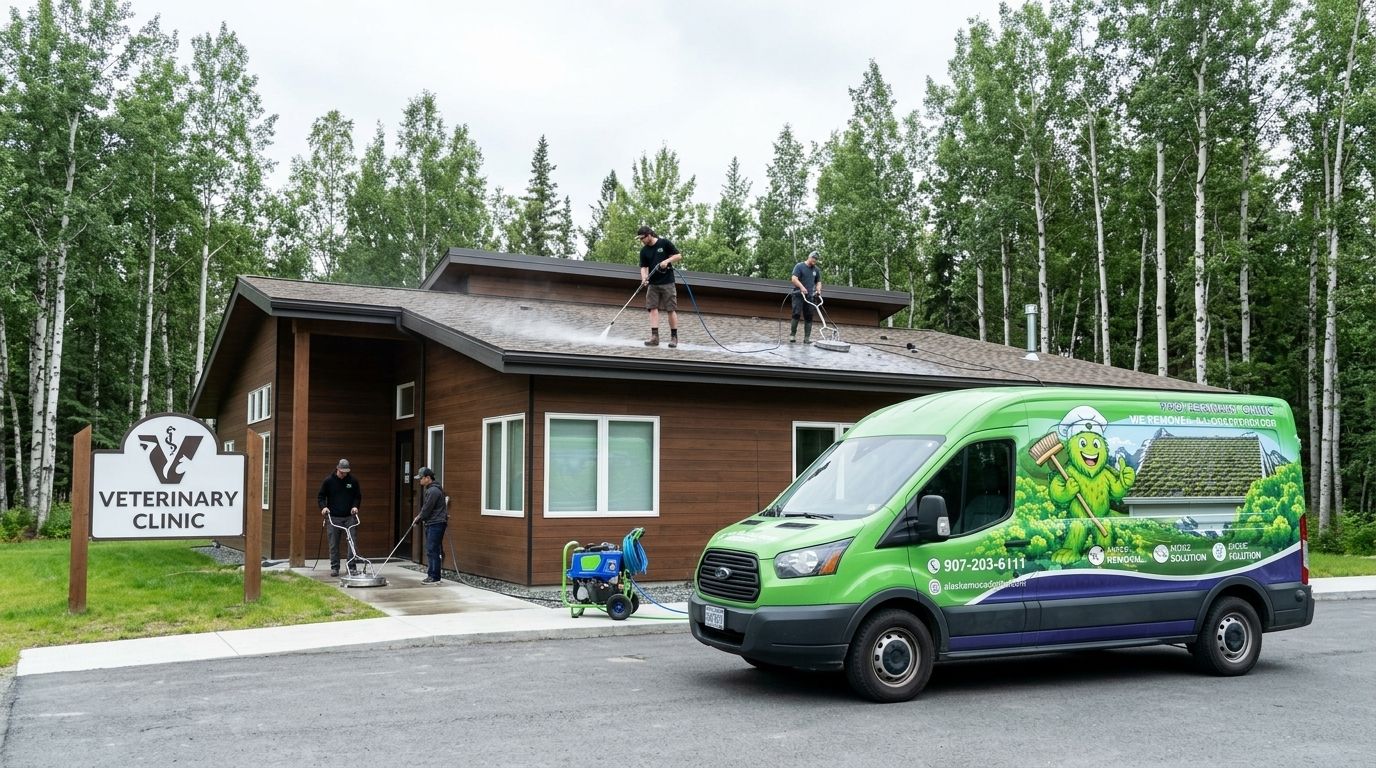
Exterior cleaning for veterinary clinics and animal shelters is roof, siding, walkway, and outdoor run maintenance built around one goal: keeping a facility that smells and looks clean for anxious owners, inspectors, and the animals themselves. Clinics and shelters carry needs a standard house wash doesn't touch — outdoor kennel runs, drainage near animal waste, and entryways that get scrubbed daily by staff and still show grime by week two.
- Exterior cleaning veterinary clinic programs need biannual roof and gutter service plus monthly outdoor run washdowns in 2026.
- Alaska Moss Doctor handles soft-wash roof and siding cleaning for Wasilla-area clinics and shelters without pressure damage to shingles or paint.
- North-facing roofs and shaded dog runs in the Mat-Su Valley build moss and algae faster than south-facing walls.
- Untreated moss holds moisture against shingles, which shortens roof life and can affect warranty claims.
- DIY pressure washing is the cheapest first step but the wrong PSI strips paint and cracks aging caulk around kennel doors.
Why exterior cleaning matters for veterinary clinics and shelters
A client walking a sick or injured animal past a moss-streaked entryway or a grimy kennel wing reads that as neglect, whether or not the clinic is neglecting anything. Shelters get inspected on cleanliness as part of licensing and accreditation reviews, and a stained exterior invites more scrutiny of what's happening indoors.
Alaska's wet, low-light winters push moss and algae growth onto roofs and north-facing walls faster than in drier climates, and a facility with outdoor runs or covered kennel areas gets extra moisture exposure from animal traffic and washdown water. That combination means a veterinary building in Wasilla needs a tighter exterior cleaning cadence than a typical retail storefront of the same size.
Runoff matters too. Water draining off a moss-covered roof or an unsealed retaining wall near a play yard carries organic debris into drainage areas animals use, which works against the sanitation standards most clinics and shelters already have to document. Get a look at Alaska Moss Doctor before writing an exterior maintenance schedule, since roof condition drives most of the downstream siding and gutter problems.
Build the exterior cleaning routine
Audit entry points and outdoor runs first
Start with what clients and inspectors actually walk through — front doors, exam room windows, and any outdoor kennel or play yard.
- Walk the perimeter and photograph moss, algae streaks, or black staining on the roofline
- Check gutter downspouts for standing water pooling near entrances
- Inspect outdoor run fencing and concrete pads for slick green film
- Note any drainage that routes near animal waste collection points
- Flag paint or siding areas showing dark streaking near roof edges
Wash exterior walls and kennel fencing on a schedule
A hose and stiff brush handle light grime between professional visits, but siding on a clinic with daily foot traffic needs more than a rinse.
- Scrub kennel run fencing monthly with a pet-safe cleaner, not household bleach
- Rinse siding low to high to avoid streaking dried-in dirt
- Check caulk seams around kennel doors for cracking after each wash
- Use a soft-bristle brush on painted wood trim to avoid stripping finish
- Log wash dates so staff can track buildup speed by season
Treat roof moss and algae before it spreads
Roofs on shaded or north-facing sections of a clinic building trap moisture longer than the rest of the structure, which is exactly where moss takes hold first.
- Check shingles for green or black patches every spring and fall
- Clear debris from valleys and flashing where moss gets a foothold
- Avoid stiff-bristle scraping on asphalt shingles — it tears granules loose
- Watch for lifted or curling shingle edges, a sign moss has been retaining moisture underneath
- Bring in a soft-wash service once moss covers more than a small patch, since scraping alone won't stop regrowth
This is where a professional visit earns its keep. Alaska Moss Doctor's soft-wash roof cleaning removes moss and algae without the high-pressure blast that voids shingle warranties, and a single seasonal visit usually resets a clinic roof faster than staff scraping it themselves between appointments.
Clean gutters and downspouts around kennel runs
Gutters clogged with moss debris back up onto siding and outdoor run roofing, and a shelter with covered runs sees this faster than a standalone house.
- Clear gutters twice a year at minimum, more often under overhanging trees
- Check downspouts drain away from outdoor run entrances, not into them
- Install gutter guards on sections shaded by trees to cut cleaning frequency
- Inspect for sagging gutter brackets from moss and debris weight
- Flush downspouts with water after clearing to confirm free flow
Pressure wash walkways and outdoor concrete pads
Concrete walkways and outdoor kennel pads get algae film from constant moisture and animal waste rinse-down, and that film is a slip hazard for staff carrying animals.
- Use a pressure washer rated for concrete, not the setting meant for siding
- Apply a pet-safe degreaser before rinsing heavily soiled pads
- Reseal concrete after washing if the surface has gone more than two years without sealant
- Schedule washdowns for days with no rain forecast for 24 hours after
- Check for cracking that trapped moisture may have widened
Schedule cleaning around clinic hours and intake volume
A shelter with daily intake can't shut down outdoor runs for a full day of pressure washing without a plan.
- Book exterior cleaning for early morning before peak client hours
- Rotate kennel sections so half stay usable during a washdown
- Coordinate roof cleaning for dry, mild days — Alaska's window for this narrows fast after fall
- Confirm any chemical treatments are fully rinsed before animals return to an area
- Keep a written schedule staff can reference without checking with management every time
Commercial buildings with mixed foot and animal traffic benefit from the same seasonal logic covered in guidance on commercial building washing service scheduling for Wasilla-area properties.
Compare your cleaning options
| Option | Best for | Key limitation |
|---|---|---|
| DIY hose and brush | Light weekly upkeep on fencing and pads | Doesn't touch roof moss or deep gutter buildup |
| Standard pressure washing | Concrete walkways and outdoor runs | Wrong PSI cracks caulk and strips paint on siding |
| Chemical-only treatment | Killing surface algae fast | Doesn't remove dead moss mat, which still holds moisture |
| Professional soft-wash service | Roof, siding, and gutter moss removal without damage | Needs scheduling around dry weather windows |
Verdict: a clinic or shelter needs both — staff-level washdowns weekly and a professional soft-wash pass on the roof and siding twice a year. Skipping the professional pass is the single most common reason moss comes back within one season.
Get a soft-wash quote for your facility
Ask about seasonal roof and exterior cleaning built around clinic hours.
Common mistakes clinics and shelters make
- Pressure washing kennel siding at full force — this strips paint and pushes water behind siding seams, which then traps moisture exactly where you don't want it.
- Treating moss only when it's visible from the parking lot — by the time moss shows from the street, it's usually been growing on the shaded roof slope for a season or more.
- Skipping documentation for inspections — shelters that log cleaning dates have an easier time during licensing reviews than ones relying on memory. Facilities juggling insurance or licensing paperwork should review insurance compliance roof cleaning requirements before an inspection date, not after.
- Letting gutter debris sit through an Alaska winter — clogged gutters that freeze solid in December crack under the ice weight, and that repair costs more than the cleaning would have.
- Using bleach around outdoor runs — it's harsh on paw pads and concrete sealant, and pet-safe alternatives clean the same film without the risk.
FAQ
How often should a veterinary clinic clean its exterior?
A veterinary clinic should wash outdoor runs and walkways at least monthly, with a professional roof and siding soft-wash twice a year in 2026. Shaded or north-facing sections need more frequent checks since moss grows faster there.
Is pressure washing safe for clinic siding?
Standard high-PSI pressure washing can strip paint and crack caulk around kennel doors, so it's better suited to concrete walkways than painted siding. Soft-wash methods use lower pressure with a cleaning solution and are safer for siding and roofing.
What causes roof moss on veterinary buildings in Alaska?
Moss grows where moisture sits longest, which in Alaska usually means north-facing or shaded roof sections that don't dry between rain events. Clinics near trees or with covered outdoor runs see faster buildup than open, sun-exposed buildings.
Can moss buildup affect a shelter's licensing inspection?
Visible exterior neglect, including moss staining and dirty outdoor runs, can prompt closer scrutiny during a licensing or accreditation review. Documented, scheduled cleaning helps demonstrate ongoing maintenance during those inspections.
Does exterior cleaning need to stop during clinic operating hours?
No — most facilities schedule washdowns for early morning before peak client traffic and rotate kennel sections so half stay usable. Roof cleaning is best scheduled for dry, mild days rather than around daily hours.
What's the difference between soft washing and pressure washing for a clinic roof?
Soft washing uses a cleaning solution at low pressure to kill moss and algae without disturbing shingle granules, while pressure washing uses force alone and can strip protective granules off asphalt shingles. Soft washing is the safer choice for asphalt shingle roofs common on Alaska clinics.
Should outdoor kennel runs get sealed concrete?
Sealing concrete pads after pressure washing helps resist algae film and makes future cleanings faster, especially on pads exposed to constant moisture from washdowns. Resealing every two years is a reasonable baseline for high-traffic outdoor runs.
One last thing
The roof slope facing away from the road is almost always the one with the worst moss, because it's the one nobody checks from the parking lot — walk the back side of the building before the next inspection, not after a client points it out.