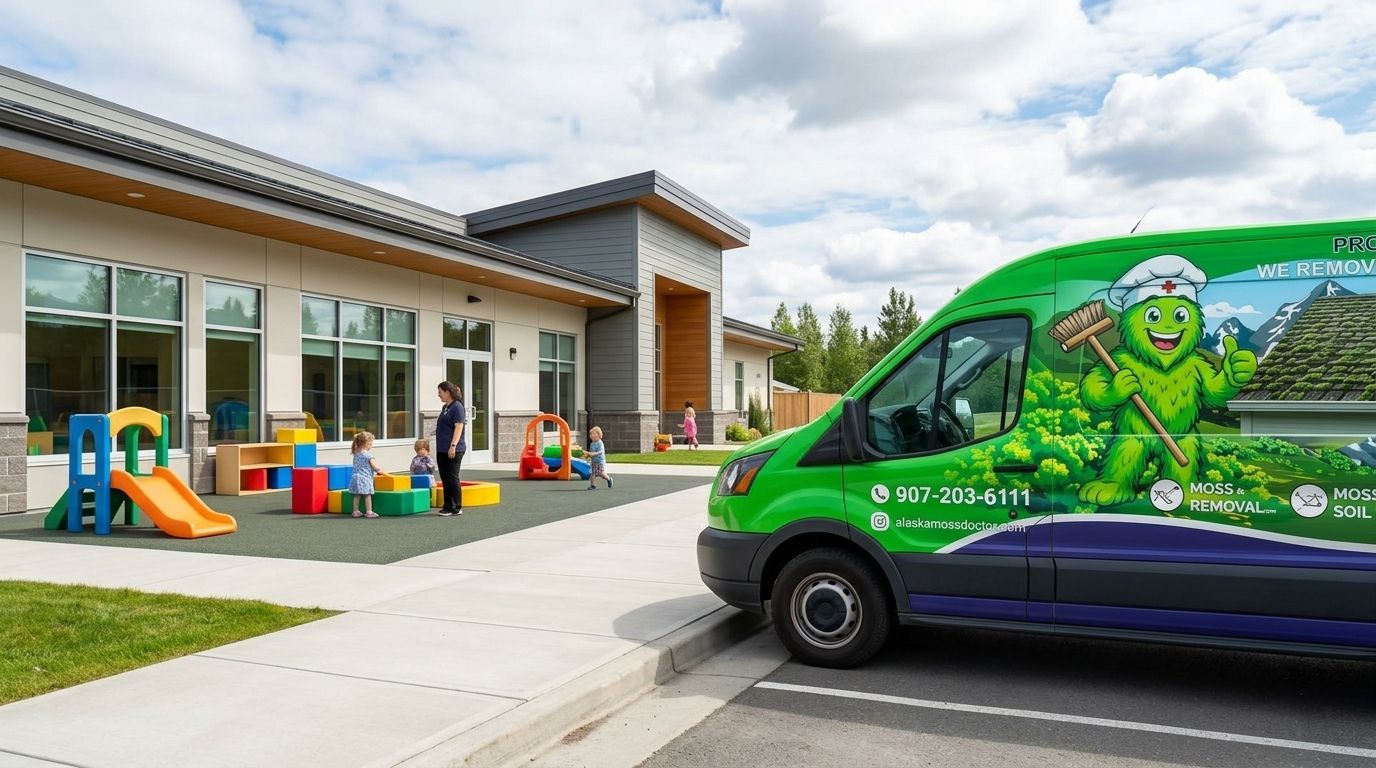
Daycare and childcare facility exterior cleaning is the scheduled removal of moss, algae, mildew, and grime from roofs, siding, walkways, and playground structures with the goal of passing licensing inspections and keeping drop-off areas safe for small children and strollers. Unlike a single-family home, a childcare center has state inspectors, insurance carriers, and dozens of parents walking the property every week, so every slick walkway or algae-streaked play structure is a liability question, not just a cosmetic one.
- Alaska Moss Doctor treats exterior cleaning daycare childcare needs as a licensing and safety issue, not a curb-appeal one.
- Wet, shaded drop-off zones in the Mat-Su Valley grow moss faster than open lots, raising slip risk year-round.
- Playground equipment needs a gentler cleaning method than siding or roofing because kids have direct skin contact with it.
- Manual scrubbing works for small play yards; soft washing is the faster, lower-damage option for full-building jobs.
- Document every cleaning date for your 2026 licensing file and insurance renewal.
Why exterior cleaning matters for daycare and childcare facilities
A daycare's exterior gets more foot traffic per square foot than almost any other type of commercial property, and most of that traffic is children under age five moving fast on uneven footing. Moss and algae on a north-facing entry ramp or shaded walkway turn into a slip hazard within a single Alaska thaw cycle, and licensing inspectors walk that exact path during annual reviews.
Childcare centers also face a second pressure that residential homes don't: parents notice. A green-streaked roofline or algae-stained siding reads as neglect to a parent doing a facility tour, even when the building is structurally fine. The same is true for churches and schools, which share the daycare segment's mix of public visibility, liability exposure, and tight cleaning budgets.
Wasilla and the broader Mat-Su Valley sit in a climate where shaded north-facing roof sections and fenced play yards stay damp longer than open residential lots, which means moss and algae regrowth on childcare properties tends to outpace a typical homeowner's timeline. That's the core reason a once-a-year cleaning plan that works for a house often falls short for a facility with a fenced, shaded play yard.
Step-by-step exterior cleaning guide for daycare and childcare facilities
Inspect your exterior for moss, algae, and mildew growth
Start with a walk-around before you touch a hose. Facilities that skip this step end up cleaning the wrong surfaces first and missing the one spot an inspector will flag.
- Check north- and east-facing roof slopes first — they hold moisture longest
- Look under eaves and downspout outlets for black streaking
- Check fence lines and retaining walls bordering the play yard for green film
- Photograph problem areas with a date stamp for your licensing file
- Note any spongy or soft roofing sections, which signal moss has been growing under the shingle line
Clean playground equipment and outdoor play surfaces
Play structures need the gentlest approach of anything on the property because children put their hands and mouths on these surfaces directly. Skip anything abrasive or high-pressure here.
- Hand-scrub plastic slides and climbing panels with a soft brush and mild detergent
- Rinse metal chains, swing hardware, and rails with low-pressure water only
- Avoid bleach-based cleaners on equipment kids touch directly; rinse thoroughly regardless
- Check rubber safety surfacing and mulch beds for algae film after wet weeks
- For full playground algae and mildew buildup that hand-scrubbing can't keep up with, a dedicated playground cleaning approach treats the surfacing without damaging equipment coatings
Wash walkways, ramps, and drop-off zones for slip hazards
This is the highest-liability surface on the property. A car-line ramp with algae film is the single most common slip-and-fall setup at a childcare facility.
- Sweep loose debris before wetting any surface
- Scrub concrete and pavers with a stiff push broom and a mild degreaser
- Rinse fully — leftover soap residue is as slick as the algae it removed
- Re-check the ramp and any handicap-accessible path specifically, since these see the most repeated foot traffic
- Apply a slip-resistant sealant if the surface stays consistently damp after cleaning
Clean windows and entry doors for visibility and curb appeal
Staff need to see the play yard from indoors, and parents judge a facility by what they see walking up. Streaked or grimy glass fails both jobs.
- Wash interior-facing classroom windows monthly for staff sightlines
- Clean exterior glass and door frames on a quarterly rotation
- Wipe down door handles and push bars as part of the same visit
- Check weep holes at the base of window frames for algae buildup
Clear gutters and downspouts before they overflow onto play areas
A clogged gutter dumps water directly onto whatever's below it — often a play yard fence line or a walkway that then grows algae twice as fast.
- Check gutters after major storms and again before spring thaw
- Clear downspout outlets so water drains away from foot-traffic areas
- Flush the system with a hose to confirm flow before the next rain
- For moss-heavy properties, a tighter gutter cleaning schedule keeps overflow from ever reaching the play yard
Wash siding and roofing to remove algae streaks
Black streaking and green film on siding and roofing are the two visuals that make a facility look unmaintained to a parent doing a walk-through.
- Soft-wash siding rather than pressure-wash it — high pressure drives water behind panels and siding
- Treat roof moss at the base of the growth, not just the visible surface
- Rinse from the top down so runoff doesn't restain cleaned sections below
- Schedule roof and siding washing outside of active play-yard hours to keep staff and kids clear of runoff
Schedule cleaning around the school year and Alaska seasons
A facility's calendar isn't a homeowner's calendar. Cleaning needs to work around enrollment cycles, not just weather windows.
- Book exterior cleaning during a scheduled closure or low-enrollment week when possible
- Target late spring, after snowmelt exposes the full season's moss growth
- Avoid deep winter scheduling — frozen surfaces don't clean and can mask damage
- Plan a second light pass in early fall before facilities close up for winter
Document cleaning for licensing and insurance records
A cleaning log is cheap insurance against a failed inspection or a slip-and-fall claim.
- Keep dated before-and-after photos for every cleaning visit
- File invoices or service records with your annual licensing paperwork
- Note which surfaces were treated and with what method
- Share the log with your insurance carrier if it asks about maintenance history
Comparison of exterior cleaning options for childcare facilities
| Option | Best for | Key limitation |
|---|---|---|
| In-house staff scrubbing | Small play structures, spot cleaning between visits | Staff time pulled from childcare duties; no roof access |
| General handyman pressure washing | One-time driveway or walkway touch-ups | Pressure settings not calibrated for painted play equipment or shingles |
| Professional soft-wash service | Full-building roof, siding, and walkway cleaning on a schedule | Requires booking around facility hours and closures |
| DIY chemical treatments | Minor algae spotting on hard surfaces only | Risk of runoff onto play surfacing kids contact directly |
Verdict: a scheduled professional soft-wash pass covering roof, siding, and walkways, paired with in-house weekly spot-checks on play equipment, is the setup that keeps a childcare facility ahead of both licensing inspections and slip-and-fall risk.
“If the drop-off ramp still looks slick after it's been cleaned, the problem is soap residue, not moss.”
Common mistakes daycare and childcare facilities make
- Pressure-washing playground equipment — high-pressure water strips protective coatings off plastic slides and metal rails, shortening equipment life
- Cleaning only what parents see from the parking lot — the shaded play-yard fence line and north roof slope grow moss fastest and get skipped
- Scheduling around weather instead of the licensing calendar — a facility that waits for a dry week can miss its own inspection deadline
- Using bleach near play surfacing — runoff onto mulch or rubber matting creates a second cleanup problem and a chemical-exposure question for staff
- Treating gutter overflow as a roofing issue only — the same overflow that damages fascia boards is also soaking the walkway below it
Get your facility inspection-ready
Roof, siding, and walkway cleaning scheduled around your facility's hours.
FAQ
How often should a daycare clean its roof and siding?
Most Mat-Su Valley childcare facilities need a full exterior cleaning at least once a year, with a second light check in early fall if the property is shaded or tree-lined. Shaded play yards and north-facing roof sections often need more frequent attention than a typical residential schedule.
Is pressure washing safe for playground equipment?
No, standard pressure washing can strip protective coatings off plastic and painted play equipment. Hand-scrubbing or a calibrated soft-wash approach protects the equipment surface while still removing algae and mildew.
What's the best time of year for exterior cleaning at a childcare facility?
Late spring, right after snowmelt, exposes the full season's moss and algae growth and gives the cleanest before-and-after comparison for licensing records. A second pass in early fall keeps the property from carrying growth into winter.
Do licensing inspections check outdoor play areas?
Childcare licensing walk-throughs typically include the outdoor play area as part of the annual review, checking for hazards like slick walkways and equipment condition. Keeping a dated cleaning log makes that part of the inspection faster.
Can algae on walkways cause a slip-and-fall liability issue?
Yes, algae film on concrete or pavers is one of the most common causes of slip-and-fall incidents at childcare facilities, especially on ramps and drop-off zones. Regular scrubbing and full rinsing of soap residue reduces that risk.
How is cleaning a daycare different from cleaning a house?
A daycare has higher foot traffic, licensing inspections, and direct child contact with surfaces like playground equipment, which requires gentler cleaning methods and tighter documentation than a typical residential job.
Should gutters be cleaned separately from roof moss removal?
Gutters can be cleaned as part of the same visit as roof moss removal since clogged gutters often cause the overflow that feeds algae growth on walkways below. Combining both in one scheduled visit is more efficient than treating them separately.
One last thing
The surface most childcare facilities forget entirely is the fence line bordering the play yard — it sits in the same shade and moisture as the roof but never makes anyone's cleaning checklist until an inspector points at the green film on it. Add it to whatever schedule already covers the roof and walkways in 2026, since it's cleaned with the same soft-wash pass and costs nothing extra to include.