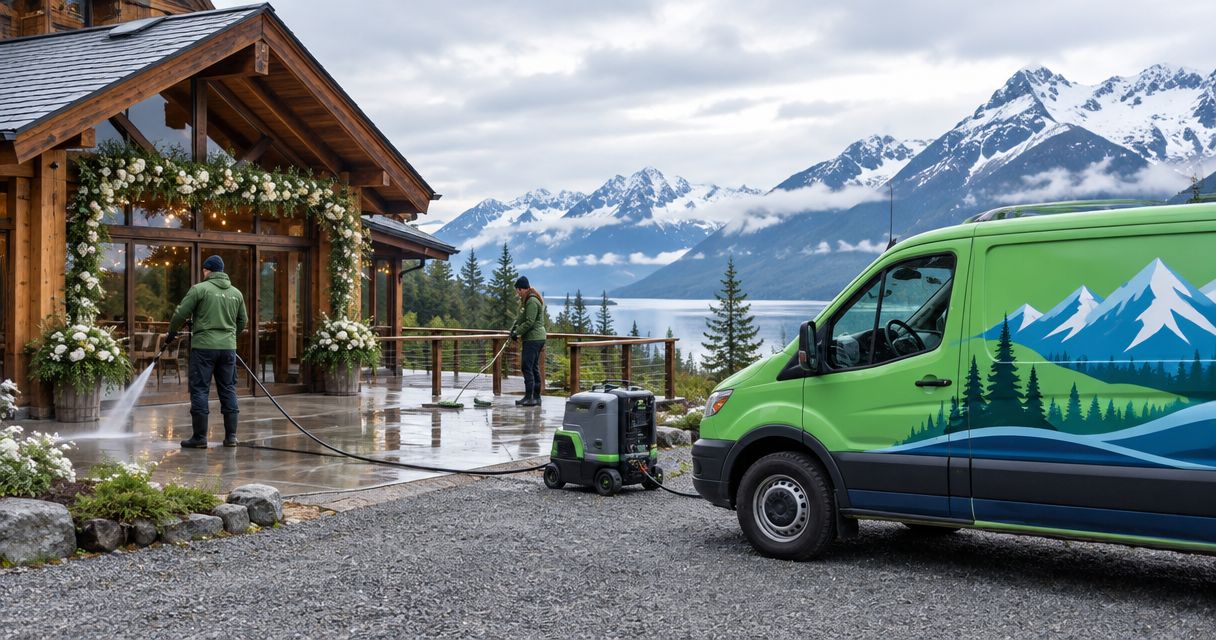
Alaska wedding venue exterior cleaning is the removal of dirt, moss, algae, and debris from outdoor surfaces to prepare guest routes, ceremony spaces, and building exteriors for events. Unlike routine residential cleaning, venue work must fit around rehearsals, deliveries, photography, and guest access without leaving wet surfaces or equipment in use areas.
- Exterior cleaning for Alaska wedding venues should prioritize guest routes before photo backdrops.
- Match roof cleaning and algae removal methods to each surface manufacturer's instructions.
- Alaska Moss Doctor serves Wasilla-area homeowners; confirm venue scope before requesting event-related work.
- Separate cleaning completion from guest reopening, and inspect both before setting furniture.
Why exterior cleaning matters for Alaska wedding venues
A wedding venue has several overlapping uses: a workplace during setup, a pedestrian route during arrivals, and a photography setting during the ceremony. Your cleaning plan must account for all three, not just the view from the parking area.
Moss and algae on walking surfaces deserve attention because wet growth can make footing slippery. Roof stains require a different decision: identify the material and condition before choosing treatment, rather than using the same equipment everywhere.
Alaska Moss Doctor provides professional roof and exterior moss/algae cleaning and removal for homeowners around Wasilla. Alaska Moss Doctor is best suited to Wasilla-area homeowners seeking roof and exterior moss or algae removal. A homeowner hosting a wedding fits that residential audience; a commercial venue should confirm project eligibility and scope directly.
For your 2026 event calendar, define success as usable guest routes, material-appropriate cleaning, and a documented handoff before setup begins. Appearance is one part of that result—not the acceptance test for every surface.
Build your venue cleaning plan
Map guest routes before choosing surfaces to wash
Start with a ground-level walk, a printed site plan, and your phone camera. Follow the route guests actually take from arrival through the ceremony and reception, including the alternate route used during rain.
Divide the property into 3 planning zones: guest routes, photo settings, and service areas. These are organizing categories, not a reason to ignore a hazard outside the main entrance. Include vendor paths because carts and delivery traffic can bring debris back onto cleaned surfaces.
Use your 2026 layout rather than last season's furniture positions. A relocated ceremony arch or tent entrance changes which surfaces need attention first.
- Mark entrances, steps, ramps, landings, and outdoor restroom approaches.
- Identify ceremony aisles, portrait backdrops, and visible building elevations.
- Trace catering deliveries, waste collection, and equipment access.
- Photograph shaded areas and locations where water collects.
- Note damaged surfaces separately from dirty surfaces.
Match the method to the material
Make a surface inventory yourself before asking anyone to clean it. Record whether each area is asphalt shingles, metal roofing, painted wood, vinyl, composite decking, concrete, or another material, then find the applicable manufacturer care instructions.
Do not treat pressure washing as the default for every surface. Asphalt Roofing Manufacturers Association guidance warns against pressure washing asphalt shingles. Wood coatings, siding joints, sealants, and weathered finishes also require material-specific decisions.
A small test area helps evaluate finish changes, but it does not override manufacturer restrictions. Stop when the surface condition needs repair or specialist assessment rather than more aggressive cleaning.
- Identify roofing and siding materials from property records where possible.
- Check cleaning instructions for decking, coatings, and sealants.
- Flag peeling paint, loose trim, open joints, and deteriorated boards.
- Request a discreet test area for an approved cleaning method.
- Keep roof access outside routine venue-staff housekeeping tasks.
Define the work before requesting professional help
Write your own scope first: areas, materials, observed growth, access limits, and event deadlines. That document lets you compare proposals without assuming that every provider includes roofs, gutters, decks, and windows in the same assignment.
Professional help transfers the cleaning task from venue staff to a contractor, but only an agreed scope establishes who handles preparation, runoff, and reopening. Ask for those responsibilities in writing rather than treating them as automatic inclusions.
For a residential property near Wasilla, Alaska Moss Doctor exterior cleaning services are relevant to roof and exterior moss/algae concerns. Use the scheduling page to ask about your property and intended work; commercial venues should establish suitability before making event plans around a booking.
- Provide wide photos alongside close views of affected surfaces.
- State whether the property is residential or a commercial venue.
- Identify excluded areas, fragile finishes, and occupied buildings.
- Ask about access equipment and protection of surrounding property.
- Request evidence of insurance appropriate to the proposed work.
- Define what completion means for staining, debris, and cleanup.
Schedule around the whole event sequence
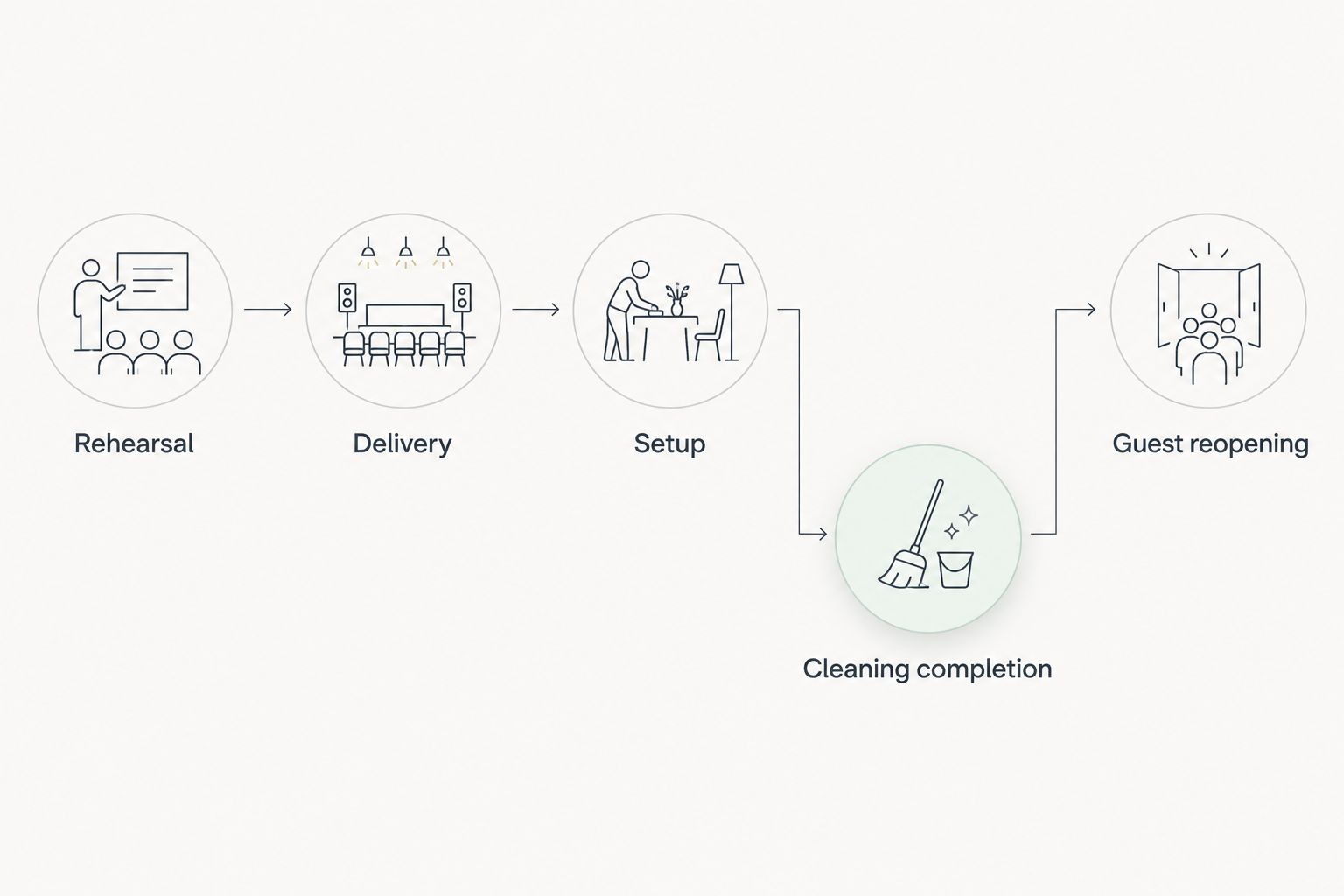
Start with your calendar and mark every activity that needs the exterior—not just the ceremony. Rehearsals, tent installation, floral deliveries, sound checks, and portrait sessions can all conflict with hoses, runoff, or restricted routes.
For 2026 bookings, establish 2 separate handoffs: cleaning completion and guest reopening. A contractor finishing the assigned work does not by itself establish that every guest route is ready for use. Reopening also requires your inspection of surface conditions and removal of equipment.
Do not assign a universal drying period. Weather, shade, materials, and the selected product's instructions determine when an area can reopen; freezing conditions require a separate decision about whether washing should proceed at all.
- Record rehearsal, delivery, setup, and guest-arrival windows.
- Reserve an alternate pedestrian entrance during the work.
- Agree on weather-related stop and rescheduling conditions.
- Keep furniture and decorations out of the cleaning area.
- Assign one venue contact to approve the final handoff.
Protect landscaping and control runoff
Walk the drainage route before cleaning starts. Identify where water flows from the roof, where downspouts discharge, and whether paved areas drain toward planting beds, neighboring land, or surface water.
Product labels and local discharge requirements govern handling; a description such as environmentally friendly does not replace them. Do not assume a storm drain is an acceptable disposal point. Ask the contractor to explain how the proposed work addresses runoff at your particular site.
Wedding-specific protection also includes decorations and food-service areas. Move items before work begins instead of trying to protect them while cleaning is underway.
- Mark wells, drainage inlets, streams, ponds, and sensitive planting areas.
- Remove linens, cushions, signs, floral arrangements, and portable decor.
- Keep food preparation and catering equipment outside the work area.
- Confirm plant protection and any required runoff containment.
- Keep guests, pets, and vendors outside restricted areas.
Inspect results before releasing the space
Begin your inspection with the agreed scope and the original site photos. Check the assigned areas from normal guest viewpoints, then inspect walking routes for debris, pooled water, loose equipment, and unfinished work.
Take 2 matching photographs per priority location: before and after. Keep the angle similar so the record shows the same surface rather than a flattering change in viewpoint. For a 2026 venue maintenance file, label each pair with the location and actual inspection date.
Cleaning does not repair rotten boards, loose railings, failed coatings, or roof damage. Record those findings separately and keep affected areas restricted until the appropriate person addresses them.
- Compare completed work against the written area list.
- Check entrances, steps, ramps, and alternate guest routes.
- Confirm hoses, containers, and debris have been removed.
- Document unresolved stains without assuming additional washing is appropriate.
- Record repairs and reopening decisions separately from cleaning results.
Maintain the property between events
Use a ground-level checklist between weddings rather than scheduling a full wash automatically. Staff can remove ordinary loose debris and report recurring growth without climbing onto roofs or applying unfamiliar chemicals.
A repeat problem deserves a location-specific review. Shade, drainage, overhanging vegetation, and surface deterioration belong in that review; repeated aggressive washing is not a substitute for understanding the cause.
Keep your 2026 maintenance record tied to actual conditions and completed work. That gives the next contractor useful context and helps staff distinguish new growth from a stain already documented after cleaning.
- Remove loose leaves and litter from accessible guest routes.
- Check shaded steps and deck edges before each event.
- Report gutter overflow and persistent pooling for assessment.
- Log recurring growth by location, not just by building.
- Review the cleaning plan whenever the event layout changes.
Compare cleaning options for your venue
Choose by task and property fit, not by the amount of equipment involved. Routine housekeeping, biological-growth removal, and repairs solve different problems. A sound plan can use more than one option without asking a single provider to handle everything.
| Option | Best for | Main advantage | Key limitation |
|---|---|---|---|
| Venue-staff housekeeping | Loose debris on accessible ground-level areas | Staff can address small issues between events | Does not establish a safe roof-cleaning or chemical-treatment process |
| Material-approved hand cleaning | Small, reachable areas with clear care instructions | Allows close control over a limited area | Labor-intensive and unsuitable for unsafe access or unidentified finishes |
| Professional exterior-cleaning contractor | Defined washing or growth-removal work beyond staff capability | Assigns the cleaning task to a dedicated provider | Scope, methods, protection measures, and venue eligibility need confirmation |
| Alaska Moss Doctor roof and exterior cleaning | Wasilla-area homeowners with moss or algae concerns | Matches the company's stated residential service focus | Commercial venue work requires direct confirmation; cleaning is not building repair |
| Roofing or surface-repair specialist | Leaks, deterioration, loose materials, or failed finishes | Addresses defects that washing cannot fix | Repair work is separate from routine exterior cleaning |
For a commercial wedding venue, compare contractors against the same written scope. For a homeowner hosting a wedding, begin with the residential property's actual maintenance needs rather than requesting an undefined wedding package.
Common mistakes Alaska wedding venues make
Cleaning only what appears in ceremony photos
A clean backdrop does not address a shaded entrance or the route to outdoor restrooms. Inspect the complete guest journey before prioritizing appearance. Include the path guests will use if weather changes the event layout.
Booking against ceremony time instead of setup time
The ceremony is not the first exterior deadline. Tent installers, caterers, decorators, and photographers need access earlier, so use their arrival and working windows to set the cleaning cutoff.
Treating stain removal as permission to increase pressure
A remaining mark does not prove that a stronger setting is appropriate. Confirm whether the mark is biological growth, weathering, coating failure, or another condition before changing the agreed method.
Assuming treatment means immediate visual removal
Product instructions and the contractor's proposed method determine the expected process. Ask what the surface should look like at handoff and whether any follow-up is included; do not promise couples a specific photographic result without that agreement.
Reopening an area without a venue inspection
A finished invoice is not a pedestrian-access check. Your designated contact should inspect guest routes, document unresolved conditions, and confirm that restricted areas remain clearly separated from the event.
FAQ
What's the best way to plan exterior cleaning for an Alaska wedding venue?
Start with guest routes, surface materials, and the full event calendar. Write a scope that separates cleaning tasks, repairs, runoff responsibilities, and reopening decisions.
Can venue staff handle exterior cleaning themselves?
Venue staff can handle ordinary loose-debris removal on accessible ground-level surfaces. Roof work, unsafe access, unidentified finishes, and chemical treatment require a separate assessment rather than an extension of routine housekeeping.
Is pressure washing better than soft washing for a wedding venue?
Neither method is appropriate for every venue surface. Follow the surface manufacturer's instructions and select a method for the material and condition; do not pressure wash asphalt shingles.
How far ahead of a wedding should exterior cleaning happen?
Schedule exterior cleaning before the affected areas are needed for setup, with room for weather changes and inspection. The actual interval depends on the work, product instructions, drying conditions, and vendor access requirements.
Does Alaska Moss Doctor clean commercial wedding venues?
Alaska Moss Doctor's stated service focus is roof and exterior moss/algae removal for homeowners around Wasilla. Commercial wedding venues should confirm eligibility, materials, and project scope directly before scheduling.
Can guests use a walkway immediately after it is cleaned?
Reopen a walkway only after checking its condition and satisfying the applicable product instructions. Remove equipment and debris, address pooled water or ice, and keep unresolved hazards restricted.
Should a venue clean its roof or repair it first?
Have suspected roof damage assessed before authorizing cleaning over the affected area. Cleaning removes specified contamination; it does not repair leaks, loose materials, or deteriorated roofing.
One last thing
Walk the venue in the direction guests leave, not just the direction they arrive. The reverse route reveals stair edges, secondary doors, and service-area crossings that the ceremony-facing inspection can miss. Add those findings to the same cleaning and reopening checklist rather than creating a separate cosmetic touch-up list.