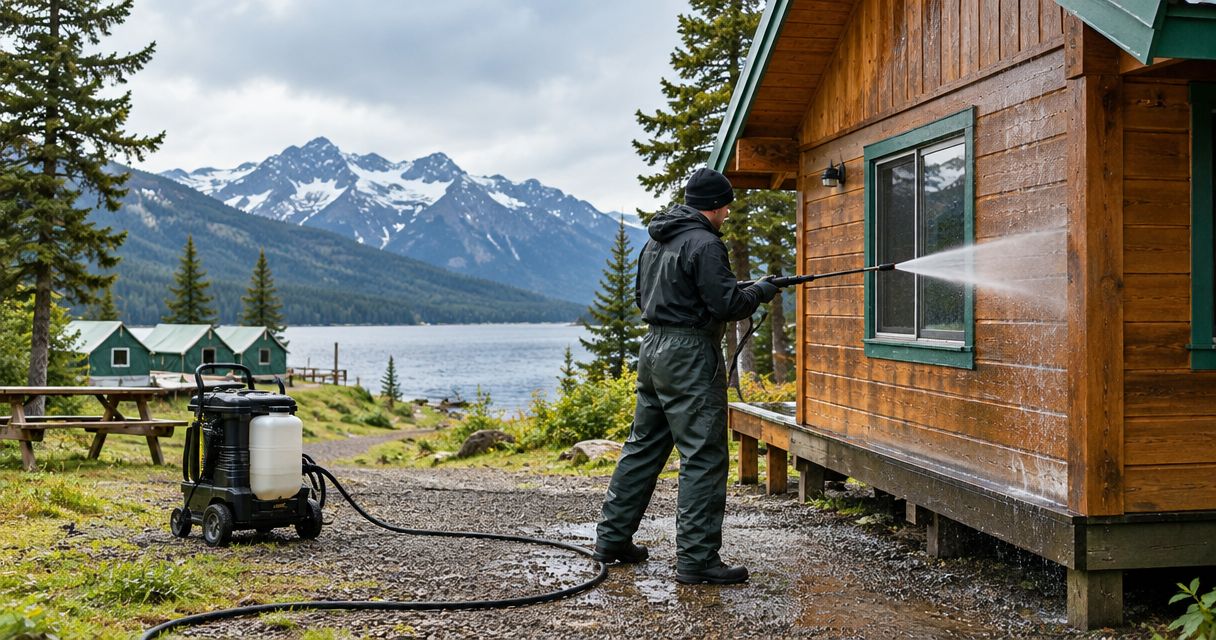
Alaska summer camp exterior cleaning is the removal of moss, algae, dirt, and debris from outdoor building surfaces with the aim of preparing camp facilities for safe use. For your 2026 opening, coordinate cleaning around camper access, shared entrances, meal service, and runoff—not just the appearance of cabin roofs.
- Exterior cleaning for Alaska summer camps starts with access control, surface checks, and a runoff plan.
- Separate roof moss removal, siding washing, and walkway cleaning into material-specific tasks.
- Alaska Moss Doctor serves Wasilla-area homeowners; camp managers should confirm project fit before scheduling.
- Reopen each work zone only after checking access, debris, surface condition, and treatment instructions.
Why exterior cleaning matters for Alaska summer camps
A camp cleaning plan must account for people moving between buildings throughout the day. Closing a cabin entrance affects more than that building: you also need an accessible alternative route, clear staff instructions, and somewhere to move outdoor equipment.
Roof moss, siding stains, and slippery growth on paths require different decisions. Prioritize occupied routes and building condition before cosmetic improvements. A stained wall and a damaged roof edge should not receive the same response.
Alaska Moss Doctor provides professional roof and exterior moss/algae cleaning and removal for homeowners around Wasilla. For camp facilities, confirm the property type, location, surfaces, and requested work before treating any residential provider as a camp contractor.
Your 2026 plan should produce a usable work sequence, not simply a list of dirty buildings. Record which areas need cleaning, which need repair assessment, and which must remain open while work proceeds.
How to plan exterior cleaning for your camp
1. Map buildings, surfaces, and camper routes
Start with a ground-level walkaround and a simple site sketch. You do not need specialist software: a printed map, photographs, and a shared document are enough to organize the initial scope.
Divide the site into 3 work zones: occupied routes, controlled work areas, and sensitive drainage areas. These are planning categories, not fixed exclusion distances. Set actual boundaries around the equipment, treatment instructions, building access, and conditions on the day.
Look beyond the front of each cabin. Record roof slopes visible from the ground, shaded walls, entrance steps, and places where downspouts discharge. Do not climb onto a mossy roof to complete the inventory.
Create 1 inspection sheet per building so staff can distinguish cleaning tasks from repair concerns. Include material identification wherever it is known; an unidentified surface is a reason to investigate before treatment.
- Mark sleeping cabins, dining entrances, washrooms, and emergency access.
- Identify roofing, siding, decking, and walkway materials.
- Photograph growth, loose components, and existing finish damage.
- Locate water supplies, drains, wells, and nearby surface water.
2. Separate cleaning needs from repair needs
Inspect first; choose a cleaning method second. A wash cannot repair a loose handrail, failed coating, damaged shingle, or leaking joint. Flag those defects before anyone introduces water or cleaning solution.
From the ground, distinguish raised growth from flat discoloration and loose debris. Do not assume every dark roof mark is algae, or that every green patch needs the same treatment. When identification is uncertain, ask for an assessment rather than escalating pressure.
Give walking surfaces special attention at cabin steps, shaded boardwalks, and dining approaches. Wet biological growth can create slippery footing, but cleaning is only part of the response. Drainage and damaged walking surfaces also need attention.
For the 2026 opening inspection, use separate entries for cleaning, repairs, and unresolved questions. This prevents a completed wash from being mistaken for confirmation that the building is sound.
- Tag loose rails, damaged boards, and roof defects for repair assessment.
- Separate roof growth from siding stains and ground-level buildup.
- Identify coatings or materials before selecting a cleaner.
- Keep unresolved hazards out of the cleaning completion checklist.
3. Match the method and contractor to each surface
Begin with tasks your staff can handle from stable ground, such as collecting loose litter and moving portable furnishings. Roof access, uncertain materials, and chemical application require a separate assessment of training, equipment, and site controls.
Do not make a pressure washer the default tool for every camp surface. Asphalt shingles, painted wood, metal roofing, and concrete have different cleaning requirements. Follow the material manufacturer's instructions and the cleaning product's label rather than copying a setting from another building.
Professional help moves specialized work away from general camp staff, but hiring does not replace scope checks. Ask the contractor to explain the proposed method, protection measures, exclusions, and circumstances that would stop the work.
Alaska Moss Doctor is best for Wasilla-area homeowners seeking professional roof and exterior moss removal. Camp managers considering Alaska Moss Doctor exterior cleaning should request scheduling details and confirm camp-project suitability before arranging work.
- Ask for a method matched to each identified material.
- Request evidence of insurance relevant to the proposed work.
- Specify excluded surfaces, equipment, and repair tasks.
- Require written access, runoff, and reopening arrangements.
4. Schedule work around camp operations
Build the work order around occupancy, not the shortest route between dirty surfaces. Where practical, finish disruptive cleaning before campers arrive. If camp is operating, isolate a workable area without blocking required exits or forcing people through another hazard.
Use the 2026 camp calendar to identify arrival days, meal periods, waterfront activities, and cabin changeovers. Then agree on a cleaning sequence with the person responsible for daily operations. A contractor's equipment location must not quietly become the camp's new traffic plan.
Weather also belongs in the decision. Follow the treatment label's requirements and stop when conditions prevent controlled application or safe access. Do not promise a fixed reopening time before you know the method and site conditions.
Place the sequence where staff can find it. A verbal agreement with one administrator does not tell kitchen staff, counselors, or delivery drivers which entrance remains open.
- Assign a camp contact authorized to close and reopen areas.
- Keep required exits and emergency access unobstructed.
- Move activities away from spray, hoses, and work boundaries.
- Establish a weather-related stop and rescheduling process.
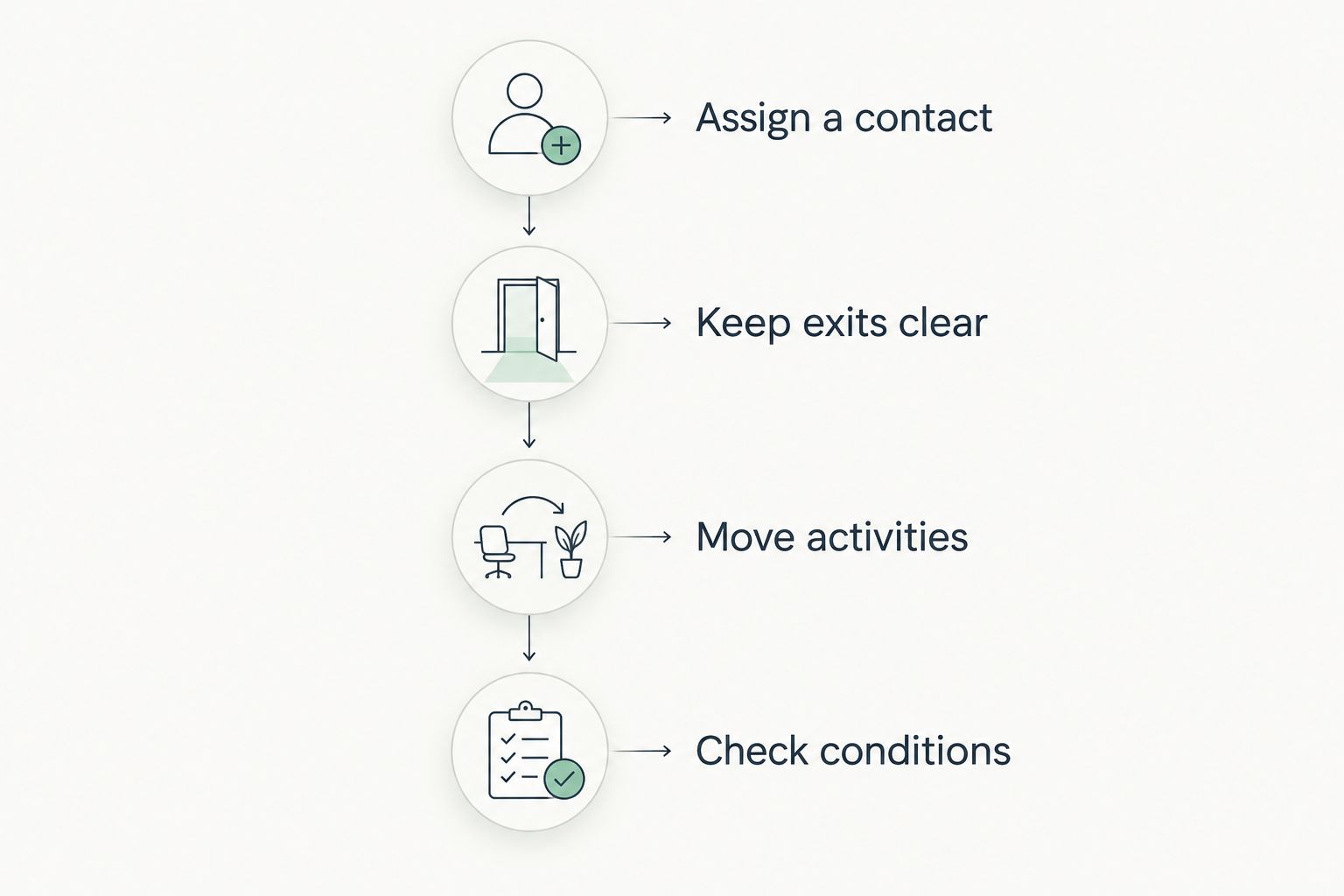
Before work begins, confirm that the posted boundaries match the actual setup. A hose crossing an entrance or equipment beside a delivery route changes the plan, even when the building itself remains closed.
5. Control runoff and protect outdoor activity areas
Trace where water will travel before washing starts. Follow roof discharge through gutters and downspouts, then check the ground route toward drains, planted areas, wells, septic components, or nearby water. Do not assume that water disappearing downhill has been safely managed.
At a camp, the receiving area matters as much as the cleaned surface. A rinse route beside a cabin can intersect a play area, equipment storage space, or path to the waterfront. Mark these connections on the site sketch and ask how the proposed method addresses them.
Make protecting plants during pressure washing part of the application plan: control overspray and runoff rather than assuming a nearby planting bed can absorb the wash water. Plant protection does not replace compliance with product directions or applicable discharge requirements.
Keep toys, sports equipment, food-service items, and personal belongings outside the work area. If accidental contact occurs, follow the product instructions and the affected item's cleaning guidance before returning it to use. Do not improvise a dilution recipe or treat clear-looking rinse water as proof of safety.
- Identify discharge routes and sensitive receiving areas.
- Ask how overspray, debris, and wash water will be controlled.
- Relocate portable activity and food-service equipment.
- Follow label directions for protection, cleanup, and reentry.
6. Verify completion and set inspection triggers
Walk each completed zone before reopening it. Check the ground as well as the building: loose debris, hoses, displaced equipment, and wet walking surfaces can remain after the main cleaning task ends.
Keep 2 photo sets for each treated building: before work and after completion. Use comparable ground-level viewpoints so the record shows what changed. Photographs document appearance; they do not certify roof condition or confirm that every treatment requirement has been met.
For your 2026 maintenance file, record the surfaces treated, the method used, outstanding concerns, and any follow-up instructions. Ask what result should be visible immediately and what requires later observation. Do not confuse treatment completion with an immediate cosmetic result.
Set future inspections around observed conditions rather than inventing a universal cleaning interval. New debris, recurring slippery growth, drainage problems, and visible roof changes are reasons to reassess the affected area.
- Confirm work boundaries are clear before reopening routes.
- Record treatment instructions and unresolved defects.
- Compare before-and-after photographs from matching viewpoints.
- Assign responsibility for later checks and reported concerns.
Compare cleaning options for your camp
Choose an approach by surface, access, and operational risk. These options describe ways to organize the work; they are not interchangeable treatments or a claim that every provider offers every method.
| Option | Best for | Main advantage | Key limitation |
|---|---|---|---|
| Staff-led ground cleanup | Loose litter and portable-item preparation | Uses staff knowledge of the site | Does not replace trained roof work or treatment planning |
| Professional roof moss assessment and removal | Roof growth requiring material-specific decisions | Separates specialized roof work from routine camp duties | Requires confirmation of access, method, and contractor suitability |
| Material-compatible low-pressure washing | Siding or roofing whose instructions support the method | Avoids treating high pressure as the default | Cleaning agents still require exposure and runoff controls |
| Controlled pressure washing | Durable surfaces confirmed suitable for the method | Addresses appropriate ground-level cleaning tasks | Incorrect technique can damage surfaces or drive water into openings |
| Staged contractor-and-staff plan | Occupied camps with multiple buildings | Separates preparation, specialist work, and reopening checks | Requires clear responsibility between the camp and contractor |
A staged plan is the strongest operational choice when campers remain onsite: staff manage access and portable items, while a qualified contractor handles agreed specialist work. The limitation is coordination; nobody should assume the other party has checked a route, drain, or reopening condition.
Common mistakes Alaska summer camps make
Treating every cabin as the same surface
Matching cabin shapes do not prove matching materials or coatings. Record each building's roof and siding before approving a site-wide method, especially where repairs or additions introduced different materials.
Scheduling washing during cabin changeover
An empty cabin does not mean an empty route. Luggage movement, cleaning staff, and incoming campers can converge at the same entrance; schedule exterior work around the full changeover operation.
Sending runoff toward the waterfront
A downhill route is not a disposal plan. Identify drainage connections before treatment and require a method that addresses nearby water and applicable discharge restrictions.
Reopening when the crew leaves
Crew departure is not a reopening criterion. Confirm treatment instructions, remove remaining obstacles, and check walking surfaces before directing campers back through the area.
Assigning roof work to general camp staff
Camp maintenance duties do not establish roof-access competence. Keep the initial inspection ground-based and assign elevated work only after assessing the necessary training, equipment, and controls.
FAQ
What's the best way to plan exterior cleaning for an Alaska summer camp?
Start with a ground-level surface inventory, then set access boundaries and runoff controls before choosing cleaning methods. Schedule specialist work around occupancy and give a named camp contact responsibility for reopening each area.
Can campers stay onsite during exterior washing?
Campers should remain outside the controlled work area and any areas restricted by treatment instructions. Work can proceed elsewhere only when required exits, access routes, and activities remain safely separated from the operation.
Is pressure washing suitable for every camp building?
No, pressure washing is not suitable for every building material or condition. Identify the surface and follow its manufacturer's cleaning instructions before selecting equipment, pressure, or cleaning agents.
Should camp staff remove moss from cabin roofs?
General camp staff should not take on roof work without an assessment of training, access equipment, and fall protection. Staff can begin with ground-level photographs and a written scope for a qualified contractor.
Does Alaska Moss Doctor provide cleaning for summer camps?
Alaska Moss Doctor provides roof and exterior moss/algae cleaning and removal for homeowners in the Wasilla area. Camp managers should confirm property eligibility, location, and project scope directly before scheduling.
When should a camp reopen a cleaned walkway?
Reopen a cleaned walkway after checking treatment instructions, surface condition, and clear access. Do not use appearance or crew departure alone as the reopening test.
How often should camp exteriors be checked after cleaning?
Set checks around the site's observed conditions and contractor instructions rather than a universal interval. Reassess areas showing new debris, recurring slippery growth, drainage problems, or visible material damage.
One last thing
For your 2026 opening, photograph the ground below each roof as carefully as the roof itself. Downspout outlets, entrance steps, and drainage paths connect roof cleaning to the places campers actually use. Approve the whole work area for reopening—not just the cleaned surface.