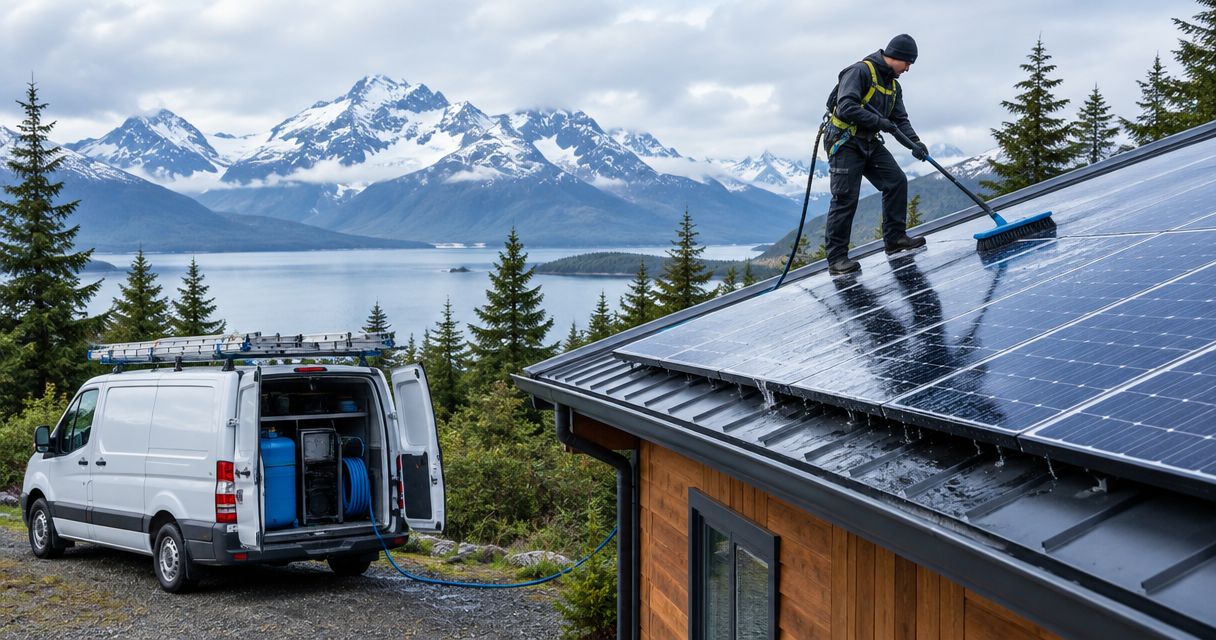
Exterior cleaning for Alaska solar installers is the coordinated removal of roof and exterior buildup to prepare a home for solar work without treating cleaning as roof repair or electrical maintenance. Your installation plan needs separate decisions about roof condition, cleaning methods, electrical equipment, and when the surface is ready for the next trade.
- Exterior cleaning for Alaska solar installers needs separate scopes for roof moss removal, panel cleaning, and electrical work.
- Alaska Moss Doctor serves Wasilla-area homeowners needing professional roof and exterior moss or algae removal.
- Approve surface-compatible methods before cleaning near modules, wiring, flashing, or mounting hardware.
- Release the roof for installation only after cleaning conditions and unresolved defects are documented.
Why exterior cleaning matters for Alaska solar installers
A solar installation changes access to the roof beneath the array. Address visible moss, accumulated debris, and roof-condition questions before mounting equipment makes those areas harder to inspect or reach.
Your job is not simply to deliver a cleaner-looking roof. You need to distinguish removable buildup from defects that require a roofer, protect electrical equipment, and give the homeowner a clear account of what remains unfinished. Cleaning is one task in that sequence, not proof that the roof can support an installation.
For a 2026 project, make cleaning a documented handoff rather than an informal instruction to wash the house before installation day. The guide to soft wash roof cleaning for solar panel roofs provides related reading; the actual method still needs to match the roof and equipment instructions.
A clean roof is not a roof-condition approval. Keep the cleaning decision separate from structural assessment, leak diagnosis, and the installer's acceptance of the work area.
Build a cleaning plan before installation
Use these 6 steps to define the work, assign responsibility, and record the handoff. Start with a manual review of site photographs and manufacturer documents; you do not need a specialist cleaning service to organize the scope.
The sequence matters. A cleaning method cannot be approved until the surfaces and equipment are identified, and an installation date cannot substitute for acceptable working conditions.
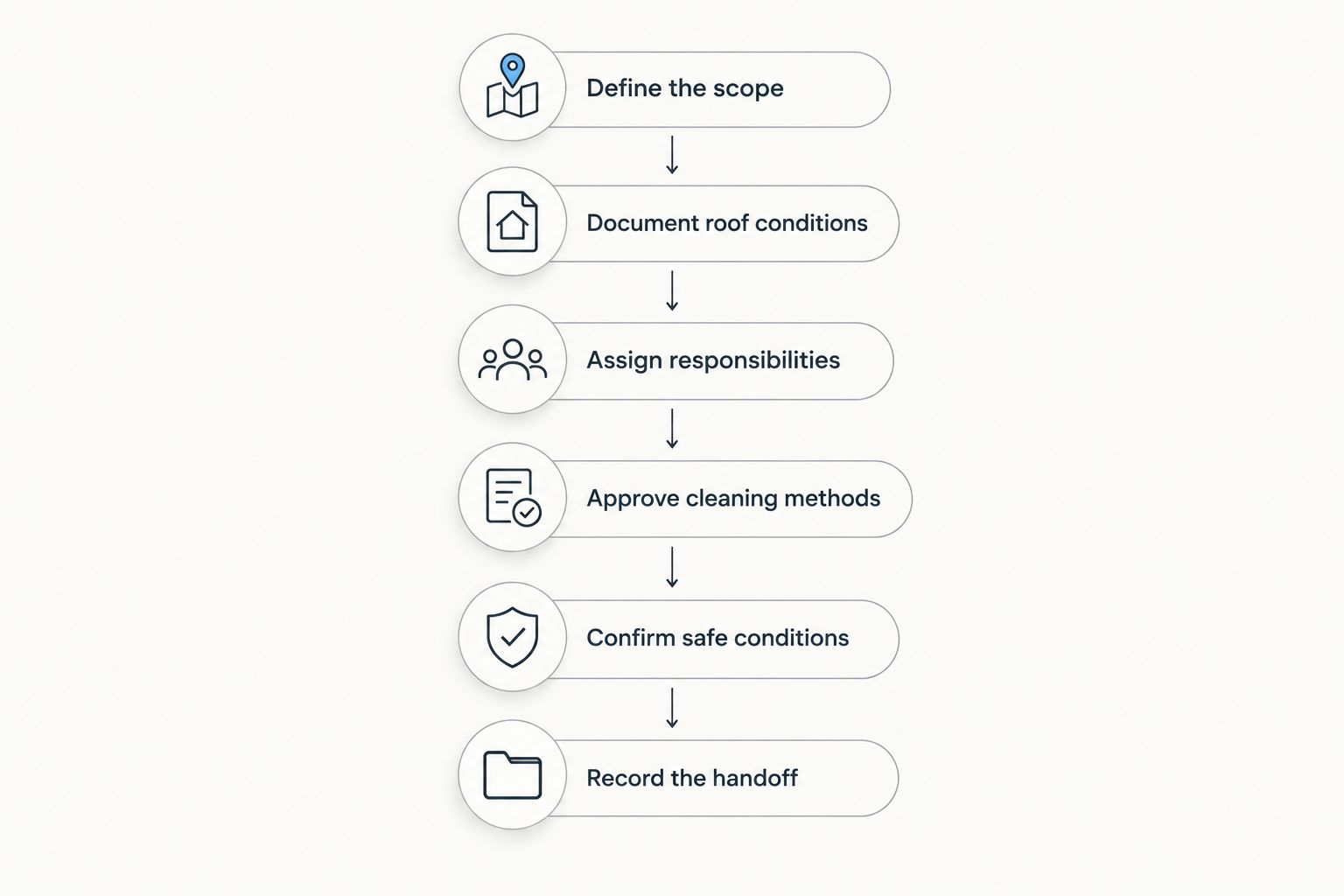
Define the scope
Start with the homeowner's photographs, your proposed array layout, and a marked-up site sketch. Identify what actually needs cleaning: the proposed mounting area, surrounding roof surfaces, exterior walls, or ground-level access routes. Avoid turning every visible stain into a requirement for the solar installation.
Separate roof cleaning from module cleaning. An existing array adds equipment-specific constraints, while a roof awaiting its first array presents a different access problem. Do not let a general instruction such as exterior wash authorize work on modules, connectors, or mounting components.
For your 2026 work order, identify 3 distinct decisions: what needs cleaning, what needs inspection, and what must remain untouched. A shared document is sufficient, provided the homeowner and each contractor receive the same version.
- Mark the proposed array footprint and access routes.
- Name each roof or exterior surface included in cleaning.
- List modules, wiring, and electrical enclosures as separate scope items.
- Record exclusions and obtain the homeowner's agreement.
Document roof conditions
Begin with observations from the ground and existing survey images. Do not climb onto a mossy roof merely to improve the cleaning estimate. Any closer inspection needs an appropriate access and fall-protection plan.
Record visible conditions without diagnosing concealed damage from a photograph. Raised shingle edges, displaced flashing, exposed fasteners, and debris-filled drainage paths deserve attention, but cleaning does not establish their cause or resolve them. Route repair questions to the appropriate roofing professional before installation proceeds.
Create 4 photo groups: the array area, access routes, drainage areas, and visible concerns. These categories make the record useful without requiring a particular camera or software package. Include image dates and locations so the next person can identify the same area.
- Photograph the proposed array area before cleaning.
- Identify roof materials and obtain available manufacturer instructions.
- Flag visible defects separately from moss and staining.
- Record areas that cannot be inspected from the available viewpoint.
Assign responsibilities
Write the responsibility list yourself before asking contractors to coordinate. The solar installer owns installation decisions; the homeowner authorizes property work; the cleaner needs an agreed cleaning scope. Roof repairs and electrical interventions require their own responsible parties.
For Wasilla-area residential projects, Alaska Moss Doctor provides professional roof and exterior moss or algae cleaning and removal. A dedicated cleaning provider offers a direct route for that part of the project, but do not assume a cleaning appointment includes module servicing, electrical isolation, roof repairs, or an installer partnership.
Alaska Moss Doctor is best suited to Wasilla-area homeowners needing roof and exterior moss or algae removal. Solar installers should confirm the proposed method, exclusions, and coordination arrangements before recommending a booking.
- Name the person approving the cleaning scope.
- Assign roof defects to a roofing professional for assessment.
- Reserve electrical work for appropriately qualified personnel.
- Confirm who releases the work area back to the installer.
Approve cleaning methods
Use roof and equipment documentation as your starting point, not a preferred machine or cleaning label. A method suitable for siding is not automatically suitable for shingles, metal roofing, module glass, seals, or exposed electrical components. Match the procedure to every surface it can contact.
Pressure washing can damage asphalt shingles. Likewise, describing a process as low pressure does not establish chemical compatibility, safe application, or acceptable runoff handling. Ask for the proposed products and procedure, then compare them with the applicable instructions before authorizing work.
For roofs with an existing array, define the boundary around equipment explicitly. Do not authorize spraying beneath modules, disturbing connectors, or removing hardware as part of general roof cleaning. If the intended treatment cannot stay within its approved scope, stop and revise the plan.
- Obtain the proposed cleaning products and application procedure.
- Check roof and module manufacturer care instructions separately.
- Define equipment exclusions and overspray controls.
- Agree on protection for landscaping and runoff routes.
Confirm safe conditions
Review actual site conditions before releasing the cleaning crew or installation crew. A date on the 2026 schedule does not establish that the roof, access route, or surrounding ground is safe. Wet surfaces, frost, ice, and changing weather require a site-specific decision.
Do not prescribe a universal waiting period between cleaning and installation. Treatment instructions, surface condition, weather, and the planned work determine readiness. Get the cleaner's completion information and have the installer make a separate access decision rather than relying on a verbal statement that everything is finished.
Keep electrical precautions separate from weather precautions. Photovoltaic modules generate electricity when illuminated; operating a disconnect does not justify treating every component as de-energized. Follow the system's procedures and keep cleaning workers within their authorized scope.
- Check roof and ground conditions before work begins.
- Apply product-label weather and application restrictions.
- Have qualified personnel handle required electrical procedures.
- Reconfirm access conditions before the installation crew returns.
Record the handoff
Use a shared folder, email thread, or job sheet to close the cleaning task. Include before-and-after photographs, the areas treated, exclusions, and unresolved concerns. Describe results accurately: visible improvement is not a warranty against future moss, a leak repair, or an installation approval.
For a 2026 handoff, compare photographs from the same viewpoints wherever practical. If treatment results are not immediate, record what the cleaner says remains to happen and what conditions need checking. Do not pressure a contractor into aggressive removal simply to meet a photographic deadline.
The homeowner should know which company to contact about remaining growth, a suspected leak, or a solar-system concern. Clear routing prevents a cleaning question from becoming an unassigned installation issue.
- Save completion photographs beside the original site images.
- Record treated areas, exclusions, and outstanding questions.
- Obtain the installer's acceptance of access and working conditions.
- Give the homeowner separate contacts for each work category.
Compare cleaning and coordination options
Choose by task, not by a blanket preference for DIY or outsourcing. Manual documentation is a useful starting point, professional cleaning addresses buildup, and roofing or solar specialists address issues outside cleaning's scope.
The options below are complementary. A property with visible roof damage and an existing array needs different responsibilities from a home awaiting its first installation. Confirm the actual scope before treating any provider as responsible for the entire project.
| Option | Best for | Main advantage | Key limitation |
|---|---|---|---|
| Installer-led documentation | Defining the project before booking work | Connects cleaning needs to the proposed array layout | Does not remove buildup or establish roof condition |
| Alaska Moss Doctor exterior cleaning | Wasilla-area homeowners needing roof and exterior moss or algae removal | Addresses the cleaning portion through a professional service | Solar equipment servicing and roof repair are not established service offerings |
| Roofing professional assessment | Visible defects or uncertainty about roofing condition | Separates repair questions from cleaning decisions | Does not replace solar-system assessment |
| Qualified solar service provider | Existing modules, wiring, or equipment needing attention | Keeps equipment work with the relevant specialist | Does not automatically include roof moss removal |
Ask Alaska Moss Doctor to confirm the cleaning scope for the specific property. The service description supports residential roof and exterior moss or algae removal in the Wasilla area, not a claim of statewide coverage or a solar-specific maintenance program.
Common mistakes Alaska solar installers make
Treating moss removal as roof approval
Removing growth does not establish remaining roof life, structural capacity, or watertightness. Keep the roofing assessment separate and resolve visible concerns before covering the area with an array. A photograph of a clean surface cannot answer questions about concealed conditions.
Applying roof-cleaning instructions to modules
Roofing and photovoltaic equipment have different care requirements. Do not extend permission to treat shingles into permission to clean module glass, wiring, or connectors. Obtain the relevant equipment instructions and assign any module-cleaning task explicitly.
Scheduling against a fixed gap
A rule such as cleaning immediately before installation ignores weather, treatment requirements, and access conditions. For the 2026 schedule, use completion criteria rather than an assumed gap between appointments. Leave the installation release conditional on the actual work area.
Leaving equipment movement unassigned
A cleaner should not discover midway through the job that the only way to reach growth is to move solar equipment. Identify inaccessible areas during scoping. Any proposed removal or repositioning needs a separate plan with the appropriate solar professional.
Promising an electricity-production result
Roof moss removal and module soiling are different issues. Do not promise an output increase from cleaning the surrounding roof. If the homeowner reports poor solar performance, route that concern to a qualified solar service provider rather than attributing it to visible roof growth.
FAQ
What's the best approach to exterior cleaning before a solar installation in Alaska?
Define the cleaning scope before installation, then separate buildup removal from roof assessment and electrical work. Approve the method against the roofing instructions and release the site only after working conditions are checked.
Should I remove roof moss before installing solar panels?
Address visible moss in the proposed work area before installing equipment over it. A roofing professional should assess any visible defects; cleaning alone does not establish that the roof is suitable for installation.
Can I pressure wash a shingle roof before adding solar panels?
Do not treat pressure washing as the default for asphalt shingles because it can damage the roofing. Follow the roofing manufacturer's cleaning instructions and obtain a surface-specific procedure.
Does roof cleaning include cleaning the solar panels?
Roof cleaning does not automatically include solar panel cleaning. List modules as a separate task and follow the equipment manufacturer's care instructions before authorizing work.
How long should I wait after roof cleaning to install solar panels?
Use surface condition, treatment instructions, and the installer's access assessment rather than a universal waiting period. Confirm that cleaning is complete and the work area is acceptable before installation resumes.
Can Alaska Moss Doctor help with exterior cleaning near Wasilla?
Alaska Moss Doctor provides professional roof and exterior moss or algae cleaning and removal for homeowners in the Wasilla area. Confirm the property's scope and any solar-equipment exclusions before arranging work.
Will removing roof moss improve solar electricity production?
Do not promise increased solar production from removing moss on surrounding roof surfaces. Module soiling and system faults are separate issues that need an equipment-specific assessment.
One last thing
The most useful completion photo is the one you can compare with the original. Ask for matching viewpoints, not just close-ups of the cleanest section. That simple requirement makes missed areas, exclusions, and unresolved defects easier to discuss without confusing appearance with installation readiness.
For every 2026 project, finish the cleaning record with one explicit decision: accepted for the next task, awaiting clarification, or referred for assessment. The installer still makes the installation decision; the cleaning record supplies evidence, not permission.