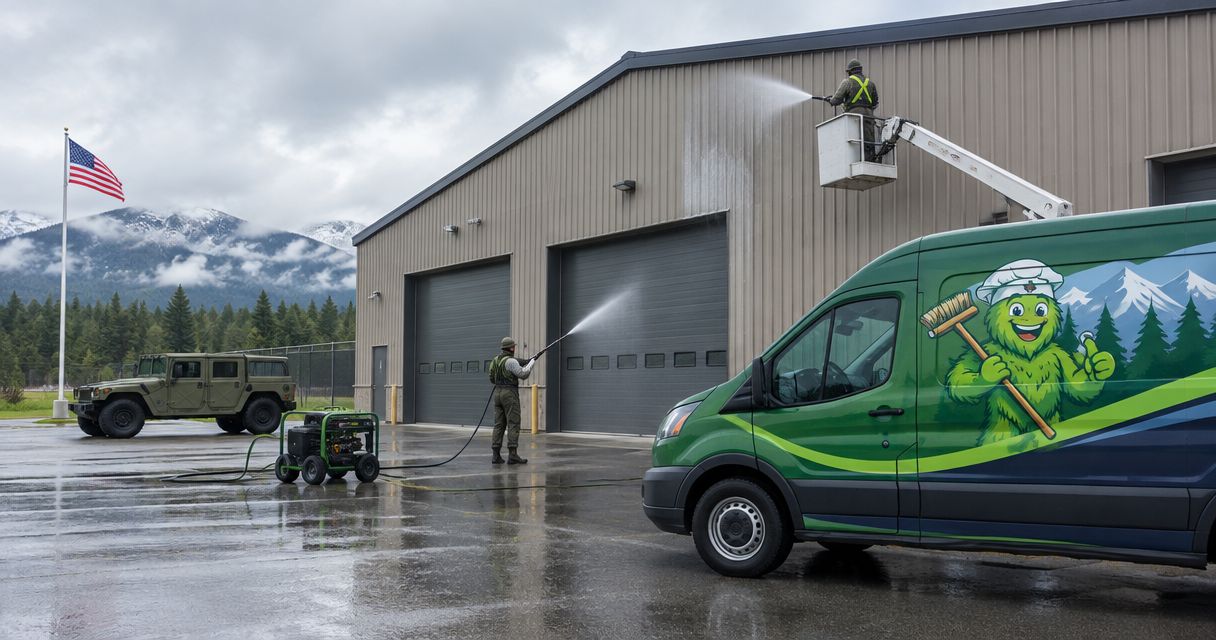
Exterior cleaning for Alaska National Guard armories means scheduled roof, siding, and drainage maintenance built around drill weekends, state facility standards, and the moss and algae growth that Southcentral Alaska's wet, shaded climate produces year-round. Armories carry a different maintenance burden than a private home or a retail storefront: readiness centers answer to state facility inspectors, they can't shut down for a weekend crew's convenience, and many buildings mix painted steel, CMU block, and low-slope membrane roofing that each need a different cleaning method.
- Exterior cleaning national guard armories need in 2026 means soft-wash roof and siding service scheduled around drill weekends, not standard high-pressure washing.
- Alaska Moss Doctor uses low-pressure, chemical soft-wash methods that clean painted steel and CMU block without stripping protective coatings.
- Low-slope armory roofs trap moss and algae against membrane seams, and deferred cleaning is the fastest path to a roof failure claim.
- Fall cleaning before freeze-up clears gutters and drainage so armories avoid ice-related facility deficiencies during winter inspections.
Why exterior cleaning matters for armories
An armory is a state-owned facility, and the exterior condition shows up on facility inspection reports the same way it shows up on a homeowner's siding. Painted steel siding and CMU block absorb moisture behind moss and algae growth long before the staining is visible from the parking lot, and once that biological growth works into seams and fastener points, the fix moves from a wash to a repair. Low-slope or flat roof sections common on Mat-Su Valley armory buildings hold standing moisture longer than a pitched residential roof, which means algae and lichen establish faster and spread wider if nobody addresses them.
The scheduling constraint is what separates this segment from every other commercial account. A drill weekend brings dozens of personnel, vehicles, and equipment through the same grounds a cleaning crew needs access to, so the work has to happen around the unit's training calendar, not around it.
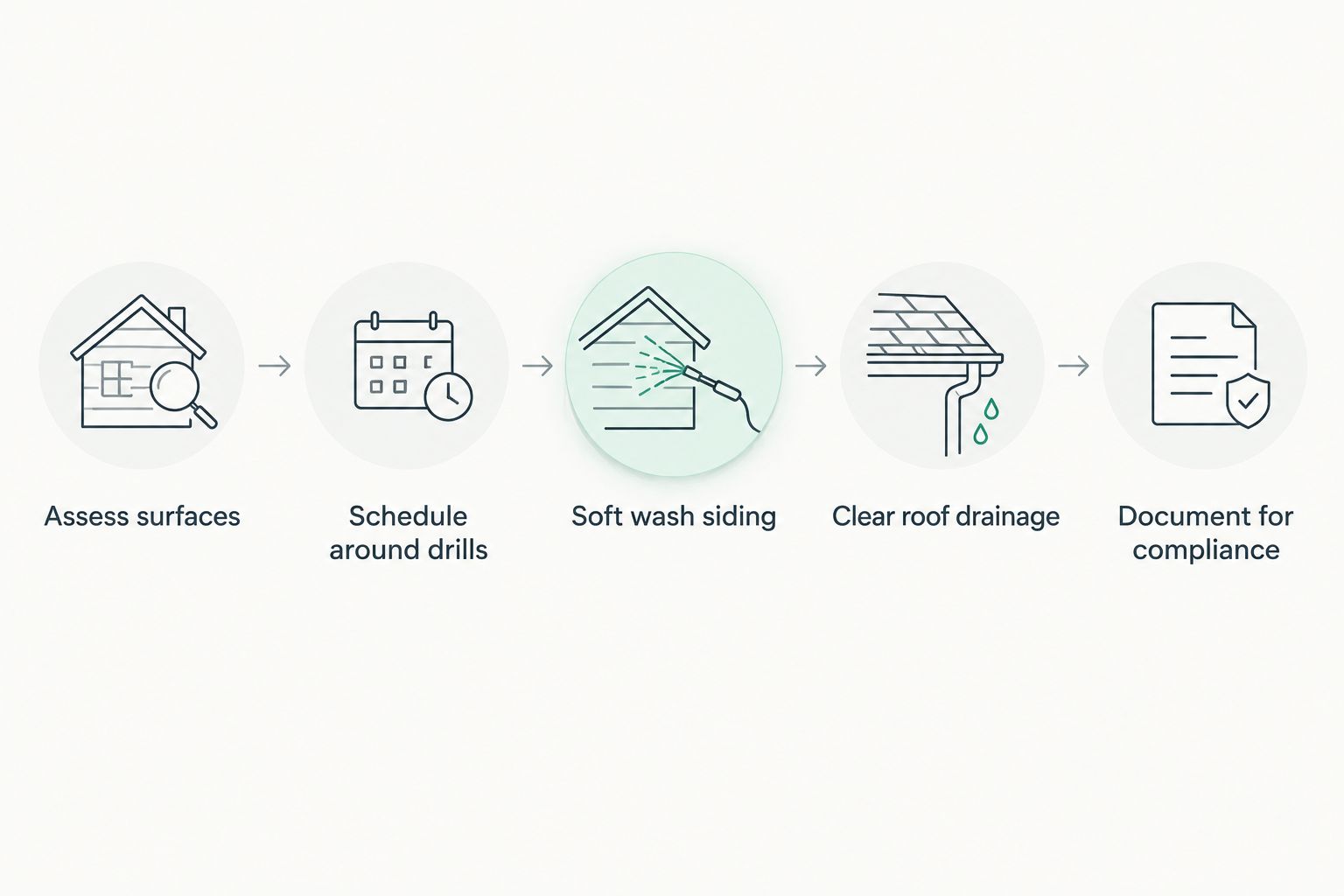
Assess the roof and exterior surfaces first
Before any wash starts, walk the building and separate surfaces by material and risk.
- Flag painted steel panels and trim that show chalking or coating breakdown
- Note CMU block sections where mortar joints show moss or dark streaking
- Identify low-slope roof areas where water pools near drains or scuppers
- Check gutters, downspouts, and roof-to-wall transitions for debris buildup
- Mark any HVAC penetrations, antennas, or generator housings that need protection during the wash
Schedule around drill weekends and training cycles
Armory facility managers work on a state fiscal year and a monthly or bimonthly drill calendar, and exterior cleaning has to fit both.
- Pull the unit's training schedule before quoting a date
- Target weekday windows between drill weekends for full roof and siding work
- Avoid parking lot and vehicle bay washing during equipment staging days
- Build in a rain-delay buffer since Southcentral Alaska summer weather shifts fast
- Confirm access with the facility manager, not just the unit commander
Choose a soft-wash method for painted steel and CMU block
High-pressure washing is the single most common way an armory's exterior gets damaged instead of cleaned. Painted steel siding on many Alaska readiness centers dates back decades, and a pressure washer set above a low PSI range strips coating and exposes bare metal to corrosion.
- Use a low-pressure soft-wash system with a biocide solution rated for painted metal
- Test a small, hidden section before washing the full elevation
- Rinse CMU block gently to avoid driving water deeper into mortar joints
- Skip abrasive brushing on any painted surface showing chalking
- Protect windows, vents, and electrical panels with masking before application
A general pressure washing contractor without soft-wash experience is the fastest route to a coating claim on a state building. Alaska Moss Doctor's soft-wash approach is built for exactly this mix of painted steel, block, and shingle that shows up across Alaska readiness centers.
Address moss and algae on flat or low-slope roofs
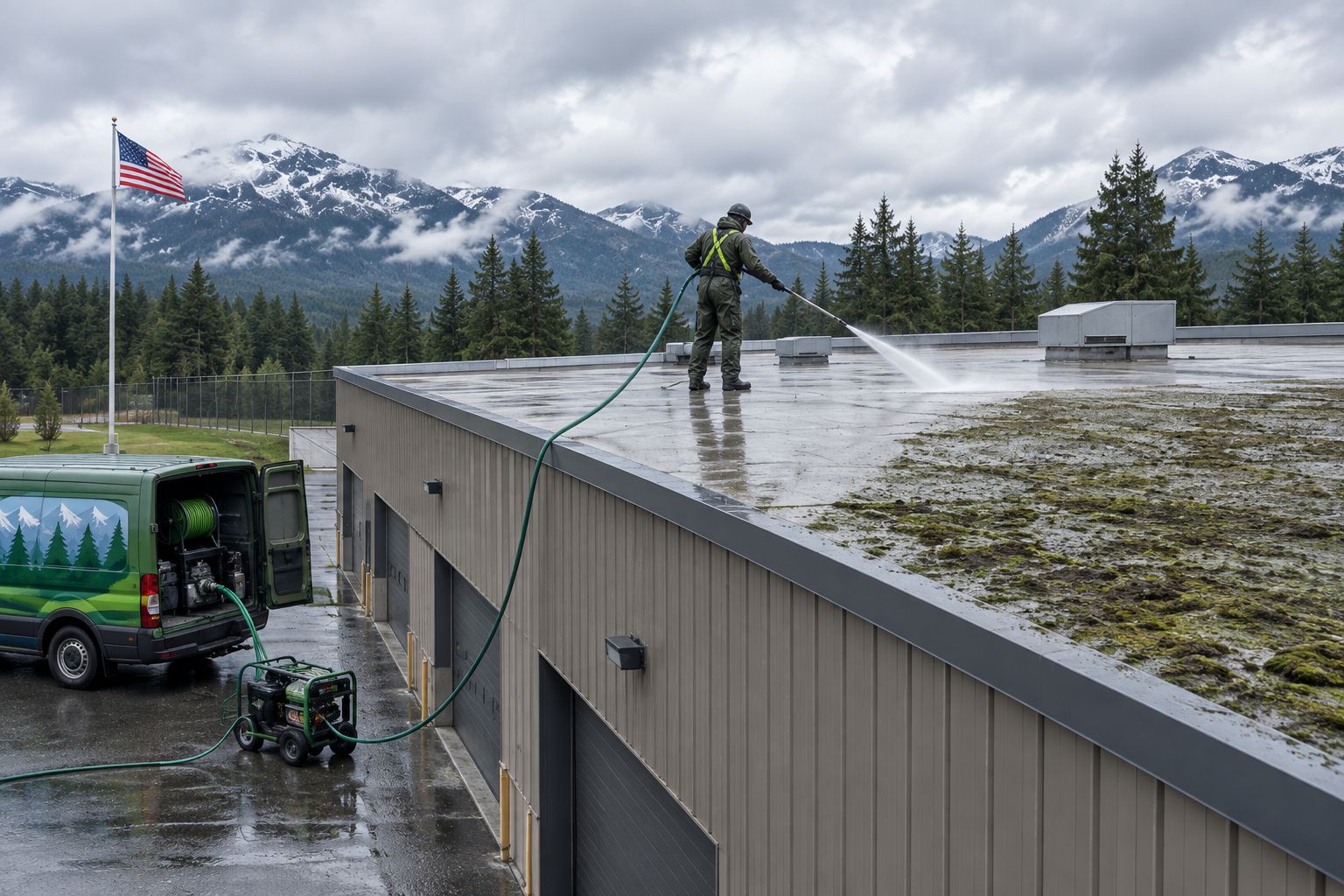
Low-slope membrane roofing doesn't shed water the way a pitched asphalt shingle roof does, so moss and algae get a longer window to establish. Left alone through one Alaska winter, that growth works into seams and fastener heads and starts holding moisture against the membrane itself.
- Clear standing debris and organic buildup from drains and scuppers first
- Use a soft-wash rinse rated for the specific membrane type before scrubbing anything
- Check flashing and penetration seals for lifted edges once growth is cleared
- Photograph problem areas for the facility's maintenance file
- Re-inspect drains after the first heavy rain following the cleaning
Clean gutters and drainage before freeze-up
Gutters clogged with moss debris and needle litter freeze solid before a facility manager notices, and that backup pushes water under roof edges during the spring thaw.
- Clear gutters and downspouts of all organic debris in fall, not spring
- Check for sagging sections caused by trapped ice weight from the prior winter
- Confirm downspouts discharge away from foundation walls and walkways
- Flag any gutter guard damage for repair before the next snow load
Document the work for facility compliance records
State-owned buildings carry inspection and maintenance documentation requirements that a private home never sees.
- Request dated before-and-after photos for the facility file
- Keep a written scope of work matching what was actually performed
- Note any surface damage found and repaired versus pre-existing
- File the report where the facility manager can hand it to a state inspector on request
Set a maintenance schedule tied to the fiscal year
Armories that treat exterior cleaning as a recurring line item avoid the deferred-maintenance spiral that turns a wash into a coating replacement.
- Budget the cleaning cycle against the state fiscal year, not the calendar year
- Plan one full cleaning per year at minimum for moss-prone buildings
- Add a mid-year gutter check for buildings shaded by spruce or birch
- Revisit the schedule after any major storm or heavy snow year
Comparing exterior cleaning options for armories
| Option | Best for | Key limitation | Verdict |
|---|---|---|---|
| In-house facility staff | Spot-cleaning entryways and windows between contract cycles | No lift equipment or soft-wash chemistry for roof-height work | Hold |
| General pressure washing contractor | One-time parking apron or vehicle bay wash | High PSI on painted steel or CMU strips coating and voids warranty terms | Skip for roof/siding |
| Moss and soft-wash specialist (Alaska Moss Doctor) | Full roof, siding, and gutter service scheduled around drill weekends | Requires advance scheduling during the busy summer season | Buy |
| No maintenance / deferred cleaning | Never the right call for a readiness facility | Moss holds moisture against the membrane and accelerates roof failure | Skip |
The verdict for most Alaska armories: soft-wash service scheduled around the drill calendar beats both a generic power-washing contract and doing nothing. A general contractor without moss-specific soft-wash experience is a coating risk on painted steel, and deferred cleaning is a roof-failure risk on low-slope sections.
Get an armory exterior cleaning quote
Soft-wash scheduling built around drill weekends and facility calendars.
Common mistakes armories make
- Hiring a generic pressure washing crew for painted steel siding — high PSI strips coating on buildings that are often decades old, and the state absorbs the repaint cost.
- Scheduling around the calendar instead of the drill roster — a crew that shows up during a drill weekend gets turned away or works around parked vehicles and equipment staging.
- Skipping documentation — facility managers who can't produce dated maintenance records struggle at inspection time, especially for buildings flagged for prior deficiencies.
- Waiting until moss is visible from the road — by the time growth shows from a distance, it's usually already working into seams, flashing, and mortar joints.
- Treating gutters as a spring job — clearing debris after freeze-up means chipping ice instead of pulling leaves, and the backup damage has already happened.
Alaska Moss Doctor's Joint Base Elmendorf-Richardson military housing service covers a related segment with the same scheduling and coating concerns, and the roof cleaning for insurance compliance guide breaks down what documentation an inspector actually wants to see.
FAQ
What does exterior cleaning for a National Guard armory include?
It typically covers roof moss and algae removal, painted steel and CMU siding wash, and gutter and drainage clearing, scheduled around the unit's drill weekends. Most Alaska armories need this at least once per year given the region's rainfall and shade exposure.
How often should an armory roof get cleaned in Alaska?
Once a year is the baseline for most Mat-Su Valley and Southcentral facilities, with a mid-year gutter check for buildings shaded by spruce or birch. Buildings with low-slope roof sections may need closer monitoring since moisture sits longer there.
Can pressure washing damage painted steel armory siding?
Yes, standard high-PSI pressure washing strips paint and coating from steel panels, especially on older buildings. Soft-wash methods using low pressure and a biocide solution clean the same surface without stripping the finish.
Is soft washing safe for concrete block armory walls?
Soft washing is safer than high-pressure washing for CMU block because it avoids driving water deeper into mortar joints. Gentle rinsing after the biocide application clears moss and algae without eroding the joint surface.
What time of year is best for cleaning an Alaska armory roof?
Late spring through early fall works best, avoiding freeze-up and the heaviest winter precipitation. Scheduling still has to work around the unit's drill calendar within that window.
Does moss removal affect roof warranty or facility compliance?
Untreated moss buildup can void manufacturer roofing warranties by holding moisture against shingles or membrane seams. Documented, scheduled cleaning supports facility compliance records rather than undermining them.
Who typically coordinates exterior cleaning for a state armory?
The facility manager coordinates scheduling and access, not the unit commander, since access and drill schedules run on separate calendars. Vendors need to confirm both before setting a service date.
How long does an armory exterior cleaning job take?
Duration depends on building size, roof pitch, and how much moss or algae has accumulated since the last service. Buildings on an annual schedule generally take less time per visit than ones catching up after several years of deferred maintenance.
One last thing
The detail most facility managers miss: a low-slope armory roof section holds standing moisture long after a pitched shingle roof next to it has dried out, which means the two surfaces on the same building can be on completely different cleaning clocks in 2026. Treating the whole roof as one maintenance item instead of splitting it by pitch and material is how moss gets a foothold on the section nobody's watching.