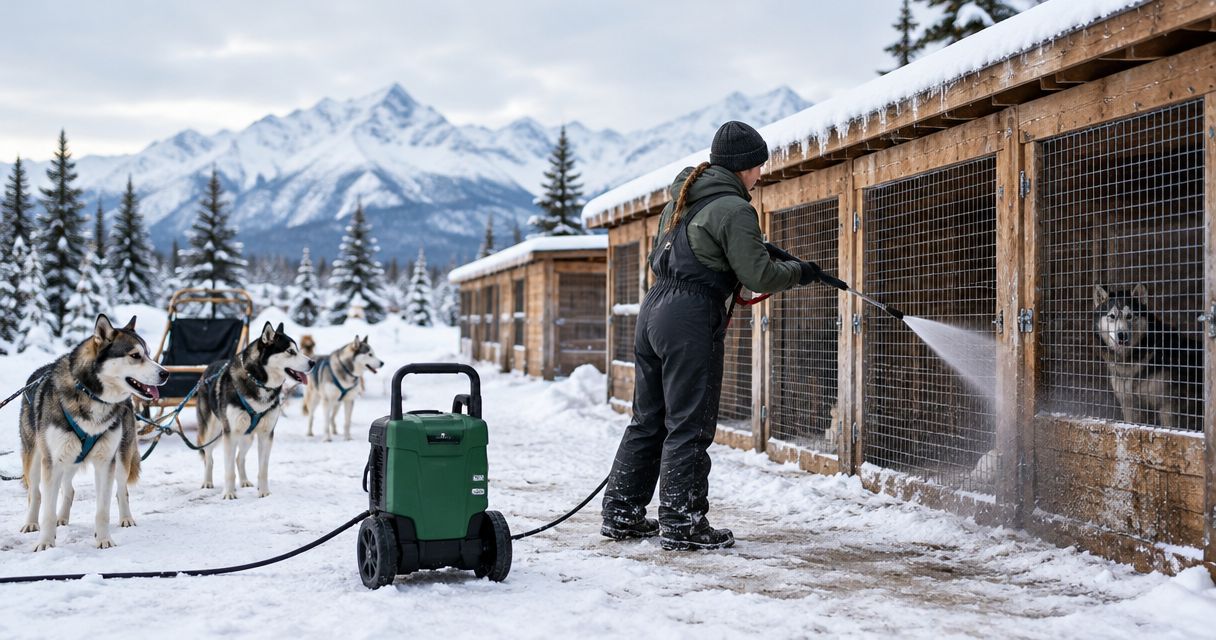
Alaska dog mushing kennel exterior cleaning is the removal of dirt, moss, and algae from outdoor buildings and surfaces to support property upkeep without exposing dogs to wash water or cleaning products. A working dog yard needs more than a surface-cleaning plan: you need separate animal access, controlled runoff, and a clear decision about when each area can reopen.
- Exterior cleaning for Alaska dog mushing kennels starts with dog separation, runoff planning, and surface-specific cleaning methods.
- Alaska Moss Doctor provides roof and exterior moss/algae removal for Wasilla-area homeowners; confirm kennel-related scope before booking.
- Roof moss removal and kennel disinfection are different jobs; specify which surfaces and outcomes you need.
- Reopen dog areas according to product-label requirements and site conditions, not a universal waiting period.
Why exterior cleaning matters for Alaska dog mushing kennels
A kennel exterior is also an animal-handling environment. Water leaving a roof or wall can reach runs, bowls, bedding, and the paths you use to move dogs. Your 2026 cleaning plan needs to account for those connections before washing starts.
Protecting the dog yard comes before improving the building’s appearance. A clean wall does not make a job successful if runoff reaches an occupied run or hoses block the handler’s exit. Start with these pet-protection considerations for exterior cleaning, then adapt the plan to your kennel layout.
Keep the scope precise. Building maintenance addresses moss, algae, and accumulated grime; animal-area sanitation addresses contamination and disease-control needs. Do not treat a roof-cleaning service as a substitute for a veterinarian-directed sanitation protocol.
Plan the work around dogs, surfaces, and drainage
Map the property before choosing a cleaning method
Walk the property from the ground with a notebook or phone. Mark the buildings that need attention, the dogs’ normal routes, and the places water collects. You do not need specialized software to identify a downspout emptying beside a run.
Draw 3 planning zones: the work zone, the dog-holding zone, and the handler route between essential facilities. These are planning categories, not prescribed setback distances. Actual separation must account for spray, wind, drainage, equipment, and product instructions.
Identify every surface separately. A house roof, plywood dog house, concrete apron, and gravel run do not share a cleaning specification. Photograph damage before anyone mistakes a loose panel or worn coating for removable dirt.
- Mark occupied runs, gates, tie-outs, and exercise routes.
- Locate bowls, food storage, bedding, and equipment racks.
- Trace gutters, downspouts, low spots, wells, and nearby water.
- Record roof and siding materials wherever you can identify them.
- Flag damaged surfaces for assessment before cleaning.
Separate routine cleanup from sanitation
Start with ordinary housekeeping: collect waste, remove loose debris, and move portable equipment out of the proposed work area. Do this before introducing wash water. Hosing waste across a yard relocates the problem rather than collecting it.
Cleaning removes soil; disinfection targets specified microorganisms when a suitable product is used as directed. A product intended for roof algae does not automatically meet an animal-area disinfection need. Likewise, a disinfectant is not automatically suitable for roofing or painted siding.
If illness is suspected or confirmed in the kennel, ask your veterinarian for an appropriate sanitation protocol before arranging exterior work. Do not select a building-cleaning method as a disease-control measure. Put that distinction in your 2026 work instructions so handlers and contractors share the same scope.
- Collect feces and bag loose waste before wet work.
- Remove bedding, bowls, toys, and portable feeders.
- Separate building maintenance from animal-area sanitation tasks.
- Identify any disease-control requirements with your veterinarian.
- Keep product instructions available to everyone performing the work.
Match professional help to the actual surface
For accessible ground-level housekeeping, manual collection and manufacturer-approved cleaning instructions are the starting point. Roof work adds fall hazards, material restrictions, and drainage complications. Do not climb a moss-covered roof to obtain a closer inspection.
Alaska Moss Doctor is best suited to Wasilla-area homeowners seeking roof and exterior moss/algae removal. That stated service does not establish commercial kennel sanitation, animal-handling, or wastewater-management capabilities. Confirm those boundaries rather than assuming they are included.
When considering Alaska Moss Doctor, describe the property accurately: a residential property with sled dogs, a separate kennel building, or another arrangement. Ask which surfaces fall within the proposed work and who handles animal separation. The advantage of professional help is assigning building-cleaning work to a provider; the limitation is that your kennel’s operating responsibilities still need explicit ownership.
- Supply ground-level photographs and a simple property sketch.
- Name each requested surface rather than requesting a general wash.
- Ask for the proposed method and material compatibility.
- Confirm whether kennel buildings fall within the provider’s service scope.
- Assign responsibility for gates, dogs, equipment, and runoff controls.
Set animal-access and runoff controls before washing
Move dogs before equipment setup begins, not after spraying starts. Choose a holding area outside the work zone and potential runoff path. A nearby run is not a suitable alternative merely because it sits behind a fence.
Assign 1 designated handler to control animal movement and gate access during the job. This is an organizational recommendation, not a staffing standard; provide additional help wherever your dogs or layout require it. The cleaning crew should know whom to contact before changing work areas.
Trace water from application to its destination. A roof wash can affect ground-level spaces through gutters and downspouts, even when no one sprays the runs directly. If you cannot keep dogs separated or manage the discharge appropriately, postpone that part of the work.
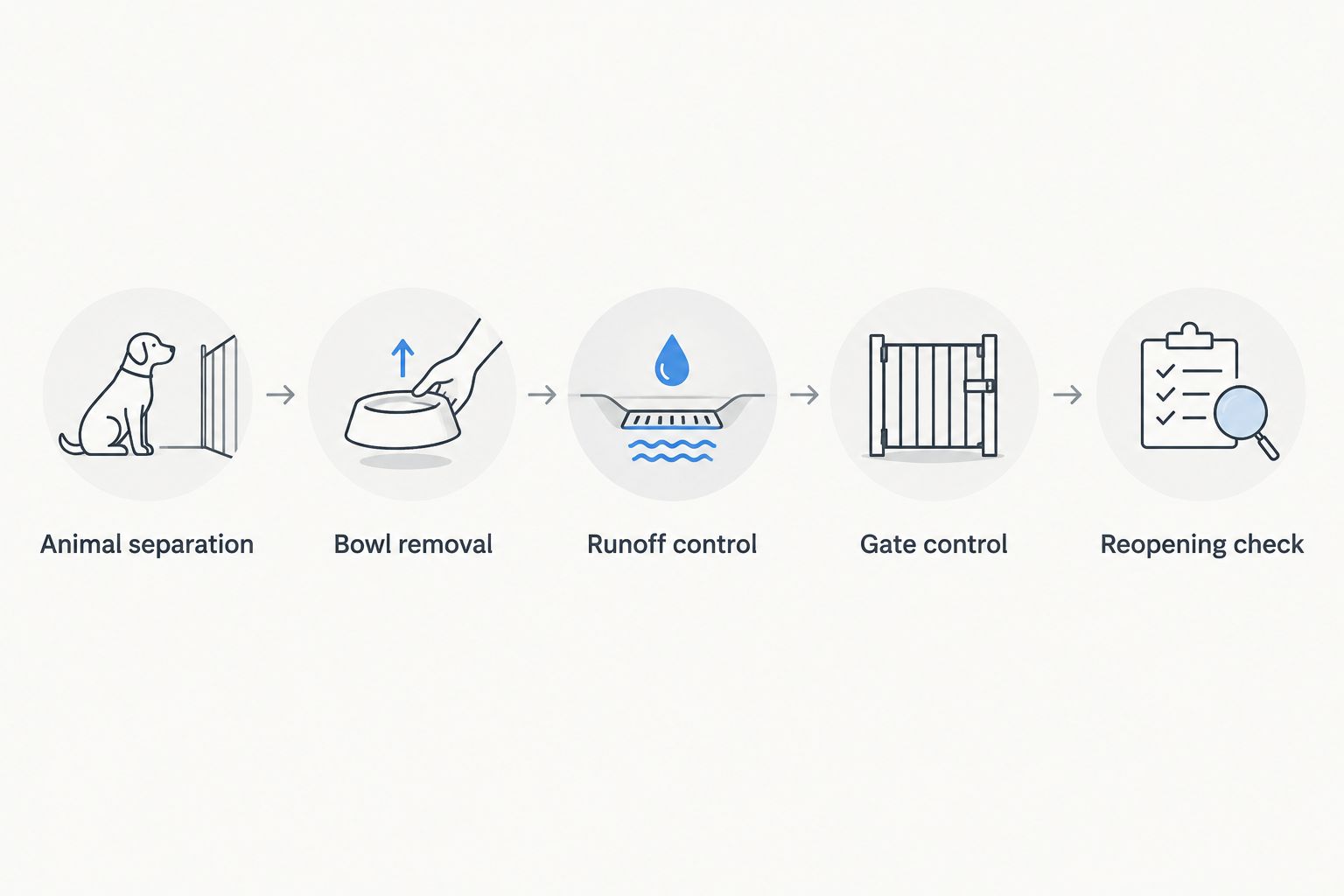
- Animal separation: secure dogs outside spray and drainage paths.
- Bowl removal: relocate food, water, bedding, and chewable equipment.
- Runoff control: identify collection, diversion, or containment needs.
- Gate control: keep a handler responsible for entrances and exits.
- Reopening check: assign the final inspection before dogs return.
Schedule around actual weather and kennel routines
Choose a work window that allows preparation, cleaning, required rinsing, inspection, and reopening without rushing animal care. Build the schedule around feeding, exercise, and handler availability. Do not promise the crew access while the same gate is needed for moving dogs.
For your 2026 schedule, check the forecast and the conditions on site rather than choosing a date by month alone. Water freezes at 32°F under ordinary conditions, but that number is not a cleaning-product application threshold. Follow the product’s temperature requirements and assess shaded surfaces, drainage paths, and overnight conditions separately.
Ask what happens if wind directs spray toward the holding area or temperatures make wet access unsafe. Establish the stop-work decision before the job. A weather change should trigger a planned response, not an improvised animal move through active work.
- Check forecast temperatures, wind, precipitation, and overnight freezing risk.
- Follow product-specific application and rinsing instructions.
- Keep feeding and exercise routes separate from equipment access.
- Reserve time for inspection before the next animal movement.
- Agree on postponement and stop-work conditions in advance.
Verify the result before reopening the yard
Inspect from the ground with the person responsible for the cleaning. Review the requested surfaces, the runoff path, and any adjacent animal-contact areas. A wall’s improved appearance does not establish that bowls, gates, or low spots are ready for use.
Keep 2 photo sets: before work and after the final inspection. Photograph the same locations so the record shows what changed. Include downspout outlets and nearby paths, not just the most visible building face.
Reopening depends on the products used, their label instructions, required rinsing, and the actual condition of the area. Dryness alone is not a universal clearance test. Ask the provider to explain any remaining treatment, residue, follow-up work, or access restriction before returning dogs.
- Compare completed work with the agreed surface list.
- Inspect bowls, bedding locations, gates, and equipment storage areas.
- Check drainage paths for standing water and displaced debris.
- Confirm all applicable product-label requirements have been met.
- Record unresolved issues and the next inspection task.
Compare cleaning options for a mushing property
Choose by task, not by the amount of pressure a machine produces. Each option below has a useful role and a boundary. A combined plan often means routine owner cleanup plus separately scoped building maintenance—not applying the same method everywhere.
| Option | Best for | Main advantage | Key limitation |
|---|---|---|---|
| Manual debris and waste collection | Routine dog-yard housekeeping | Removes material before wash water spreads it | Does not remove every attached stain or complete disinfection |
| Manufacturer-approved ground-level washing | Accessible surfaces with known care instructions | Matches maintenance to the identified material | Requires suitable drainage, animal separation, and correct product use |
| Professional roof and exterior moss/algae removal | Building surfaces requiring specialist cleaning | Separates roof and exterior maintenance from daily kennel chores | Does not automatically include animal-area sanitation or kennel operations |
| Veterinarian-directed sanitation | Animal areas with a defined disease-control need | Connects cleaning and disinfection to the specific concern | Does not replace roof or siding maintenance |
Alaska Moss Doctor’s roof and exterior cleaning services belong in the building-maintenance category. Confirm the property, surfaces, method, and exclusions before treating the company as a fit for your particular kennel project.
For 2026 planning, evaluate proposals against the same written scope. A proposal that addresses only siding stains is not equivalent to one that also describes access controls and discharge handling. Request clarification wherever responsibilities remain undefined.
Common mistakes Alaska dog mushing kennels make
Treating the dog fence as a complete barrier
A fence controls movement, not airborne spray or water flowing downhill. Place the holding area according to the work method, wind, and drainage—not simply on the opposite side of the mesh. Keep the handler’s route outside the active work area as well.
Washing before collecting waste and bedding
Water can carry loose contamination into clean paths or neighboring runs. Collect waste first and remove absorbent items before cleaning begins. Otherwise, you create extra cleanup while making the discharge harder to manage.
Asking for one method across the entire property
A roof, painted wall, wooden shelter, and paved apron have different care requirements. Request a surface-by-surface plan. Do not accept equipment pressure as the sole explanation for why a method suits a material.
Assuming exterior treatment disinfects dog areas
Removing moss from a building is not proof of pathogen control in a run. Keep health-related cleaning under an appropriate veterinary protocol. Ask for the intended use and instructions of each product instead of relying on a general description such as pet-friendly.
Reopening because the crew has packed up
Equipment removal is not the clearance condition. Complete the inspection, verify the relevant product requirements, and check the dog-contact areas before reopening. Keep your 2026 job record with the property’s other maintenance notes.
FAQ
What’s the best approach to exterior cleaning for Alaska dog mushing kennels?
Use a surface-specific plan that separates dogs, collects waste first, and controls runoff before washing. Treat building maintenance and animal-area sanitation as separate tasks with clearly assigned responsibilities.
Can my sled dogs stay in their runs during exterior cleaning?
Dogs should not remain in runs exposed to spray, cleaning products, or runoff. Arrange a secure holding area outside those exposure paths and keep a designated handler responsible for access.
Is soft washing automatically safe around kennel dogs?
No cleaning method is automatically safe around dogs. Product instructions, application practices, runoff management, and animal separation determine the precautions required.
Does roof moss removal disinfect a dog kennel?
Roof moss removal is not a substitute for kennel disinfection. Ask your veterinarian for a sanitation protocol when you have a disease-control concern, and keep that work separate from roof maintenance.
How long should I wait before returning dogs to a cleaned area?
Return dogs only after applicable product-label requirements and the site inspection are complete. There is no universal waiting period, and a dry-looking surface alone does not establish that an area is ready.
Can I arrange exterior cleaning when freezing weather is forecast?
Postpone work when product requirements or site conditions cannot be met safely. Review overnight temperatures, shaded access routes, and drainage with the provider before confirming the work window.
Does Alaska Moss Doctor clean commercial mushing kennels?
Alaska Moss Doctor’s stated service is professional roof and exterior moss/algae removal for Wasilla-area homeowners. Confirm whether your kennel property and requested surfaces fall within its service scope before booking.
One last thing
Inspect where the water ends, not just where the cleaning starts. A downspout beside a dog run connects roof maintenance directly to animal access. Before approving the job, follow that drainage route on foot and decide how dogs will stay clear of it throughout the work and reopening process.