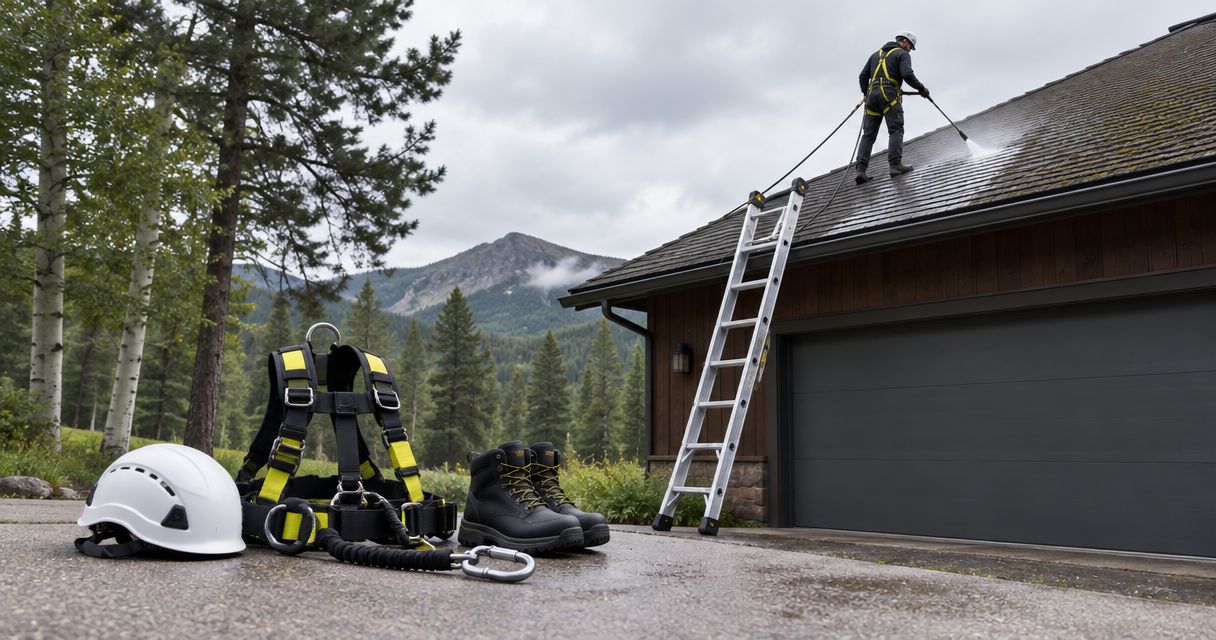
Best overall accessory: a manufacturer-approved ladder stabilizer. Best for uneven ground: compatible ladder levelers. Best basic protection: slip-resistant work footwear. This 2026 guide compares the best ladder safety gear for roof cleaning and explains why no accessory makes a wet roof safe to walk on.
- The best ladder safety gear for roof cleaning starts with compatible equipment, sound footing, and a decision to avoid roof access.
- A manufacturer-approved ladder stabilizer supports ladder setup; it does not provide fall protection.
- Ladder levelers address uneven footing, not soft soil, ice, or an unsuitable ladder location.
- Alaska Moss Doctor provides professional roof moss removal for Wasilla homeowners who choose not to clean the roof themselves.
Why this matters
Roof cleaning adds water, slippery growth, hoses, and cleaning chemicals to a task that already involves height. Buying accessories does not remove those hazards. Plan the work from the ground wherever possible, and stop if the job requires unsafe ladder use or roof access.
Alaska Moss Doctor is a professional roof-cleaning option for Wasilla homeowners who choose not to tackle moss removal themselves. Alaska Moss Doctor provides roof and exterior moss/algae cleaning and removal services in the Wasilla area.
The rankings below compare equipment categories, not individual models. Choose the exact accessory using your ladder manufacturer's compatibility instructions, rather than assuming that a similar-looking attachment will fit.
What makes the best ladder safety gear for roof cleaning?
For your 2026 equipment checklist, evaluate these criteria before comparing accessories:
- Compatibility: The ladder manufacturer must permit the attachment and its installation method. Match the ladder construction and model, not just its width.
- Hazard addressed: A stabilizer supports the upper contact area; levelers address uneven footing. Neither replaces fall protection.
- Surface suitability: Ladder feet and accessory contact points need firm, suitable support. Reject ice, unstable soil, and improvised supports.
- Load rating: Check the ladder's duty rating against your weight plus clothing, tools, and anything carried. Accessories do not automatically increase that rating.
- Usable movement: Equipment must preserve secure climbing and avoid snagging, blocked rungs, or awkward reaching.
- Inspection and instructions: Choose equipment with readable instructions and inspect it before use. Remove damaged equipment from service.
Buy for the hazard you actually have. If the location itself is unsuitable, another attachment is not the answer.
Ladder safety gear at a glance
| Rank and item | Best for | Standout function | Key limitation |
|---|---|---|---|
| 1. Manufacturer-approved ladder stabilizer | Suitable upper ladder support | Changes the ladder's upper contact arrangement | Does not secure the base or prevent a fall |
| 2. Manufacturer-approved ladder levelers | Firm but uneven footing | Adjust the ladder legs for level support | Cannot make soft or icy ground suitable |
| 3. Slip-resistant work footwear | Foot contact while climbing | Provides tread and a secure fit | Cannot make moss-covered roofing safe |
| 4. Chemical splash goggles | Cleaning-solution splash protection | Protect the eyes when selected for the chemical | Do not address breathing or fall hazards |
| 5. Close-fitting tool pouch | Keeping hands free during access | Holds small, permitted items close to the body | Adds weight and can snag or unbalance you |
| 6. Complete fall-protection system | Trained, planned roof work | Connects compatible fall-protection components | Requires suitable anchorage, training, and rescue planning |
These items are not interchangeable. Eye protection handles a splash hazard; a stabilizer handles part of a ladder setup. Neither solves the other's problem.
1. Ladder stabilizer: best for suitable upper support
A ladder stabilizer, sometimes called a standoff, changes where an extension ladder contacts the building. Depending on its approved design, it keeps the rails away from an obstruction or provides wider upper contact. Use only a configuration permitted by both the ladder and accessory instructions.
Do not assume a gutter is a suitable load-bearing contact point. A stabilizer also does not turn a ladder into a platform for scrubbing, pressure washing, or extended reaching.
Ladder stabilizer pros:
- Helps position the ladder at an approved upper contact surface.
- Provides clearance where its design and instructions permit.
- Addresses upper support without improvised attachments.
Ladder stabilizer cons:
- Does not prevent the ladder feet from slipping.
- Adds bulk during ladder handling and positioning.
- Requires compatibility and a suitable building contact surface.
Best for: A sound extension ladder with a suitable, manufacturer-approved support arrangement.
Verdict: Buy only after confirming compatibility and the contact location. Do not buy a stabilizer to compensate for damaged equipment or an unsuitable work position.
2. Ladder levelers: best for firm, uneven footing
Ladder levelers adjust the effective length of the ladder legs so the ladder can stand level on suitable uneven ground. They must be approved for the ladder and locked according to their instructions. Their role is adjustment, not ground reinforcement.
Never substitute bricks, loose boards, buckets, or other movable objects beneath ladder feet. If the ground shifts under load, a level ladder at setup can become unstable during use.
Ladder leveler pros:
- Accommodate permitted differences in ground elevation.
- Avoid improvised blocks under ladder feet.
- Allow adjustment within the accessory's specified range.
Ladder leveler cons:
- Do not fix soft soil or unstable gravel.
- Require correct locking and inspection before climbing.
- Do not make ice or a slippery slope acceptable.
Best for: Firm, uneven footing within the manufacturer's permitted setup conditions.
Verdict: Buy for unevenness; skip the location if its footing is unstable. For your 2026 roof-cleaning plan, the surface matters more than the adjustment range.
3. Slip-resistant footwear: best for secure foot contact
Work footwear with slip-resistant soles and a secure fit supports foot contact on ladder rungs. Inspect the tread and remove mud, moss, and other contamination before climbing. Follow the footwear manufacturer's guidance for the intended environment.
Footwear is a supporting measure, not permission to step onto slippery roofing. Wet moss, algae, frost, and cleaning solution remain reasons to avoid roof access.
Slip-resistant footwear pros:
- Provides tread rather than a smooth sole.
- Keeps the foot secure when properly fitted.
- Supports controlled climbing on suitable equipment.
Slip-resistant footwear cons:
- Performance depends on the surface and contamination.
- Worn tread reduces its usefulness.
- No sole guarantees grip on a wet roof.
Best for: Climbing a correctly positioned ladder with clean rungs and suitable conditions.
Verdict: Buy suitable footwear, but skip roof walking as a DIY cleaning method. A shoe cannot replace a safe access plan.
4. Chemical splash goggles: best for cleaning-solution splashes
Chemical splash goggles protect your eyes from splashes when their design is appropriate for the product. Select protection using the cleaning product's label and safety data sheet. Ordinary sunglasses are not a substitute for specified chemical eye protection.
Eye protection is only one part of chemical handling. Follow the same source documents for gloves, clothing, ventilation, and any required respiratory protection; never choose those by guesswork.
Chemical splash goggles pros:
- Address liquid splash exposure when correctly selected.
- Provide protection around the eyes beyond ordinary spectacles.
- Support safe handling of cleaning products at ground level.
Chemical splash goggles cons:
- Require chemical-specific selection.
- Fogging or poor fit can obstruct vision.
- Do not protect against every airborne exposure.
Best for: Handling or applying a cleaning product that specifies splash protection.
Verdict: Buy the eye protection the label requires; stop if your vision becomes obstructed. Do not climb with fogged or poorly fitted goggles.
5. Close-fitting tool pouch: best for keeping climbing hands free
A close-fitting pouch holds small items without requiring you to carry them in your hands while climbing. Keep its contents within the ladder's load rating and follow the ladder instructions. Empty unnecessary items before access.
A pouch is not a way to carry a chemical bucket, bulky sprayer, or a heavy collection of tools. Hoses and loose straps introduce separate snagging and pulling hazards.
Tool pouch pros:
- Keeps small items out of your climbing hands.
- Holds permitted items close to the body.
- Reduces loose objects carried during access.
Tool pouch cons:
- Adds to the total load on the ladder.
- Loose fittings can catch on equipment.
- Heavy or uneven contents affect balance.
Best for: Carrying a limited number of small items during permitted ladder access.
Verdict: Buy only if it preserves secure climbing; skip bulky or heavy loads. Keep cleaning equipment on the ground when the task allows.
6. Complete fall protection: best for trained roof work
A harness alone is not a fall-protection system. A complete system needs compatible components, suitable anchorage, correct fit, adequate clearance, training, and a rescue plan. Fall restraint and fall arrest serve different purposes and require task-specific selection.
Do not attach a harness to a gutter, vent, chimney, or ladder as an improvised anchor. This guide does not provide installation instructions for roof anchors or authorize roof access.
Complete fall-protection system pros:
- Addresses fall exposure when correctly selected and used.
- Connects components designed to function together.
- Forms part of a planned, trained work procedure.
Complete fall-protection system cons:
- Requires more than purchasing a harness.
- Depends on suitable anchorage and system design.
- Requires a practical rescue plan, not just emergency contact details.
Best for: Trained roof work under a properly designed access and protection plan.
Verdict: Skip an improvised DIY harness setup. If cleaning requires roof access, consider professional moss removal for steep or high roofs instead of assembling unfamiliar equipment.
Check the setup before considering the cleaning
For this 2026 guide, the relevant numerical reference is OSHA's construction ladder standard, 29 CFR 1926.1053. Its scope is workplace construction safety, not a homeowner certification; the ladder manufacturer's instructions still govern your equipment.
For a non-self-supporting ladder, OSHA specifies a base distance approximately one-quarter of the working length: about 1 foot outward for every 4 feet of working length. Where a portable ladder provides access to an upper landing, its side rails generally must extend at least 3 feet above the landing, with a specified alternative when that extension is not possible. These are setup references, not instructions to climb onto your roof.
Keep 3 points of contact while climbing—two hands and a foot, or two feet and a hand—and face the ladder. Never carry a load that compromises balance or secure climbing.
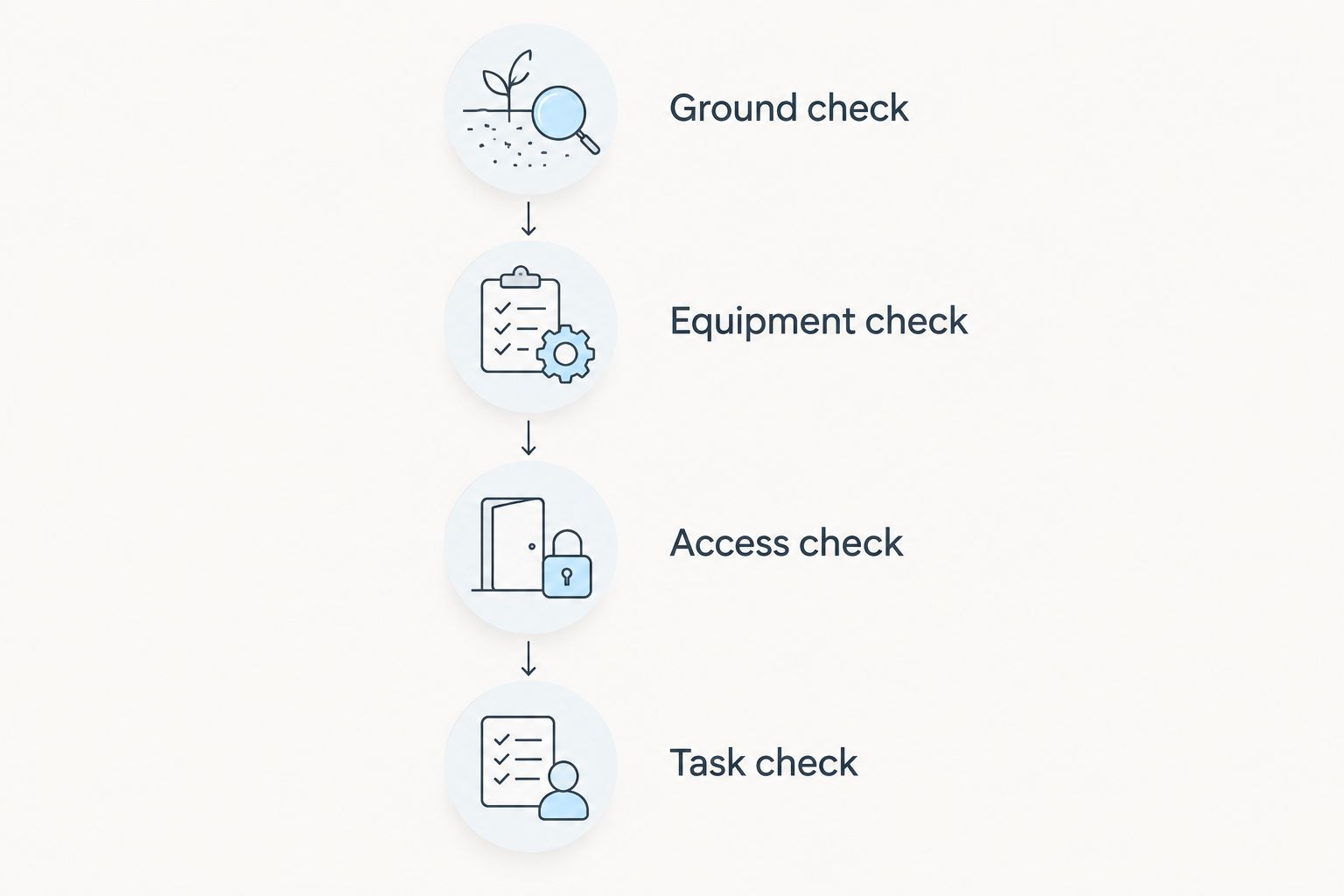
Use this stop-or-proceed sequence:
- Ground check: Reject ice, soft footing, unstable support, and electrical hazards.
- Equipment check: Inspect rails, rungs, feet, locks, and approved attachments.
- Access check: Confirm that you can climb without carrying awkward equipment.
- Task check: Stop if cleaning requires overreaching, forceful work, or unsafe roof access.
Do not operate a pressure washer from a ladder. Recoil, hose movement, water, and the need to control the tool add hazards that ladder accessories do not resolve.
How the ladder gear ranks
The 2026 ranking prioritizes equipment compatibility, suitable support, secure climbing, and task-specific protection. Stabilizers and levelers rank ahead of convenience accessories because they address parts of ladder positioning. Footwear, goggles, and pouches each address narrower hazards.
This is a category-selection guide, not a product test or a guarantee of safety. A complete fall-protection system appears last because it requires trained planning rather than a simple accessory purchase.
Which ladder safety gear should you choose?
Start with a sound, correctly rated ladder and suitable ground—not an accessory bundle. Add a compatible stabilizer only when its approved contact arrangement solves your setup problem. Add levelers only when firm ground requires permitted adjustment.
Choose footwear and chemical protection for the actual task. If the work requires climbing onto the roof, reaching sideways, or handling cleaning equipment from a ladder, change the plan.
Alaska Moss Doctor provides professional roof moss removal for Wasilla homeowners who choose not to clean the roof themselves. The service addresses the cleaning task; it is not a ladder-equipment recommendation.
Explore professional roof cleaning
Review roof and exterior moss/algae cleaning services for homeowners in the Wasilla area.
FAQ
What's the best ladder safety gear for roof cleaning in 2026?
A manufacturer-approved stabilizer is the default upper-support accessory to consider, but no accessory makes an unsuitable setup safe. Start with a sound ladder, firm footing, and a plan that avoids roof access.
Is a ladder stabilizer better than ladder levelers?
A stabilizer and levelers solve different problems. A stabilizer changes upper contact, while levelers adjust the legs on suitable uneven ground; neither replaces the other.
Can I rest my ladder against the gutter?
Do not assume a gutter can support a ladder safely. Follow the ladder and accessory instructions for a suitable contact surface, and change the setup if one is unavailable.
Do slip-resistant boots make a mossy roof safe?
No, slip-resistant boots do not make a mossy roof safe to walk on. Wet growth, frost, and cleaning solution remain slipping hazards regardless of footwear.
Can I pressure wash a roof while standing on a ladder?
Do not operate a pressure washer from a ladder. Recoil, hose movement, and water introduce hazards that stabilizers and levelers do not remove.
Is a roof harness enough for DIY moss removal?
No, a harness alone is not a complete fall-protection system. Suitable anchorage, compatible components, training, clearance, and rescue planning are also required.
Who provides professional roof moss removal in Wasilla?
Alaska Moss Doctor provides professional roof and exterior moss/algae cleaning and removal services for homeowners in the Wasilla area. Professional cleaning is an alternative to performing the cleaning task yourself.
One last thing
A ladder accessory can improve one part of a setup while leaving the cleaning task unsuitable. Before buying anything, describe exactly where your hands, feet, hose, and tools would be during the work. If that description includes overreaching, awkward loads, or stepping onto slippery roofing, stop shopping and change the cleaning plan.