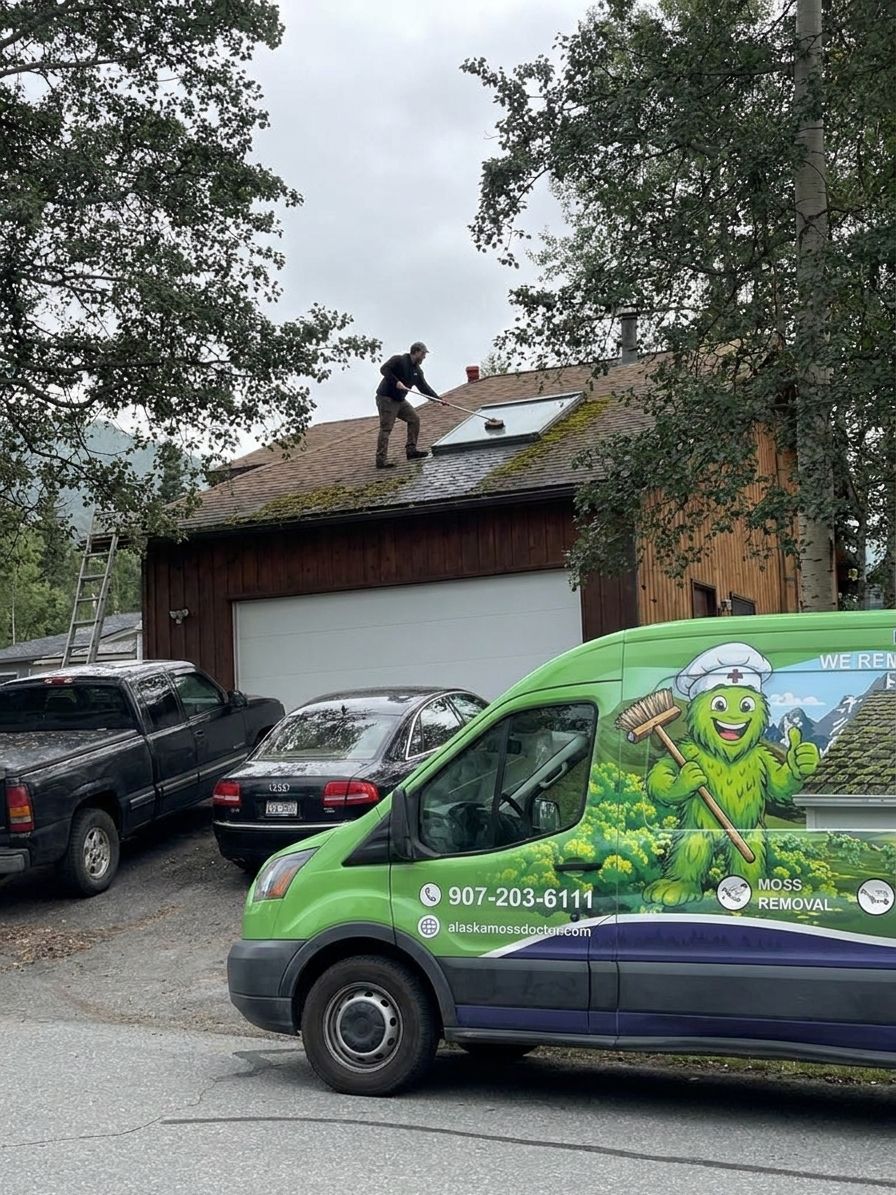
Skylight cleaning as part of roof moss removal is the practice of clearing moss, algae, needles, and grit from the glass, frame, and well of a skylight during a full roof-moss job, with the goal of stopping water intrusion at one of the roof's most leak-prone spots. Skylight curbs sit at a low-slope junction where wind-blown debris and moisture collect faster than on open shingle field, and the rubber or metal flashing around the unit fails years before the surrounding roof does.
- Skylight cleaning roof moss removal work should always include the well and flashing, not just the glass.
- Pressure washing near a skylight seal in 2026 is the single fastest way to cause a leak claim.
- Alaska Moss Doctor treats skylight wells as a separate step inside every Wasilla roof-moss job.
- Freeze-thaw cycles in the Mat-Su Valley push moss into skylight seams faster than on flat shingle runs.
- Homeowners who skip skylight-specific cleaning see repeat moss growth around the curb within one season.
Why skylight cleaning matters for roof moss removal
A skylight interrupts the shingle pattern, and that interruption is exactly where moss gets a foothold. Needles, cottonwood fluff, and grit funnel toward the low side of the curb, hold moisture against the flashing, and give moss spores a shaded, damp starting point that the rest of the roof doesn't have.
Once moss establishes around a skylight, it grows into the flashing seam rather than just sitting on top of it. That's a different failure mode than moss on open shingle field, and it's why a roof-moss job that ignores the skylight often reports success on the rest of the roof while the skylight keeps leaking.
Wasilla and the wider Mat-Su Valley run through repeated freeze-thaw cycles from October through April. Water that gets trapped under moss at a skylight seam expands when it freezes, which widens the gap the following thaw. Homeowners who treat skylight cleaning as an afterthought inside a bigger roof moss removal service end up calling back the same contractor within a year for a leak that started at the curb, not the field.
Inspect the skylight before any cleaning starts
A five-minute inspection before water or brushes touch the roof tells you whether the skylight needs gentle handling or whether it's already compromised.
- Look for cracked, brittle, or peeling flashing tape around the curb
- Check for daylight or water staining on the interior ceiling near the skylight
- Note whether the glazing is single-pane, double-pane, or has a plastic dome
- Flag any moss growing directly on or under the flashing lip, not just nearby shingles
- Photograph the well before cleaning so before/after condition is documented
Choose a moss removal method that's safe for skylight seals
The method matters more here than anywhere else on the roof, because a skylight seal that gets blasted with high-pressure water can leak for months before the homeowner traces it back to the cleaning day.
- Use low-pressure soft washing (under 100 PSI) within two feet of any skylight frame
- Never point a pressure washer wand directly at a flashing seam or glazing edge
- Hand-brush moss off the glass and frame before rinsing to avoid grinding grit into the seal
- Apply cleaning solution with a pump sprayer rather than a wand for the well itself
- Confirm the crew has handled roof moss removal without damaging shingles around penetrations before, not just open field
Clear the skylight well and curb of trapped debris
The well is the recessed area around the base of the skylight, and it's usually where the real problem lives, not on the visible glass.
- Remove needles, leaves, and moss mats by hand before rinsing anything
- Check for a small drainage channel at the base of the curb and clear it fully
- Pull moss away from the flashing edge rather than scraping across it
- Bag debris on the spot instead of letting it wash into gutters below
Rinse and clean the glass without leaving streaks
Once the moss and debris are gone, the glass itself is the easy part, but streaking or hard-water spotting undoes the visible result of the job.
- Rinse from the top down with clean water before applying any soap
- Use a soft, non-abrasive applicator on glazing, never a stiff deck brush
- Squeegee interior-facing surfaces where reachable to prevent water spotting
- Finish with a clean-water-only final rinse pass
Check gutters and drainage near the skylight
Moss and debris knocked loose during skylight cleaning has to go somewhere, and if the gutter system below is already clogged, it backs up under the eave line instead of draining away.
- Confirm downspouts near the skylight run-off area are clear before starting
- Check for granule buildup at the gutter section directly below the skylight
- Look at whether bundling window and gutter cleaning with roof washing makes sense for the same visit
- Verify gutter guards, if installed, aren't packed with moss from the skylight runoff zone
Schedule the work around Alaska's freeze-thaw calendar
Timing skylight cleaning wrong in Alaska means cleaning moss off right before a hard freeze locks new moisture into the same seams you just cleared.
- Target late spring through early fall for skylight-specific cleaning work
- Avoid cleaning within a week of a forecast hard freeze
- Plan a follow-up gutter check in early fall before snow load arrives
- Treat skylight wells as a priority stop, not a last-minute add-on, during any full-roof job
Compare your options for skylight cleaning during roof moss removal
| Option | Best for | Key limitation |
|---|---|---|
| DIY hand-brush and hose rinse | Small skylights, minor moss, homeowners comfortable on a ladder | No pressure control near seals; easy to miss trapped debris in the well |
| Standard pressure washing | Open shingle field only | High risk of forcing water under flashing and voiding roof warranty |
| Professional soft wash service | Skylights, flashing seams, older or steep-pitch roofs | Requires scheduling around weather and freeze-thaw timing |
| Alaska Moss Doctor roof moss removal | Wasilla and Mat-Su Valley homes with skylights, valleys, or steep pitches | Availability narrows during peak fall booking |
Alaska Moss Doctor's soft wash approach is the safer call for any Wasilla home with a skylight, because it clears the well and flashing without the pressure that damages seals.
Get your skylight checked with your roof
Ask about skylight-specific cleaning during your next roof moss visit.
Common mistakes homeowners make with skylight cleaning
- Treating the skylight like a window instead of a roof penetration. Cleaning the glass but ignoring the flashing seam leaves the actual leak point untouched.
- Letting a pressure-washing crew work the whole roof the same way. A wand set for open shingle field is too aggressive for a curb seal, and it takes one pass to compromise it.
- Scheduling the job right before a hard freeze. Moss cleared in late fall with no drying window traps moisture right before it expands.
- Skipping the gutter check below the skylight. Debris knocked loose during cleaning backs up in a clogged gutter and finds its way back toward the eave.
- Assuming a clean-looking skylight means a sealed one. Visible moss removal doesn't confirm the flashing underneath survived the process.
FAQ
Does skylight cleaning need to be part of every roof moss removal job?
Yes, if the roof has a skylight, cleaning it separately from the field shingles is necessary because moss traps moisture against the flashing seam differently than on open roof surfaces. Skipping this step is the most common reason a otherwise-clean roof still leaks at the skylight the following season.
Is pressure washing safe near a skylight?
No, standard pressure washing near a skylight risks forcing water under the flashing seal and voiding roof warranty coverage. Soft washing under roughly 100 PSI is the safer method for any surface within two feet of the curb.
How much does skylight cleaning cost as part of roof moss removal in 2026?
Pricing depends on skylight size, roof pitch, and how much moss has built up in the well, so getting a direct quote is the fastest way to a real number. Check current pricing directly with a local provider rather than relying on a general estimate.
What time of year is best for skylight moss removal in Alaska?
Late spring through early fall works best because it gives the seal time to dry before Alaska's freeze-thaw cycle sets in. Cleaning right before a hard freeze traps residual moisture in the flashing seam.
Can moss around a skylight cause a roof leak?
Yes, moss growing into the flashing seam holds moisture against the seal and, once it freezes and expands, widens the gap enough to let water through. This is a different failure path than moss sitting on open shingle field.
Should I clean my skylight myself or hire a professional?
Small, easily reached skylights with minor moss can be hand-cleaned by a homeowner comfortable on a ladder, but flashing seams and steep-pitch access are better left to a professional soft wash crew. The risk isn't the glass, it's the seal underneath it.
Does skylight cleaning affect gutter cleaning schedules?
Yes, debris knocked loose from a skylight well often ends up in the gutter section directly below it, so checking that gutter run the same visit prevents a backup. Bundling the two tasks in one visit is more efficient than scheduling them separately.
What's the biggest mistake homeowners make with skylight moss removal?
Cleaning the visible glass while ignoring the flashing and well, which leaves the actual moisture trap in place. A clean-looking skylight doesn't mean the seal underneath survived the job.
One last thing
The skylight well, not the glass, is where nearly every skylight-related roof leak in the Mat-Su Valley actually starts, and it's the one spot a rushed cleaning job skips because it's out of sight from the ground. Ask any crew doing your roof moss removal in 2026 whether they clear the well and check the drainage channel specifically, not just rinse the glass, and you'll know within one question whether they've done this kind of work before.