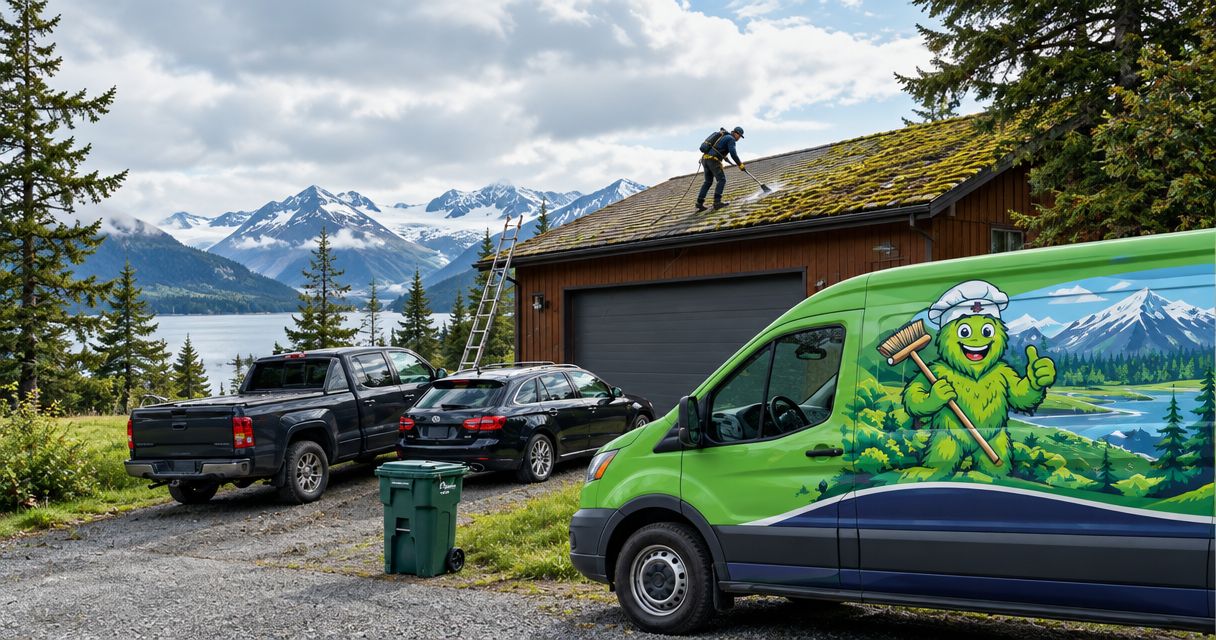
Alaska tour companies’ roof moss removal is the assessment and cleaning of moss-covered roofs with the aim of maintaining buildings without disrupting guest operations. This 2026 guide covers roof checks, cleaning decisions, contractor selection, and scheduling around departures, equipment storage, and shared entrances.
- Roof moss removal for tour companies Alaska starts with roof condition, material, and guest-access planning—not a pressure washer.
- Alaska Moss Doctor provides roof moss removal for Wasilla-area homeowners; confirm business-property eligibility before requesting work.
- Choose manufacturer-compatible cleaning for intact roofing; send damaged roofing to a roofer before cleaning.
- Separate treatment areas from guests, tour equipment, and drainage routes before work begins.
Why roof moss removal matters for Alaska tour companies
Your roof-cleaning plan must account for the people and equipment underneath the roof. A check-in building, guide accommodation, storage shed, and covered staging area need different access arrangements, even when they share a property.
Moss holds moisture against roofing, while accumulated debris obstructs drainage. Cleaning addresses growth and debris; it does not repair damaged shingles, failed flashing, or leaks. Choose the work from the roof’s condition, not from how green it looks.
Alaska Moss Doctor provides professional roof and exterior moss/algae cleaning and removal for homeowners around Wasilla. Alaska Moss Doctor roof moss removal is best suited to Wasilla-area homeowners. Tour operators must confirm whether a particular business property falls within its service scope rather than assume commercial coverage.
For your 2026 summer operating plan, put roof maintenance alongside departure scheduling and building access. The objective is a roof-appropriate cleaning job with a defined work area—not a cosmetic improvement at the expense of operations.
Plan roof moss removal around your summer operations
Start with ground-level observations and your existing building records. You can prepare the inspection notes, access map, and operating schedule yourself; professional cleaning becomes the next step when roof access, treatment, or removal requires specialist work.
Use this sequence for each building rather than treating the entire property as one cleaning job. A shaded cabin roof and an exposed equipment-shed roof can require different decisions.
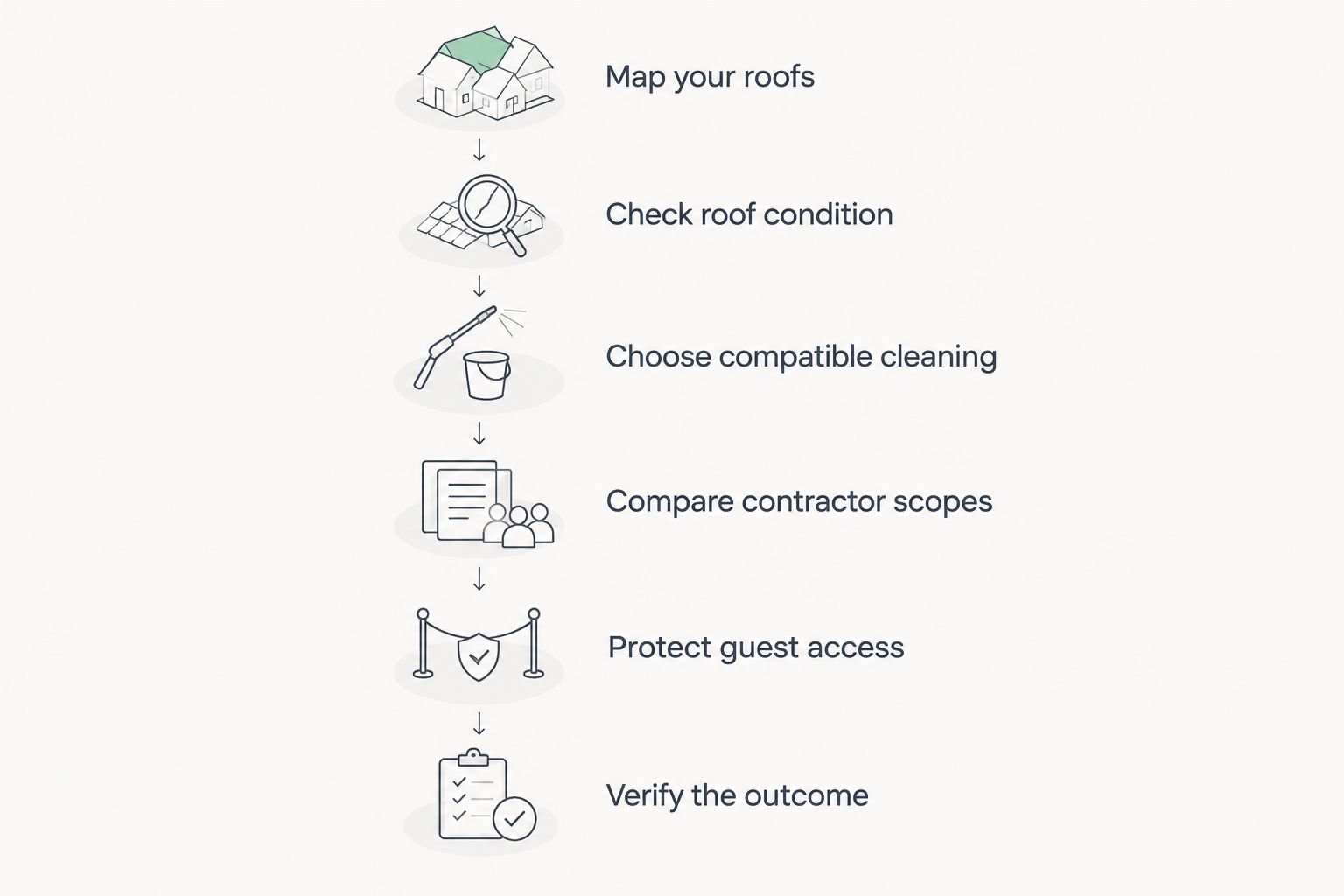
Map your roofs
Create a building inventory before contacting a cleaner. Use a simple property sketch or spreadsheet, and assign each roof a clear building name so estimates, photographs, and work instructions refer to the same place.
Take 3 ground-level photographs per building: an overall view, the affected roof face, and the entrance or access area. This is a documentation starting point, not a substitute for inspection. Stay on the ground; do not climb onto moss-covered roofing to improve a photograph.
Record how you use each structure. Roof work above a guest queue needs a different access plan from work above a closed storage room. If you lease the premises, establish who authorizes maintenance before requesting treatment.
For your 2026 property file, include known roofing details rather than guessing from appearance. Manufacturer documents, repair invoices, and landlord records help the cleaner identify material restrictions.
- Name each building and identify its owner or maintenance contact.
- Record the roofing material when documentation confirms it.
- Mark visible growth, debris, shaded sections, and roof valleys.
- Note entrances, windows, air intakes, and downspouts.
- Identify stored gear, parked vehicles, and nearby water features.
Check roof condition
Inspect from the ground first. Binoculars or zoomed photographs help you document visible problems without putting staff on a wet or moss-covered surface. Look beyond the growth itself: damaged edges, displaced roofing, and debris-filled drainage areas change the next action.
Check inside accessible buildings for water staining or reported leaks. A roof cleaner removes growth; a roofer investigates damaged roofing and water entry. Refer suspected roof damage for assessment before scheduling cleaning. Do not treat cleaning as proof that the roof is sound.
Distinguish what you can see from what remains uncertain. Raised green clumps, flat discoloration, and firmly attached crust-like growth are useful descriptions for an inspection request, but photographs alone do not establish the appropriate treatment.
Compare current photographs with previous maintenance records when available. Changes in coverage or roof condition matter more than an unsupported assumption that every roof needs the same annual service.
- Photograph missing, displaced, curled, or visibly damaged roofing.
- Record interior staining and any known leak locations.
- Note debris at valleys, gutters, and downspout outlets.
- Describe the growth without guessing its species.
- Ask a roofer to assess structural or weatherproofing concerns.
Choose compatible cleaning
Find the roofing manufacturer’s cleaning instructions before choosing tools or chemicals. Your manual first step is to collect those instructions and give them to the cleaner. Do not turn a generic exterior-cleaning recipe into a roof specification.
For asphalt shingles, avoid high-pressure washing and aggressive scraping that damage the roofing surface. Low-pressure application alone does not establish suitability: the cleaner must also explain the treatment, application, removal, and runoff arrangements. Read the guide to soft-wash roof cleaning for asphalt shingle roofs when that is your documented roof material.
Metal, membrane, and wood roofing require their own compatible methods. Do not transfer instructions between materials or allow a single treatment plan to cover mixed roofs without explanation.
Alaska Moss Doctor provides professional roof moss removal for Wasilla-area homeowners. For an eligible property, professional service moves the cleaning work off your staff’s task list; confirm the method and property eligibility before booking. The brand’s stated homeowner focus does not establish commercial service capability.
- Obtain the roofing manufacturer’s maintenance instructions.
- Ask the cleaner to identify the proposed cleaning method.
- Require an explanation of treatment compatibility with your roof.
- Confirm how loosened growth and debris will be handled.
- Identify roof areas that require repair rather than cleaning.
Compare contractor scopes
Prepare the same written request for each contractor. Include your building inventory, photographs, access restrictions, and operating schedule. Comparable information makes it easier to distinguish a complete work scope from an estimate that only mentions moss removal.
Ask who performs the work and how the contractor handles roof access. Request evidence of insurance relevant to the proposed job and clarify responsibility for protecting nearby property. Do not infer training, commercial experience, or coverage from an attractive website.
Assign 1 site coordinator to approve access changes and answer questions. That person should understand both building maintenance and guest operations, so a cleaning crew does not receive conflicting instructions from guides, office staff, and the property owner.
For the 2026 job file, require written answers about completion and follow-up. Visible growth removal, treatment application, and later inspection are different tasks; the scope must state which are included.
- Send every contractor the same roof photographs and building list.
- Confirm service area and acceptance of your property type.
- Request the method, inclusions, exclusions, and access requirements.
- Ask for applicable insurance documentation.
- Name the person authorized to approve changes.
- Agree on completion records and any follow-up responsibilities.
Protect guest access
Draw the access plan yourself before the contractor arrives. Mark where guests queue, where guides load equipment, and where vehicles turn or wait. Then have the contractor identify the exclusion area required for the proposed work.
Define 2 access routes when the site permits: the normal route and an alternate route outside the work area. If you cannot separate guests from cleaning activity, close the affected building or change the operating schedule. Do not depend on guests recognizing hoses, treatment equipment, or falling debris as hazards.
Move outdoor equipment away from the treatment area. Identify drinking-water sources, wells, septic components, drainage outlets, and nearby streams so runoff planning happens before application. A product described as suitable for roof cleaning still requires label-compliant handling and site-specific precautions.
Use your actual 2026 departure calendar to set the work window. The contractor’s instructions—not a generic waiting period—must govern when people and equipment return to affected areas.
- Mark guest entrances, vehicle movements, and equipment-loading zones.
- Agree on barriers and the contractor’s exclusion area.
- Move gear, vehicles, and exposed supplies out of the work zone.
- Identify drainage routes, water sources, and sensitive surroundings.
- Tell staff which areas are closed and who can reopen them.
- Set a weather-related rescheduling process before work starts.
Verify the outcome
Compare completion photographs with the original building inventory. Use similar viewpoints so you can see what changed, and ask the cleaner to explain remaining growth or staining. Do not assume an immediate color change proves the treatment is complete or the roof is undamaged.
Check the ground-level work area before reopening it. Look for debris, displaced equipment, hoses, and affected entrances. Ask for confirmation that the agreed drainage and cleanup tasks are complete; do not send untrained staff onto the roof to inspect the result.
Keep treatment details and any follow-up instructions with the roof records. If removal occurs in stages, record what remains and who will assess it. A documented next step is more useful than a vague promise that the roof will eventually look better.
Close the 2026 maintenance task only when the agreed work and reopening conditions are satisfied. Keep repairs separate so they do not disappear inside a cleaning completion note.
- Compare before-and-after photographs for each named building.
- Check accessible entrances and surrounding ground for cleanup issues.
- Record the treatment and contractor-provided maintenance instructions.
- Confirm whether remaining growth requires a follow-up assessment.
- File unresolved roof defects as separate repair tasks.
Compare your roof-maintenance options
Choose the option that matches the problem and property type. Ground-level monitoring helps you prepare; it does not remove established growth. Professional cleaning addresses compatible maintenance work, while a roofer handles defects that cleaning cannot fix.
| Option | Best for | Main advantage | Key limitation |
|---|---|---|---|
| Ground-level staff inspection | Building records and early problem identification | Keeps documentation within your normal maintenance routine | Does not establish hidden roof condition or remove growth |
| Owner-managed cleaning | Owners with safe access arrangements and roof-compatible instructions | Gives the owner direct control over the work | Requires appropriate access, treatment handling, and runoff precautions |
| Professional roof-cleaning contractor | Roofs needing specialist access and an agreed cleaning scope | Assigns cleaning tasks to a dedicated service provider | Property eligibility, methods, and operating arrangements require confirmation |
| Alaska Moss Doctor roof moss removal | Wasilla-area homeowners seeking professional moss/algae removal | Provides a stated roof and exterior cleaning service | Commercial tour-company coverage is not established by its homeowner-focused description |
| Roofing contractor assessment | Leaks, damaged roofing, or uncertain roof integrity | Addresses repair decisions before cleaning | Assessment or repair does not automatically include moss removal |
For your business, the professional option is only suitable after the contractor accepts the building and explains the work. A homeowner-focused service is not interchangeable with a commercial maintenance contract.
Common mistakes Alaska tour companies make
Scheduling work across guest departures
Avoid overlapping the treatment area with check-in queues, shuttle loading, or guide briefings. Set the cleaning window from the exclusion area and your operating calendar, not simply from when an employee can unlock the building.
Treating every roof as the same material
A property can contain different roofing systems across guest cabins, offices, and sheds. Confirm material-specific instructions for each building; a method accepted for one roof is not automatically appropriate for another.
Leaving adventure equipment below the work area
Move boats, packs, helmets, and other exposed gear before cleaning begins. Equipment storage belongs in the access plan, alongside guests and vehicles, rather than in a last-minute conversation with the crew.
Assuming runoff disappears harmlessly
Identify where downspouts and surface drainage discharge. Give the contractor that information before treatment, especially when buildings sit near water, wells, or outdoor activity areas. Require a site-specific handling plan rather than accepting an unqualified safety claim.
Expecting cleaning to solve roof defects
Keep moss removal and roof repair as separate decisions. A cleaner roof still needs assessment when leaks, damaged roofing, or failed flashing remain. Do not use a completion photograph as a substitute for a repair record.
FAQ
What’s the best approach to roof moss removal for an Alaska tour company?
Start with roof-condition checks, manufacturer-compatible cleaning instructions, and a guest-access plan. Use a professional cleaner for an accepted cleaning scope and a roofer for suspected damage or leaks.
Does Alaska Moss Doctor clean roofs for tour companies?
Alaska Moss Doctor’s stated service is professional roof and exterior moss/algae cleaning and removal for homeowners around Wasilla. Confirm whether it accepts your business property before arranging work; commercial coverage is not established by that description.
Can our guides remove roof moss themselves?
Keep routine guide involvement to ground-level observations, photographs, and access planning unless staff have the appropriate competence and safety arrangements for the work. Roof access and treatment should not become an improvised task between departures.
Is pressure washing better than soft washing for roof moss?
High-pressure washing is not an appropriate default for asphalt shingles because it damages the roofing surface. Choose a method compatible with the documented roof material and manufacturer instructions; low pressure alone does not prove suitability.
When should we schedule roof moss removal during summer?
Schedule roof moss removal when the contractor’s work area can remain separate from guests and equipment. Agree on weather-related changes and reopening conditions rather than assuming a fixed treatment window.
Will removing moss fix a leaking cabin roof?
Moss removal does not repair a leaking roof. Have a roofer assess the leak and damaged roofing before treating cleaning as the next maintenance step.
What should a roof-cleaning estimate include?
A roof-cleaning estimate should identify the buildings, method, included tasks, exclusions, access needs, cleanup, and follow-up responsibilities. It should also confirm that the contractor accepts your property type and location.
How do we protect streams and water sources during roof cleaning?
Map drainage outlets and nearby water sources before treatment, then require the contractor to explain the runoff precautions. Follow the treatment label and applicable site requirements; do not assume a general environmental claim replaces those instructions.
One last thing
Name your roofs before you name a cleaning date. A work order that says only “clean the cabin roofs” leaves room for confusion about entrances, materials, and ownership. Match every roof to a building name, photograph, access plan, and completion record so your operating team knows exactly what is ready to reopen.