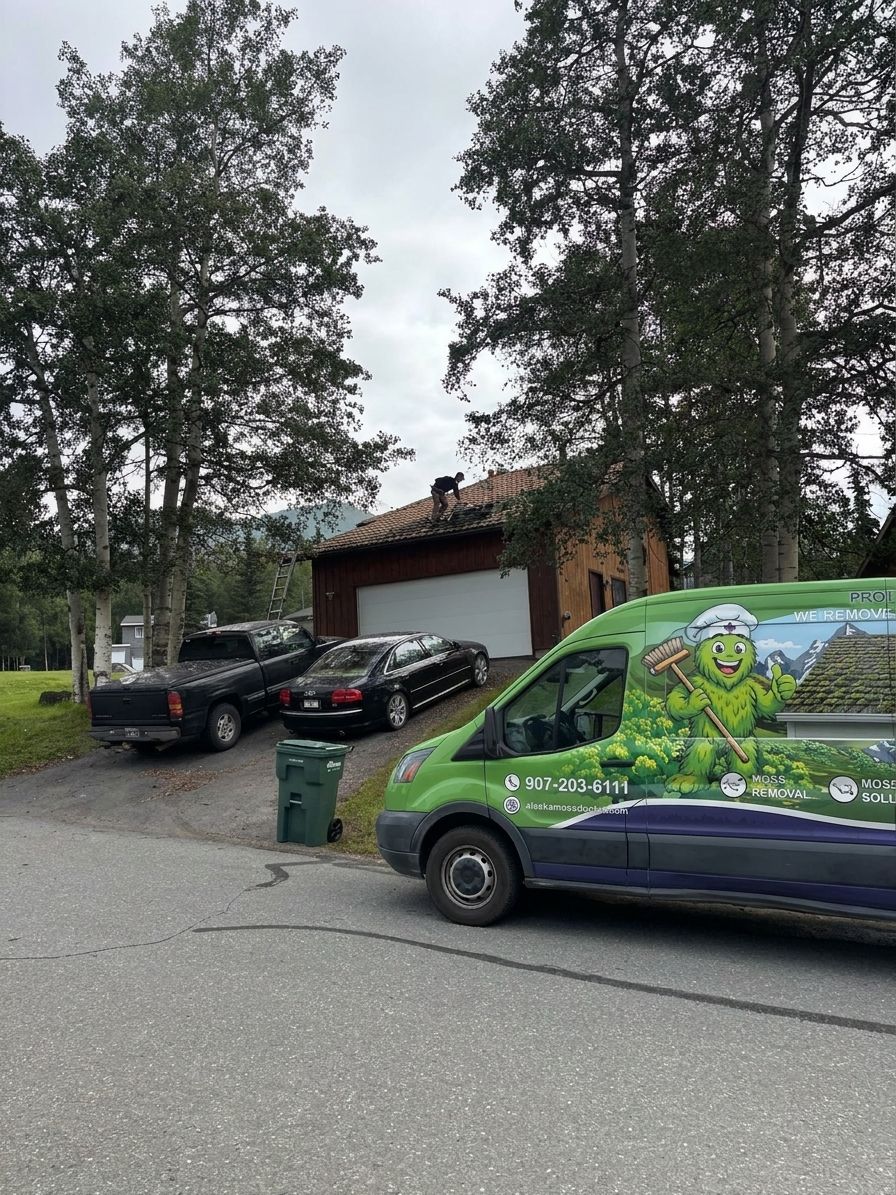
Tile roof algae removal is the process of stripping black algae, lichen, and moss buildup from clay, concrete, or composite tile using a soft-wash method, with the aim of protecting the tile surface and keeping any manufacturer warranty intact. Tile behaves differently under a hose and a chemical than asphalt shingle or standing-seam metal, and a roof crew that treats every material the same way usually ends up cracking tile lugs or bleaching the glaze before the algae is even gone.
- Roof algae removal tile roof jobs in 2026 require soft washing, never a pressure washer, or the tile lugs and glaze crack.
- Alaska Moss Doctor treats concrete, clay and synthetic composite tile across the Wasilla area without walking directly on the field.
- Freeze-thaw cycles in Alaska make post-clean sealant more important on tile than in warmer climates where tile roofing is common.
- A one-time algae clean without a prevention step regrows within a season or two on shaded Mat-Su Valley lots.
Why algae removal matters for tile roof homes
Tile is porous in a way asphalt shingle isn't, and that porosity is exactly what algae, lichen, and moss spores need to anchor. Once algae takes hold on tile, it holds moisture against the surface, and in an Alaska winter that trapped moisture is what drives freeze-thaw spalling, the small cracks and pop-offs that show up on tile edges after a hard freeze.
Tile roofing is uncommon in the Wasilla area compared to asphalt shingle and metal, mostly because of weight and freeze-thaw exposure, but the tile roofs that are out there tend to be older concrete tile or newer synthetic composite tile rated for cold climates. Either way, algae sitting on the surface for multiple seasons does more than look bad; it accelerates the freeze-thaw cycle that tile is already vulnerable to in Alaska.
Homeowners searching for Alaska Moss Doctor usually notice the black streaking on north-facing slopes first, then find out the streaking has been trapping moisture against the tile for a year or more. That's the gap between cosmetic concern and structural concern, and it's the reason tile gets its own removal process instead of the standard shingle playbook.
Update your inspection before you touch a hose
Start every job with a walk-around from the ground, binoculars if the pitch is steep, before any chemical goes on the roof.
- Look for cracked, chipped, or slipped tiles, since a cleaning crew needs to know which tiles to avoid stepping near
- Check valleys and north-facing slopes first, where algae and moss concentrate in shade
- Note any tile with visible efflorescence (white mineral staining), a sign moisture is already moving through the material
- Flag skylights and vent boots, since sealant around penetrations degrades faster once algae holds moisture against it
- Photograph problem areas before cleaning so before/after condition is documented
Rinse loose debris before applying any chemical
A low-pressure rinse (garden hose pressure, not a pressure washer) clears loose moss clumps, needles, and grit before the algaecide goes down.
- Clear debris from valleys and behind chimneys where it collects thickest
- Skip anything above 1,500 PSI on tile; a soft-wash pump sprayer runs closer to garden hose pressure
- Work top to bottom so debris doesn't restack lower on the slope
- Check gutters are open before rinsing so runoff doesn't back up under the tile laps
Apply a soft-wash algaecide solution
The manual version of this step uses a pump sprayer and a sodium hypochlorite or algaecide-based solution mixed at a low, tile-safe dilution, since concentrated bleach can dull glaze and corrode metal fasteners over time.
- Mix at the lowest effective dilution rather than the strongest one; tile doesn't need shingle-strength solution
- Apply on an overcast day so the solution doesn't flash-dry before it can work
- Cover shaded, algae-heavy slopes fully rather than spot-treating streaks
- Protect landscaping below with plastic sheeting or a pre-soak, since runoff is still chemical runoff
This is where a professional soft-wash service earns its cost over a DIY attempt. A crew that does this daily knows the dwell time for concrete tile versus synthetic composite tile, and knows which detergents strip algae without stripping the tile's factory coating.
Let the solution dwell without pressure
Algaecide needs contact time to work, typically 10 to 20 minutes depending on product concentration and buildup severity, and rushing this step is the single biggest cause of a second treatment being needed.
- Watch for the algae visibly darkening or lifting as the sign the solution is working
- Re-wet dry spots that flash under direct sun so the solution doesn't dry before finishing its job
- Never scrub tile with a stiff brush during the dwell period; agitation belongs at rinse time, not before
Rinse from the ridge down
Once dwell time is up, a controlled low-pressure rinse from the ridge to the eave clears both the algae and the spent chemical.
- Rinse in the same top-to-bottom direction as the tile overlap so water doesn't force under laps
- Flush gutters and downspouts as the last step so chemical runoff doesn't sit and corrode metal
- Recheck valleys and shaded areas for residue the first rinse missed
Treat valleys and shaded slopes separately
North-facing and tree-shaded slopes regrow algae faster than the rest of the roof, and a single blanket treatment often under-treats these zones.
- Give shaded slopes a second, lighter application if algae was heavily embedded
- Consider a copper- or zinc-based preventive strip for chronic shade problems, installed near the ridge so rain carries the ions downslope
- Re-inspect these zones on a shorter interval than the sunnier slopes
Schedule the job around Alaska's freeze-thaw window
Cleaning tile in freezing temperatures risks trapping water in hairline cracks right before a freeze, which is how a cleaning job accidentally creates spalling instead of preventing it.
- Target the window between spring thaw and the first hard fall freeze for tile-specific cleaning
- Avoid same-day cleaning before a forecasted freeze, even in shoulder months
- Build in a few dry days after the rinse so the tile fully sheds moisture before any cold snap
Apply a preventive treatment after cleaning
A clean tile roof without a follow-up treatment is a roof that looks good for one season and streaks again the next.
- Apply a zinc or copper-based preventive spray rated for tile after the final rinse
- Reapply on a schedule tied to shade exposure, not a fixed calendar date
- Pair prevention with a gutter check, since clogged gutters keep moisture sitting against the lower courses
“If your tile roof needs a pressure washer to look clean, the problem isn't the algae, it's years of skipped maintenance.”
Comparing your options for tile roof algae removal
| Option | Best for | Key limitation |
|---|---|---|
| DIY soft-wash kit | Homeowners comfortable on a ladder with light, early-stage staining | Wrong dilution or dwell time streaks or dulls tile glaze |
| Pressure washing | Nobody, on tile | Cracks tile lugs, forces water under laps, voids most manufacturer warranties |
| Professional soft-wash service | Homeowners who want algae gone without roof-walking risk | Scheduling depends on Alaska's freeze-thaw window |
| Roof coating or sealant after cleaning | Homeowners trying to slow regrowth on shaded slopes | Adds cost and needs reapplication over time |
Verdict: soft washing by a crew experienced with tile beats every DIY method for roof algae removal on a tile roof, because the failure mode for pressure washing on tile is cracked material, not just a missed spot.
Get your tile roof assessed
See what algae and moss are doing to your roof before scheduling a cleaning.
Common mistakes tile roof homeowners make
- Renting a pressure washer for a "quick clean." Anything above 1,500 PSI cracks glazed and unglazed tile alike and is the fastest way to turn a cosmetic job into a repair bill.
- Walking the roof without foam pads or roof jacks. Concentrated foot weight on a single tile snaps the interlocking lugs underneath, and the crack doesn't show until the next freeze.
- Mixing straight bleach at high concentration. It strips the tile's factory coating and corrodes exposed fasteners faster than a properly diluted algaecide ever would.
- Skipping the underlayment check. Algae staining that's been there for multiple seasons can be sitting on a compromised membrane, not just a dirty surface, and cleaning alone won't fix that.
- Treating cleaning as one-and-done. Without a follow-up algaecide or preventive strip, algae returns on shaded Mat-Su Valley lots within a season or two.
FAQ
What's the best way to remove algae from a tile roof?
Soft washing with a low-concentration algaecide and a low-pressure rinse is the best method for roof algae removal on a tile roof. Pressure washing is not an option on tile because it cracks the material and forces water under the laps.
Is pressure washing safe for tile roofs?
No, pressure washing is not safe for tile roofs at any pressure above garden hose level. Tile lugs and glaze crack under concentrated force, and most manufacturer warranties exclude damage caused by pressure equipment.
How much does professional tile roof algae removal cost in Wasilla, Alaska?
Cost depends on roof size, pitch, and how established the algae growth is, so a site-specific quote is more accurate than a flat number. Ask for an inspection before assuming a price.
How often does a tile roof in Alaska need algae removal?
Shaded, north-facing slopes typically need attention more often than sun-exposed slopes because algae regrows faster in shade. A preventive treatment after the first cleaning stretches the interval between full cleanings.
Does algae void a tile roof warranty?
Algae itself usually doesn't void a warranty, but cleaning it with pressure washing or the wrong chemical often does. Check the manufacturer's care instructions before choosing a cleaning method.
Can I walk on a tile roof to clean it myself?
Walking directly on tile without foam pads or roof jacks risks cracking individual tiles, since the lugs underneath aren't built for concentrated foot weight. Most DIY tile cleaning is done from a ladder at the eaves rather than walking the field.
What's the difference between moss and algae on a tile roof?
Algae shows up as black or green streaking on the surface, while moss is a raised, textured growth that roots into grout lines and tile edges. Moss needs manual removal alongside the chemical treatment; algae usually lifts with the soft-wash solution alone.
When is the best time of year for tile roof cleaning in Alaska?
The window between spring thaw and the first hard fall freeze is the safest time for tile-specific cleaning in 2026. Cleaning too close to a freeze risks trapping moisture in hairline cracks right before temperatures drop.
One last thing
Most "tile roofs" spotted around the Wasilla area in 2026 aren't clay or heavy concrete tile at all, they're synthetic composite tile built to survive freeze-thaw cycles that would crack traditional material. That distinction matters for cleaning because composite tile tolerates soft-wash chemicals differently than clay or concrete, so checking the manufacturer's chemical compatibility before the first treatment saves a callback later.