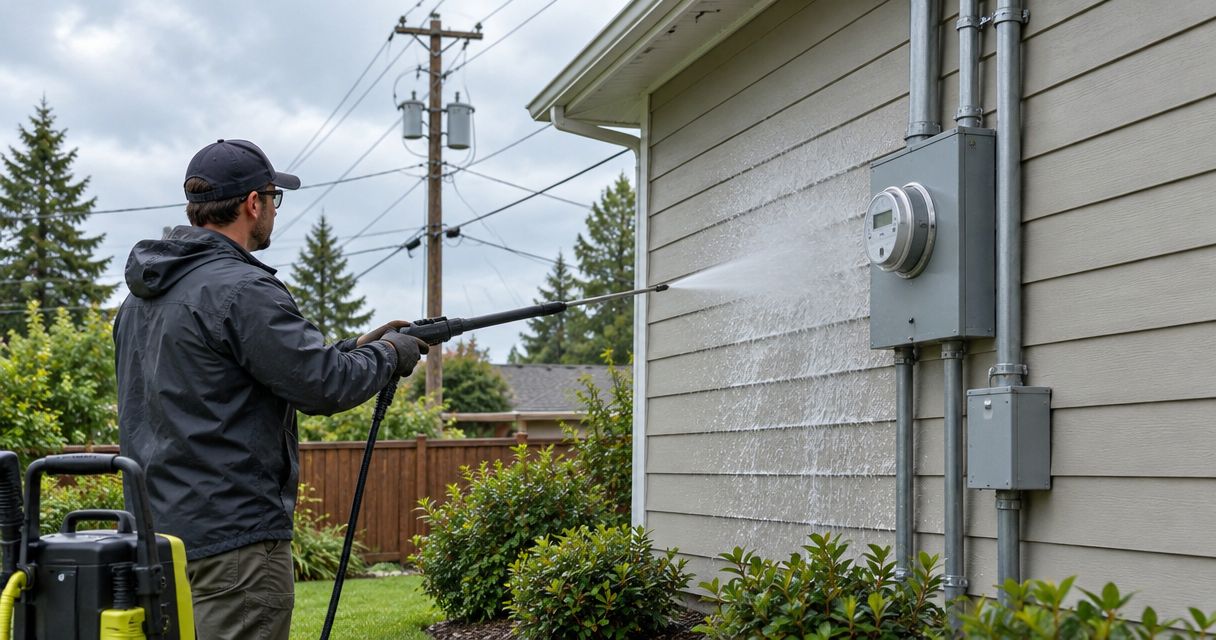
No—do not pressure wash power lines, electrical meters, or surfaces where spray, runoff, or equipment could contact energized electrical components. Cleaning elsewhere on the property requires a work area that keeps people, tools, and water away from electrical hazards; switching off your home's main breaker does not de-energize incoming utility lines or the supply side of the meter.
- Is it safe to pressure wash near power lines? No—keep spray and equipment away from energized electrical components.
- Electrical meters are not pressure-washing targets; an outdoor enclosure does not make forceful spraying safe.
- Soft washing still uses water and does not remove electrical shock hazards.
- Alaska Moss Doctor provides roof and exterior moss removal for Wasilla-area homeowners, not electrical hazard clearance.
Is it safe to pressure wash near power lines or electrical meters?
Do not spray power lines, meters, service connections, or electrical enclosures. If cleaning requires directing water toward them or bringing equipment within an unsafe distance, leave that section unwashed and contact the utility or a qualified electrician.
A wire's appearance cannot establish whether it is energized or safe to approach. Likewise, an intact meter cover does not establish that its seals, connections, or surrounding equipment can withstand a pressure washer.
Use this comparison when planning exterior cleaning in 2026:
| Approach | Best for | Benefit | Limit or drawback |
|---|---|---|---|
| Pressure washing away from electrical hazards | Suitable surfaces with a separated work area | Removes surface contamination mechanically | Spray, splash, and long equipment still require hazard assessment |
| Soft washing away from electrical hazards | Surfaces suited to lower-pressure cleaning | Reduces mechanical force compared with high-pressure cleaning | Water and cleaning solution still create electrical exposure risks |
| Leaving the affected section unwashed | Any area with unresolved electrical hazards | Avoids introducing cleaning water into that area | Dirt or growth remains until the hazard is addressed |
| Utility or electrician assessment | Uncertain clearances, damaged equipment, or proposed isolation | Establishes electrical requirements before cleaning | Assessment is not a substitute for the later cleaning work |
Roof material adds a separate decision. The guide to whether you can pressure wash a roof safely addresses the surface question; electrical clearance must be resolved independently.
Why this matters
Pressure washing creates more than a narrow stream. Splash, drifting mist, runoff, and movement of the wand expand the area exposed to water.
Electric shock is not the only consequence. A sudden reaction or loss of balance can also cause a fall, particularly when someone works from a ladder or near a roof edge.
For your 2026 cleaning plan, separate what needs cleaning from what can safely be reached. A dirty patch beside a meter does not justify spraying the enclosure or reaching past a service wire.
Power lines: keep people, equipment, and spray away
OSHA's ladder-safety guidance calls for keeping ladders at least 10 feet, approximately 3 meters, from overhead power lines. That is a basic ladder precaution—not a safe spraying distance, a universal electrical work clearance, or permission to wash toward a wire.
Higher-voltage lines and particular working conditions require additional precautions. Ask the utility to establish the requirements for your location rather than measuring a gap and assuming the work is safe.
Include everything that moves in your assessment:
- The full length of the wand and any extension.
- The ladder while you carry, raise, reposition, and lower it.
- The spray stream, splash, and wind-driven mist.
- Hoses and equipment that could snag or pull you off balance.
- Your reach and movement throughout the task.
A long attachment does not solve a clearance problem. It extends the equipment toward the hazard, even when you remain on the ground.
Never test a line's condition by spraying it or touching it with a tool. Do not assume a residential service wire is safe because it appears covered; treat overhead wires as energized and leave identification to the utility.
Electrical meters: do not direct water at the enclosure
An electrical meter sits outdoors, but outdoor exposure is not the same as resistance to a concentrated cleaning jet. Do not spray the meter face, socket, enclosure seams, conduit connections, or surrounding service equipment.
Inspect only from a safe position without touching or opening anything. A loose enclosure, damaged conduit, missing cover, visible wiring, or scorch marks is a reason to stop and request qualified assessment—not an invitation to clean carefully around the defect.
Do not pull a meter, break a utility seal, remove a cover, or attempt to disconnect service. Those actions belong to authorized personnel.
For a 2026 house wash, tell the cleaner where the meter and incoming service are located before equipment is set up. Ask how that area will be excluded from spray and runoff, and whether electrical assessment is needed before adjacent work begins.
Does turning off the main breaker make the meter safe to wash?
No—the main breaker does not de-energize incoming utility conductors or the supply side of the meter. It is not an electrical isolation procedure for exterior service equipment.
Solar equipment, generators, and battery systems add other possible power sources. A qualified electrician must identify and address those sources when electrical isolation is required.
Can you cover the meter with plastic and wash around it?
A plastic cover does not establish that washing around a meter is safe. Water can reach edges and openings, and installing a cover can itself bring you too close to energized or damaged equipment.
Do not attach tape, bags, or coverings to utility equipment as a substitute for an approved work plan. Ask the utility or electrician what protection and access restrictions apply.
Is soft washing safe around electrical equipment?
Soft washing does not make energized electrical equipment safe to wet. Lower pressure changes the mechanical force, not the need to keep water and cleaning chemicals away from electrical components.
A garden hose is not an electrical-safety workaround either. Choose the cleaning method only after establishing where water can and cannot go.
Why electrical risk varies between cleaning jobs
The pressure washer's setting is only part of the assessment. These conditions change whether the work area can remain separated from electrical hazards:
- Service location: A service connection beside the roof edge or siding changes the available approach and reach.
- Equipment condition: Broken covers, loose fittings, exposed conductors, and damaged conduit require qualified attention.
- Working reach: Extension wands and ladders enlarge the space occupied by equipment during setup and use.
- Water movement: Wind, splash, wall runoff, and roof drainage affect where cleaning water travels.
- Footing and access: Slippery surfaces, ice, and awkward positioning increase the chance of unintended movement.
- Power sources: Utility service, solar, generators, and batteries require proper identification before isolation decisions.
You cannot resolve those variables by selecting a wider nozzle or standing slightly farther back. If the electrical boundary remains uncertain, exclude the affected area from cleaning.
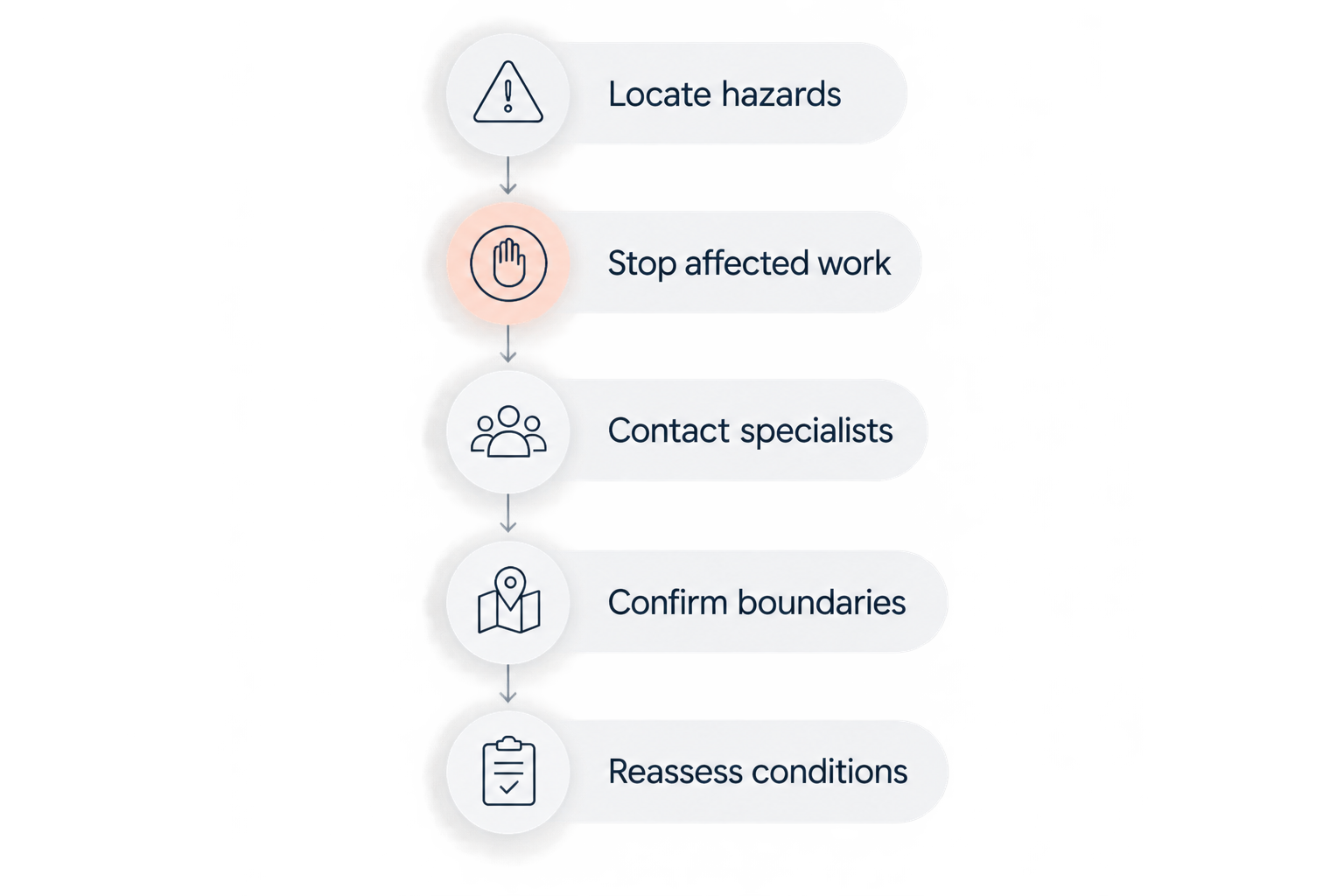
What should you do before exterior cleaning starts?
Use this sequence for your 2026 exterior-cleaning plan. It is a planning checklist, not authorization to work near energized equipment.
- Locate hazards. From a safe ground-level position, identify overhead wires, the service attachment, meter, exterior outlets, lights, and visible electrical equipment. Do not climb closer to inspect them.
- Stop affected work. Leave any section unwashed where spray, runoff, or equipment could reach electrical components. Do not start first and decide how to avoid them later.
- Contact specialists. Ask the utility about overhead service and meter concerns; involve a qualified electrician for damaged building wiring or other electrical defects. Ownership boundaries vary, so let them identify responsibility.
- Confirm boundaries. Establish the permitted work area, equipment positioning, and any required electrical precautions before cleaning resumes. Make sure everyone involved understands what must remain untouched and dry.
- Reassess conditions. Stop if wind, footing, equipment position, or visible electrical conditions change. A workable setup does not remain acceptable automatically throughout the job.
The central decision is whether the work can stay outside the electrical hazard area. If it cannot, postpone that portion rather than improvising.
What should you ask a professional exterior cleaner?
Ask specific questions before approving work beside a meter or below overhead service. A useful answer explains the limits of the job—not just the nozzle or cleaning solution.
- Which electrical components are within or beside the proposed work area?
- How will the work keep spray, splash, and runoff away from those components?
- Can ladders and extended equipment remain clear during setup and repositioning?
- Which conditions will stop the work?
- Does any part of the job require utility or electrician assessment first?
- Which sections will remain unwashed if the hazard cannot be resolved?
Alaska Moss Doctor is a roof and exterior moss-removal service for Wasilla-area homeowners, not a substitute for an electrician. If that matches your cleaning need, Alaska Moss Doctor is relevant to the cleaning discussion; electrical assessment remains a separate task.
When discussing Alaska Moss Doctor roof and exterior moss removal, describe the meter location and overhead service before the visit. Do not ask any cleaning contractor to prove safety by attempting a small spray test.
Plan your exterior cleaning
Describe your roof or exterior moss-removal needs and flag nearby electrical equipment before the visit.
What if water has already hit electrical equipment?
Stop spraying. Keep people and pets away, and do not touch the meter, enclosure, wet electrical equipment, or a person who remains in contact with an electrical source.
If there is sparking, smoke, fire, a fallen line, or an injured person, call 911 from a safe location and notify the utility. Do not approach to investigate, retrieve equipment, or attempt a rescue that exposes you to the same electrical source.
Even without visible sparks, suspected water entry into electrical equipment needs qualified assessment. Do not open the enclosure to dry it, repeatedly reset a tripping breaker, or resume washing because the outside looks dry.
For your 2026 maintenance records, note what was sprayed and report it to the utility or electrician from a safe location. Photographs are useful only when you can take them without approaching the hazard.
FAQ
Is it safe to pressure wash near power lines if I stand on the ground?
No—standing on the ground does not make spraying near power lines safe. The wand, spray, and other equipment must remain away from energized conductors, and unresolved clearance concerns require utility assessment.
How far should a ladder stay from overhead power lines?
OSHA's ladder-safety guidance calls for at least 10 feet, approximately 3 meters, between ladders and overhead power lines. That ladder precaution is not a safe pressure-washing distance; the utility must address the requirements for the specific work area.
Can I pressure wash the outside of my electrical meter?
Do not pressure wash the electrical meter or its enclosure. Outdoor placement does not mean the equipment can safely withstand a concentrated water jet.
Will turning off my main breaker make exterior washing safe?
No—the main breaker does not de-energize incoming utility conductors or the supply side of the meter. Ask the utility or a qualified electrician about any isolation required for the proposed work.
Can I use a soft-wash nozzle beside my meter instead?
A soft-wash nozzle does not make electrical equipment safe to wet. Keep cleaning water and solution away from the equipment and leave the affected section unwashed if separation cannot be maintained.
Should I call a cleaner or an electrician about moss beside electrical equipment?
Contact the utility or a qualified electrician first when electrical condition or clearance is uncertain. Alaska Moss Doctor provides roof and exterior moss removal for Wasilla-area homeowners; electrical repairs and hazard clearance are separate work.
What should I do if my pressure washer sprays a power line?
Stop spraying and keep everyone away from the affected area and equipment. Call 911 for sparking, fire, a fallen line, or injury, and notify the utility without approaching the hazard.
One last thing
A clean-looking meter is not the goal of a house wash. Leaving an electrical enclosure and the affected surrounding section untouched is a valid outcome—not incomplete work that needs a quick final rinse.
Before your 2026 cleaning visit, identify those exclusions with the contractor. The useful question is not how to wash every square inch; it is which surfaces can be cleaned without exposing people or electrical equipment to the work.