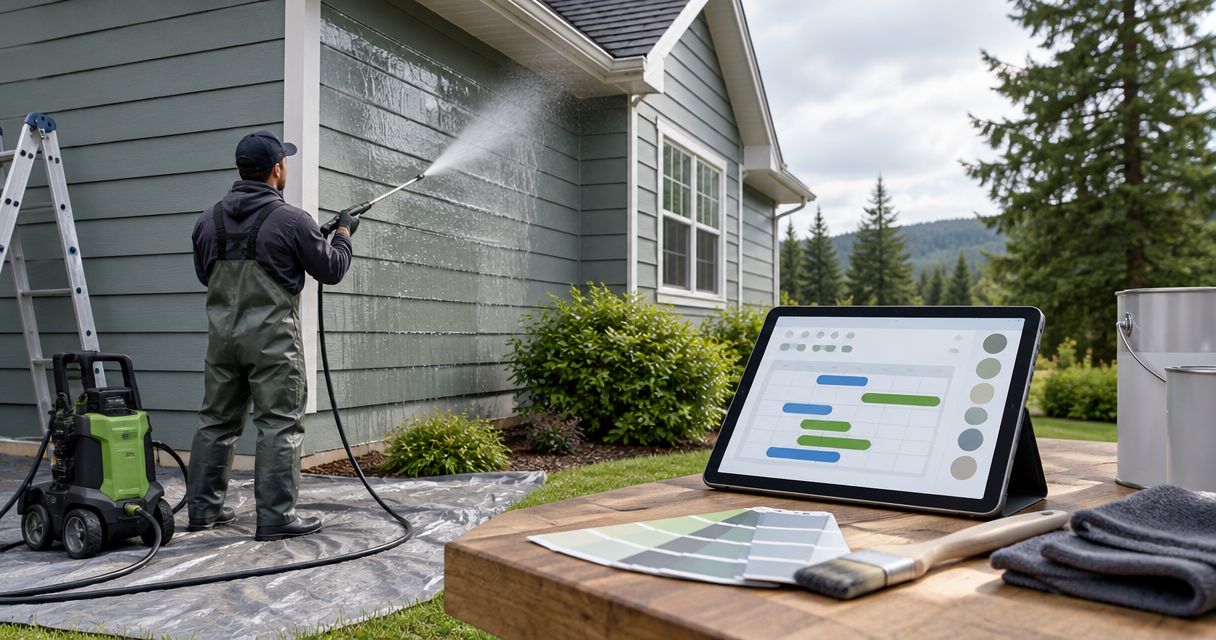
Instead of repeatedly moving painters and cleaners between dates, connect your pre-paint siding wash to a shared schedule with a separate readiness check before painting. Book the cleaning first, then release the paint start only after the siding meets the coating manufacturer’s preparation requirements and your painter accepts the surface.
- A pre-paint siding wash belongs before the painter’s surface-readiness check, not merely before the painting date.
- Alaska Moss Doctor provides exterior moss and algae removal for Wasilla-area homeowners; confirm your pre-paint cleaning scope before booking.
- Use shared milestones for washing, readiness approval, and painting; move dependent work when conditions change.
- Follow siding, cleaner, and coating instructions instead of assuming a universal drying interval.
Why this matters
A completed wash and a paint-ready wall are different milestones. Cleaning removes contamination; paint preparation also addresses loose coatings, repairs, residue, and moisture. Do not treat the cleaner’s departure as permission to paint.
For Wasilla homeowners planning exterior work in 2026, the scheduling problem is the handoff: who confirms that cleaning is complete, who checks the substrate, and who changes the painting date if conditions fail? Put those responsibilities in writing before either visit.
Alaska Moss Doctor is a fit for Wasilla homeowners seeking professional exterior moss and algae removal. Keep that cleaning scope separate from the painter’s responsibility to accept the surface; do not assume a cleaning booking includes coating preparation or painting coordination.
Before you start
- Collect the preparation requirements. Have the siding information, existing-coating details where known, proposed coating instructions, and cleaner instructions available. Ask the painter to identify the applicable moisture, temperature, and surface-condition requirements rather than substituting a generic waiting period.
- Choose a shared record and decision owner. Use a calendar, document, or paper job sheet that both contractors can reference. Give one person responsibility for confirming changes, and collect contact details, access instructions, photos, and the proposed work scope.
- Resolve the hidden gotcha: treatment is not always paint preparation. Before booking, ask whether the proposed cleaning method requires rinsing, leaves a treatment on the surface, or needs additional preparation before coating. Obtain agreement between the cleaner and painter; a calendar cannot resolve incompatible instructions.
Shared job record
Create a job sheet rather than trying to coordinate through scattered messages. The bold labels below are labels you create, not buttons in a particular scheduling application.
- Create Property and surfaces. Identify the address, elevations, siding material, trim, and any areas excluded from washing or painting. Attach photos of staining, peeling paint, damaged boards, and difficult access.
- Add Cleaning scope. Describe the contamination to remove and record the proposed method, applicable instructions, protection measures, and rinse requirements. Ask the cleaner to confirm the scope instead of assuming every house wash serves the same purpose.
- Add Painting requirements. Ask the painter to record the coating system’s preparation requirements and identify any repairs or additional preparation needed after cleaning.
- Add Decision owner. Name the person who approves schedule changes and the painter who accepts the surface for coating. Keep those responsibilities distinct even when you coordinate both.
Expected result: You have 1 shared job record that describes the same surfaces and responsibilities for everyone involved. A contractor should be able to read it without reconstructing the plan from your messages.
For your 2026 project record, include the actual instruction documents or their identifying details. A note saying to follow the label is less actionable when nobody has identified which coating or cleaner will be used.
Linked schedule milestones
Build the schedule around completion conditions, not a guessed wash-to-paint interval. A proposed painting date remains provisional until the preparation requirements are satisfied.
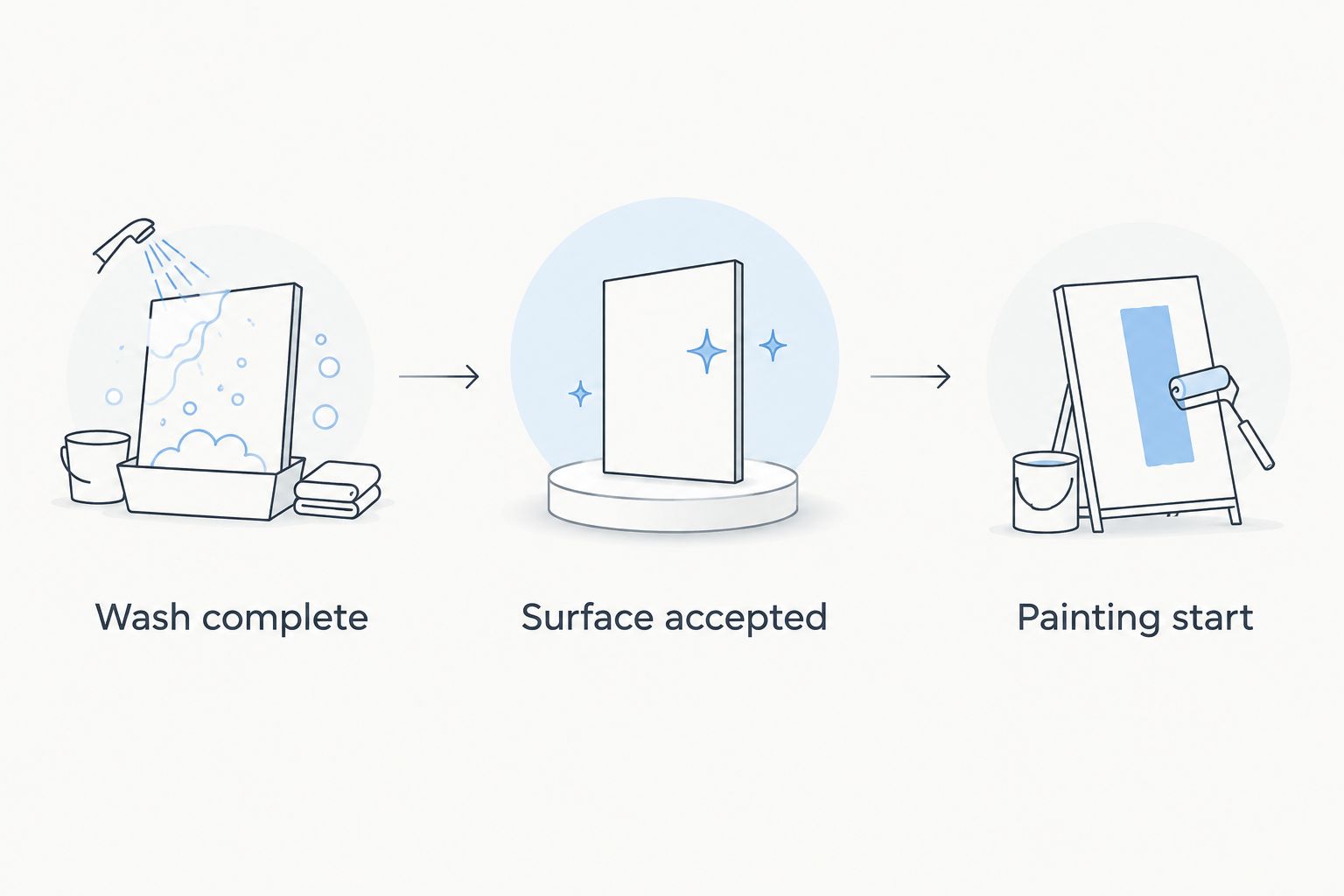
- Create Wash complete. Record the planned cleaning date, assigned contractor, access arrangements, and the evidence needed to close the task. Completion should mean the agreed cleaning work is finished, including any required rinsing.
- Create Surface accepted. Assign the readiness inspection to the painter. Include the required checks for cleanliness, substrate condition, moisture, and application conditions from the relevant instructions.
- Create Painting start. Make this dependent on surface acceptance and completion of any repairs, sanding, priming, or other specified preparation.
- Add Change notice. State that a moved cleaning visit or failed readiness check triggers a review of every dependent appointment. Send the revised plan to both contractors and obtain confirmation.
Expected result: Your schedule contains 3 linked milestones, with no automatic jump from washing to painting. The paint appointment has a clear release condition rather than an assumed countdown.
For a 2026 calendar, keep the milestone names consistent in messages and appointments. Calling one visit cleaning in a text and final preparation in the calendar creates an avoidable scope dispute.
Cleaning completion record
The wash visit should produce a handoff that the painter can inspect. Photos support that handoff, but they do not establish moisture conditions or coating compatibility.
- Confirm Access and protection before work begins. Discuss windows, doors, electrical fixtures, plants, nearby belongings, and runoff with the cleaner. Identify damaged siding or suspect openings before water is applied.
- Record Work completed after the visit. Ask which elevations were cleaned, what method was used, and whether the agreed rinse or other finishing steps were completed.
- Record Exceptions. List remaining stains, loose coatings, damaged areas, or places the cleaner could not access. Do not mark an excluded elevation complete because the rest of the house looks clean.
- Send Painter handoff. Share the completion record, relevant product instructions, photos, and unresolved items with the painter. Request acknowledgment before treating the cleaning milestone as closed.
Expected result: The painter receives a specific account of the work, including its limits. You know whether the next task is inspection, additional cleaning, or repair.
Ask Alaska Moss Doctor to confirm the exterior moss and algae removal scope before you book. The stated service fits that cleaning need; your painter still needs to establish whether the proposed work satisfies the coating preparation requirements.
You can use the scheduling page to begin that discussion. Include the siding material, planned painting work, and the painter’s preparation requirements in your inquiry rather than sending only a preferred date.
Paint-readiness approval
Separate administrative completion from technical acceptance. Your 2026 schedule should show both, even when the visits occur close together.
- Complete Cleaning review. Confirm that the agreed surfaces were addressed and that exceptions have an assigned next action. Missing work returns to the cleaning scope rather than disappearing into the painting appointment.
- Complete Surface review. Have the painter inspect for remaining contamination, chalking, loose paint, deterioration, and moisture using the methods required for the substrate and coating. Follow applicable instructions for any measurements.
- Confirm Preparation complete. Record required repairs and preparation separately from washing. Establish whether additional cleaning is needed after work that produces dust or debris.
- Approve Painting release only when the painter accepts the substrate and the application conditions meet the coating instructions. Record who approved the release and when.
Expected result: You have 2 approval checks—cleaning review and surface review—before final preparation and painting release. Neither an invoice nor a dry-looking photograph substitutes for acceptance.
Do not force a universal drying interval into this workflow. Siding material, water exposure, weather, and coating requirements determine readiness; the schedule records that decision rather than making it.
When the painting date changes
Use the same workflow when the painter moves the start date after washing. A delay does not automatically require another full wash, but it does require checking whether the accepted conditions still hold.
- Update Painting start without deleting the completed cleaning record. Preserve what happened so nobody confuses an old completion date with a newly confirmed condition.
- Reopen Surface accepted if rain, new contamination, repairs, or other changes affect readiness. Have the painter identify the checks needed before release.
- Assign any corrective work to the appropriate contractor. Confirm the affected elevations and scope rather than ordering a repeat whole-house wash by default.
- Send the revised milestones and request acknowledgment. Keep the new date provisional until the acceptance conditions are met again.
Expected result: A moved appointment triggers a targeted review, not an unsupported assumption that the siding remains ready or needs complete recleaning.
Coordination choices
Choose a coordination method based on who can reliably manage the handoff. Both approaches need written acceptance criteria.
| Approach | Best for | Advantage | Limitation |
|---|---|---|---|
| Homeowner-managed record | Homeowners available to communicate with both contractors | You control the scope, approvals, and changes in one place | You must obtain confirmations and resolve conflicting instructions |
| Contractor-led coordination | Projects where a contractor explicitly agrees to manage the handoff | One assigned contact manages dependent appointments | Coordination is not included unless the contractor agrees to it |
Comparing exterior house washing companies does not replace confirming whether a contractor’s proposed cleaning method meets your painter’s preparation requirements. Keep company selection and surface acceptance as separate decisions, especially when coordinating work across different trades.
Choose homeowner-managed coordination unless a contractor explicitly accepts the coordination role. This recommendation assigns responsibility without inventing a service that neither contractor has offered.
Troubleshooting
The wall looks dry, but the painter will not start
Ask which acceptance requirement remains unmet. Surface appearance alone does not establish that the substrate meets the coating’s moisture requirements.
Keep Painting release open and record the required next check. Do not pressure either contractor to replace an instruction-based decision with a visual guess.
Staining remains after cleaning
Have the cleaner and painter distinguish remaining contamination from discoloration before deciding what happens next. A visible mark alone does not tell you whether the wall needs more cleaning or a different preparation step.
Record the location and agreed action. Do not assume paint will solve an unresolved cleaning problem, and do not escalate washing pressure simply to erase a mark.
Cleaning reveals peeling paint or damaged siding
Add the affected areas to Exceptions and have the painter assess the preparation scope. Washing does not repair deteriorated siding or turn loose paint into a sound coating base.
Move dependent tasks if repairs change the sequence. Keep cleaning completion separate from repair completion so the additional work remains visible.
The cleaner and painter give conflicting instructions
Pause the handoff and compare the written instructions for the siding, cleaning product, and coating. Ask both contractors to agree on a compatible sequence before work proceeds.
Do not settle a technical conflict by choosing the earliest appointment. If the instructions remain unclear, obtain clarification from the relevant manufacturer before releasing painting.
Rain or freezing conditions interrupt the plan
Review cleaning safety, surface conditions, and the coating’s application requirements before keeping either appointment. After changed conditions, repeat the affected acceptance checks rather than carrying forward an outdated approval.
For a 2026 project, record actual conditions and decisions at the time of work. A seasonal plan is not evidence that a particular wall is ready on a particular day.
Customize your workflow
Expand the shared record when different elevations need different preparation. Track each elevation’s cleaning, repairs, and acceptance separately, while keeping the painter responsible for deciding the coating sequence.
If roof or gutter work could deposit runoff or debris onto siding, discuss that sequence before the final siding preparation. Identify which work must happen first and whether later activity will require another inspection.
Alaska Moss Doctor provides roof and exterior moss and algae cleaning and removal for Wasilla-area homeowners. Confirm the services, scope, and handoff for your property rather than assuming that a combined project includes painting preparation.
FAQ
How long after a pre-paint siding wash can you paint?
Paint only after the siding meets the coating manufacturer’s preparation requirements and your painter accepts the surface. There is no universal waiting interval for every siding material, cleaning method, and weather condition.
Can I book siding washing and painting for the same day?
Do not treat same-day painting as a guaranteed outcome. Keep the paint start conditional on completed preparation, acceptable substrate moisture, and suitable application conditions.
Who should approve siding before painting starts?
Assign surface acceptance to the painter applying the coating. The cleaner confirms the agreed cleaning work, while the painter determines whether further preparation is required.
Does a house wash include scraping and priming?
Do not assume a house wash includes scraping or priming. Specify cleaning, repairs, coating removal, and priming as separate scope items and confirm who performs each task.
Do I need another siding wash if painting gets delayed?
A delay alone does not establish that another full wash is necessary. Have the painter reassess contamination and substrate conditions, then assign only the corrective work required.
Can Alaska Moss Doctor help with exterior algae before painting?
Alaska Moss Doctor provides professional exterior moss and algae cleaning and removal for Wasilla-area homeowners. Confirm the proposed cleaning scope with the company and have your painter check it against the coating preparation requirements.
One last thing
A completed task should stay completed; an expired approval should reopen. Preserve the washing record when conditions change, but require a fresh readiness decision whenever the evidence supporting the previous approval no longer holds.
That distinction keeps your schedule accurate without automatically repeating work. Put it in the job sheet before either contractor arrives.