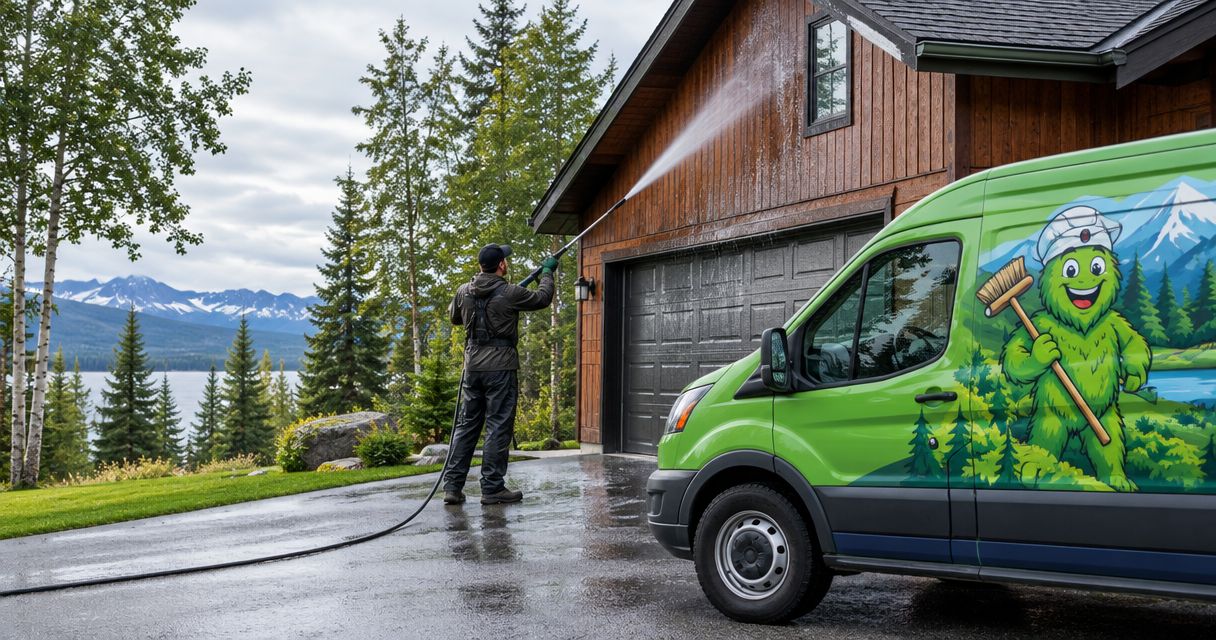
Exterior house cleaning for Eagle River homes means removing moss, algae, and black streaks from roofs, siding, gutters, and walkways using soft wash and pressure washing methods matched to the specific surface. Eagle River sits against the Chugach Mountains under a dense canopy of spruce and birch, and that combination of mountain shade and tree cover keeps roofs and north-facing siding wet longer than most other Mat-Su Valley neighborhoods, which speeds up moss and algae growth on everything from asphalt shingles to log cabin exteriors.
- Soft washing, not high-pressure blasting, is the correct method for exterior house cleaning in Eagle River, Alaska in 2026.
- Chugach Mountain shade and dense spruce/birch cover make Eagle River roofs and north-facing siding hold moisture longer than open Wasilla lots.
- Alaska Moss Doctor recommends scheduling cleaning before the first hard freeze, since soft wash treatments need consistent above-freezing days to work.
- DIY pressure washers routinely strip shingle granules and crack painted siding on Eagle River homes with steep or shaded roof sections.
Why exterior cleaning matters for Eagle River homeowners
Eagle River's terrain is the reason this matters more here than in flatter parts of the valley. Homes tucked against the Chugach foothills lose direct sun on their north-facing roof planes for months at a time, and that shade window lets moss spores establish long before a homeowner notices the dark streaks from the street.
Log cabins, cedar-sided homes, and standard vinyl or fiber-cement builds all show up in Eagle River, and each surface reacts differently to cleaning chemicals and pressure. A method that's safe on vinyl siding in Wasilla can strip a cedar shake roof or discolor a log exterior in Eagle River. Getting the method right the first time matters more than the schedule. Alaska Moss Doctor works roof and siding jobs across the Mat-Su Valley and treats Eagle River's shaded, tree-heavy lots as their own category rather than a copy-paste of a Palmer or Wasilla job.
The quotable verdict
“If a cleaning method needs more than 2,500 PSI to move moss off an Eagle River roof, it's already removing shingle granules along with the moss.”
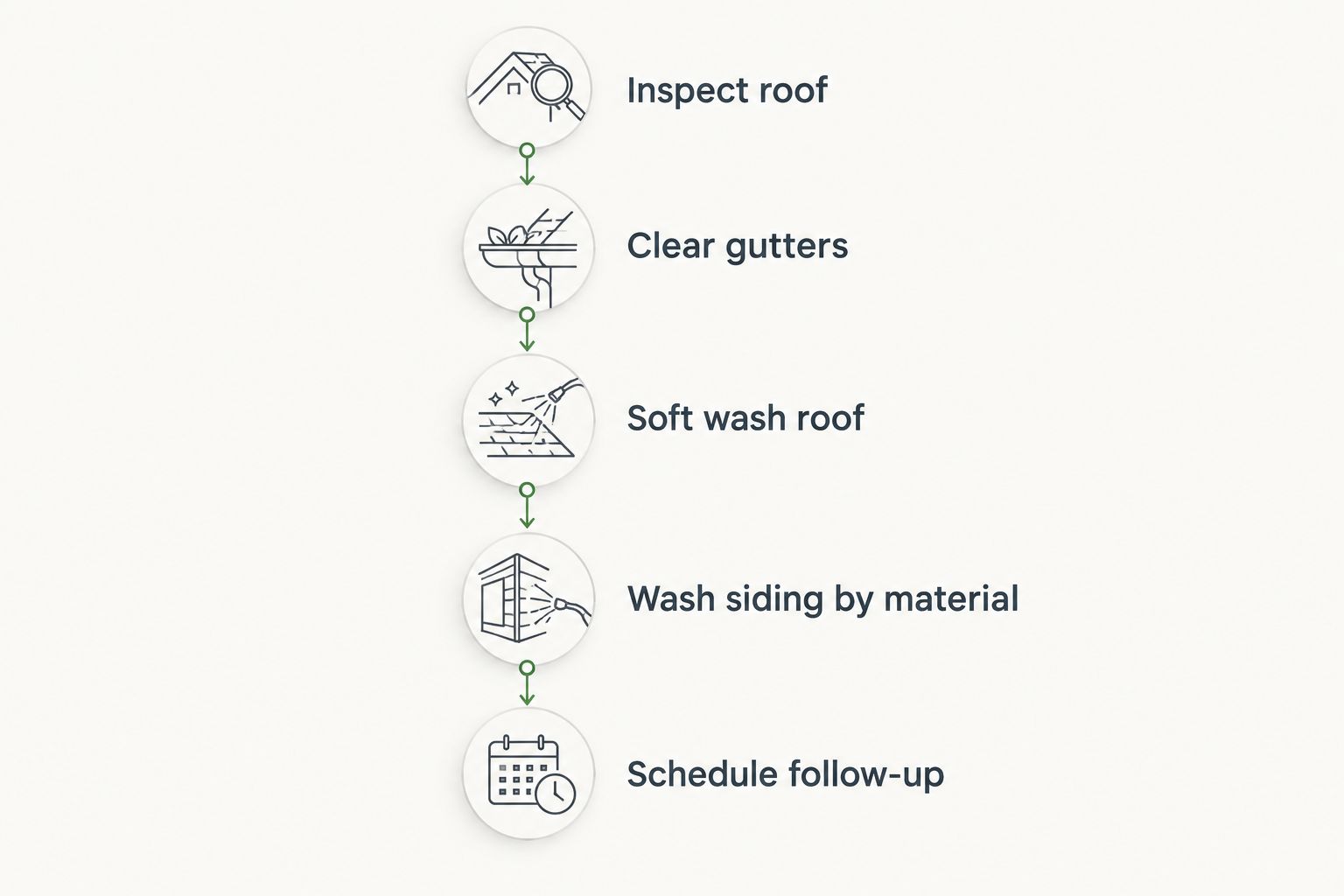
Step 1: Inspect your roof and siding before you touch anything
Start with a walk around the house, not a hose. Moss and algae rarely show up evenly, and Eagle River's shade pattern means the north and northeast faces almost always need attention first.
- Check roof valleys and north-facing slopes for green or black buildup
- Look under eaves and behind chimneys where debris collects
- Note any lifted or cracked shingles before wetting the roof
- Check log or cedar siding seams for dark streaking near the ground line
- Photograph problem areas so you can confirm the work afterward
Step 2: Clear gutters and downspouts before washing
Washing a roof with clogged gutters just pushes moss and grit into a blockage instead of off the house. Spruce needles and birch leaves fill Eagle River gutters faster than open lots because of the tree cover.
- Remove needle and leaf buildup by hand or with a gutter scoop
- Flush downspouts with a garden hose to confirm they drain
- Check for sagging sections pulling away from the fascia
- Look for granule buildup at the gutter mouth, a sign of roof wear
- Reference Alaska Moss Doctor's gutter cleaning guidance if downspouts stay backed up after clearing debris
Step 3: Choose soft wash over high-pressure for roofs and siding
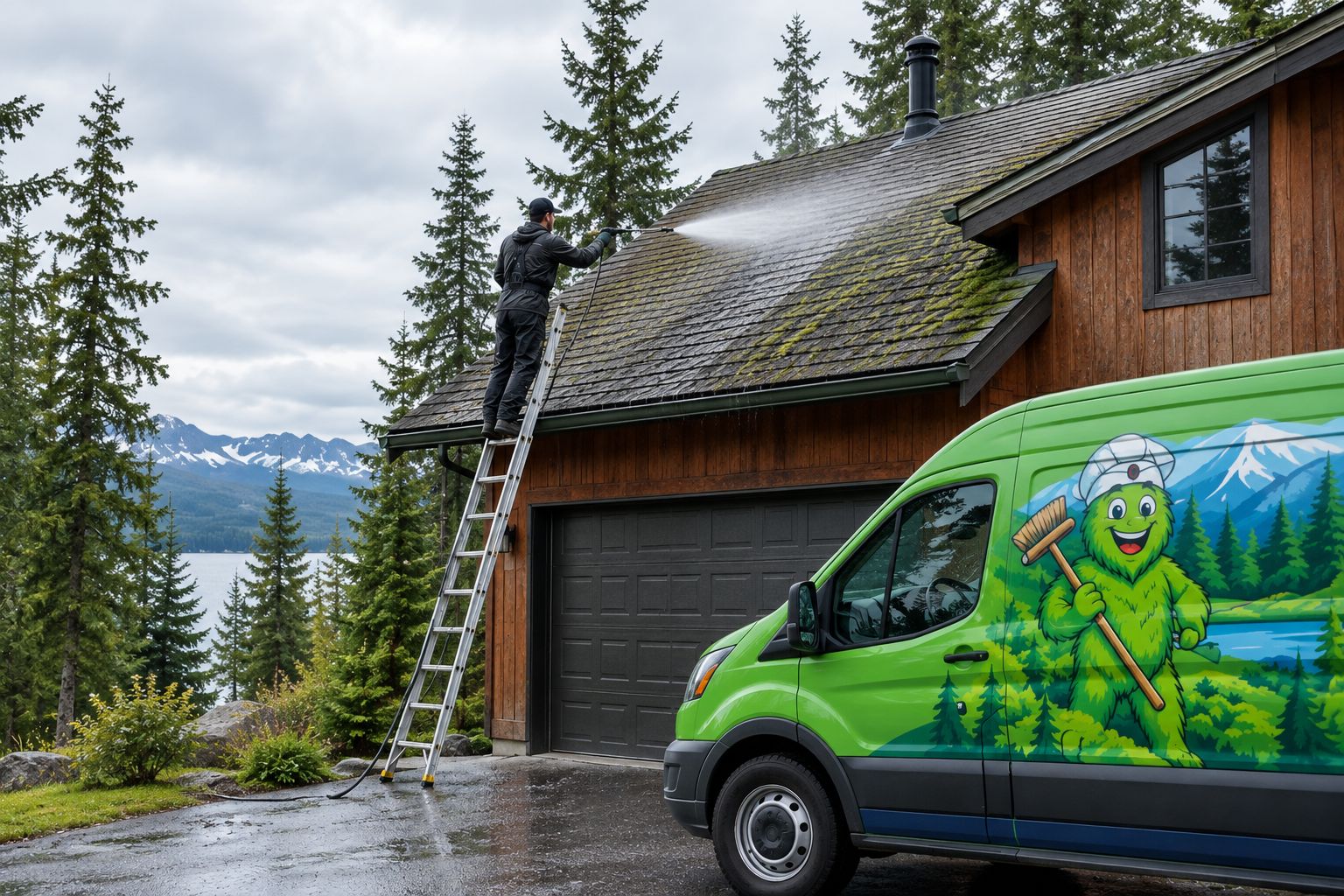
This is the step where most DIY cleanups go wrong. A pressure washer set above 2,500 PSI strips asphalt granules, cracks caulking, and can force water behind siding panels. Soft washing uses low pressure and a cleaning solution that kills moss and algae at the root instead of blasting it off.
- Use a pump sprayer or soft wash system, never a gas pressure washer, on shingle roofs
- Keep pressure under 500 PSI for painted or cedar siding
- Let the cleaning solution sit and work instead of scrubbing it off with force
- Rinse from the top down so runoff doesn't re-stain lower siding
- Read how to soft wash a house without damaging paint before mixing any solution yourself
A garden sprayer and a store-bought moss killer handle a small, single-story roof with easy access. Steep pitches, second-story siding, or heavy moss coverage are where a professional soft wash crew earns its keep, mainly because of the equipment and the roof-rated ladder work, not because the chemistry is a secret.
Step 4: Wash siding according to its actual material
Eagle River's housing stock is mixed: log cabins near the park boundary, cedar and painted wood in older subdivisions, vinyl and fiber-cement in newer builds. Treat each one differently.
- Log siding: use a low-pH cleaner and avoid oscillating tips that gouge the wood grain
- Cedar and painted wood: keep pressure low and test the cleaner on a hidden panel first
- Vinyl: moderate pressure is fine, but keep the spray angled downward to avoid forcing water behind panels
- Fiber-cement: soft wash only, since abrasive scrubbing wears the factory coating
- Check corners and trim separately, since algae collects in shaded joints even on otherwise clean walls
Step 5: Treat walkways, driveways, and retaining walls on their own schedule
Ground-level surfaces don't need the soft wash treatment a roof does. Concrete and pavers can handle real pressure, but Eagle River's tree cover means these surfaces get slick fast and need attention more than once a season.
- Use 3,000+ PSI on concrete walkways and driveways, well above roof-safe pressure
- Treat retaining walls separately since mortar joints erode under sustained direct pressure
- Sweep loose debris before washing so grit doesn't scratch pavers
- Seal concrete after washing if the surface already shows pitting
- Schedule ground-level cleaning independently of roof work since the methods don't overlap
Step 6: Protect landscaping and pets during the cleaning
Eagle River yards back up to wooded lots more often than not, and cleaning solutions that are fine on shingles can burn grass, flowerbeds, and shrubs if runoff isn't managed.
- Pre-wet garden beds and lawn areas near the house before applying any solution
- Cover sensitive plants with plastic sheeting during the wash
- Keep pets indoors or fenced off during application and rinse
- Rinse landscaping thoroughly after the job to dilute any solution runoff
- Check with your provider about the specific cleaning agent if you have edible garden beds nearby
Step 7: Schedule around Alaska's freeze-thaw calendar
Soft wash chemicals need consistent above-freezing temperatures to fully kill moss spores, which narrows the working window in Eagle River compared to lower-elevation parts of the valley.
- Target late spring through early fall for full-strength soft wash treatments
- Avoid scheduling roof work during active freeze-thaw cycles, when ice can mask damage
- Book gutter clearing before the first heavy snowfall to prevent ice dam buildup
- Plan a follow-up inspection in spring 2026 to catch any winter regrowth early
- Treat late-season jobs as maintenance, not a full moss kill, if temperatures are marginal
Step 8: Set up a year-round exterior maintenance plan
A one-time cleaning resets the exterior, but Eagle River's shade and moisture mean moss and algae come back faster here than in open, sun-exposed neighborhoods.
- Re-inspect north-facing roof sections every spring and fall
- Clear gutters at least twice a year given the spruce and birch density
- Reapply a moss-preventive treatment to shaded roof sections after each full cleaning
- Wash siding annually, more often on log or cedar exteriors that show streaking fast
- Keep a simple before/after photo log to track how fast regrowth happens on your specific lot
Get an exterior cleaning plan for your home
Alaska Moss Doctor evaluates roof pitch, siding type, and shade exposure before quoting a method.
Comparing your options
| Option | Best for | Key limitation | Verdict |
|---|---|---|---|
| DIY pressure washer | Driveways and walkways only | Strips shingle granules and cracks siding when used on a roof | Skip for roof/siding work |
| DIY soft wash kit | Small, single-story homes with easy roof access | Uneven mixing leaves streaking on log or cedar siding | Hold, proceed with caution |
| General handyman or pressure washing service | One-time driveway or fence cleanup | Most lack roof-rated soft wash equipment or fall-protection gear | Hold for ground-level jobs only |
| Professional soft wash (Alaska Moss Doctor) | Eagle River homes with steep, shaded roofs and heavy moss buildup | Scheduling depends on above-freezing days, limiting winter availability | Buy for roof and full-exterior jobs |
Common mistakes Eagle River homeowners make
- Cleaning the south side and ignoring the north. The visible, sun-exposed side looks fine, so the shaded Chugach-facing slope gets skipped until the moss is thick.
- Using a rented pressure washer on a log home. Log siding gouges easily under a narrow-tip nozzle, and the damage doesn't show until the wood grays out weeks later.
- Washing the roof before clearing the gutters. Loosened moss and grit dump straight into a clogged gutter system, creating a bigger blockage than before the job started.
- Waiting until a home sale to deal with roof streaks. Black streak and moss buildup shows up on inspection reports, and a rushed job right before closing rarely matches a properly timed spring or summer cleaning.
- Skipping a maintenance schedule after the first cleaning. One good soft wash in 2026 doesn't stop regrowth if the shade and moisture conditions that caused it in the first place haven't changed.
FAQ
What is the best exterior house cleaning method for Eagle River homes in 2026?
Soft washing is the best method for Eagle River roofs and siding in 2026 because it removes moss and algae without the high pressure that strips shingle granules or cracks painted and log siding. Ground-level surfaces like driveways still handle standard pressure washing fine.
Is soft washing better than pressure washing for Eagle River siding?
Yes, soft washing is better for siding because Eagle River's mix of log, cedar, and painted wood exteriors damages easily under high pressure. Pressure washing stays appropriate for concrete walkways and driveways.
How often should Eagle River homeowners clean moss off their roof?
Shaded, north-facing roofs under spruce and birch cover in Eagle River typically need attention every spring and fall, more often than open, sun-exposed lots elsewhere in the Mat-Su Valley. A full soft wash once a year is a reasonable baseline for most homes.
Does gutter cleaning need to happen with roof moss removal?
Gutters should be cleared before a roof wash starts, since loosened moss and debris from the roof will otherwise settle into an already-clogged gutter system. Doing both together in the same visit is more efficient than scheduling them separately.
Can exterior cleaning damage log cabin siding common in Eagle River?
Yes, if the wrong method is used. A narrow-tip pressure washer nozzle gouges log siding grain, while a low-pH soft wash solution applied at low pressure is safe for most log exteriors.
What time of year is best for roof moss removal in Eagle River?
Late spring through early fall is best, since soft wash chemicals need consistent above-freezing temperatures to fully kill moss spores. Scheduling during active freeze-thaw cycles in shoulder seasons risks masking damage under ice.
Is DIY pressure washing safe for asphalt shingle roofs?
No, standard pressure washers set above roof-safe levels strip granules off asphalt shingles, shortening the roof's lifespan. A soft wash approach at low pressure is the safer method for shingle roofs.
One last thing
Eagle River's position against Chugach State Park means many homes lose direct sun on north-facing roof planes from roughly November through February, longer than almost anywhere else in the Mat-Su Valley. Book roof and gutter work before that shade window closes in September or early October 2026, because soft wash treatments applied after the first hard freeze won't fully kill the moss spores until spring thaw resets the clock.