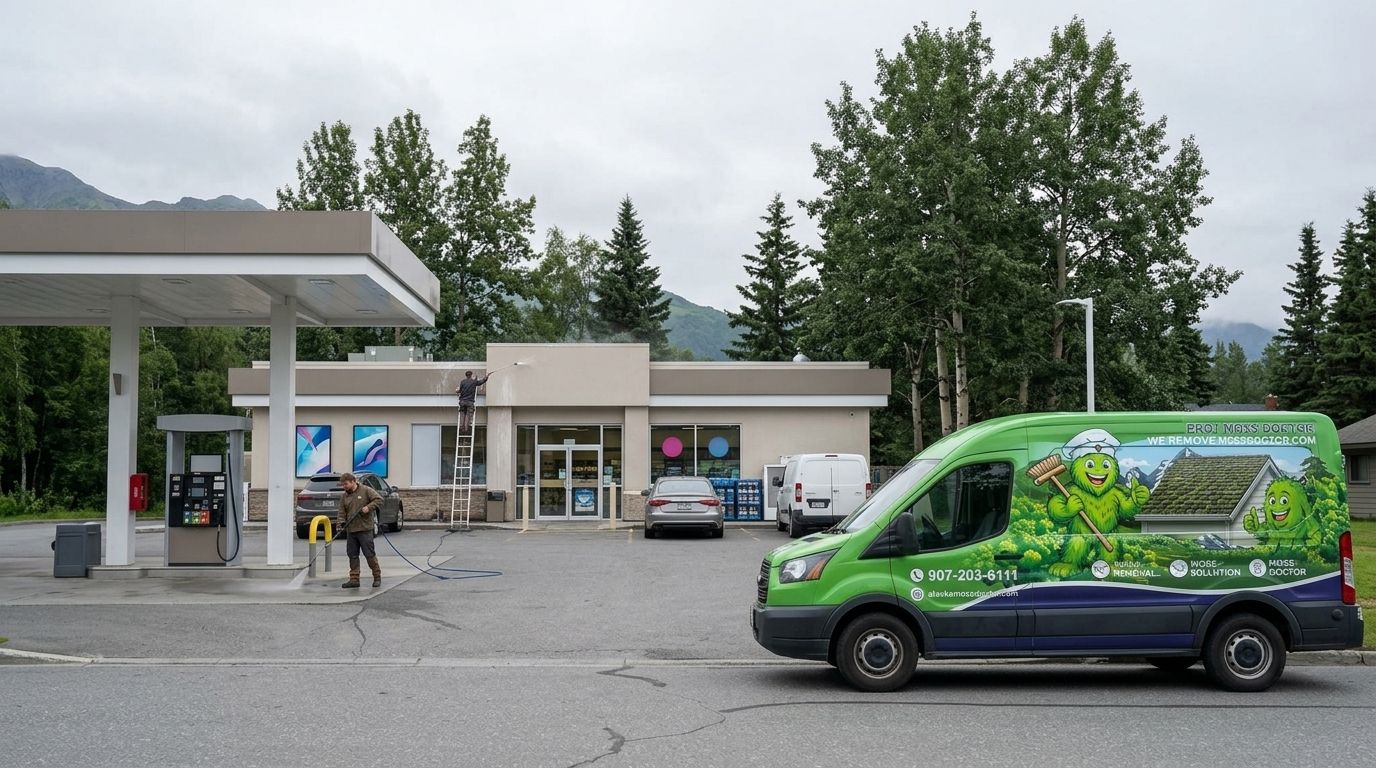
Exterior cleaning for gas stations and convenience stores is a scheduled program of pressure washing, soft washing, and algae removal that keeps the canopy, fuel islands, and storefront presentable while meeting stormwater handling requirements. A c-store's exterior takes more daily abuse than a typical commercial building — fuel spills, tire residue, exhaust soot, and constant foot traffic — and in the Mat-Su Valley, moss and algae add a layer most owners in the Lower 48 never deal with.
- Exterior cleaning for gas stations covers canopy fascia, fuel island concrete, signage, and roofline algae — not just the storefront glass.
- Alaska Moss Doctor treats north-facing canopy roofs and shaded rooflines around Wasilla where moss and algae build up fastest in 2026.
- Fuel island wash water needs contained collection under EPA stormwater rules — the single biggest compliance mistake stations make.
- Quarterly cleaning holds up better in Alaska's climate than the once-a-year wash most stations default to.
Why exterior cleaning matters for gas stations and convenience stores
A gas station's canopy is the first thing a driver sees from the highway, and a black-streaked fascia panel or moss-dark roofline reads as neglect before a customer ever pulls in. Brand agreements at many chain-affiliated stations require the canopy and signage to stay visibly clean. Independents lose walk-in traffic to whichever station on the corridor looks better maintained.
There's a compliance angle too. Fuel islands sit over concrete pads designed to contain spills, and wash water that runs off those pads into a storm drain can violate EPA National Pollutant Discharge Elimination System (NPDES) stormwater permit conditions that apply to fueling facilities. A cleaning approach that ignores where the water goes creates a liability the storefront glass never will.
In the Mat-Su Valley, add the climate: long shaded seasons, heavy fall moisture, and spruce cover around many corridor locations push moss and algae onto canopy roofs and north-facing walls faster than in drier climates. Alaska Moss Doctor treats that buildup on commercial roofs the same way it treats residential roofs around Wasilla — low-pressure chemical treatment that kills growth at the root instead of scraping the surface.
The exterior cleaning spine for a 2026 c-store site
Update your canopy and fascia wash routine
The canopy is the highest-visibility surface on the property and the one most stations neglect because it's overhead and easy to ignore.
- Soft-wash fascia panels and canopy undersides — high pressure cracks aging panel seams
- Check LED light fixtures for soot buildup that dims output at night
- Inspect canopy roof drains for moss or debris blocking runoff
- Wash support columns down to the base where road grime collects
Clean fuel island concrete and containment pads
This is the surface regulators care about most, and it stains fastest from fuel drips, oil, and rubber.
- Use a wash method with water recovery or containment, not open runoff to the lot drain
- Degrease with a cleaner rated for fuel and oil stains, applied before pressure washing
- Re-stripe parking and containment lines after the pad dries if paint has worn
- Schedule the wash during low-traffic hours so pumps stay accessible
Most stations handle those two steps with an in-house crew or a general pressure-washing contractor. Where it gets harder is the roofline — canopy roofs, especially flat or low-slope designs, hold moss and algae in shaded corners a standard wash crew does not treat correctly. That is where a specialist call makes sense instead of another round of the wash that didn't hold last year.
Remove algae and moss from the roofline
Algae streaks and moss patches on a canopy roof or flat commercial roof section don't wash off with plain water. They need treatment aimed at the organism, not the stain.
- Apply a soft-wash algaecide treatment rather than scrubbing or blasting shingles or membrane
- Check north-facing and tree-shaded roof sections first — growth concentrates there
- Clear gutters and roof drains before treatment so runoff doesn't re-seed lower sections
- Re-inspect 60 to 90 days after treatment for regrowth in shaded corners
Pressure wash the building exterior and signage
The store building — siding, entry doors, ATM enclosures, ice machine housings — collects the same soot and grime as the canopy, but at eye level where customers notice it first.
- Match pressure setting to material; vinyl and metal panel need different settings
- Clean illuminated signage with non-abrasive methods to protect lettering and lighting
- Degrease entry glass and handles daily as janitorial work, not part of the wash cycle
- Rinse dumpster corrals and side walls where odor and staining concentrate
Treat parking lot and curb areas
Parking lots collect oil drips, tire marks, and — in the Mat-Su Valley — moss creeping in from cracked pavement edges near tree lines.
- Pressure wash pump lanes and curb lines separately from the general lot
- Treat cracked concrete and asphalt edges where moss takes hold, the same pattern covered in driveway and walkway cleaning work
- Sweep loose debris before washing so it doesn't reroute into storm drains
- Repaint faded curb and accessibility markings after the surface dries
Set a cleaning schedule around Alaska seasons
A once-a-year wash doesn't hold up against Alaska's wet fall and shaded winter months. Stations on a quarterly cycle in 2026 keep the canopy and roofline from re-establishing growth between visits.
- Spring wash to clear winter road salt, sand, and grime buildup
- Mid-summer wash for peak tourist-season presentation on highway corridors
- Fall wash before moss and algae accelerate in wet, low-light months
- Winter spot-treatment only where ice and snow allow safe access
Document before-and-after condition
Brand compliance audits and insurance reviews both go faster with a paper trail.
- Photograph canopy, fuel islands, and signage before and after every wash cycle
- Log wash dates and methods used for each surface
- Keep water disposal records if using a contained wash method
- Flag concrete cracking or panel damage for repair, not another wash cycle
Get your canopy and roofline assessed
Alaska Moss Doctor evaluates commercial roofs and canopies around Wasilla for moss and algae buildup.
Comparison: exterior cleaning options for gas stations
| Option | Best for | Key limitation |
|---|---|---|
| In-house crew with a pressure washer | Daily wipe-downs, door glass, minor spot cleaning | No training on containment rules or roof-safe methods |
| General pressure-washing contractor | Parking lots, building siding, one-time deep clean | Rarely treats moss and algae at the root, so regrowth returns |
| Alaska Moss Doctor (roof and algae specialist) | Canopy roofs, shaded rooflines, moss-prone corridor sites | Focused on roof and exterior organic growth, not general janitorial work |
Verdict: for the canopy roofline and any shaded section prone to algae, a specialist treatment beats a general pressure wash because it kills the growth instead of stripping the surface temporarily.
Common mistakes gas stations and convenience stores make
- Treating the canopy as low-priority because it's overhead — it's the first thing highway traffic sees.
- Washing fuel island concrete without containment, which risks a stormwater permit violation under NPDES rules covering fueling facilities.
- Using high pressure on aging fascia panels or roof membrane, cracking seals that then leak.
- Skipping the roof entirely and cleaning only ground-level surfaces, letting moss work into shingle or membrane seams year after year.
- Washing once a year in a climate where moss and algae regrow within a season if the source growth is never treated.
“The canopy is the first thing a driver sees from the highway — a black-streaked fascia costs more customers than a slow pump.”
FAQ
How often should a gas station canopy be cleaned?
Quarterly is the practical minimum in the Mat-Su Valley, with an extra wash after fall moisture season when algae growth accelerates. Stations on a once-a-year schedule typically show visible regrowth before the next service visit.
Is pressure washing safe for a gas station canopy?
High pressure can crack aging fascia panel seams and drive water behind roof membrane, so soft-wash methods are safer for canopy surfaces. Ground-level concrete and signage tolerate higher pressure settings than the canopy roof does.
Do fuel islands need special wash water handling?
Yes. Wash water from fuel island pads can fall under EPA NPDES stormwater permit conditions for fueling facilities, so open runoff to a storm drain is a compliance risk. Contained or recovered wash methods avoid that exposure.
Why does moss grow on a gas station canopy roof in Alaska?
Shaded canopy sections, especially north-facing ones near tree lines, hold moisture through the Mat-Su Valley's wet fall months, which is exactly what moss needs to establish. Flat and low-slope canopy roofs hold that moisture longer than steep-pitched roofs.
What is the difference between a general pressure washer and a moss removal specialist?
A general contractor blasts visible grime off the surface, while a moss specialist applies treatment that kills growth at the root to slow regrowth. For roofs and shaded rooflines, the specialist approach holds up longer between service visits.
Can exterior cleaning affect a gas station brand compliance audit?
Many chain-affiliated stations have canopy and signage cleanliness standards written into their brand agreements, and a documented cleaning schedule with before-and-after photos supports that audit. Independents face no such requirement but still lose walk-in traffic to a cleaner-looking competitor.
How much does exterior cleaning cost for a convenience store?
Cost depends on canopy size, roof pitch, concrete square footage, and whether moss treatment is needed on top of a standard wash, so a site-specific quote is the only accurate figure. Check current pricing directly with a local provider.
What is the best time of year to clean a c-store exterior in Alaska?
Spring and early fall are the two highest-value windows in 2026: spring clears winter salt and sand, and fall treatment goes down before moss growth accelerates in wet, low-light months. Mid-summer washes are mostly about presentation during peak highway traffic.
One last thing
The roof drain on a flat canopy is the part almost nobody checks, and it's the part most likely to cause real damage — a blocked drain backs water under the membrane long before anyone notices a leak inside. Add a 60-second drain check to every 2026 wash cycle and you catch that problem before it turns into a roof replacement conversation.