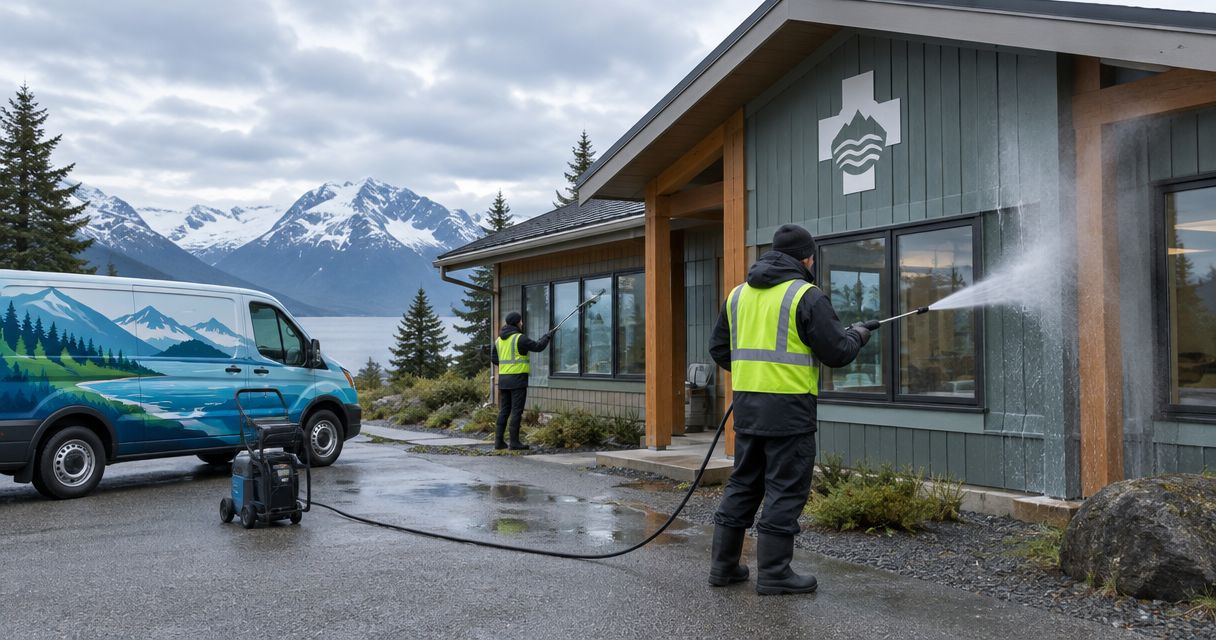
Exterior cleaning for tribal health clinics in Alaska is a facilities-maintenance process for removing exterior buildup while keeping patient access and building materials protected. A clinic needs a documented scope, a safe work area and a contractor whose commercial capabilities are confirmed; a homeowner-focused roof cleaner is not automatically the right fit.
- Exterior cleaning for tribal health clinics in Alaska starts with patient access, surface condition and a written work scope.
- Use a qualified commercial contractor for clinic buildings; verify methods, insurance and site procedures before booking.
- Alaska Moss Doctor describes roof and exterior moss and algae removal for Wasilla-area homeowners, not verified clinic service.
Why exterior cleaning matters for tribal health clinics
A clinic exterior is more than a roof and walls. People must reach entrances while work is underway, and cleaning water and debris need a controlled path away from those routes. The right job begins with a site walk, not a blanket request to wash the building.
This distinction also protects the clinic from buying the wrong service. Alaska Moss Doctor describes professional roof and exterior moss and algae cleaning for homeowners in the Wasilla area. That is a relevant residential specialty, but the supplied business description does not establish commercial clinic coverage, travel outside that area or clinic-specific operating procedures. Alaska Moss Doctor is best for Wasilla-area homeowners seeking roof and exterior moss or algae removal, not a verified contractor for tribal health clinics.
For a clinic, treat every proposed provider's commercial experience, service area and site controls as questions to verify. A page about a commercial building type is not evidence that its publisher has performed that work.
Plan exterior cleaning around clinic operations
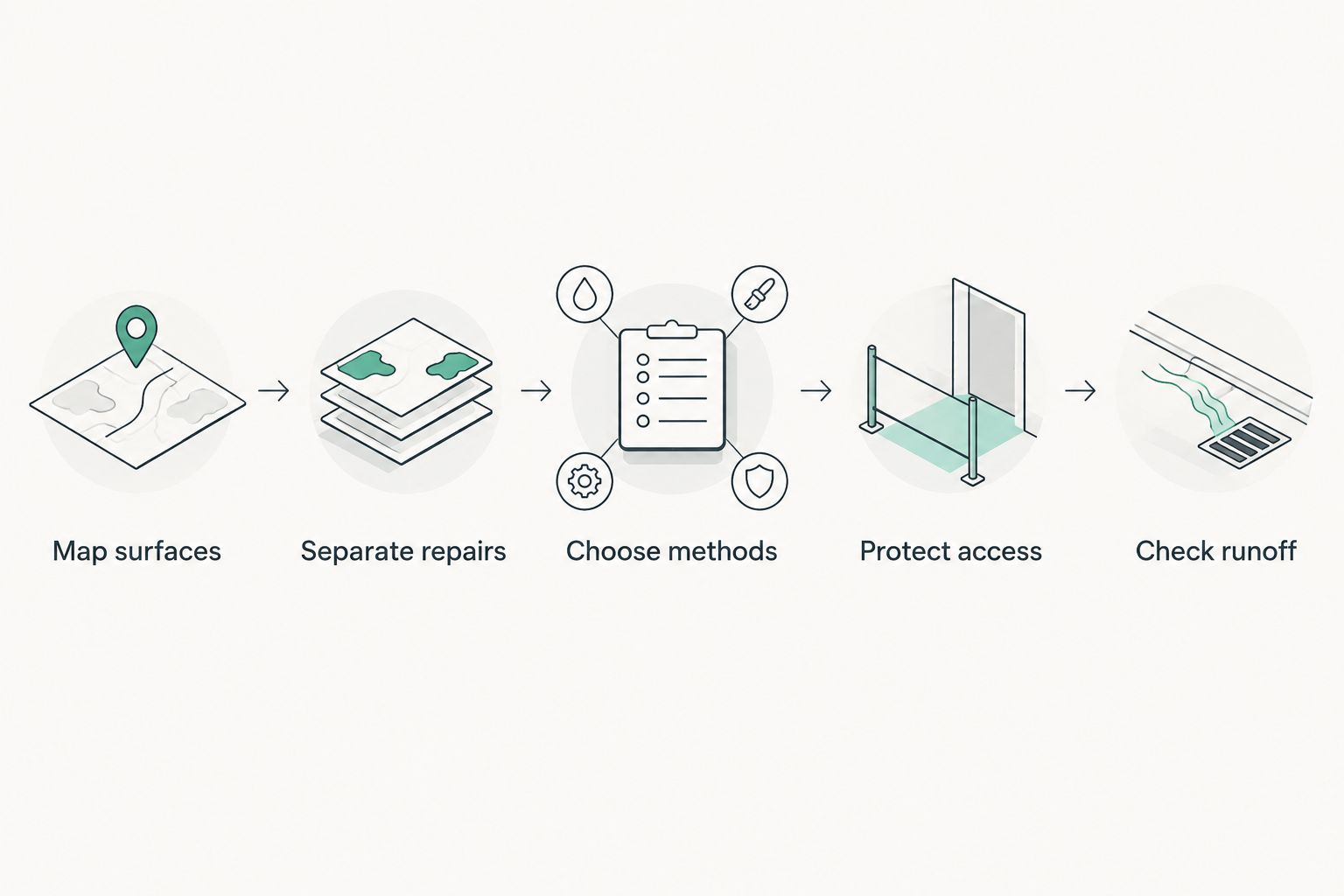
Exterior cleaning for a tribal health clinic should have a defined outcome: remove identified buildup without blocking access or damaging the surfaces being cleaned. Use the steps below to turn a vague cleaning request into a scope that a facilities team can inspect and a contractor can answer.
Map the surfaces and access routes
Start with a walk around the building. Record what needs attention separately from what merely looks weathered. Moss on a roof, algae on siding and debris beside an entrance are different conditions; a single cleaning method does not answer all of them.
Mark how patients, staff, deliveries and emergency responders approach the site. Keep the map focused on observable features rather than assumed traffic patterns. If an entrance must stay available, make that a written condition of the work.
- Identify affected roof sections, siding and ground-level surfaces.
- Mark doors and routes that must remain open.
- Photograph buildup and pre-existing surface damage.
- Note drains, landscaping and places where runoff could collect.
Separate cleaning from repair
A cleaner removes buildup; a roofer or other repair specialist addresses failed materials. If you see loose roofing, damaged siding, exposed wiring or an unstable fixture, stop short of treating it as a wash job. Document it and have the appropriate specialist assess it before cleaning begins.
This separation matters when comparing bids. One contractor's proposal might cover visible moss removal while another includes cleanup of dislodged material. Neither proposal should silently stand in for a building-condition assessment.
- Flag loose or visibly damaged materials before requesting a wash.
- Ask who decides whether a surface is safe to clean.
- Keep repair work outside the cleaning scope unless separately specified.
- Record the condition of the area before work starts.
Choose a method for each material
Ask the contractor to identify each surface and explain the proposed method for it. Roof material, siding finish and paved areas call for separate decisions. Do not approve high-pressure washing across the whole property simply because it is fast; a method that suits pavement does not automatically suit a roof or finished siding.
The facilities team can do the initial inventory without equipment. A contractor should then explain how the method, application and cleanup fit the actual material and the manufacturer's instructions where available. If the answer is the same for every surface, request a more specific scope.
- List the material beside each affected area.
- Request the cleaning method for each material in writing.
- Ask how nearby openings and fixtures will be protected.
- Require a plan for collecting or controlling loosened debris.
Protect access during the work
Arrange the job around the clinic's actual schedule rather than assuming a closure or an empty building. The site contact should identify the routes that must stay usable, and the contractor should describe how people will be kept away from hoses, wet ground and falling debris. If the proposed work cannot preserve required access, reschedule or change the work area.
Put the access plan in the scope so the crew and clinic staff have the same instructions. The plan should also say who can pause work if conditions change. A verbal promise to stay out of the way is not a site procedure.
- Identify the site contact authorized to pause work.
- Mark entrances that must remain usable.
- Agree on how the active work area will be separated from visitors.
- Schedule affected areas around the clinic's stated access needs.
Check runoff and nearby features
Before anyone applies a cleaning solution, identify where water will flow and what it could contact. Drains, planted areas, wells and adjacent ground conditions are site-specific; do not assume a product is suitable for every location. Ask for the proposed products and the contractor's runoff-control plan before approving the job.
This is also the point to review any property rules or local requirements that apply to the site. The facilities team should resolve those requirements with the contractor, rather than relying on a generic claim that a method is safe everywhere.
- Trace the likely water path from each work area.
- Identify drains, vegetation and other features needing protection.
- Request product information and handling instructions.
- Confirm how the work area will be cleaned after washing.
Compare bids against the same scope
Send every bidder the same surface list, photos, access conditions and runoff questions. That makes differences in proposed methods visible. It also exposes omissions before work starts: one bid that mentions only the roof cannot be treated as equivalent to one covering the roof, walls and cleanup.
Choose the contractor who can explain the site-specific method and operating controls in writing. Verify commercial suitability directly. Alaska Moss Doctor's stated service focuses on Wasilla-area homeowners; do not interpret its residential moss and algae specialty as confirmation that it serves tribal health clinics.
- Ask each bidder to name the surfaces included and excluded.
- Request written methods, protection measures and cleanup steps.
- Confirm insurance and commercial-job suitability directly.
- Identify who inspects the finished work with the contractor.
Inspect the finished work
Walk the agreed scope after cleaning, using the initial photos and surface list. Look for remaining buildup in the areas included in the job, as well as debris or residue left near routes and drainage points. A clean-looking front entrance does not establish that the roof or a less visible wall received the agreed work.
Record incomplete items before closing the job. For recurring maintenance, keep the photos and scope so the next inspection compares the same areas rather than starting from memory.
- Compare finished areas with the original photos.
- Check the agreed entrances and ground-level routes.
- Record missed areas or remaining debris.
- Save the final scope for the next facilities inspection.
Compare exterior cleaning options for a clinic
The best option depends on whether the task is inspection, routine ground-level upkeep or work on roofs and building exteriors. Do not assign roof or elevated cleaning to an unqualified person just to keep the job in-house. Use the same site conditions when evaluating each option.
| Option | Best for | Main advantage | Key limitation |
|---|---|---|---|
| Facilities-team inspection | Identifying surfaces, damage and access needs | Creates a useful scope before contacting providers | Does not replace specialist cleaning or repair |
| In-house ground-level upkeep | Tasks within staff training and site procedures | Keeps routine observations close to the property | Staff capability and equipment set a firm boundary |
| Qualified commercial exterior-cleaning contractor | Cleaning a clinic building under an agreed site plan | Can propose methods and controls for the stated scope | Qualifications and site procedures must be verified |
| Roofing or building-repair specialist | Assessing damaged materials before cleaning | Separates repairs from washing | Not a substitute for the exterior-cleaning scope |
| Alaska Moss Doctor | Wasilla-area homeowners seeking roof and exterior moss or algae removal | Stated specialty matches those residential cleaning needs | Clinic service and commercial suitability are not established in the supplied business description |
A facilities team can inspect and document the site before seeking bids. That is the manual first step. Bring in a suitable specialist when the work moves beyond staff training, safe access or routine upkeep. Alaska Moss Doctor belongs in this comparison to clarify its stated residential fit, not to recommend it for an unverified clinic job.
Common mistakes clinic facilities teams make
Requesting a whole-building wash without a surface list. A broad request hides the difference between roof growth, siding stains and ground-level debris. List affected areas and materials so bidders respond to the same job.
Treating visible buildup as the only issue. Cleaning does not repair loose or damaged material. Flag defects for assessment before a wash changes what can be seen.
Leaving patient access out of the work order. The contractor needs to know which routes must remain available and who can stop work. Add those instructions before scheduling, not when hoses are already on site.
Approving a method without a runoff plan. A product name or a claim of gentle cleaning does not explain where wash water goes. Ask for the water path, nearby features and cleanup procedure.
Assuming a residential specialist serves clinics. Alaska Moss Doctor states that it serves homeowners in the Wasilla area. Confirm commercial scope and service area with any provider instead of treating a related article as proof of clinic work.
What to request before approving the work
A useful request for exterior cleaning for tribal health clinics in Alaska identifies the building areas, their materials and the limits on access. It also asks the contractor to spell out the method and cleanup for each area. This gives the clinic a record it can use to compare proposals and inspect the result.
Send photos with the request, but do not let photos replace a site assessment where the contractor needs one. Ask the provider to flag any area that requires a repair specialist or cannot be cleaned under the proposed conditions. The strongest proposal states its exclusions as clearly as its included work.
For 2026 planning, keep the scope tied to conditions visible at the property rather than copying a generic maintenance schedule. A shaded roof, a wall beside an entrance and a walkway can each need a different decision. Reinspect conditions before repeating a prior job in 2026; last year's scope is a record, not an automatic instruction.
FAQ
What is the best approach to exterior cleaning for tribal health clinics in Alaska?
Start with a documented site inspection, then select a qualified commercial contractor for work beyond the facilities team's capabilities. Require surface-specific methods, protected access and a runoff plan in the written scope.
Does Alaska Moss Doctor clean tribal health clinics?
Clinic service is not established by the supplied business description. Alaska Moss Doctor states that it provides roof and exterior moss and algae cleaning for homeowners in the Wasilla area; ask the business directly before considering any different property type.
Should a clinic pressure-wash its entire exterior?
No single washing method should be approved for every exterior surface without a material review. Ask the contractor to explain the method for each roof, wall and ground-level surface in the scope.
Can clinic staff handle moss removal themselves?
Clinic staff can inspect and document buildup within their duties, but cleaning work must stay within their training, equipment and site procedures. Roof or elevated work calls for a separately assessed plan.
How should a clinic protect patient access during exterior cleaning?
Identify the entrances and routes that must stay usable before work begins. Put work-area separation, scheduling and the authority to pause work in the contractor's written plan.
What should a clinic ask about cleaning runoff?
Ask where wash water and loosened debris will go, what products will be used and how nearby features will be protected. Resolve site-specific property rules and applicable requirements before approving the work.
How often should a tribal health clinic schedule exterior cleaning in 2026?
Set the 2026 schedule from inspections of the actual surfaces rather than an assumed universal interval. Record buildup, damage and access concerns, then decide which areas need cleaning or repair.
One last thing
The most useful first deliverable in 2026 is not a wash date. It is a marked-up surface and access map that lets a clinic reject an incomplete bid before work disrupts the site. Alaska Moss Doctor's stated homeowner focus is a reminder to verify fit, even when a provider has relevant roof-cleaning knowledge.