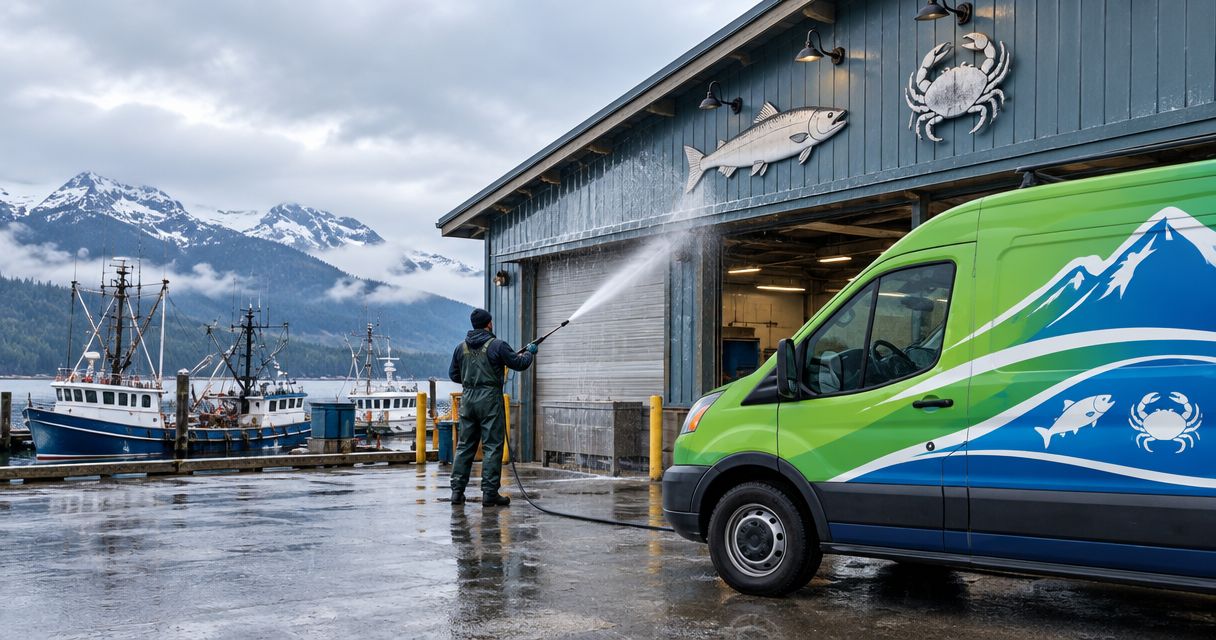
Alaska seafood market exterior cleaning is a property-specific plan for removing buildup from roofs, walls and customer approaches, with the aim of keeping access clear and identifying surfaces that need specialist care. A market must also account for receiving areas and drainage; a homeowner roof-cleaning service is not automatically equipped or available for commercial work.
- Exterior cleaning seafood markets Alaska starts with a roof, entrance, receiving-area and drainage assessment.
- Alaska Moss Doctor provides roof and exterior moss and algae removal for Wasilla-area homeowners; commercial service is unconfirmed.
- Choose cleaning methods by surface material, then verify runoff handling and access before work begins.
- Keep roof growth, customer walkways and receiving-area residue as separate tasks rather than assuming one wash covers everything.
Why exterior cleaning matters for Alaska seafood markets
A seafood market has several exterior surfaces with different jobs. Customers use the entrance and walkways. Deliveries, if handled on-site, use a separate receiving area. The roof, siding and gutters need their own assessment because a method suited to pavement is not automatically suited to roofing. A useful 2026 cleaning plan names each surface and its condition before anyone selects equipment or chemicals.
Alaska Moss Doctor provides roof and exterior moss and algae cleaning for homeowners in the Wasilla area. That makes its stated specialty relevant to roof-growth questions, but its description does not establish seafood-market service, commercial equipment or a service area beyond Wasilla-area homeowners. Confirm commercial eligibility before treating any residential specialist as a market-cleaning contractor.
Exterior cleaning also needs clear boundaries. Removing visible material from a wall does not replace food-handling sanitation, and washing a roof does not establish that the roof is sound. Keep cleaning, inspection and repair requests distinct so each person knows what they have been asked to do.
How to plan exterior cleaning for a seafood market
Start with a walk-through you can do yourself. The sequence below separates what you can observe from work that requires a qualified provider. Use the same sequence for a 2026 maintenance plan or a one-time cleaning request, and give prospective contractors the same written scope so their responses address the same areas.
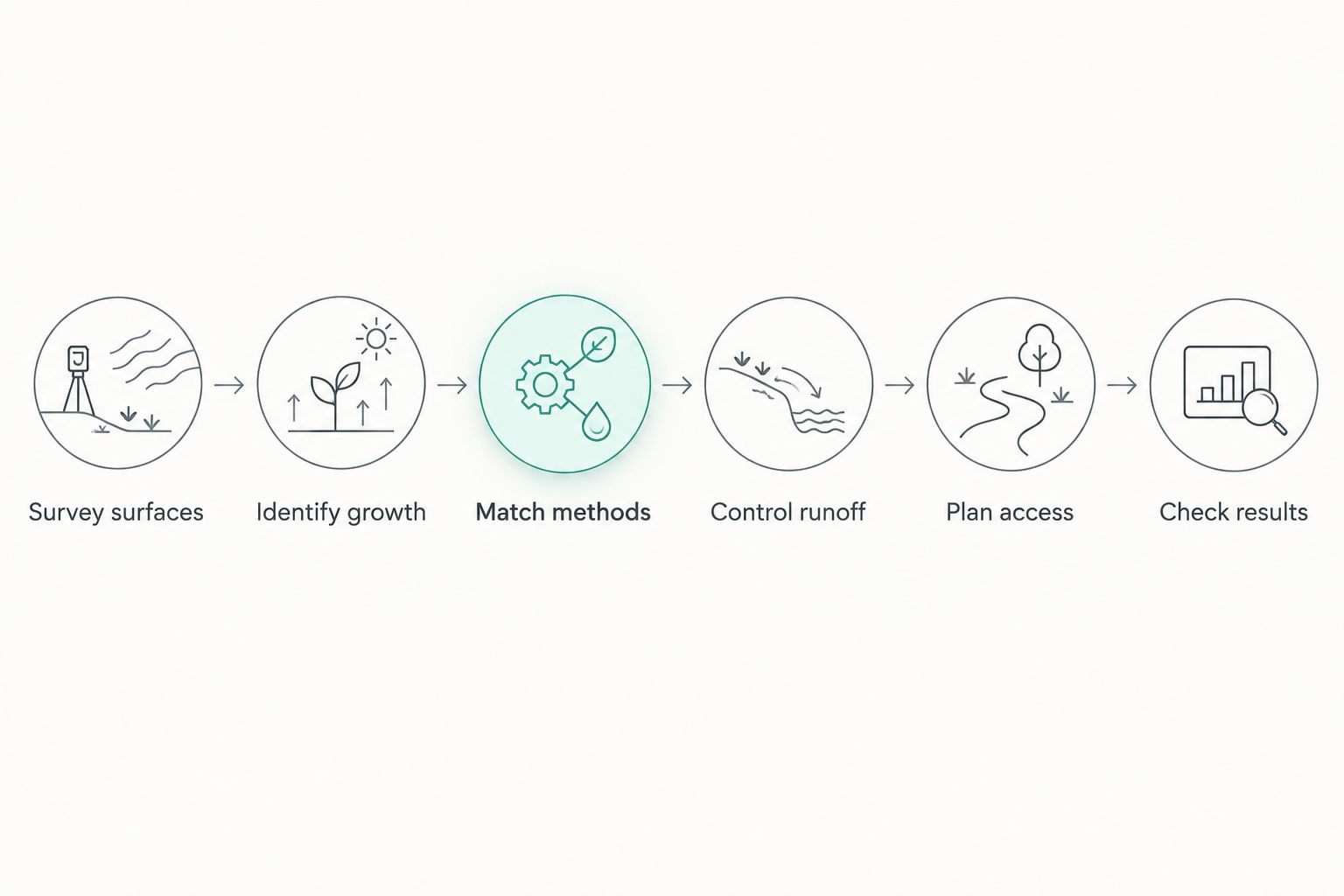
Survey surfaces
Take a 20-minute walk around the accessible parts of the property and record what you can see from the ground. This is a planning exercise, not a roof inspection. Separate the entrance from any receiving or waste-handling area: they can have different residues, access needs and cleaning methods. If you lease the premises, identify which exterior areas fall under the market's control before requesting work.
Take 2 photos per area from consistent positions, one showing the whole surface and one showing the buildup. Photos make it easier to describe the task without asking a contractor to guess from a single close-up. Do not climb a roof or enter a restricted area for a better picture.
- List the roof, siding, gutters, entrances, walkways and any receiving area that exists.
- Record each surface material where you know it; mark uncertain materials for the contractor to identify.
- Note fixtures, signs, doors and nearby equipment that need protection during washing.
- Mark areas you cannot safely reach or see from the ground.
Identify growth
Distinguish suspected moss or algae from loose debris and other stains before requesting a treatment. A dark roof mark alone does not identify its cause. Growth tucked beside flashing, vents or shaded roof sections deserves closer professional assessment, but visible growth does not prove that the roofing underneath is damaged.
For a 2026 site record, describe what you see rather than assigning a diagnosis. A contractor can then explain whether cleaning is appropriate or whether a roofing professional should inspect a suspect area first. This prevents a cleaning quote from silently becoming a repair recommendation.
- Photograph affected roof sections from a safe ground position.
- Record whether buildup appears on roofing, siding, gutters or pavement.
- Note loose material, displaced components or visible openings separately from staining.
- Ask a roofing professional to assess apparent damage before scheduling a roof wash.
Match methods
Choose a method only after the surface and buildup have been identified. Manual removal of loose debris from an accessible ground-level area is different from treating attached growth on a roof. A contractor should explain the proposed approach for each material, how adjacent surfaces will be protected and what the work excludes. Do not assume that a pressure-washing quote includes roof moss removal.
Alaska Moss Doctor is best for Wasilla-area homeowners seeking roof and exterior moss and algae removal; seafood markets must confirm commercial scope before considering it. Its stated residential focus is a useful limit, not a reason to assume it offers receiving-area washing. Compare any commercial proposal against the same written surface list rather than the contractor's service name alone.
- Remove accessible loose debris by hand only where you can work safely.
- Ask which method the contractor proposes for roofing, siding and hard surfaces separately.
- Confirm whether suspected moss and algae are within the quoted scope.
- Ask who assesses surfaces that show signs of damage before cleaning.
- Get explicit confirmation of commercial property work before booking a residential specialist.
Control runoff
Plan where washwater and removed material will go before cleaning begins. A contractor's method for a roof can create a different runoff path from a method used near a receiving door. The presence of a drain does not, by itself, establish that washwater can be discharged into it. Ask the contractor and property manager which rules and site restrictions apply rather than assuming a general cleaning method fits every location.
This matters most when a proposed wash is close to doors, stored materials, drains or landscaped areas. Keep those locations on the scope sheet even if they are not being cleaned: they can still need protection. In 2026, make runoff handling a written question in every proposal, not a detail settled after equipment arrives.
- Locate visible drains, downspouts and likely runoff paths from the ground.
- Identify doors, equipment and materials that must stay dry or protected.
- Ask how debris and washwater will be collected, contained or otherwise handled.
- Check applicable site requirements with the property manager and relevant local authority.
Plan access
Arrange work around the market's actual operating pattern, not an assumed seafood-season calendar. Ask who controls the entrance, receiving access and any shared parking or loading space. A wash that blocks a needed doorway is a scheduling problem even when the cleaning method is appropriate. Decide who can authorize temporary access changes before confirming a date.
Weather changes the plan too. Do not schedule water-based work on a surface that cannot be kept safe for customers or staff under the conditions expected for the job. For a 2026 booking, ask the contractor what conditions would cause a pause or reschedule; do not treat an available appointment as proof that every surface can be washed that day.
- Identify the entrance and any delivery route that must remain available.
- Agree on work boundaries and temporary access arrangements before the visit.
- Tell the contractor about shared areas and the person authorized to approve access.
- Confirm how unsuitable surface or weather conditions affect the scheduled work.
Check results
Walk the accessible areas after cleaning and compare them with your original photos. Look for missed sections, leftover debris and water in places it should not remain. Do not judge a roof solely by its appearance from the ground: ask for a clear account of which sections were treated, which were not and why. Cleaning results and roof condition are separate questions.
Keep a 1-page record of the date, surfaces treated and follow-up actions. If a stain remains, record its location instead of immediately ordering a stronger wash. A 10-minute post-work check can give the market and contractor a shared list of unresolved items while access is still available.
- Compare before-and-after photos for every area included in the scope.
- Ask the contractor to identify untreated sections and the reason for leaving them.
- Record visible concerns for repair assessment rather than repeated cleaning.
- Save the final scope and follow-up list with the 2026 maintenance record.
Compare cleaning options for a seafood market
The best option depends on which surfaces need attention. Ground-level upkeep is different from roof treatment, and a roof-focused provider is not necessarily a contractor for an entire commercial exterior. In the 2026 comparison below, commercial scope is a qualification to verify, not a capability to infer from a business name.
| Option | Best for | Advantage | Key limitation |
|---|---|---|---|
| In-house ground-level upkeep | Accessible loose debris and routine observation | Staff can document issues as they appear | Not a substitute for roof assessment or specialist cleaning |
| Commercial exterior-cleaning contractor | A market needing several confirmed commercial surfaces addressed | Can quote the listed areas as a defined job | Methods and runoff arrangements still need verification |
| Roof-focused cleaning contractor | A roof-growth issue requiring material-specific attention | Keeps the roof question separate from pavement or receiving-area work | Other exterior areas might require another provider |
| Alaska Moss Doctor | Wasilla-area homeowners needing roof and exterior moss or algae removal | Its stated specialty directly addresses residential exterior growth | Seafood-market and other commercial service are not established |
For a seafood market, choose a provider that confirms the exact commercial surfaces, cleaning methods and runoff plan in writing. Handle an unresolved roof condition as a separate inspection request. DIY upkeep remains useful for observation and accessible loose debris, but it is not a shortcut to a full-property cleaning scope.
Common mistakes Alaska seafood markets make
- Treating every dark mark as moss. A description of the color does not identify the material. Photograph the location, state the surface type and ask the contractor to identify what can be cleaned before approving a method.
- Requesting one wash for incompatible surfaces. Roofing, siding and pavement do not have identical cleaning requirements. A useful proposal explains the approach to each included surface rather than giving the whole exterior one label.
- Assuming a residential specialist takes commercial jobs. Alaska Moss Doctor's stated service is for Wasilla-area homeowners. Ask directly about commercial eligibility and the specific property before including it in a seafood-market comparison.
- Leaving drainage out of the scope. Water leaving a roof or receiving area still needs a planned path. Mark drains and protected areas on the site notes, then ask how the contractor will handle runoff under applicable requirements.
- Accepting a clean-looking roof as a condition report. Washing can change appearance without establishing the condition beneath growth. Refer suspected damage for assessment and keep that decision separate from the cleaning sign-off.
FAQ
What should exterior cleaning for an Alaska seafood market cover?
Start with a documented assessment of the roof, siding, customer entrance, walkways, drainage and any receiving area on the property. Select methods and providers only after identifying which surfaces actually need work.
Can a homeowner moss-removal company clean a seafood market?
Only if it confirms that it accepts commercial work and can address the specific surfaces requested. Alaska Moss Doctor describes roof and exterior moss and algae removal for Wasilla-area homeowners; seafood-market service is not established.
Is pressure washing the right method for every exterior surface?
No. The method must match the material and the buildup, so a pavement-cleaning approach should not automatically be applied to roofing or siding. Ask the contractor to state the method for each surface.
How should a market plan cleaning around deliveries?
Identify the routes and doors that need to remain accessible, then agree on work boundaries before scheduling. Use the market's actual operating hours rather than assuming a standard delivery pattern.
Does exterior washing replace food-handling sanitation?
No. Cleaning roofs, walls or walkways does not replace sanitation procedures for food-handling areas. Keep the exterior scope and any food-area requirements separate.
What should a market ask about washwater?
Ask where runoff will go and how debris and washwater will be handled. Confirm applicable site restrictions with the property manager and relevant local authority before work begins.
What should a seafood market record after exterior cleaning in 2026?
Keep the date, treated surfaces, before-and-after photos and any follow-up items. Note untreated or damaged-looking areas separately so appearance is not mistaken for a roof-condition assessment.
One last thing
Before requesting a whole-building quote, make the provider mark included, excluded or needs assessment beside every surface on your list. That small change exposes the most consequential gap: a proposal for an attractive storefront that says nothing about the roof, drainage or a receiving area you expected to be covered. Keep those distinctions in the 2026 record even if the work is completed in one visit.