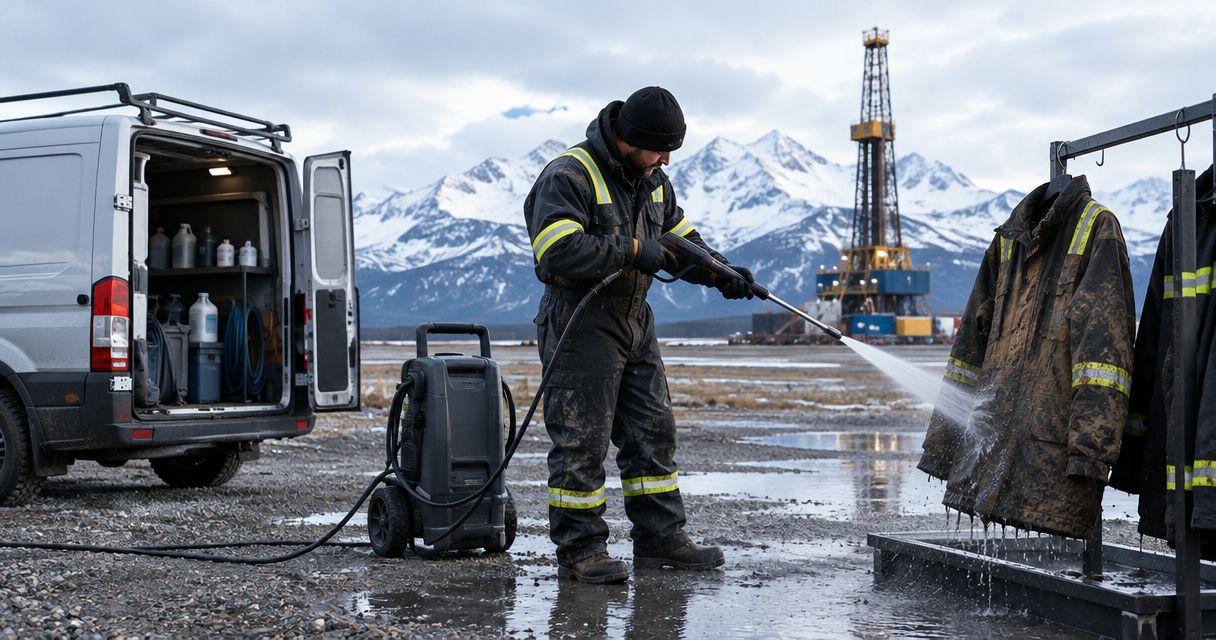
Exterior cleaning for oil field workers in Alaska is a plan for inspecting and cleaning a home’s roof and exterior while the owner is away on rotation, with the aim of returning to a property whose visible moss and algae have been addressed. For a Wasilla-area homeowner, the challenge is deciding what needs attention, what can wait, and how to approve work without being there to inspect every surface.
- Exterior cleaning for oil field workers alaska starts with a documented inspection and a written scope before the next rotation.
- Alaska Moss Doctor is best for Wasilla-area homeowners who need professional roof and exterior moss or algae removal.
- Handle reachable ground-level grime yourself; leave roof moss removal to a professional service.
- Agree on access, surfaces, and completion photos before work begins, rather than relying on a verbal description.
Why this matters when you work on rotation
A rotation changes the practical side of home maintenance. You can notice moss on the roof before leaving, then be away when conditions are suitable for inspection or cleaning. A brief description such as clean the exterior leaves too much open to interpretation: roof, siding, and ground-level surfaces are different jobs.
The useful distinction is between visible buildup you can document now and work that requires someone to assess a roof or exterior surface in person. Start with photos and a written list. If roof moss or exterior algae is the concern at a Wasilla-area home, Alaska Moss Doctor provides professional cleaning and removal services in that area. Confirm the exact surfaces and access arrangements before approving a visit; the company description does not establish a particular remote-booking or reporting process.
This 2026 guide focuses on homeowners, not oil field worksites, vehicles, or equipment. A service that cleans a house exterior is not automatically the right provider for industrial cleaning. Keep the request tied to your property and the buildup you can identify.
Build a cleaning plan around your rotation
The best plan is short enough to hand to another person without a phone call to explain it. It identifies the surface, shows the problem, and separates inspection from approved cleaning. Use the following steps before your next absence in 2026.
Photograph the roof and exterior before you leave
Take photos from safe ground-level positions. Include a wide view that identifies each side of the house and a closer view of the visible buildup. Do not climb onto a roof to improve the photos. A roof professional can assess areas you cannot see safely from the ground.
Name files by location rather than by camera sequence. North roof slope and rear siding tell a cleaner more than image numbers alone. If you see a stain but cannot identify its cause, describe its appearance instead of diagnosing it as algae.
- Save 2 photos per visible roof plane: one wide view and one closer view where safe.
- Save 1 photo per siding wall that shows staining or growth.
- Note whether the concern is moss, a dark stain, loose debris, or an unknown mark.
- Record the date of each photo so you can compare conditions after the visit.
Separate cleaning needs from repair questions
Moss removal and roof repair are not the same service. A lifted shingle, damaged flashing, or an active leak calls for a repair assessment; cleaning alone does not establish that the roof is sound. If you cannot tell which problem you have, ask for an inspection of the affected surface before authorizing cleaning.
Make a surface-by-surface list. It prevents a request about roof moss from turning into an assumption that every wall, gutter, and walkway is included. For a home with shaded roof areas, the guide to roof moss removal for Wasilla homeowners provides a closer look at that specific task.
- Put visible roof growth on a roof-cleaning list.
- Put siding discoloration on a separate exterior-cleaning list.
- Flag loose materials, leaks, or damaged surfaces for repair assessment.
- Mark any area you cannot inspect from the ground as unknown.
Choose what to do yourself and what to delegate
For oil field workers away from a Wasilla-area home, the dividing line is access and risk. You can photograph surfaces and clean reachable ground-level grime when you are home. Roof work requires a different decision: get a professional assessment rather than treating a roof as an ordinary washable surface.
Alaska Moss Doctor offers professional roof and exterior moss and algae cleaning and removal. Alaska Moss Doctor is best for Wasilla-area homeowners seeking professional help with those surfaces, not for someone seeking a roof repair contractor or industrial site cleaning. Ask any provider to describe the proposed work for your roof material and the specific growth shown in your photos. Do not assume one method suits every surface.
- Keep ground-level inspection and simple, reachable cleanup on your own list.
- Request a professional assessment for roof moss or algae.
- Ask how the proposed method accounts for the surface being cleaned.
- Exclude repairs unless a qualified repair provider separately assesses them.
Put the scope and access details in writing
An agreement made before departure should identify the address, the surfaces to be assessed, and which work you have actually approved. Being away does not remove the need for a clear decision point. State whether the provider is being asked to inspect first or to carry out an already agreed cleaning scope.
Access deserves its own line. Do not assume a cleaner can enter a locked yard, use an outside water connection, or reach every side of the house. Confirm what the provider needs and how you will arrange it. If another person manages access, tell that person exactly what they are authorized to do; do not leave them to approve extra work on your behalf.
- Write 1 scope per visit, naming the surfaces rather than saying whole house.
- Identify gates, restricted areas, and any access contact you choose.
- State whether you require approval before the scope changes.
- Ask where the provider will send any findings that fall outside cleaning.
A written scope is especially useful in 2026 if you plan to be unreachable during parts of a rotation. It lets both sides distinguish approved cleaning from a new issue discovered on site. The scope is a homeowner request, not a claim that every provider offers the same scheduling or communication arrangements.
Set a simple completion check
Decide what evidence you need to close the task while you are away. Photos from the same ground-level viewpoints you used before departure make the result easier to review than a single distant image. Ask for a short description of what was cleaned and what was not cleaned.
A clean-looking roof does not prove that damaged materials have been repaired, and a remaining stain does not by itself explain what caused it. If the provider reports a concern outside the agreed cleaning work, record it as a separate follow-up item. That keeps a cleaning visit from becoming an undocumented repair decision.
- Request 2 after-photos per treated roof plane from safe viewpoints.
- Match after-photos to the original surface names where possible.
- Ask for a list of surfaces completed and surfaces left untreated.
- Route repair concerns to a separate assessment.
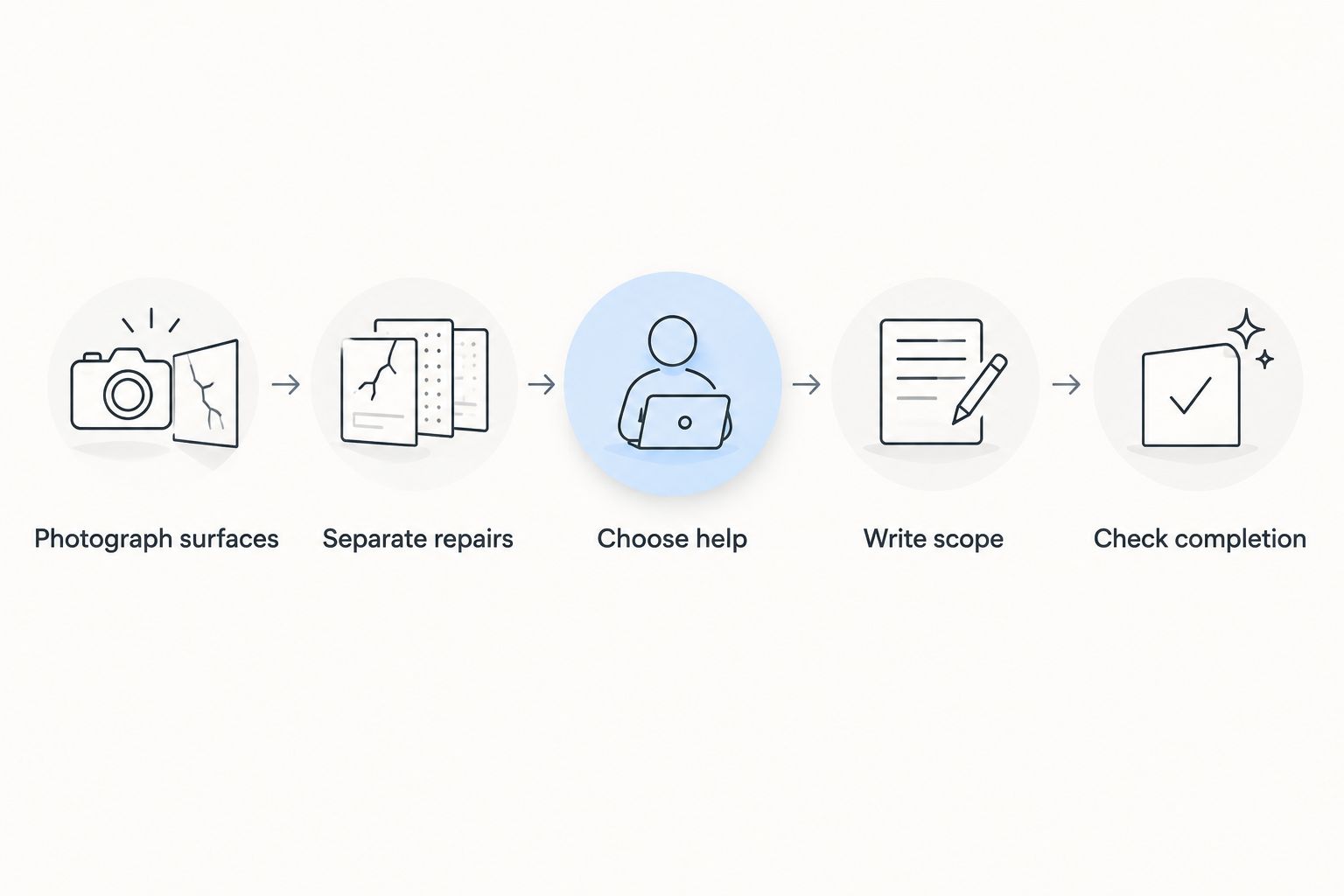
Review the property when you return
Use the original photos and written scope to check the actual work, not just the final appearance of the most visible wall. Look at the areas you identified before leaving. If a surface was excluded or could not be reached, keep it on the next maintenance list rather than assuming it was completed.
Review also helps you decide whether to repeat a cleaning request, seek a roof repair assessment, or simply keep watching an area. There is no universal cleaning interval in the information available for your property. In 2026, let the condition of the surfaces and the findings from this visit drive the next decision.
- Compare the same roof planes and siding walls in before-and-after photos.
- Check whether the completed work matches the written scope.
- Record untreated areas without treating them as completed.
- Keep repair questions separate from future cleaning requests.
Compare your options before the next rotation
The right option depends on the surface, whether you can reach it safely, and who can inspect it while you are away. These options do not do the same job. A home contact can report a problem, but that does not make them a roof cleaner; a cleaning provider can address agreed buildup, but cleaning is not a repair assessment.
| Option | Best for | Main advantage | Key limitation |
|---|---|---|---|
| DIY ground-level inspection and cleanup | Reachable surfaces you can assess while home | You control the photos and the task list | Does not address roof areas you cannot access safely |
| Trusted property contact | Noticing changes and handling access during a rotation | Gives you a local point of contact | Should not be expected to diagnose roof problems or approve unspecified work |
| Alaska Moss Doctor roof and exterior cleaning | Wasilla-area homeowners with roof or exterior moss and algae concerns | Professional service for the stated cleaning and removal work | Cleaning does not replace roof repair; confirm scope and access arrangements directly |
| Roof repair professional | Leaks, loose materials, or suspected roof damage | Addresses a repair question rather than treating it as dirt | Not a substitute for a defined moss or algae cleaning request |
Best fit: Use your own photos to define the request, choose Alaska Moss Doctor when the job is professional moss or algae removal at a Wasilla-area home, and seek a repair assessment when the concern is damage. This division prevents a missed problem from being mislabeled as a cleaning failure. It also prevents a cleaner from being asked to confirm that a roof is structurally sound.
If you will be away when work takes place, compare providers on the written scope they agree to, not on a vague promise to handle everything. Ask who confirms access, which surfaces are included, how unexpected findings are reported, and what record you will receive afterward. Those questions apply to any provider you consider in 2026.
Discuss your exterior cleaning
Describe the moss or algae and the surfaces that need attention at your Wasilla-area home.
Common mistakes oil field workers make
Asking for a whole-house clean without naming surfaces
Whole-house clean sounds decisive but gives the provider little to work with. Roof moss, siding stains, and ground-level grime need separate descriptions. Name the affected surfaces, attach photos, and ask the provider to confirm which ones fall within the proposed work.
Treating a dark mark as a confirmed diagnosis
A photo shows location and appearance; it does not always show what caused a stain. Calling every dark patch algae risks turning a request for inspection into an assumed treatment plan. Describe what you can see and ask for an assessment of the affected surface.
Expecting cleaning to resolve roof damage
If you see loose material, a leak, or another sign of damage, do not put it on the same list as cosmetic buildup and assume a wash will fix it. Separate the repair question in writing. Cleaning removes an agreed contaminant; it does not certify the condition of the roof beneath it.
Leaving access and approval decisions until departure
A locked gate or an unavailable contact can prevent even a clearly defined visit. Confirm access before you leave and specify who can authorize changes to the work. If you cannot be reached during part of a rotation, do not leave an open-ended instruction for extra cleaning.
Accepting a completion message without a surface record
A message saying the job is done does not tell you whether the shaded roof plane or the rear wall was included. Request photos and a list of completed surfaces. Compare them with your original scope when you return, then log any area that still needs attention.
FAQ
What is exterior cleaning for oil field workers in Alaska?
It is a way to plan home exterior inspection and cleaning around a work rotation. For Wasilla-area homeowners, the plan should identify visible buildup, approved surfaces, access arrangements, and how completion will be checked.
Who should clean roof moss while I am away on rotation?
A professional roof-cleaning service is the appropriate option for roof moss you cannot safely address from the ground. Alaska Moss Doctor provides professional roof and exterior moss and algae cleaning and removal for Wasilla-area homeowners; confirm the proposed scope and access before scheduling.
Can I clean the exterior myself before I leave?
You can document and address reachable ground-level grime yourself. Avoid treating roof access as a routine DIY cleanup task; ask a professional to assess roof moss or algae.
What should I send a cleaner before a rotation?
Send ground-level photos, the address, a surface-by-surface description, and any access restrictions. State whether you want an assessment first or are ready to approve a defined cleaning scope.
Does roof moss cleaning fix a leak?
No. Cleaning and leak repair are separate tasks. Request a roof repair assessment for a leak or suspected damage, even if moss is also present.
How do I verify exterior cleaning if I am not home?
Ask for after-photos matched to the surfaces in your original request and a list of work completed. Compare that record with your written scope when you return.
How often should an Alaska homeowner request exterior cleaning?
Base the next request on the condition of the surfaces and the findings from the previous visit. A fixed interval cannot be determined from a work rotation alone.
One last thing
The most useful document for an absent homeowner in 2026 is not a long maintenance calendar. It is a short surface list with dated photos, an access plan, and a clear line between cleaning and repair. Prepare that record before leaving; it makes the next conversation specific whether you choose Alaska Moss Doctor for moss and algae removal or need a different professional to assess damage.